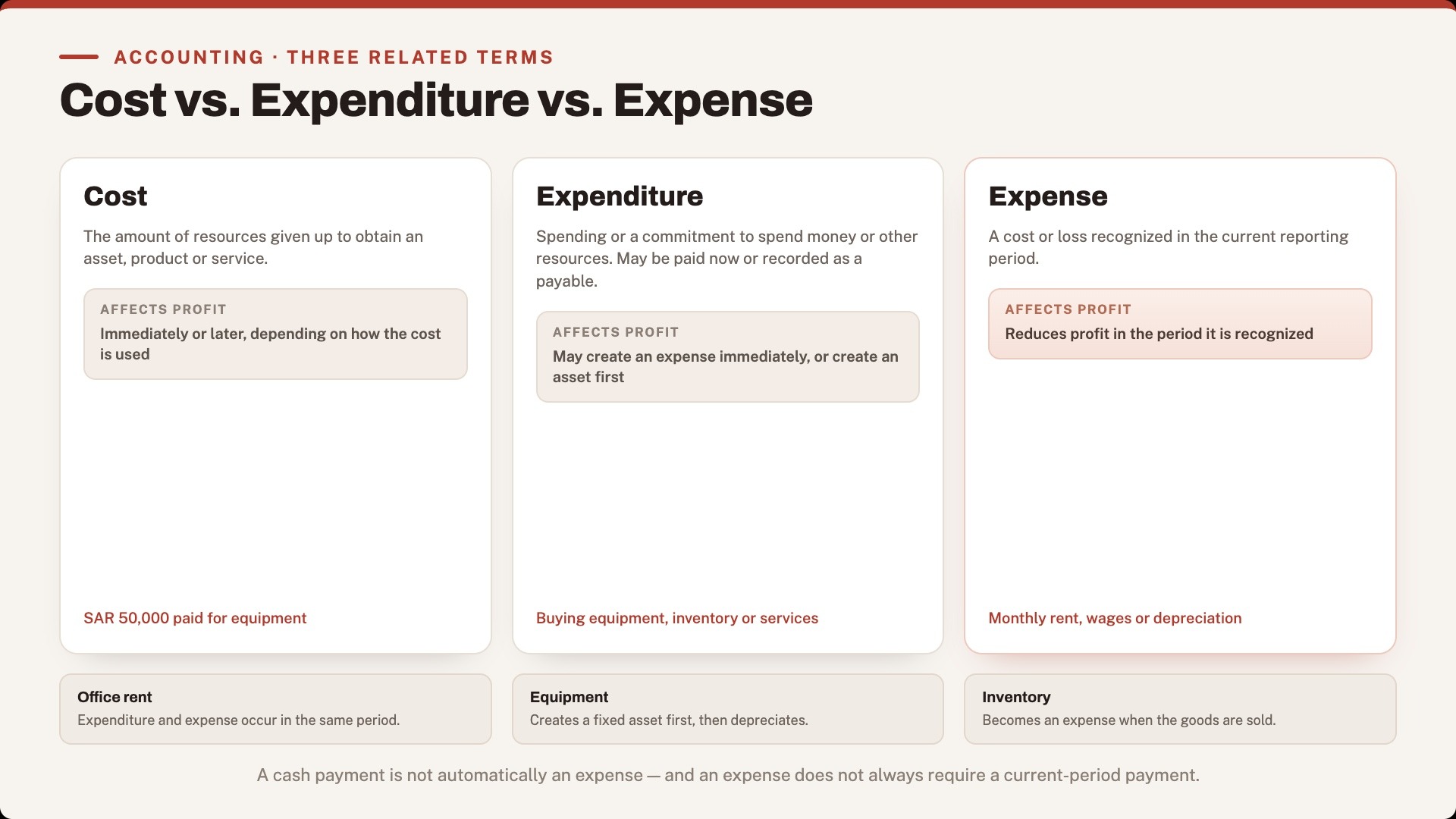

تستخدم كل شركة الموارد لتوليد الإيرادات والحفاظ على عملياتها التشغيلية. ويتم الاعتراف ببعض هذه الموارد كمصروفات فورًا، بينما تُسجل موارد أخرى في البداية كأصول ولا تتحول إلى مصروفات إلا عند استهلاكها أو بيعها أو احتساب إهلاكها.
لا ينطوي المصروف دائمًا على دفع نقدي فوري. فقد تسجل الشركة مصروف الكهرباء قبل سداد مستحقات المورد، أو تدفع تكاليف التأمين مقدمًا ثم تعترف بالمصروف على مدار عدة أشهر، أو تسجل الإهلاك دون إجراء أي دفعة نقدية خلال الفترة.
يساعد فهم هذه الاختلافات فرق التمويل على حساب الأرباح بشكل صحيح، وإعداد قوائم مالية موثوقة، والتحكم في الإنفاق، والتمييز بين التكاليف التشغيلية وشراء الأصول.
يوضح هذا الدليل معنى المصروف في المحاسبة، وكيف تختلف المصروفات عن التكاليف والنفقات، والطرق الرئيسية التي تصنف بها الشركات المصروفات، بالإضافة إلى قيود اليومية المستخدمة لتسجيل الأمثلة الشائعة.
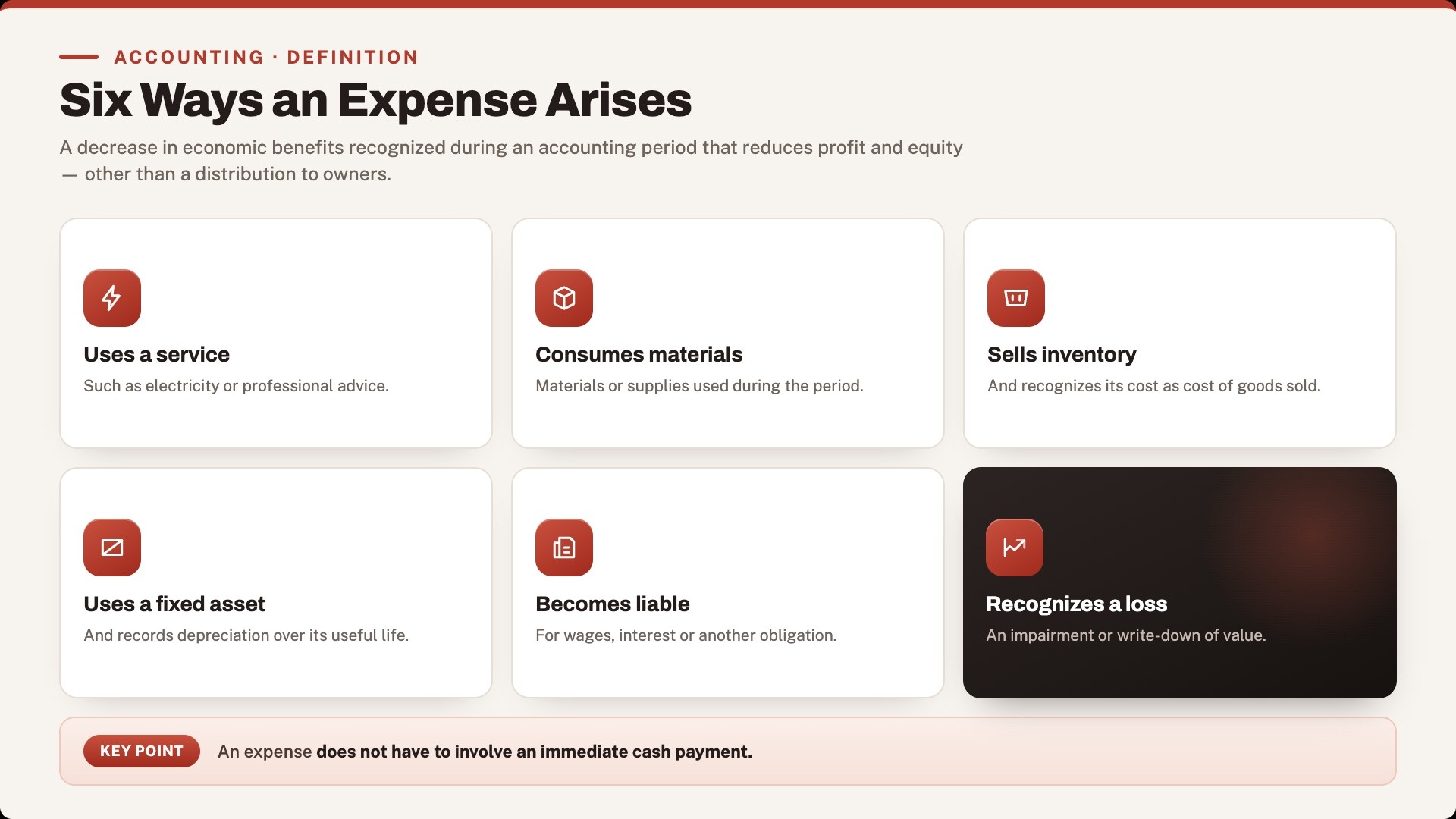
المصروف هو انخفاض في المنافع الاقتصادية يتم الاعتراف به خلال فترة محاسبية، مما يؤدي إلى انخفاض أرباح الشركة وحقوق الملكية، باستثناء التوزيعات على المالكين.
يمكن أن ينشأ المصروف عندما تقوم الشركة بما يلي:
لا يشترط أن ينطوي المصروف على دفع نقدي فوري.
على سبيل المثال، لنفترض أن شركة استخدمت ما قيمته 3,000 ريال سعودي من الكهرباء خلال شهر يونيو، لكنها سددت المبلغ للمورد في شهر يوليو. وبموجب أساس الاستحقاق المحاسبي، تسجل الشركة المصروف في شهر يونيو:
مدين: مصروف المرافق — 3,000 ريال سعودي
دائن: المصروفات المستحقة أو الحسابات الدائنة — 3,000 ريال سعودي
وعند سداد المبلغ في شهر يوليو، تقوم الشركة بإلغاء الالتزام:
مدين: المصروفات المستحقة أو الحسابات الدائنة — 3,000 ريال سعودي
دائن: النقد — 3,000 ريال سعودي
لا يؤدي السداد في شهر يوليو إلى تسجيل مصروف ثانٍ، لأن المصروف تم الاعتراف به بالفعل في شهر يونيو.
اقرأ أيضًا: فهم الحسابات الدائنة: التعريف والعملية والأمثلة
المصطلحات الثلاثة مرتبطة ببعضها، لكنها لا تصف نفس الحدث المحاسبي.