

في جميع أنحاء المملكة العربية السعودية، تسرّع الشركات وتيرة التحول الرقمي في إطار رؤية 2030، مع لعب التقنيات السحابية دورًا محوريًا. فمن التصنيع والمقاولات إلى التجارة والتعليم، تستبدل الشركات الأنظمة القديمة المثبتة محليًا بأنظمة تخطيط موارد المؤسسات السحابية لتحقيق السرعة والمرونة والتحكم.
وبالنسبة للرؤساء التنفيذيين والمديرين الماليين، لا يقتصر هذا التحول على التكنولوجيا فحسب؛ بل يتعلق بمرونة الأعمال واستدامتها. إذ يربط نظام ERP السحابي بين الشؤون المالية والعمليات والموارد البشرية وسلاسل الإمداد في منصة واحدة، مما يساعد متخذي القرار على مراقبة الأداء والاستجابة بشكل أسرع لتغيرات السوق.
إن اعتماد المملكة المتزايد على البيانات الفورية، وفرق العمل عن بُعد، وسير العمل المتكامل يجعل من تبنّي أنظمة ERP السحابية خطوة استراتيجية لتعزيز التنافسية وقابلية التوسع.
في هذا الدليل، ستتعرّف على أهم 10 فوائد لأنظمة ERP السحابية وكيف تساعد الشركات على تحسين الكفاءة، وقابلية التوسع، واتخاذ القرار.
تُبسّط أنظمة تخطيط موارد المؤسسات السحابية إدارة الأعمال من خلال ربط جميع الأقسام، بما في ذلك الشؤون المالية، والموارد البشرية، والمشتريات، والعمليات، والمخزون، عبر منصة سحابية واحدة. وهي تقضي على تسرب البيانات والتقارير اليدوية، مما يتيح للفرق العمل بمعلومات دقيقة وفورية من أي مكان.
وبالنسبة للشركات في طور النمو، ينعكس ذلك في تقليل المهام اليدوية، وتسريع إعداد التقارير، وتحسين التنسيق بين الأقسام. كما تضمن أنظمة ERP السحابية حصول متخذي القرار دائمًا على رؤية واضحة للأداء من خلال لوحات معلومات وتحليلات فورية.
وبفضل مرونتها وقابليتها للتوسع وكفاءتها من حيث التكلفة، ليس من المستغرب أن تتجه المزيد من المؤسسات إلى أنظمة ERP السحابية لتبسيط عملياتها والحفاظ على قدرتها التنافسية. إن فهم مزاياها يساعدك على إدراك كيفية إسهامها في تحسين إدارة الأعمال اليومية.
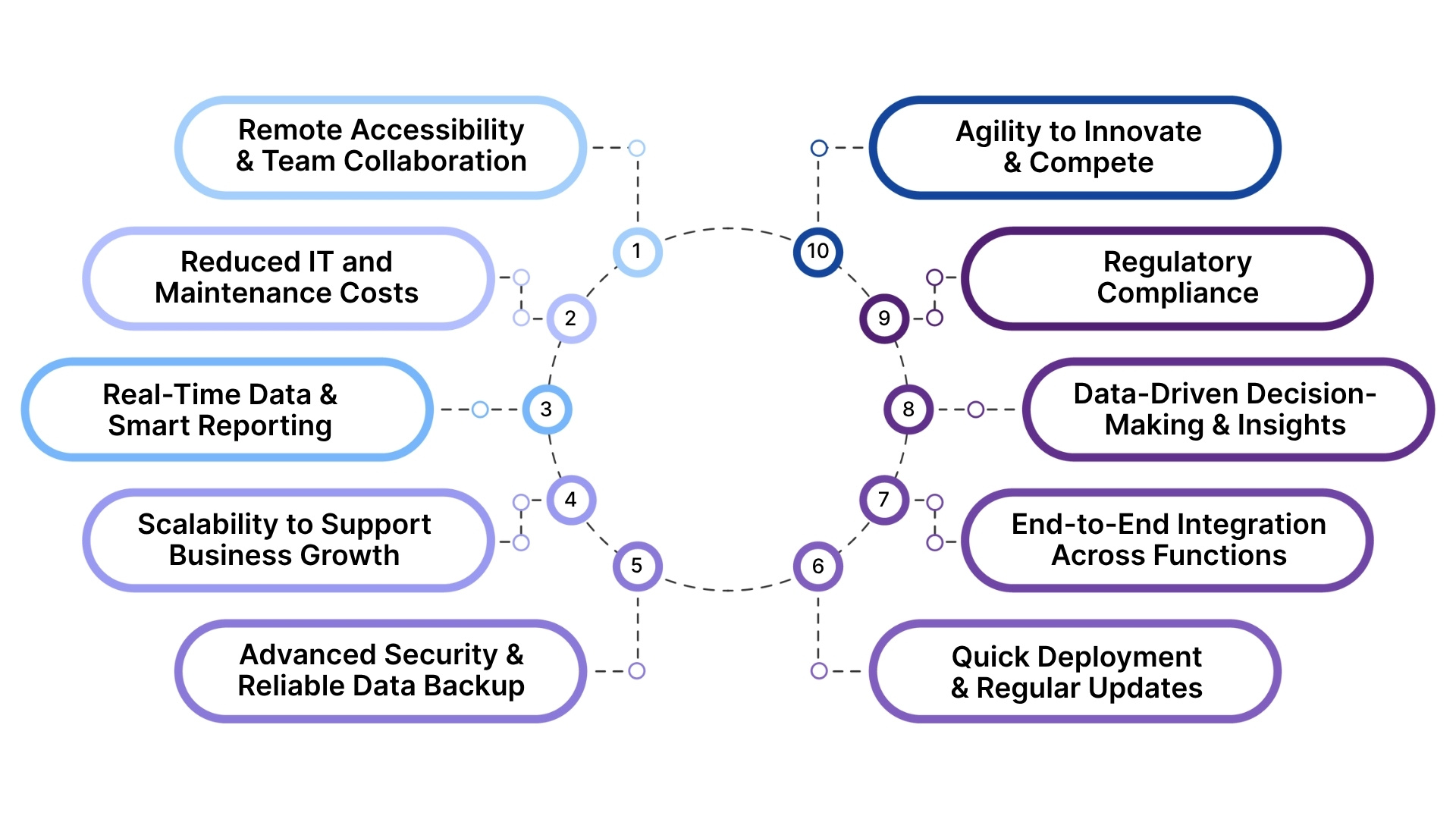
تُحدث أنظمة تخطيط موارد المؤسسات السحابية تحولًا في طريقة عمل الشركات الحديثة في المملكة العربية السعودية ودول مجلس التعاون الخليجي. فهي تجمع بين المرونة والأتمتة والذكاء الفوري، مما يمنح القادة الوضوح اللازم لاتخاذ قرارات واثقة.
إليك كيف يحقق نظام ERP السحابي قيمة ملموسة للأعمال عبر مختلف القطاعات:
يتيح نظام تخطيط موارد المؤسسات السحابي (Cloud ERP) للفرق الوصول إلى البيانات وسير العمل بأمان من أي جهاز أو موقع. بالنسبة للأعمال الإقليمية التي لديها فروع متعددة، فإنه يضمن تواصلًا ورؤية متسقة. يمكن لصناع القرار والمديرين والفرق الميدانية التعاون بسلاسة في الوقت الفعلي، مما يقلل التأخيرات ويحافظ على الإنتاجية حتى عند العمل عن بُعد.
نظرًا لأن أنظمة تخطيط موارد المؤسسات السحابية (Cloud ERP) مستضافة عبر الإنترنت، تتجنب الشركات الاستثمارات الكبيرة مقدمًا في الخوادم والأجهزة وفرق الصيانة. يتم التعامل مع التحديثات من قبل المزود، مما يقلل من فترات التوقف ويقلل الحاجة إلى موارد تكنولوجيا المعلومات في الموقع. تساعد هذه البنية التحتية التكاليفية المتوقعة المديرين الماليين على إدارة الميزانيات بشكل أكثر كفاءة وإعادة تخصيص التوفير نحو مبادرات النمو.
القراءة الأساسية: دليل بسيط لتكاليف ERP للشركات الصغيرة
تقوم أنظمة تخطيط موارد المؤسسات السحابية (Cloud ERP) بتجميع البيانات من كل قسم في لوحة تحكم واحدة. يمكن لفرق المالية والمبيعات والعمليات تتبع الأداء فورًا دون الحاجة للانتظار لتقارير يدوية. تعمل الرؤى اللحظية على تحسين دقة التنبؤات ومساعدة القادة في تحديد نقاط الضعف مبكرًا، مما يؤدي إلى اتخاذ قرارات أسرع وأكثر استنارة.
مع توسع الشركات إلى أسواق جديدة أو إضافة خطوط إنتاج جديدة، يتيح نظام تخطيط موارد المؤسسات السحابي (Cloud ERP) التوسع بسهولة. فهو يمكّن الشركات من إضافة مستخدمين أو وحدات أو مواقع دون الحاجة إلى ترقيات مكلفة. تجعل هذه المرونة النظام مثالياً للمؤسسات النامية في قطاعات التصنيع والتجارة والمقاولات التي تواجه طلبًا متقلبًا أو ارتفاعات موسمية.
تدعم أدوات مثل HAL Startup الشركات في مراحلها المبكرة من خلال تقديم عروض أسعار فورية، وتتبع المدفوعات، وإدارة السيولة، كل ذلك في مكان واحد. ومن خلال برنامج Startup Accelerator، يمكن للشركات الناشئة المؤهلة الوصول إلى حلول ERP مخصصة مع مزايا حصرية تساعدها على التوسع بكفاءة.
تستخدم أنظمة تخطيط موارد المؤسسات السحابية (Cloud ERP) خوادم مشفرة، ومصادقة متعددة العوامل، ونسخ احتياطية آلية لحماية البيانات الحساسة. ويعد ذلك أمرًا بالغ الأهمية خاصةً للصناعات التي تتعامل مع المعلومات المالية أو بيانات العملاء. كما تستفيد الشركات في المملكة العربية السعودية من الامتثال لمعايير حماية البيانات المحلية، مما يضمن استمرارية الأعمال حتى أثناء انقطاع النظام أو التعرض للتهديدات السيبرانية.
على عكس أنظمة ERP التقليدية التي تستغرق شهورًا للتنفيذ، يمكن نشر أنظمة تخطيط موارد المؤسسات السحابية (Cloud ERP) خلال أسابيع. يتم طرح التحديثات الدورية تلقائيًا من قبل المزود، مما يضمن أن تعمل الشركات دائمًا بأحدث تصحيحات الأمان والميزات، دون أي تكلفة إضافية أو توقف عن العمل.
يربط نظام تخطيط موارد المؤسسات السحابي (Cloud ERP) كل قسم، من المالية والموارد البشرية إلى المخزون والمبيعات، في نظام واحد متكامل. فهو يقضي على تسرب البيانات، ويقلل الإدخالات المكررة، ويعزز كفاءة العمليات. يحصل القادة على رؤية شاملة بنسبة360° للأداء، بينما يعمل الموظفون بسرعة أكبر بفضل المعلومات الدقيقة والمتزامنة.
القراءة المقترحة: فهم تكامل أنظمة ERP: الأساليب والأهمية والتحديات
مع التحليلات المدمجة والرؤى المدعومة بالذكاء الاصطناعي، يحوّل نظام تخطيط موارد المؤسسات السحابي (Cloud ERP) البيانات الخام إلى معلومات قابلة للتنفيذ. يساعد ذلك المديرين على تحديد فرص توفير التكاليف، وتتبع مؤشرات الأداء الرئيسية، ووضع الخطط الاستراتيجية. كما يشجع المديرين الماليين والرؤساء التنفيذيين على اتخاذ قرارات قائمة على البيانات تتماشى مع أهداف الأعمال طويلة الأمد.
بالنسبة للشركات في المملكة العربية السعودية ودول مجلس التعاون الخليجي، يُعد الامتثال التنظيمي أمرًا بالغ الأهمية. تم تصميم حلول تخطيط موارد المؤسسات السحابية (Cloud ERP) لتتماشى مع إرشادات ضريبة القيمة المضافة والهيئة العامة للزكاة والدخل (ZATCA)، مما يضمن التزام الشركات بجميع المتطلبات التنظيمية المحلية.
يسهّل نظام HAL VAT CARE، وهو وحدة للفواتير الإلكترونية متوافقة مع المرحلة الثانية من ZATCA ضمن HAL ERP، هذه العملية بشكل أكبر. فهو يوفر أتمتة آمنة، وأمانًا على مستوى المؤسسات، وتقارير ضريبية دقيقة، مما يساعد فرق المالية على الامتثال بثقة.
تُعد المرونة أمرًا بالغ الأهمية في اقتصاد اليوم سريع الحركة. يتيح نظام تخطيط موارد المؤسسات السحابي (Cloud ERP) التكيف بسرعة مع تغيرات السوق من خلال توفير رؤية لحظية، وسير عمل مرن، وإمكانية الوصول عبر الأجهزة المحمولة.
يمكن للشركات الابتكار بشكل أسرع، واختبار نماذج جديدة، والاستجابة بسرعة لتغيرات العملاء أو سلسلة التوريد، مما يحافظ على قدرتها التنافسية ومرونتها.
القراءة الموصى بها: اتجاهات برامج ERP التي يجب مراقبتها في 2025-2026
من خلال توحيد البيانات والعمليات والأفراد ضمن منصة واحدة، تتيح أنظمة Cloud ERP للشركات العمل بذكاء أكبر، والتوسع بشكل أسرع، واتخاذ قرارات مستنيرة بثقة.
بالنسبة للشركات التي تبحث عن نظام يحقق هذه النتائج بسلاسة، فإن الاطلاع على كيفية دعم HAL ERP لهذا التحول أمر ضروري.
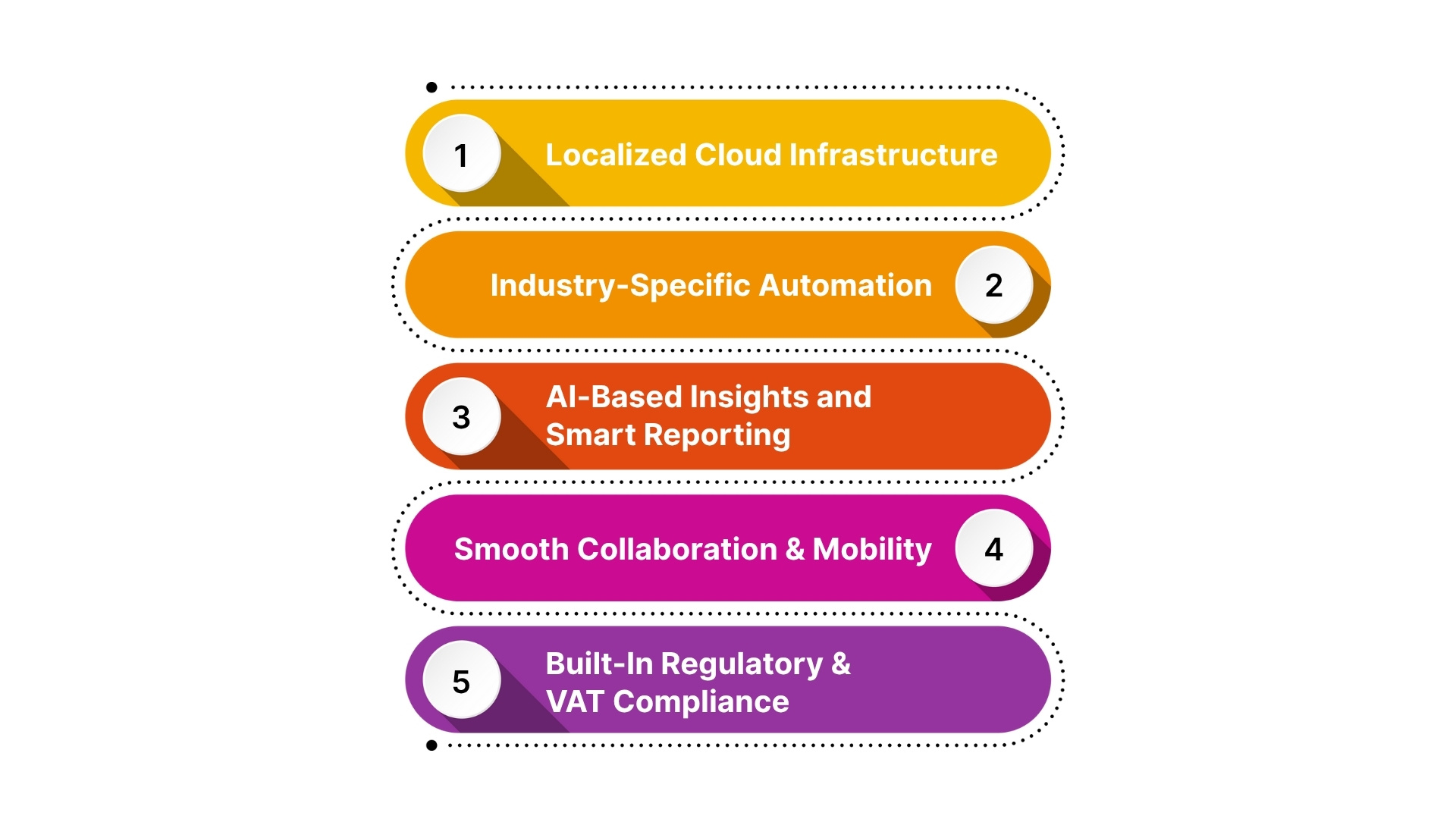
HAL هي شركة سعودية لتقديم برمجيات المؤسسات تساعد الشركات المتوسطة والنامية على تحديث عملياتها من خلال الأتمتة الذكية وتقنية السحابة. تم تصميم HAL ERP خصيصًا لسوق دول مجلس التعاون الخليجي، وهو برنامج سحابي مدعوم بالذكاء الاصطناعي يدمج المالية، والموارد البشرية، والعمليات، والمخزون، مع ضمان الامتثال الكامل لضريبة القيمة المضافة وZATCA.
يعمل HAL ERP على خوادم سحابية آمنة مستضافة في السعودية تضمن الامتثال لقوانين حماية البيانات الوطنية. تستفيد الشركات من أداء موثوق، وسرعة وصول أسرع، وضمان سيادة البيانات، وهو متطلب أساسي للمنظمات التي تعمل ضمن الأطر التنظيمية المحلية.
سواء في التصنيع أو المقاولات أو التجارة أو التعليم، يتكيف HAL ERP مع احتياجات العمليات الخاصة بك. تحل سير العمل الآلي محل العمليات اليدوية، مما يقلل الأخطاء والتأخيرات ويحسن الكفاءة عبر الأقسام. يمكن للمديرين مراقبة الأداء بسهولة وضمان الاتساق من أي مكان.
يستخدم HAL ERP الذكاء الاصطناعي والتحليلات المتقدمة لتحويل البيانات التشغيلية الخام إلى رؤى قابلة للتنفيذ. يحصل التنفيذيون وفرق المالية على رؤية واضحة للتكاليف والإيرادات واستخدام الموارد، مما يتيح اتخاذ قرارات أسرع وأكثر دقة والتخطيط الاستراتيجي طويل المدى.
مع الوصول في أي وقت ومن أي مكان، يسمح HAL ERP للفرق عبر مواقع متعددة بالتعاون على نفس البيانات في الوقت الفعلي. تضمن التنقلية السحابية بقاء التنفيذيين والفرق الميدانية ووحدات المالية متوافقة، مما يحسن الإنتاجية والتنسيق عبر الفروع.
يبسط HAL ERP الامتثال لمتطلبات الفوترة الإلكترونية لضريبة القيمة المضافة وZATCA من خلال أدوات السجلات والتقارير الآلية. يمكن للشركات الحفاظ على دقة الإقرارات الضريبية والتدقيق مع تقليل مخاطر عدم الامتثال أو الغرامات.
قبل اعتماد HAL ERP، كانت شركة جاش هولدينغ، إحدى الشركات الرائدة في إدارة المشاريع والخدمات في المملكة العربية السعودية، تواجه العديد من التحديات التشغيلية الكبرى. كانت الشركة تعتمد على معالجة الرواتب يدويًا لأكثر من 4,000 موظف، بالإضافة إلى بيانات المشاريع المجزأة، وتعقب المخزون غير الفعّال عبر الفروع.
تسببت هذه التحديات في تأخيرات في التقارير، وأخطاء متكررة في البيانات، ورؤية مالية محدودة.
بعد تنفيذ HAL ERP، حققت جاش هولدينغ تحولًا ملموسًا، حيث تحسنت الكفاءة التشغيلية بنسبة 60%، وتم تعزيز التحكم في التكاليف، وأصبحت عمليات اتخاذ القرارات على مستوى المشاريع أسرع وأكثر دقة.
كانت عملية التنفيذ سلسة، حيث تم الانتهاء من الإعداد الأساسي وتدريب المستخدمين في غضون 2 إلى 4 أسابيع، وتم نشر النظام بالكامل، بما في ذلك الوحدات المخصصة، في غضون 8 إلى 12 أسبوعًا فقط.
نظام ERP السحابي لم يعد ترفًا، بل أصبح ضرورة للشركات التي تهدف إلى البقاء في صدارة المنافسة والمرونة في الاقتصاد الرقمي الحالي. من خلال توحيد بيانات المالية، والعمليات، والموارد البشرية، وسلسلة التوريد في منصة سحابية واحدة، يتيح النظام إدارة الأعمال بشكل أسرع وأكثر ذكاءً وشفافية.
مع تقدم المملكة العربية السعودية نحو رؤية 2030، تدفع حلول ERP السحابي النمو المستدام من خلال الرؤية اللحظية، وكفاءة التكاليف، والقدرة على التوسع، والاستعداد للامتثال، والمرونة في الابتكار. هذه الفوائد تمكّن الشركات من الاستجابة بسرعة للتغيرات، واتخاذ قرارات مستنيرة، وتعظيم القيمة طويلة المدى.
للبقاء في المقدمة في سوق سريع التطور، حان الوقت الآن للنظر في أنظمة ERP التي تتماشى مع أهدافك الاستراتيجية، مما يساعد عملك على بناء أساس متصل ومستعد للمستقبل من أجل النجاح.
هل لا تزال شركتك في الرياض تعتمد على الأنظمة اليدوية القديمة؟ تعرف على كيفية ضمان HAL ERP لحلول السحابة التي تُعزز من عملياتك وتسريع التحول الرقمي. احجز عرضًا تجريبيًا مجانيًا اليوم.
نظام ERP السحابي هو منصة عبر الإنترنت تدمج الوظائف الأساسية للأعمال مثل المالية، والموارد البشرية، والعمليات. يعمل النظام عن طريق تخزين البيانات بأمان في السحابة، مما يسمح بالوصول الفوري، وأتمتة المهام، والتعاون من أي موقع، مما يساعد الشركات في تبسيط سير العمل واتخاذ قرارات أسرع ومدعومة بالبيانات.
يقلل نظام ERP السحابي التكاليف بعدة طرق:
نعم، نظام ERP السحابي مثالي للشركات الصغيرة والمتوسطة، حيث يقدم:
العديد من الصناعات تستفيد من نظام ERP السحابي، بما في ذلك:
يتيح نظام ERP السحابي لجميع هذه الصناعات تحسين العمليات، دمج تتبع المشاريع، وضمان الامتثال، مما يرفع الكفاءة ويعزز الرؤية عبر الأقسام المختلفة.
أنظمة ERP السحابية تعتبر آمنة للغاية، حيث تستخدم عدة طبقات من الأمان لحماية البيانات:
بالمجمل، يُعتبر نظام ERP السحابي أكثر أمانًا وموثوقية من العديد من الأنظمة المحلية، نظرًا للاستخدام المتقدم لبروتوكولات الأمان وحماية البيانات.