
تتعثر دورات المبيعات غالبًا ليس بسبب نقص الجهد، بل بسبب نقص الرؤية. في المملكة العربية السعودية، أصبحت العمليات التجارية رقمية بشكل كبير بالفعل: حيث أفادت الهيئة العامة للإحصاء (GASTAT) أن 97.7% من المنشآت كانت تمتلك اتصالًا بالإنترنت في عام 2023، بينما استخدم 91.3% منها خدمات الحكومة الإلكترونية. ومع انتقال المشترين والموردين والفرق الداخلية عبر القنوات الرقمية، أصبحت أنشطة المبيعات موزعة بشكل متزايد بين استفسارات المواقع الإلكترونية، ومحادثات واتساب، ورسائل البريد الإلكتروني، والمكالمات، والعروض التوضيحية، والعروض السعرية، والموافقات، والفوترة.
في الوقت نفسه، أصبح مشترو B2B أكثر انتقائية بشأن كيفية تفاعلهم مع الموردين. تشير تقارير Gartner إلى أن 61% من مشتري B2B يفضلون تجربة شراء خالية من مندوبي المبيعات بشكل عام، بينما يتجنب 73% منهم الموردين الذين يرسلون تواصلًا غير ذي صلة.
هذا الواقع يجعل الاعتماد على جداول البيانات والمتابعة عبر البريد الإلكتروني غير موثوق. تقوم برمجيات دورة المبيعات بجمع كل نقطة تواصل، وكل صاحب مصلحة، وكل عرض سعر، وكل متابعة، وكل خطوة لاحقة داخل نظام واحد، مما يمكّن الفرق من دفع الصفقات إلى الأمام، واكتشاف المخاطر مبكرًا، والتنبؤ بالإيرادات بثقة.
يشرح هذا الدليل ما هي دورة المبيعات، وكيف تعمل، ومراحلها، ولماذا تُعد مهمة لتحقيق نمو إيرادات يمكن التنبؤ به.
دورة المبيعات هي المسار الذي يمر به العميل المحتمل من الاهتمام الأولي إلى اتخاذ قرار الشراء. في فرق المبيعات لدى الشركات الصغيرة والمتوسطة في السعودية، توفر هذه الدورة هيكلة للفرص التي قد تتوزع بين المكالمات، ورسائل واتساب، والجداول، والعروض السعرية، والموافقات غير الرسمية.
ما الذي توضحه لفريق المبيعات
تساعد دورة المبيعات الفريق على فهم الحالة الحالية لكل فرصة. هل العميل يقارن الخيارات، أم ينتظر عرضًا محدثًا، أم يراجع قسم المالية، أم يستفسر عن توفر المخزون أو الخدمة؟
هذا مهم لأن العميل المحتمل قد يبدو نشطًا دون أن يكون قريبًا من اتخاذ قرار. من خلال تتبع الحالة الصحيحة، يمكن للفريق التركيز على الإجراء التالي المفيد بدل تكرار المتابعة نفسها.
تبدأ الدورة عادة عندما تكون هناك فرصة بيع حقيقية، وليس مجرد اسم في قائمة جهات اتصال. قد تكون استفسارًا واردًا، أو إحالة، أو طلب إعادة شراء، أو عميلًا من موقع إلكتروني، أو متطلب مشروع يحتاج إلى تأهيل.
تنتهي عندما تصل الفرصة إلى نتيجة واضحة: فوز، خسارة، تعليق، أو تحويل إلى متابعة مستقبلية. إذا تم الفوز بالصفقة، فإن الخطوة التالية عادة هي تسليم داخلي إلى المالية أو التسليم أو الخدمة أو المخزون أو فرق المشاريع. هذا يحافظ على ارتباط دورة المبيعات بالعمليات دون تحويلها إلى عملية ما بعد البيع بالكامل.
تصبح دورة المبيعات عادة أطول عندما:
قيمة الصفقة مرتفعة وتتطلب موافقة المالك أو قسم المالية أو المشتريات.
يحتاج العميل إلى عرض سعر مُعدل، أو تجربة توضيحية، أو زيارة موقع، أو فحص تقني.
تكون توفر المخزون أو قدرة التسليم أو جاهزية الخدمة أو نطاق المشروع غير واضحة.
تحتاج تفاصيل التسعير أو شروط الدفع أو العقد إلى مراجعة داخلية.
تكون بيانات العملاء أو تاريخ العروض أو مسؤولية المتابعة موزعة عبر أدوات مختلفة.
لماذا تصبح دورة المبيعات الواضحة ضرورة غير قابلة للتجاهل مع نمو الشركات
مع نمو الشركة في السعودية، يصبح من الصعب إدارة المبيعات عبر الذاكرة أو عادات المتابعة الفردية أو جداول البيانات المبعثرة. تصبح دورة المبيعات الواضحة ضرورة عندما تبدأ المكالمات الفائتة أو تأخر العروض أو ضعف التأهيل أو سوء تسليم المهام بين الفرق في التأثير على الإيرادات.
في فريق صغير، قد يتذكر مندوب مبيعات واحد كل عميل محتمل وكل عرض وكل وعد مع العملاء. لكن هذا لا يستمر عندما تزداد الاستفسارات عبر المكالمات، وواتساب، والإحالات، ونماذج الموقع، والعملاء المتكررين.
تُظهر الدورة الواضحة ما يجب أن يحدث بعد ذلك: مكالمة أولى، عرض سعر مُعدل، موافقة العميل، توضيح شروط الدفع، أو قرار نهائي. هذا يساعد الفريق على المتابعة بناءً على حالة الصفقة بدلًا من العادة أو التخمين.
الشركة في مرحلة النمو لا تحتاج فقط لمعرفة عدد العملاء المحتملين المفتوحين، بل تحتاج لفهم سبب عدم تحرك بعض الفرص.
تساعد دورة المبيعات المحددة على كشف المكالمات المتأخرة، والعروض المتوقفة، وضعف التأهيل، وتأخر الموافقات، أو العروض التي تنتظر رد العميل. هذا يجعل المشكلة واضحة قبل أن يصبح هدف نهاية الشهر في خطر.
لا تنتهي المبيعات عند موافقة العميل. بل يجب أن تنتقل الصفقة إلى الفوترة، أو حجز المخزون، أو التسليم، أو جدولة الخدمة، أو تنفيذ المشروع.
بالنسبة للشركات الصغيرة والمتوسطة في السعودية، يمكن أن تفشل هذه المرحلة إذا بقيت تفاصيل العرض أو شروط الدفع أو التزام التسليم أو متطلبات الخدمة مع مندوب واحد فقط. تساعد دورة المبيعات الواضحة على حفظ المعلومات التي تحتاجها الفرق الأخرى، حتى لا تتحول الصفقة المغلقة إلى تأخير تشغيلي.
اقرأ أيضًا - أفضل 7 برامج إدارة علاقات العملاء (CRM) لمبيعات الشركات الصغيرة في السعودية (2026)
غالبًا ما تُستخدم هذه المصطلحات معًا، لكنها لا تعني الشيء نفسه. بالنسبة لفرق المبيعات في الشركات الصغيرة والمتوسطة في السعودية، يساعد التفريق بينها على تجنب الالتباس عند مراجعة العملاء المحتملين، والمتابعات، والعروض السعرية، وتوقعات الإيرادات.
|
المصطلح |
ماذا يعني |
ما الذي يساعدك على فهمه |
مثال |
|
دورة المبيعات |
الرحلة التي تمر بها الفرصة من أول اهتمام وحتى الوصول إلى نتيجة واضحة |
أين تقف الصفقة حاليًا |
ينتقل العميل المحتمل من الاستفسار إلى التأهيل، ثم عرض السعر، فالتفاوض، وأخيرًا الإغلاق |
|
عملية المبيعات |
المنهجية التي يتبعها الفريق لدفع الصفقات عبر الدورة |
كيف يجب أن يتعامل الفريق مع كل خطوة |
يتحقق مندوب المبيعات من احتياج العميل، ويؤكد اعتماد التسعير، ثم يرسل عرض السعر، ويتابع مع العميل |
|
دورة الاتصال بالمبيعات |
الوتيرة المخطط لها للاتصالات أو التواصل مع العميل المحتمل أو الحالي |
متى ولماذا يجب على الفريق التواصل مع العميل |
يتصل المندوب بالموزع بعد إرسال عرض السعر، ثم يتابع معه مرة أخرى بعد ثلاثة أيام |
|
خط أنابيب المبيعات |
العرض المرئي للفرص النشطة حسب المرحلة |
عدد الصفقات المفتوحة، أو المتعثرة، أو المرجّح إغلاقها |
يرى المدير 20 صفقة في مرحلة عرض السعر، و8 صفقات في مرحلة التفاوض، و5 صفقات متوقع إغلاقها |
|
قمع المبيعات |
عرض لحجم العملاء المحتملين ونسب التسرب عبر المراحل |
أين يتحول العملاء المحتملون إلى عملاء فعليين أو ينسحبون |
يتحول 100 عميل محتمل إلى 40 عميلاً مؤهلاً، و20 عرضًا، و8 صفقات مغلقة |
مع زيادة عدد العملاء المحتملين، يصبح التحدي الأكبر هو الحفاظ على كل فرصة مرئية ومحدثة ومتقدمة في المسار. وهنا يقلل برنامج دورة المبيعات من العبء اليدوي.
برنامج دورة المبيعات هو منصة رقمية تساعد الشركات على إدارة وتتبع وتحسين عملية المبيعات بالكامل، من توليد العملاء المحتملين إلى إغلاق الصفقات والمتابعة بعد البيع. الهدف هو إبقاء كل فرصة في حالة حركة مستمرة عبر مراحل واضحة، ومسؤولين محددين، وخطوات تالية، وتقدم قابل للقياس.
عادةً ما يجمع برنامج دورة المبيعات بين:
بالنسبة لفرق المبيعات التي تدير أيضًا العملاء المباشرين، وتوفر المنتجات، والفوترة، والمعاملات اليومية، لا يجب أن يكون تتبع دورة المبيعات منفصلًا عن عمليات نقاط البيع. يمكن لنظام HAL POS أن يساعد الشركات الصغيرة والمتوسطة في السعودية على ربط تفاعلات العملاء، وسجلات المبيعات، وحركة المخزون، والمتابعات التشغيلية في سير عمل واحد.
يقوم برنامج دورة المبيعات بتجميع نشاط العملاء المحتملين والحسابات والصفقات في نظام واحد، بحيث يكون لكل فرصة مالك واضح، ومرحلة محددة، وخطوة تالية. والأهم أنه يحول عملية البيع اليومية إلى نظام يمكن مراجعته وقياسه وتحسينه. بدل الاعتماد على الذاكرة أو الملاحظات المبعثرة، يعمل الفريق من مصدر واحد للحقيقة.
ينشئ خط أنابيب منظم
يتم تحديد المراحل مسبقًا (مثل: مؤهل → اكتشاف → عرض سعر → تفاوض). ويمكن أن تحتوي كل مرحلة على حقول مطلوبة، ومستندات، وخطوات موافقة، بحيث تنتقل الصفقات بطريقة متسقة.
يفرض التأهيل وجودة البيانات
تضمن نماذج إدخال العملاء، ونظام تقييم العملاء، والحقول الإلزامية تسجيل تفاصيل مهمة مثل حالة الاستخدام، ونطاق الميزانية، والجدول الزمني، والمنافسين، وموعد الاجتماع التالي. هذا يمنع الصفقات “الفارغة” التي تُضخم التوقعات.
يسجل تسلسلًا كاملًا للتفاعلات
يتم ربط رسائل البريد الإلكتروني، والمكالمات، والاجتماعات، والملاحظات، والملفات المشتركة بسجل الحساب أو الصفقة. يمكن لأي شخص معرفة ما حدث، وما تم وعد العميل به، وما الذي تفاعل معه المشتري.
يتتبع أصحاب المصلحة ولجنة الشراء
في صفقات B2B، يساعد النظام على تحديد صناع القرار، والمؤثرين، والمعرقلين. ويعرض الأدوار والعلاقات والخطوات التالية بشكل واضح حتى لا تتعطل الصفقات بسبب غياب الأطراف المهمة.
يجعل الخطوات التالية إلزامية
تقوم المهام والتذكيرات وسلاسل المتابعة بأتمتة عملية المتابعة. وتضع العديد من الفرق قواعد مثل: “بدون خطوة تالية، لا يوجد توقع إغلاق” لتقليل تعثر الصفقات.
يكشف صحة الصفقة ومؤشرات المخاطر
تساعد الإشارات مثل “عدم وجود نشاط لمدة 14 يومًا”، أو “تأجيل تاريخ الإغلاق مرتين”، أو “صفقة مرتبطة بشخص واحد فقط”، أو “تم إرسال عرض دون رد” في تدخل المديرين مبكرًا.
يحسن التنبؤ بالإيرادات باستخدام إشارات فعلية
تعتمد التوقعات على مرحلة خط الأنابيب، واحتمال الإغلاق، وتاريخ الإغلاق المتوقع، ونسب التحويل التاريخية، وإشارات النشاط، بدل الاعتماد على الحدس.
يوفر رؤية كاملة عبر القمع البيعي، ويقلل الصفقات المتوقفة، ويسرّع تسليم المهام بين المندوبين والمديرين، ويجعل التوقعات أقرب إلى الواقع.
اقرأ أيضًا: تقرير خط أنابيب مبيعات CRM: العناصر الأساسية، المقاييس، وأفضل الممارسات [دليل 2026]
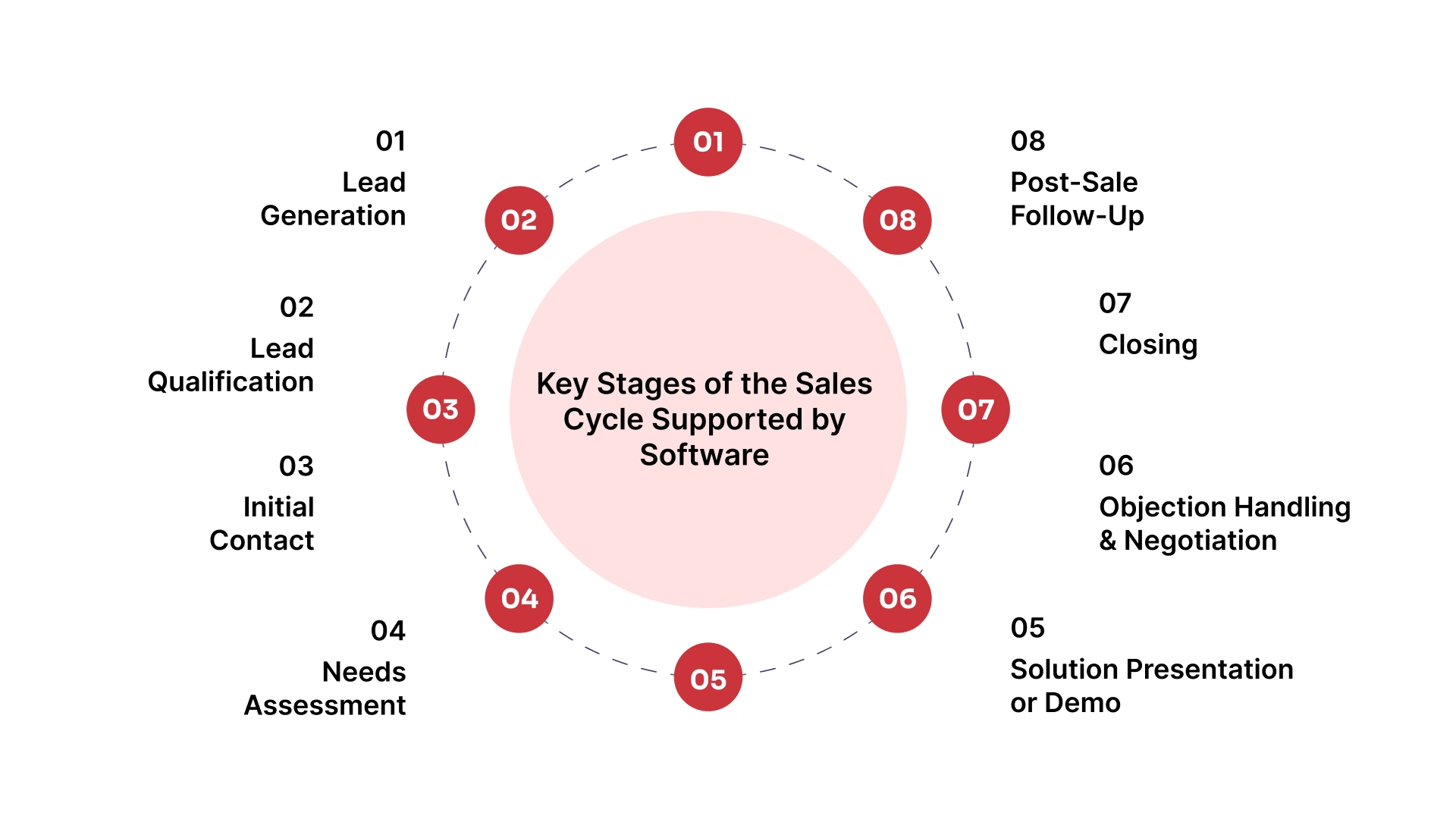
يدعم برنامج دورة المبيعات رحلة العميل بالكامل من خلال تحويل كل مرحلة إلى سير عمل قابل للتتبع. بدل الاعتماد على الحدس في “تحريك الصفقات”، تقوم الفرق بتحديد ما يجب أن يحدث في كل خطوة، وتسجيل البيانات المهمة، وإنشاء إجراءات واضحة للخطوة التالية. هذا التنظيم يقلل تعثر الصفقات ويحسن جودة التنبؤ بالإيرادات.
بمجرد أن تصبح مراحل دورة المبيعات واضحة، فإن الخطوة التالية هي قياس مدى جودة تحرك الفرص عبر هذه المراحل.
بعد أن تصبح مراحل دورة المبيعات واضحة وقابلة للتتبع، يمكن لفرق المبيعات أن ترى أكثر من مجرد من يقوم بالمتابعة. يمكنهم تحديد أين تتباطأ الصفقات، وأي المراحل تفقد أكبر عدد من الفرص، وما إذا كانت التأخيرات تأتي من العميل أو من مندوبي المبيعات أو من عمليات داخلية.
متوسط مدة دورة المبيعات يوضح كم يستغرق إغلاق الصفقة من لحظة تسجيل الاهتمام الأول حتى الإغلاق.
يصبح هذا المؤشر أكثر دقة عند تصنيف الصفقات حسب النوع، لأن الطلبات المتكررة أو العقود الخدمية أو عروض المشاريع أو مشتريات الأنظمة قد تختلف في مدتها الطبيعية.
نسبة التحويل بين المراحل توضح كم عدد الفرص التي تنتقل من مرحلة إلى أخرى.
يوضح الوقت في كل مرحلة أين تفقد الصفقات زخمها.
في الشركات الصغيرة والمتوسطة في السعودية، قد لا تكون التأخيرات دائمًا بسبب المبيعات، بل بسبب المالية أو المخزون أو التسليم أو الخدمات أو فرق المشاريع.
يجب تسجيل سبب واضح لكل صفقة ناجحة أو خاسرة مثل:
مع الوقت، تساعد هذه البيانات أصحاب الشركات ومديري المبيعات على تحسين الأداء بناءً على أنماط واضحة بدل التخمين. الهدف ليس فقط التقارير، بل معرفة المرحلة التي تحتاج تحسين قبل تكرار نفس المشكلة.
بعد تتبع مراحل المبيعات والمقاييس، يصبح السؤال التالي هو أين يجب أن تعيش هذه البيانات وكيف تتصل بالعمليات. قد يكون نظام CRM وحده كافيًا لإدارة العملاء والمتابعات، لكن الشركات الصغيرة والمتوسطة في السعودية غالبًا تحتاج ربط المبيعات بالمخزون والفواتير والمالية والتسليم والخدمات.
يكون نظام CRM كافيًا عندما يكون التحدي الأساسي هو وضوح الرؤية في المبيعات فقط.
يصبح CRM غير كافٍ عندما يرى فريق المبيعات الفرصة لكنه لا يستطيع الوصول للمعلومات التشغيلية اللازمة لإتمام الصفقة.
عندما تكون هذه العمليات في أنظمة مختلفة، تكون دورة المبيعات مرئية لكن غير متصلة فعليًا.
يصبح الربط مع ERP ضروريًا عندما تحتاج بيانات المبيعات للتحرك بين الأقسام دون إعادة إدخال يدوي.
لتحويل الفرص إلى مبيعات منفذة فعليًا، تحتاج الفرق إلى أكثر من مجرد تتبع. ربط CRM مع ERP يساعد الشركات الصغيرة والمتوسطة في السعودية على الانتقال من إدارة الفرص إلى تنفيذ دورة إيرادات كاملة.

يساعد HAL ERP فرق المبيعات على الانتقال من مجرد تتبع العملاء المحتملين إلى تنفيذ المبيعات فعليًا من خلال دمج قدرات CRM داخل منصة ERP ذكية تعتمد على الوكلاء (Agentic ERP). بدل إدارة أنشطة العملاء، والمتابعات، والعروض، وتسليم المهام عبر أدوات منفصلة، يجمع HAL كل ذلك في سير عمل واحد مترابط مدعوم بوكلاء ذكاء اصطناعي.
يوفر HAL CRM مكانًا واحدًا لإدارة العملاء المحتملين، والعملاء، والمحادثات، والفرص، والمتابعات. تصبح كل تفاعلات العميل أسهل في التتبع والمراجعة والتصرف، لأن البيانات تبقى مرتبطة داخل نظام ERP متكامل.
تعمل وكلاء الذكاء الاصطناعي داخل نظام CRM لدعم الفريق أثناء تقدم الصفقات. تساعد في:
تحويل CRM من سجل سلبي إلى طبقة توجيه تساعد فرق المبيعات على اتخاذ قرارات أفضل في التوقيت المناسب وبسياق أوضح.
يساعد HAL ERP على إبقاء دورة المبيعات منظمة من الاستفسار إلى العرض، ثم الطلب، ثم الفوترة. يمكن لمديري المبيعات رؤية:
تقليل الاعتماد على التخمين في مراجعات خط الأنابيب والتركيز على صحة الصفقات وخطوات التنفيذ.
يربط HAL إدارة العملاء المحتملين بأوامر البيع والفوترة، بحيث لا تنتهي دورة المبيعات عند إغلاق الصفقة. عند استعداد العميل، تنتقل البيانات بسلاسة إلى:
يقوم HAL ERP بأتمتة وتوليد التقارير عبر دورة المبيعات، مما يقلل العمل اليدوي ويحسن الرؤية. تصبح المتابعات المتكررة، والتحديثات المفقودة، والموافقات المتأخرة، والتقارير المبعثرة أسهل في الإدارة عندما تكون البيانات متصلة داخل النظام.
يحوّل HAL ERP دورة المبيعات من عملية مبعثرة يدوية إلى نظام منظم وقابل للقياس. من خلال توفير رؤية كاملة لكل مرحلة، من التقاط العميل المحتمل إلى الإغلاق والمتابعة، يساعد الفرق على تحريك الصفقات بسرعة أكبر، وتحسين الكفاءة، والتنبؤ بالإيرادات بثقة أعلى.
إذا كانت خطوط المبيعات لديك لا تزال تعتمد على أدوات منفصلة وتحديثات يدوية، يمكنك حجز عرض توضيحي لرؤية كيف يدعم HAL ERP إدارة دورة المبيعات من البداية إلى النهاية، مع متابعات أقوى وتنفيذ أكثر سلاسة من العميل المحتمل حتى الفوترة.
ليس دائمًا. CRM هو قاعدة البيانات الأساسية للعملاء والفرص، بينما برنامج دورة المبيعات يضيف عادةً إدارة مراحل أكثر تنظيماً، وأتمتة للأنشطة، وتوقعات للإيرادات، وخطط عمل لإدارة التقدم من البداية للنهاية.
عندما تتعثر الصفقات دون معرفة السبب بوضوح، أو تكون المتابعات غير منتظمة، أو لا تكون مراحل خط الأنابيب موحدة، أو تعتمد التوقعات على الحدس بدل البيانات.
من خلال استخدام إشارات حقيقية مثل حركة الصفقة، وسجل النشاط، وتحديثات المراحل بدل الافتراضات اليدوية، مما يجعل التوقعات أكثر واقعية مع الوقت.
نعم، لأنه يجعل الخطوات التالية واضحة، ويرسل تذكيرات تلقائية، ويوحد سير العمل، مما يمنع توقف الفرص دون متابعة.
الشركات التي تعتمد على التسعير، والمخزون، والتسليم، والفوترة تستفيد أكثر من ERP متكامل مع CRM، لأنه يربط المبيعات بالتنفيذ ويقلل أخطاء نقل البيانات بين الأقسام.