

يبدأ التنفيذ القوي بالتخطيط القوي، خاصة في قطاع البناء، حيث يمكن أن يتسبب تأخير واحد في تضاعف التكاليف، وتعطل الجداول الزمنية، واضطراب سير العمل.
في المملكة العربية السعودية، تزداد هذه المخاطر مع استمرار القطاع في التوسع بوتيرة سريعة. ومن المتوقع أن ينمو سوق البناء بمعدل نمو سنوي مركب قدره 5.4% بين عامي 2026 و2029، مدفوعًا بمشاريع رؤية 2030 العملاقة والاستثمارات واسعة النطاق في البنية التحتية.
ومع هذا الزخم، لم يعد التخطيط لمشاريع البناء خيارًا؛ بل أصبح ميزة استراتيجية. فالشركات التي تخطط بشكل جيد تحقق تحكمًا أكبر في الميزانيات والموارد والجداول الزمنية وتنسيق المقاولين.
في هذا الدليل، ستتعرف على أفضل استراتيجيات التخطيط لمشاريع البناء، والتحديات التي يجب الانتباه إليها، وكيف يمكن لأدوات ERP الحديثة تعزيز نتائج مشاريعك.
.webp)
أصبح التخطيط القوي للمشاريع ضرورة متزايدة في قطاع البناء في المملكة العربية السعودية مع ارتفاع الطلب على مشاريع الإسكان والبنية التحتية والتطوير الصناعي.
ومع تسارع الموافقات على المشاريع في إطار رؤية 2030، تم إصدار 14,303 تصريحًا العام الماضي، باستثناء حالات التستر، مما يعكس سرعة نمو نشاط المشاريع. ومع هذا التوسع، يجب على المقاولين تحسين عمليات التخطيط لتجنب تعارضات الجداول الزمنية ونقص القوى العاملة وتأخر الموافقات.
فيما يلي بعض الأسباب الرئيسية التي توضح أهمية التخطيط السليم لمشاريع البناء في عام 2026:
قراءة مقترحة: تقدير التكاليف في مشاريع البناء: دليل شامل
لم يعد التخطيط خيارًا؛ فهو العامل الذي يحدد ما إذا كانت المشاريع ستبقى متوافقة مع المتطلبات، وفعالة من حيث التكلفة، وملتزمة بالجدول الزمني. ولكن باستخدام الاستراتيجيات الذكية، يمكنك تخطيط مشاريع البناء بفعالية أكبر في عام 2026.
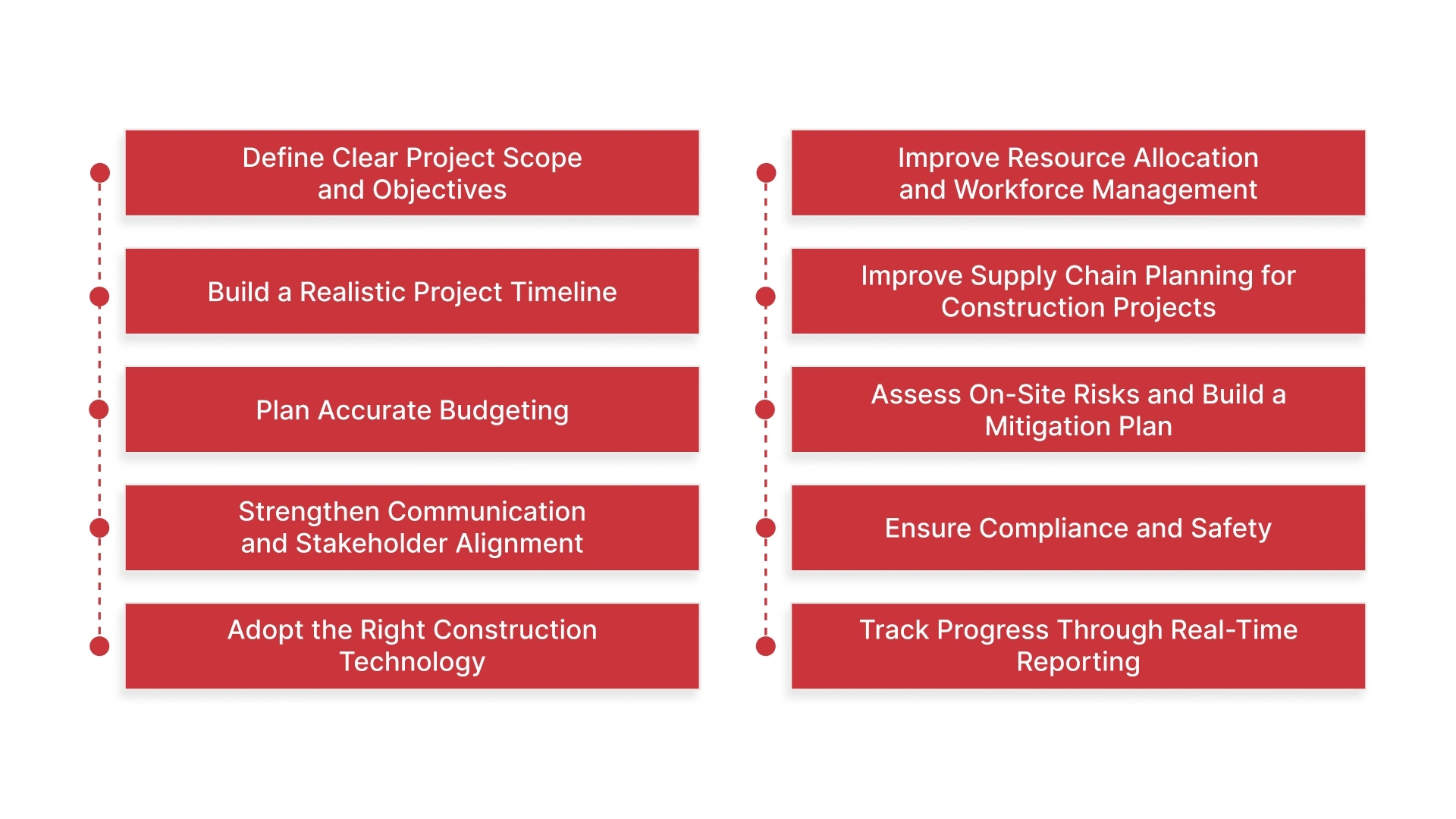
يدخل قطاع البناء في المملكة العربية السعودية مرحلة من النمو المرتفع، مدفوعًا برؤية 2030 وبرامج التنمية الوطنية الكبرى. ومع تزايد الطلب على الإسكان، تعمل المملكة على رفع نسبة تملك المساكن إلى 70% بحلول عام 2030.
كما يتسارع التوسع الصناعي، مع توقع إنشاء 36,000 مصنع جديد بحلول عام 2035. وتؤدي هذه الأهداف إلى زيادة كبيرة في الطلب على التخطيط المنظم والموثوق للمشاريع. ومع هذا الحجم من التطوير، يجب على شركات البناء اتباع استراتيجيات مثبتة للحفاظ على الجداول الزمنية والميزانيات وجودة التنفيذ.
تقدم الاستراتيجيات العشر التالية خارطة طريق واضحة للتخطيط الفعّال لمشاريع البناء في المملكة العربية السعودية.
يساعد تحديد نطاق المشروع بشكل واضح على إزالة أي غموض منذ البداية. وينبغي على المقاولين تحديد المخرجات ومتطلبات المواد والتفاصيل الهندسية والقيود والمسؤوليات والجداول الزمنية للموافقات.
تمنع هذه الوضوح إعادة العمل وأوامر التغيير، والتي تعد من العوامل الشائعة لارتفاع التكاليف في قطاع البناء السعودي. كما يضمن تحديد النطاق توافق المشروع مع الأكواد البلدية والإرشادات البيئية وتوقعات العملاء.
على سبيل المثال:
يتطلب التخطيط الناجح للبناء وضع جداول زمنية تعكس القيود الفعلية على أرض الواقع، مثل فترات توريد المواد، وتوفر المقاولين من الباطن، ودورات الموافقات.
غالبًا ما تتضمن مشاريع التطوير واسعة النطاق في المملكة مراجعات من جهات متعددة، لذلك يجب أن تأخذ الجداول الزمنية نقاط التحقق الخاصة بالامتثال في الاعتبار. ويساعد الجدول الواقعي على تقليل تكاليف العمالة غير المستغلة وضمان تسلسل سلس للأنشطة.
على سبيل المثال:
يبدأ إعداد الميزانية الدقيقة بتقدير مفصل للتكاليف، بما في ذلك المواد والمعدات والعمالة ورسوم المقاولين من الباطن والرسوم التنظيمية.
وتجعل تقلبات أسعار المواد في سوق دول مجلس التعاون الخليجي التنبؤ بالميزانية أمرًا ضروريًا. ويجب على المقاولين في المملكة تضمين احتياطيات لمواجهة تقلبات سلسلة التوريد وضمان التوافق مع ضريبة القيمة المضافة ومتطلبات ZATCA.
على سبيل المثال:
هل تبحث عن طريقة أبسط للحفاظ على دقة ضريبة القيمة المضافة في ميزانيات مشاريعك؟ تساعد أدوات مثل HAL VAT CARE المقاولين على الالتزام بالمرحلة الثانية من متطلبات ZATCA من خلال الفوترة الإلكترونية السهلة، والتكامل السريع، والدعم المحلي الموثوق، دون إضافة تعقيد إلى سير العمل.
تشمل مشاريع البناء العملاء والاستشاريين والمقاولين من الباطن والموردين والجهات الحكومية. ويساعد التواصل المنظم على إبقاء جميع الأطراف على توافق مستمر.
تقلل اجتماعات التنسيق الأسبوعية ومنصات التعاون الرقمية ودورات الموافقة الموثقة من الاحتكاك، كما يحد التواصل الواضح من النزاعات ويسرّع اتخاذ القرارات، وهو أمر ضروري للمشاريع السعودية سريعة التنفيذ.
على سبيل المثال:
يمكن لتقنيات البناء الحديثة، مثل BIM وأنظمة ERP وأنظمة إدارة المشاريع وأدوات الجدولة وعمليات التفتيش الرقمية، أن تحسن الكفاءة بشكل كبير.
تساعد تقنية BIM على اكتشاف التعارضات قبل بدء البناء، بينما تدمج منصات ERP المشتريات والمخزون والتخطيط المالي. كما توفر التكنولوجيا رؤية فورية للتقدم والمخاطر.
على سبيل المثال:
هل ترغب في تحكم أكبر في المواد والقوى العاملة وتكاليف المشاريع؟ توفر أدوات مثل HAL Contracting طريقة متكاملة لإدارة هذه العمليات من خلال نظام واحد. وتساعد المقاولين على الحفاظ على رؤية واضحة، وتبسيط عمليات الفوترة، والحفاظ على المشاريع ضمن الجدول الزمني دون تعقيدات تشغيلية.
يضمن التخصيص الأمثل للموارد استخدام العمالة والآلات والمواد بكفاءة.
تعتمد مشاريع البناء في المملكة بشكل كبير على حشد القوى العاملة في الوقت المناسب وجدولة المعدات بكفاءة. ومع النقص الموسمي في العمالة ببعض المناطق، يصبح التخطيط الذكي للقوى العاملة أمرًا ضروريًا لتجنب التأخيرات.
على سبيل المثال:
ولتسهيل تخطيط الموارد والقوى العاملة، تساعد أدوات مثل HAL ERP على توحيد عملياتك اليومية من خلال ربط تطبيقات الأعمال الرئيسية وأتمتة سير العمل الروتيني. كما تتيح للمقاولين تقليل الجهد اليدوي، وتحسين التنسيق، والحفاظ على إنتاجية متسقة بين الفرق.
يمكن أن تؤدي اضطرابات تدفق المواد إلى تعطيل الجداول الزمنية لمشاريع البناء بالكامل. وتُعد شبكات الموردين القوية، والتخطيط المبكر للمشتريات، والرؤية الواضحة للمخزون عوامل أساسية للحفاظ على سير العمل.
تستورد المملكة العربية السعودية جزءًا كبيرًا من مواد البناء، مما يجعل التنبؤ بفترات التوريد أمرًا ضروريًا.
على سبيل المثال:
تواجه مواقع البناء مخاطر تشمل اضطرابات الطقس، وتعطل المعدات، ومشكلات سلامة العمال، وتأخر الامتثال للمتطلبات التنظيمية.
يساعد سجل المخاطر المنظم، وعمليات التفتيش الدورية على المواقع، والتدابير الوقائية على حماية الجداول الزمنية والميزانيات. ويجعل تنوع المناخ في المملكة العربية السعودية تقييم المخاطر المحلية أمرًا مهمًا بشكل خاص.
على سبيل المثال:
يخضع قطاع البناء في المملكة العربية السعودية لتنظيمات صارمة تشمل المتطلبات البلدية والقوانين البيئية وأطر السلامة مثل OSHA وكود البناء السعودي.
ويجب أن يبدأ التخطيط للامتثال منذ مرحلة بدء المشروع. ويساعد تدريب السلامة والتوثيق وعمليات التدقيق المنتظمة على تقليل الحوادث في المواقع وتأخيرات الجهات التنظيمية.
على سبيل المثال:
ولتحسين الإشراف على الامتثال، تساعد أدوات مثل HAL ERP على توحيد عمليات فحص الجودة والوثائق وسجلات التدقيق، مما يمكّن المقاولين من اكتشاف المشكلات مبكرًا وتقليل تكاليف إعادة العمل. ومن خلال توفير رؤية فورية للمخزون وعمليات الموقع، يمكن للفرق الحفاظ على معايير أعلى للسلامة والامتثال التنظيمي بسهولة.
تساعد التقارير الشفافة مديري المشاريع على متابعة التقدم والتكاليف والمخاطر واستخدام الموارد.
وتتيح لوحات المعلومات الفورية وأنظمة التقارير الرقمية إجراء تعديلات سريعة، مما يحافظ على توافق المشروع مع أهدافه. ويُعد التتبع القائم على البيانات أمرًا ضروريًا للمشاريع الكبيرة ومتعددة المراحل الشائعة في جميع أنحاء المملكة العربية السعودية.
على سبيل المثال:
توفر هذه الاستراتيجيات خارطة طريق منظمة للتخطيط لمشاريع البناء في قطاع العقارات سريع التطور في المملكة العربية السعودية. ومن خلال تحديد أهداف واضحة، وتواصل قوي، وتكنولوجيا موثوقة، وتخطيط يراعي خصوصية كل منطقة، يمكن للشركات تنفيذ المشاريع بشكل أسرع وأكثر أمانًا وتحقيق ربحية أعلى.
بعد ذلك، دعنا نناقش التحديات الشائعة التي تواجهها شركات البناء أثناء عملية التخطيط وكيف يمكنك تجنبها.
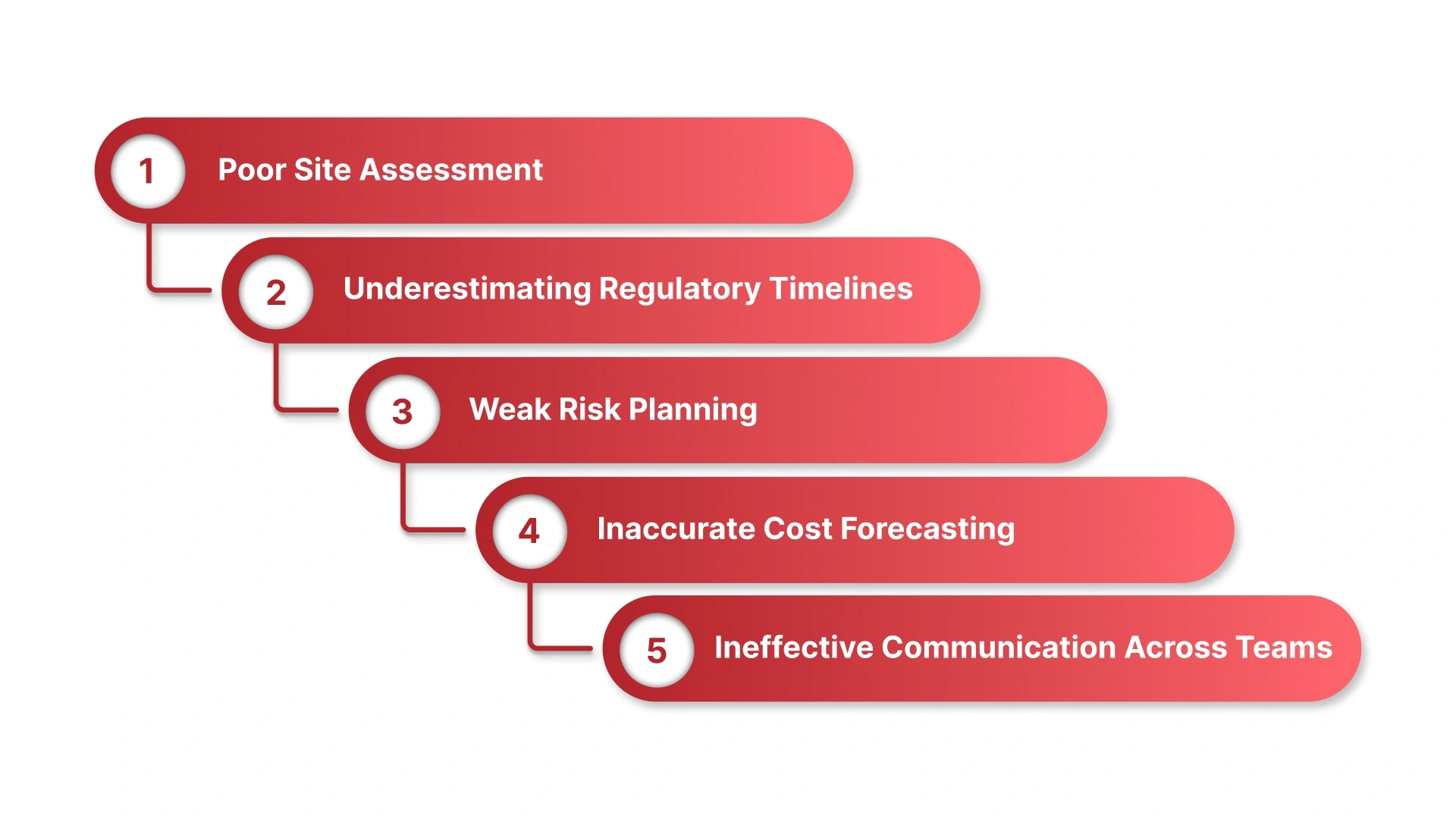
تتسم مشاريع البناء في المملكة العربية السعودية بوتيرة سريعة، وحتى المقاولون ذوو الخبرة قد يواجهون تأخيرات أو تجاوزات في التكاليف دون تخطيط مناسب. ويساعد فهم الأخطاء الشائعة الفرق على بناء سير عمل أقوى وأكثر قابلية للتنبؤ بالمشاريع.
فيما يلي بعض التحديات التي يجب الانتباه إليها وكيفية تجنبها:
يجب قراءته: تخطيط التكاليف في البناء: استكشف أهم الفوائد والأنواع
يساعد تجنب هذه التحديات على تعزيز دقة التخطيط ومنع الانتكاسات المكلفة في مواقع البناء في جميع أنحاء المملكة العربية السعودية.
بعد ذلك، دعنا نناقش كيف يمكن لـ HAL مساعدة الشركات السعودية على تبسيط وتحسين تخطيط مشاريع البناء من خلال إمكانات ERP الحديثة.
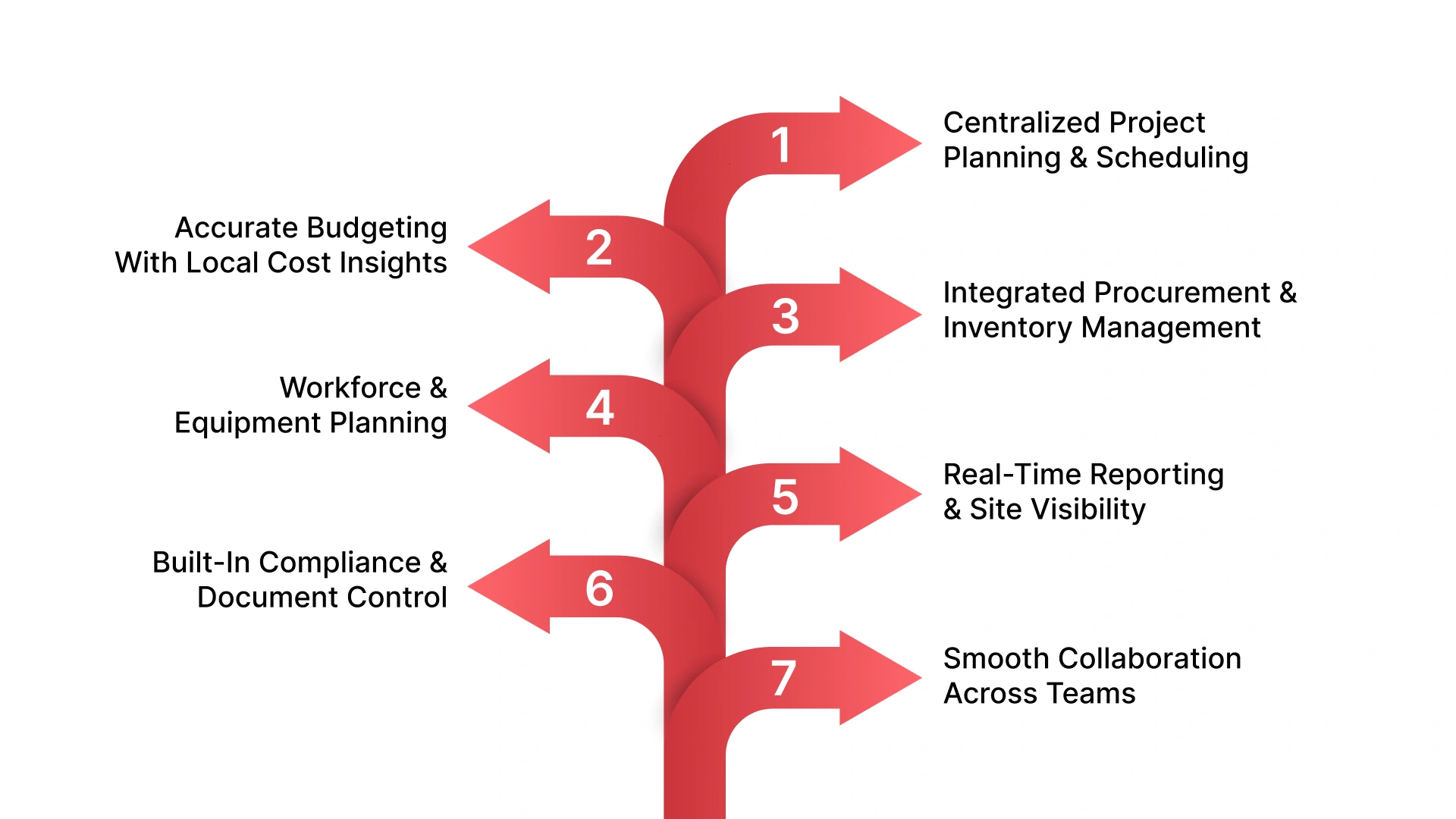
HAL هو منصة موحدة لإدارة البناء والعمليات، مصممة للشركات السعودية التي تدير مشاريع معقدة ومتعددة المواقع. وتجمع المنصة بين التخطيط والميزانية والمشتريات والامتثال والتنفيذ الميداني ضمن نظام واحد.
صُممت HAL للمقاولين والمطورين والشركات القائمة على المشاريع في الرياض وجدة والدمام والمنطقة الشرقية، وتساعد الفرق على إدارة أحجام العمل الكبيرة دون فقدان السيطرة.
إليك كيفية دعم HAL لكل مرحلة من مراحل تخطيط المشروع:
ومن خلال أدوات التخطيط الموحدة وسير العمل الآلي ودعم الامتثال المخصص للسوق السعودي، تمكّن HAL شركات البناء من تنفيذ المشاريع في الوقت المحدد وضمن الميزانية.
استخدمت Jash Holding، إحدى أكبر مجموعات الخدمات وإدارة المشاريع في المملكة العربية السعودية، نظام HAL ERP للتغلب على تشتت البيانات وسير العمل اليدوي وبطء إعداد التقارير عبر الشركات التابعة.
بعد التطبيق، حققت الشركة تحسنًا بنسبة 60% في الكفاءة التشغيلية، وأتمتت عمليات الرواتب بالكامل لأكثر من 4,000 موظف، وسرّعت عملية اتخاذ القرارات عبر مواقع المشاريع. كما اكتمل التنفيذ الكامل، بما في ذلك الوحدات المخصصة، خلال 12 أسبوعًا فقط.
ويوضح ذلك كيف يمكن لشركات البناء السعودية تبسيط عملياتها وتحسين الرؤية وتقليل التأخيرات باستخدام نظام رقمي موحد.
هل تواجه صعوبة في إدارة الميزانيات والجداول الزمنية والامتثال عبر مواقع بناء متعددة؟ احجز عرضًا توضيحيًا مجانيًا واكتشف كيف يمكنك تبسيط التخطيط لمشاريع البناء من خلال منصة متكاملة واحدة.
لم يعد التخطيط الفعّال لمشاريع البناء أمرًا اختياريًا؛ بل أصبح الأساس للتسليم في الوقت المحدد، والتحكم المالي، ونجاح المشاريع على المدى الطويل. وفي سوق سريع النمو مثل المملكة العربية السعودية، حيث الجداول الزمنية ضيقة والمتطلبات التنظيمية تتزايد، يضمن التخطيط القوي بقاء الفرق متوافقة، وتقليل المخاطر، واستخدام الموارد بكفاءة.
يشمل التخطيط لمشاريع البناء تحديد نطاق المشروع بوضوح، ووضع جداول زمنية واقعية، وإعداد ميزانيات دقيقة، وضمان الامتثال، وتتبع التقدم بشكل فوري، وغير ذلك. وتساعد هذه الاستراتيجيات فرق البناء على البقاء مستعدة ومنظمة وقادرة على المنافسة.
وتشمل التحديات الشائعة المتطلبات غير الواضحة، وضعف التنسيق، وعدم دقة إعداد الميزانيات، ومحدودية الرؤية، وفجوات الامتثال. ويساعد تجنب هذه المشكلات على تحقيق تنفيذ أكثر سلاسة وتقليل الاضطرابات المكلفة.
هل أنت مستعد للقضاء على فجوات التخطيط، وتقليل إعادة العمل، وتحسين كفاءة المشاريع عبر مواقعك؟
1. ما الخطوة الأولى في التخطيط لمشاريع البناء؟
تتمثل الخطوة الأولى في تحديد نطاق واضح للمشروع. ويشمل ذلك تحديد الأهداف، والمخرجات المطلوبة، والجداول الزمنية، والتوقعات المتعلقة بالميزانية. ويساعد تحديد نطاق واضح على منع سوء الفهم، وتوجيه تخطيط الموارد، ووضع أساس دقيق للجدولة وتقدير التكاليف طوال دورة حياة المشروع.
2. كم يستغرق التخطيط لمشروع بناء عادةً؟
تعتمد مدة التخطيط على حجم المشروع ومدى تعقيده. قد تحتاج المشاريع الصغيرة إلى بضعة أسابيع، بينما قد تستغرق المشاريع التجارية أو مشاريع البنية التحتية الكبيرة عدة أشهر. ويساعد التخطيط الشامل على إعداد ميزانية دقيقة، وتقييم المخاطر، ووضع جداول زمنية واضحة، مما يقلل من التأخيرات وإعادة العمل عند بدء التنفيذ.
3. لماذا تُعد الميزانية مهمة إلى هذا الحد في تخطيط مشاريع البناء؟
تضمن الميزانية التحكم المالي طوال فترة المشروع. فهي تساعد على توقع تكاليف المواد والعمالة والمعدات والمتطلبات التنظيمية. كما تتضمن الميزانية الجيدة مخصصات للطوارئ لمواجهة تقلبات الأسعار أو التأخيرات، مما يساعد مديري المشاريع على الحفاظ على استقرار التدفقات النقدية وتجنب تجاوزات التكلفة الباهظة.
4. كيف يقلل مديرو المشاريع من التأخيرات أثناء تنفيذ أعمال البناء؟
يعمل مديرو المشاريع على تقليل التأخيرات من خلال إعداد جداول زمنية دقيقة، ومتابعة التقدم في الوقت الفعلي، وتخصيص الموارد بكفاءة، والتواصل الاستباقي مع أصحاب المصلحة. ويساعد تحديد المخاطر مبكرًا والتنسيق الوثيق مع الموردين والمقاولين من الباطن وفرق الموقع على معالجة المشكلات قبل تفاقمها وتأثيرها على الجداول الزمنية.
5. ما الأدوات الأكثر فائدة في التخطيط لمشاريع البناء؟
تشمل الأدوات الشائعة برامج إدارة المشاريع، ونمذجة معلومات البناء (BIM)، وأنظمة تخطيط موارد المؤسسة (ERP)، وتطبيقات الجدولة، وأدوات تقييم المخاطر، ومنصات إدارة المستندات الرقمية. تساعد هذه الأدوات على تحسين التنسيق، ومتابعة التقدم، وتبسيط عمليات المشتريات، وتوفير رؤية فورية عبر الفرق، مما يساعد المشاريع على الالتزام بالجدول الزمني والميزانية ومتطلبات الامتثال.
6. كيف يساعد نظام ERP في الامتثال لمتطلبات هيئة الزكاة والضريبة والجمارك (ZATCA) في مشاريع البناء؟
تعمل أنظمة ERP على تبسيط الامتثال لمتطلبات هيئة الزكاة والضريبة والجمارك (ZATCA) من خلال أتمتة الفوترة الإلكترونية، وحساب ضريبة القيمة المضافة، وحفظ السجلات، وإعداد التقارير. كما تضمن توافق كل معاملة مع متطلبات المرحلة الثانية وتقلل من الأخطاء اليدوية. وبالنسبة لشركات البناء التي تدير عدة مواقع، يعمل نظام ERP على توحيد البيانات المالية، مما يجعل عمليات التدقيق والمطابقات والتقارير التنظيمية أسرع وأكثر دقة وأقل عرضة للمخاطر.