

Strong execution begins with strong planning, especially in the construction sector, where one delay can multiply into cost overruns, stalled timelines, and disrupted workflows.
In Saudi Arabia, this risk is even higher as the industry continues to expand rapidly. The construction market is projected to grow at a 5.4% CAGR between 2026 and 2029, fueled by Vision 2030 megaprojects and large-scale infrastructure investments.
With such momentum, planning for construction projects is no longer optional; it’s a strategic advantage. Companies that plan well gain tighter control over budgets, resources, timelines, and contractor coordination.
In this guide, you will learn the top strategies for planning for construction projects, the challenges to watch out for, and how modern ERP tools can strengthen your project outcomes.
.webp)
Strong project planning is becoming a necessity in Saudi Arabia’s construction sector as demand rises across housing, infrastructure, and industrial development.
With Vision 2030 accelerating project approvals, 14,303 permits were issued last year, excluding anti-concealment cases, showing how quickly project activity is rising. With this surge, contractors must improve their planning to avoid scheduling clashes, workforce shortages, and approval delays.
Here are a few key reasons explaining why proper planning for construction projects matters in 2026:
Recommended Reading: Cost Estimation in Construction Projects: A Comprehensive Guide
Planning is no longer optional; it determines whether projects stay compliant, cost-effective, and on schedule. But with smart strategies, you can plan construction projects more effectively in 2026.
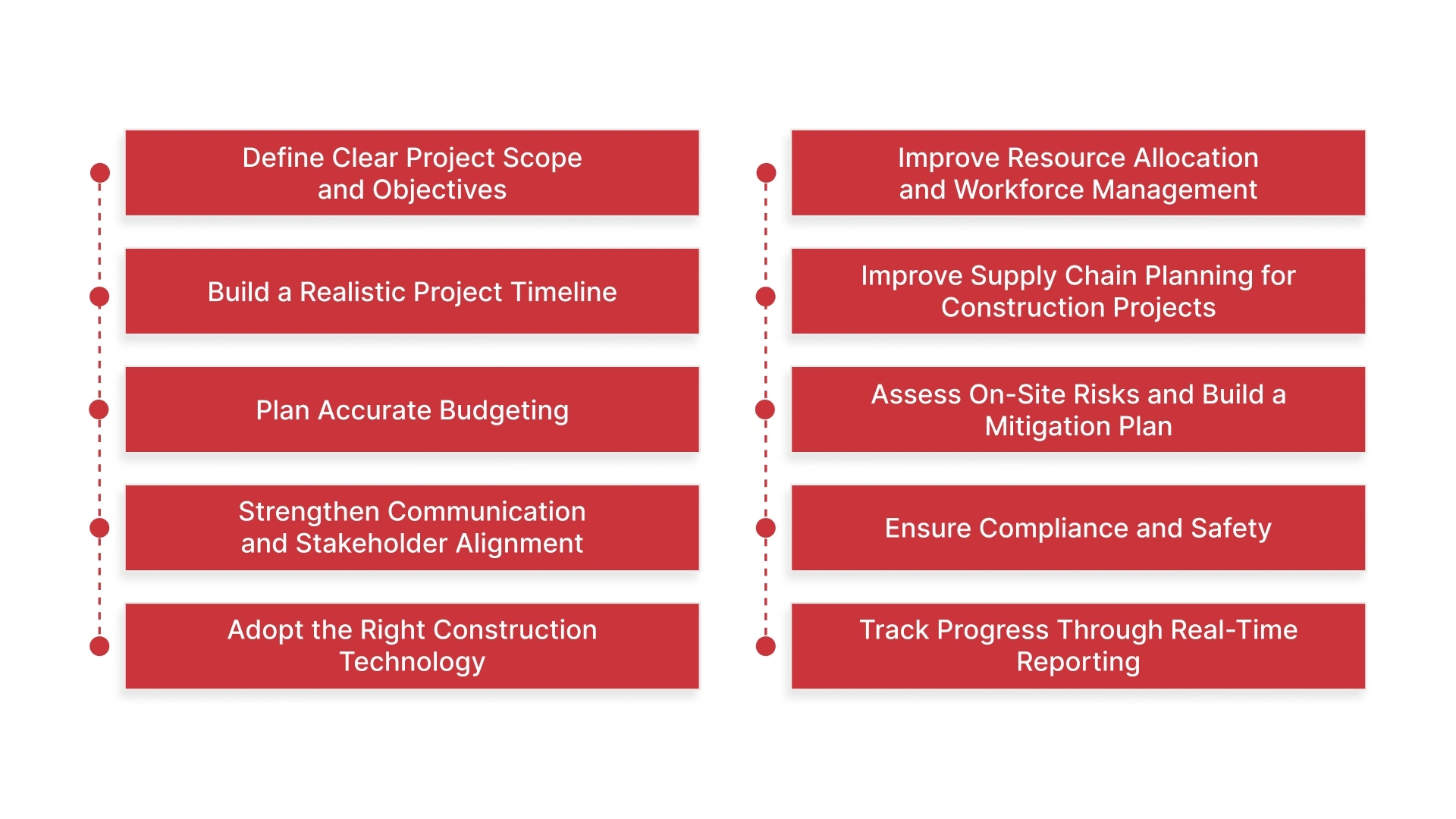
Saudi Arabia’s construction sector is entering a high-growth cycle, shaped by Vision 2030 and major national development programs. As housing demand increases, the Kingdom is pushing homeownership toward the 70% mark by 2030.
Industrial expansion is accelerating as well, with 36,000 new factories expected by 2035. These targets dramatically increase the demand for structured, reliable project planning. With this scale of development, construction companies must follow proven strategies to maintain timelines, budgets, and quality.
The following 10 strategies offer a clear roadmap for effective planning for construction projects in Saudi Arabia.
A well-defined project scope eliminates doubtfulness from the beginning. Contractors should outline deliverables, material requirements, engineering details, constraints, responsibilities, and approval timelines.
This clarity prevents rework and change orders, which are common cost drivers in Saudi construction. Scope definition also ensures alignment with municipal codes, environmental guidelines, and client expectations.
For instance:
Successful construction planning requires timelines that reflect on-ground constraints such as material lead times, subcontractor availability, and approval cycles.
Saudi Arabia’s large-scale developments often involve multi-agency reviews, so timelines must account for compliance checkpoints. A realistic schedule reduces idle labor costs and ensures smooth sequencing of activities.
Let’s say:
Accurate budgeting begins with itemized cost estimation: materials, equipment, labor, subcontractor fees, and regulatory charges.
Fluctuating material prices in the GCC market make budget forecasting essential. Saudi contractors must include contingencies for supply chain volatility and ensure alignment with VAT and ZATCA requirements.
For example:
Looking for a simpler way to manage VAT accuracy in your project budgets? Tools like HAL VAT CARE help contractors stay aligned with ZATCA Phase II through easy e-invoicing, fast integrations, and reliable local support, without adding complexity to your workflow.
Construction projects involve clients, consultants, subcontractors, suppliers, and authorities. Structured communication keeps all parties aligned.
Weekly coordination meetings, digital collaboration platforms, and documented approval cycles reduce friction. Clear communication limits disputes and accelerates decision-making, essential for fast-moving Saudi projects.
For example:
Modern construction technology, like BIM, ERP, project management systems, scheduling tools, and digital inspections, can significantly improve efficiency.
BIM supports clash detection before construction begins, and ERP platforms integrate procurement, inventory, and financial planning. Technology provides real-time visibility into progress and risks.
For instance:
Do you want tighter control over material, manpower, and project costs? Tools like HAL Contracting provide an integrated way to manage these workflows from one system. It helps contractors maintain visibility, streamline billing, and keep projects on schedule without operational friction.
Optimal resource allocation ensures labor, machinery, and materials are deployed efficiently.
Saudi construction projects depend heavily on timely workforce mobilization and equipment scheduling. With seasonal labor shortages in some regions, smart workforce planning is essential to avoid delays.
To illustrate:
To simplify resource and workforce planning, tools like HAL ERP help unify your daily operations by connecting key business apps and automating routine workflows. It allows contractors to reduce manual effort, improve coordination, and maintain consistent productivity across teams.

Material flow disruptions can hold entire construction timelines. Strong supplier networks, early procurement planning, and inventory visibility are vital.
Saudi Arabia imports a significant portion of its construction materials, making lead-time forecasting essential.
Let’s say:
Construction sites face risks including weather disruptions, equipment failure, labor safety issues, and compliance delays.
A structured risk register, periodic site inspections, and preventive measures protect timelines and budgets. Saudi Arabia’s diverse climate makes local risk assessment especially important.
For instance:
Saudi construction is closely regulated under municipal requirements, environmental laws, and safety frameworks such as OSHA and the Saudi Building Code.
Compliance planning must begin at the project initiation stage. Safety training, documentation, and regular audits reduce on-site accidents and regulatory delays.
To illustrate:
For better compliance oversight, tools like HAL ERP centralize quality checks, documentation, and audit trails, helping contractors detect issues early and reduce costly rework. With real-time visibility across inventory and site operations, teams can maintain higher safety and regulatory standards with ease.
Transparent reporting helps project managers monitor progress, costs, risks, and resource utilization.
Real-time dashboards and digital reporting systems enable quick adjustments, keeping the project aligned with goals. Data-driven tracking is essential for large, multi-phase developments common across Saudi Arabia.
For instance:
These strategies provide a structured blueprint for planning for construction projects in Saudi Arabia’s rapidly developing real-estate sector. With clear goals, strong communication, reliable technology, and region-specific planning, businesses can deliver projects faster, safer, and at higher profitability.
Next, let’s discuss the common challenges construction companies face during the planning process and how you can avoid them.
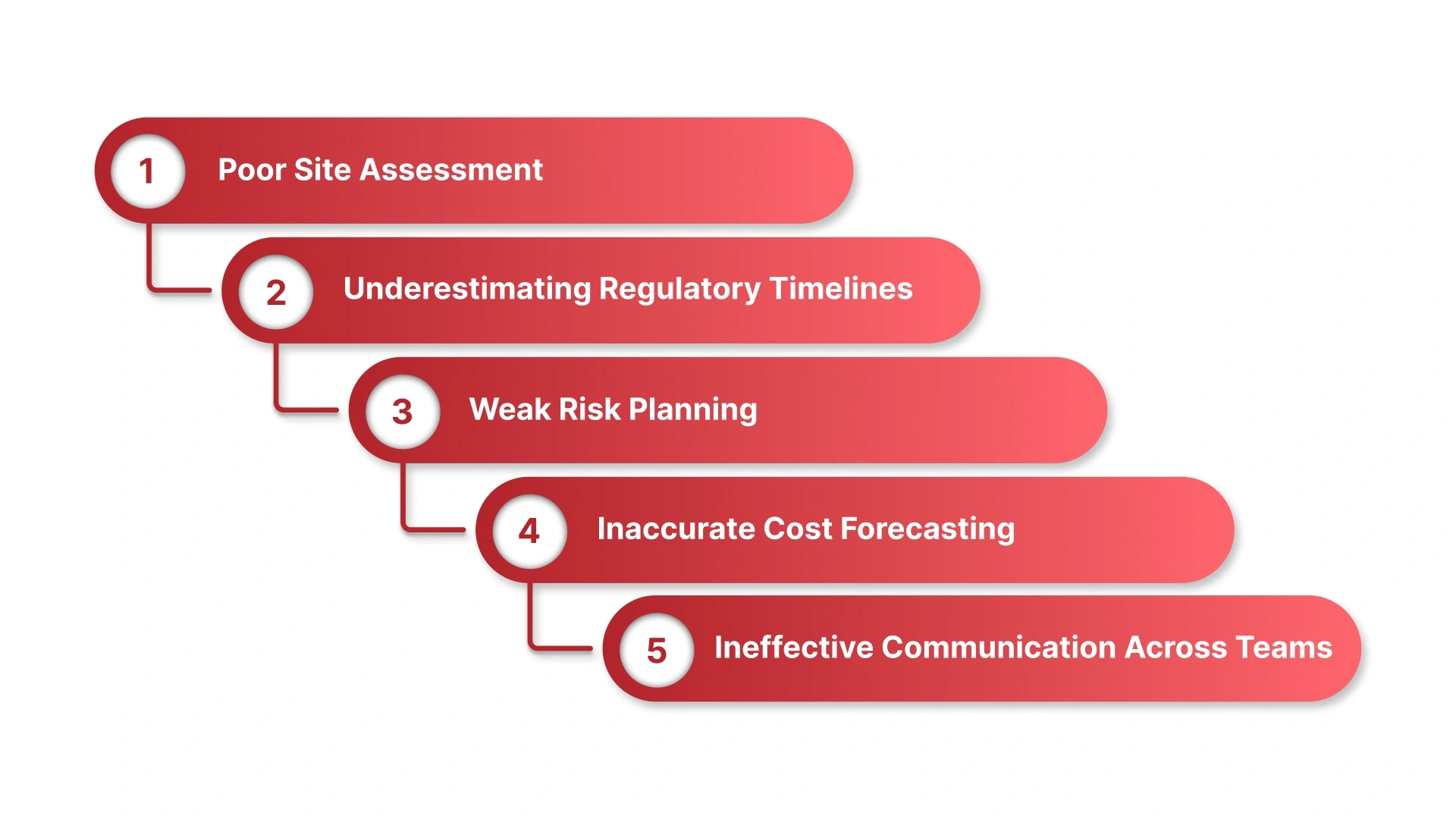
Construction projects in Saudi Arabia move fast, and even experienced contractors can face delays or cost overruns without proper planning. Understanding common pitfalls helps teams build stronger, more predictable project workflows.
Here are a few challenges to watch for and how to avoid them:
Must Read: Cost Planning in Construction: Explore Key Benefits & Types
Avoiding these challenges strengthens planning accuracy and prevents costly setbacks across Saudi construction sites.
Next, let’s discuss how HAL can help Saudi businesses simplify and optimize their construction project planning with modern ERP capabilities.
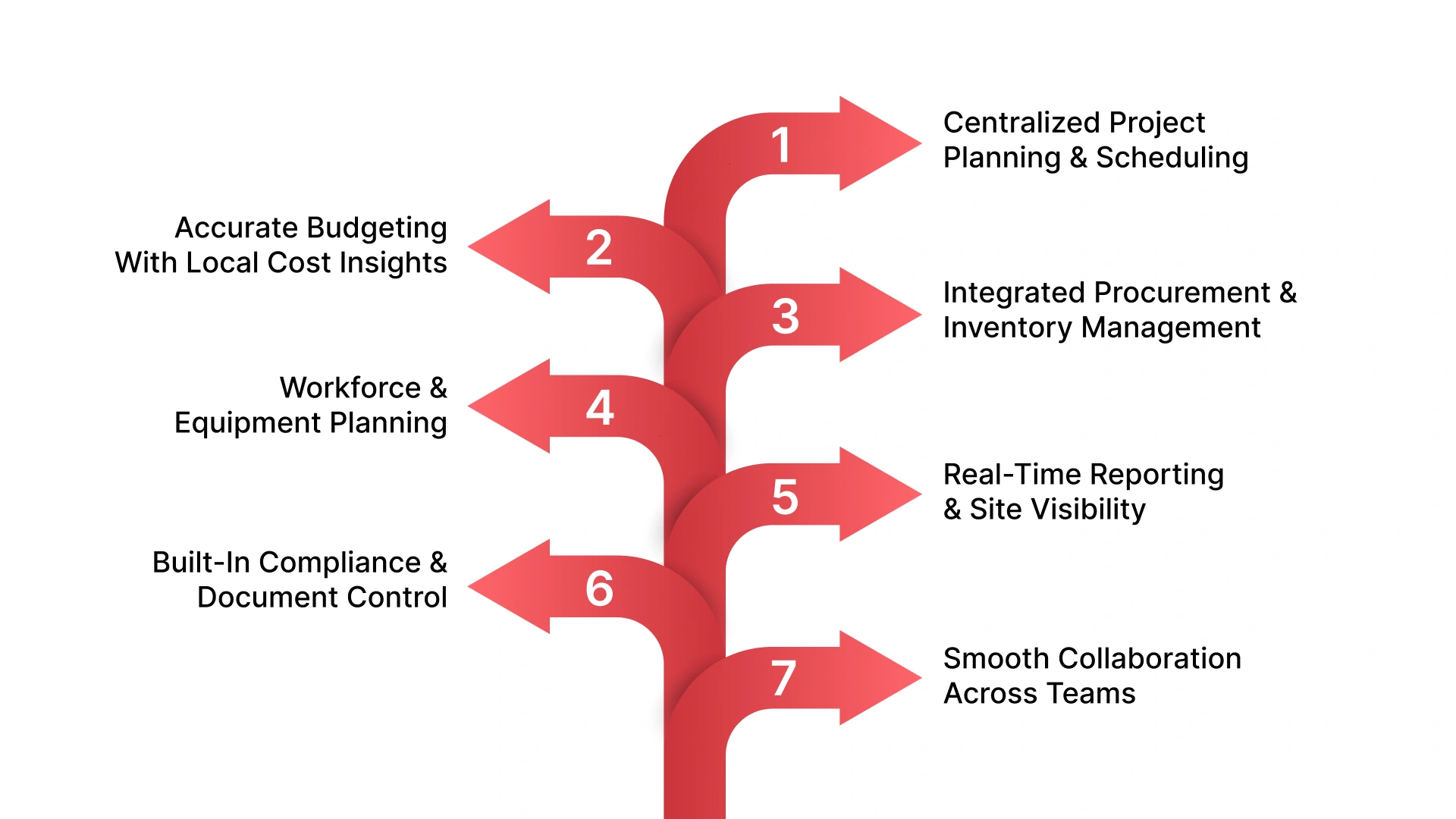
HAL is a unified construction and operations management platform designed for Saudi businesses that handle complex, multi-site projects. It brings planning, budgeting, procurement, compliance, and field execution onto a single system.
Built for contractors, developers, and project-based companies across Riyadh, Jeddah, Dammam, and the Eastern Province, it helps teams manage high-volume workloads without losing control.
Here’s how HAL supports every stage of project planning:
With unified planning tools, automated workflows, and Saudi-specific compliance support, HAL empowers construction companies to deliver projects on time and within budget.
Jash Holding, one of Saudi Arabia’s largest service and project management groups, used HAL ERP to overcome fragmented data, manual workflows, and slow reporting across subsidiaries.
After implementation, they achieved 60% improved operational efficiency, fully automated payroll for 4,000+ employees, and faster decision-making across project sites. Full deployment, including custom modules, was completed in just 12 weeks.
It demonstrates how Saudi construction businesses can simplify operations, improve visibility, and reduce delays using a unified digital system.
Struggling to manage budgets, timelines, and compliance across multiple construction sites? Book a free demo and see how you can simplify planning for construction projects with one integrated platform.
Effective planning for construction projects is no longer optional; it's the foundation of timely delivery, financial control, and long-term project success. In a fast-growing market like Saudi Arabia, where timelines are tight and regulations are rising, strong planning ensures teams stay aligned, risks are minimized, and resources are used wisely.
Planning for construction projects includes defining scope clearly, building realistic timelines, budgeting accurately, ensuring compliance, tracking progress in real time, and more. These strategies help construction teams stay prepared, organized, and competitive.
Common challenges such as unclear requirements, weak coordination, inaccurate budgeting, limited visibility, and compliance gaps. Avoiding these issues leads to smoother execution and fewer costly disruptions.
Ready to eliminate planning gaps, reduce rework, and improve project efficiency across your sites?

1. What is the first step in planning for construction projects?
The first step is defining a clear project scope. It includes outlining objectives, deliverables, timelines, and budget expectations. A well-defined scope prevents misunderstandings, guides resource planning, and sets a foundation for accurate scheduling and cost estimation throughout the project lifecycle.
2. How long does construction project planning usually take?
Planning duration depends on project size and complexity. Small projects may require a few weeks, while large commercial or infrastructure projects can take several months. Thorough planning ensures accurate budgeting, risk assessment, and scheduling, reducing delays and rework once construction begins.
3. Why does budgeting matter so much in construction planning?
Budgeting ensures financial control throughout the project. It helps forecast costs for materials, labor, equipment, and regulatory requirements. A solid budget also includes contingencies for price fluctuations or delays, allowing project managers to maintain cash flow stability and avoid expensive overruns.
4. How do project managers reduce delays during construction?
Managers minimize delays through accurate scheduling, real-time progress tracking, efficient resource allocation, and proactive communication with stakeholders. Identifying risks early and coordinating closely with suppliers, subcontractors, and site teams ensures issues are addressed before they escalate and disrupt timelines.
5. What tools are most helpful for planning construction projects?
Common tools include project management software, BIM, ERP systems, scheduling apps, risk assessment tools, and digital documentation platforms. These tools improve coordination, track progress, simplify procurement, and provide real-time visibility across teams, helping projects stay on time, within budget, and fully compliant.
6. How does ERP help with ZATCA compliance in construction projects?
ERP systems simplify ZATCA compliance by automating e-invoicing, VAT calculations, record-keeping, and reporting. They ensure every transaction meets Phase II requirements and reduce manual errors. For construction firms handling multiple sites, an ERP centralizes financial data, making audits, reconciliations, and regulatory submissions faster, accurate, and risk-free.