

كل قرار تجاري، بدءًا من تعيين موظف جديد ووصولًا إلى إبرام صفقة كبرى، يعتمد على اتفاقيات واضحة ومدارة بكفاءة. ومع ذلك، يمكن أن تكلف إدارة العقود بشكل غير فعّال الشركات ما يصل إلى 9% من إيراداتها، وفقًا لـ World Commerce & Contracting Association.
تعمل إدارة دورة حياة العقود (CLM) على تغيير ذلك من خلال رقمنة وأتمتة عملية التعاقد بالكامل. فهي تعزز الكفاءة، وتحسّن التعاون، وتضمن سير العمليات بسلاسة، سواء لدعم فرق المبيعات أو تقنية المعلومات أو غيرها من الفرق. وفي المملكة العربية السعودية، تتماشى إدارة دورة حياة العقود أيضًا مع توجه المملكة نحو التحول الرقمي والتميز التشغيلي.
في هذه المقالة، سنستعرض عملية إدارة دورة حياة العقود (CLM)، ومراحلها المختلفة، وكيف يمكن أن يساعد مخطط عملية إدارة دورة حياة العقد مؤسستك على تصور عملية إدارة العقود وتحسينها.
إدارة دورة حياة العقود (CLM) هي عملية منظمة لإدارة كل مرحلة من مراحل العقد، بهدف ضمان فعاليته، والحفاظ على الامتثال، وتحقيق القيمة طوال دورة حياته. تبدأ العملية عند اقتراح العقد أو طلبه، وتستمر حتى تنفيذه، وتسليم السلع أو الخدمات، ثم تجديده أو انتهاء صلاحيته.
تساعد عملية CLM المحددة بوضوح المؤسسات على الحفاظ على التنظيم، وتقليل المخاطر، وضمان الامتثال، والتأكد من تحقيق العقود للنتائج المرجوة. وباختصار، تمثل عملية إدارة دورة حياة العقد الرحلة الكاملة للعقد، بدءًا من إنشائه ووصولًا إلى إغلاقه أو تجديده.
والآن، لنرَ كيف تعمل الحلول الحديثة على تبسيط هذه العملية وأتمتتها، مما يجعل إدارة العقود أسرع وأكثر دقة.
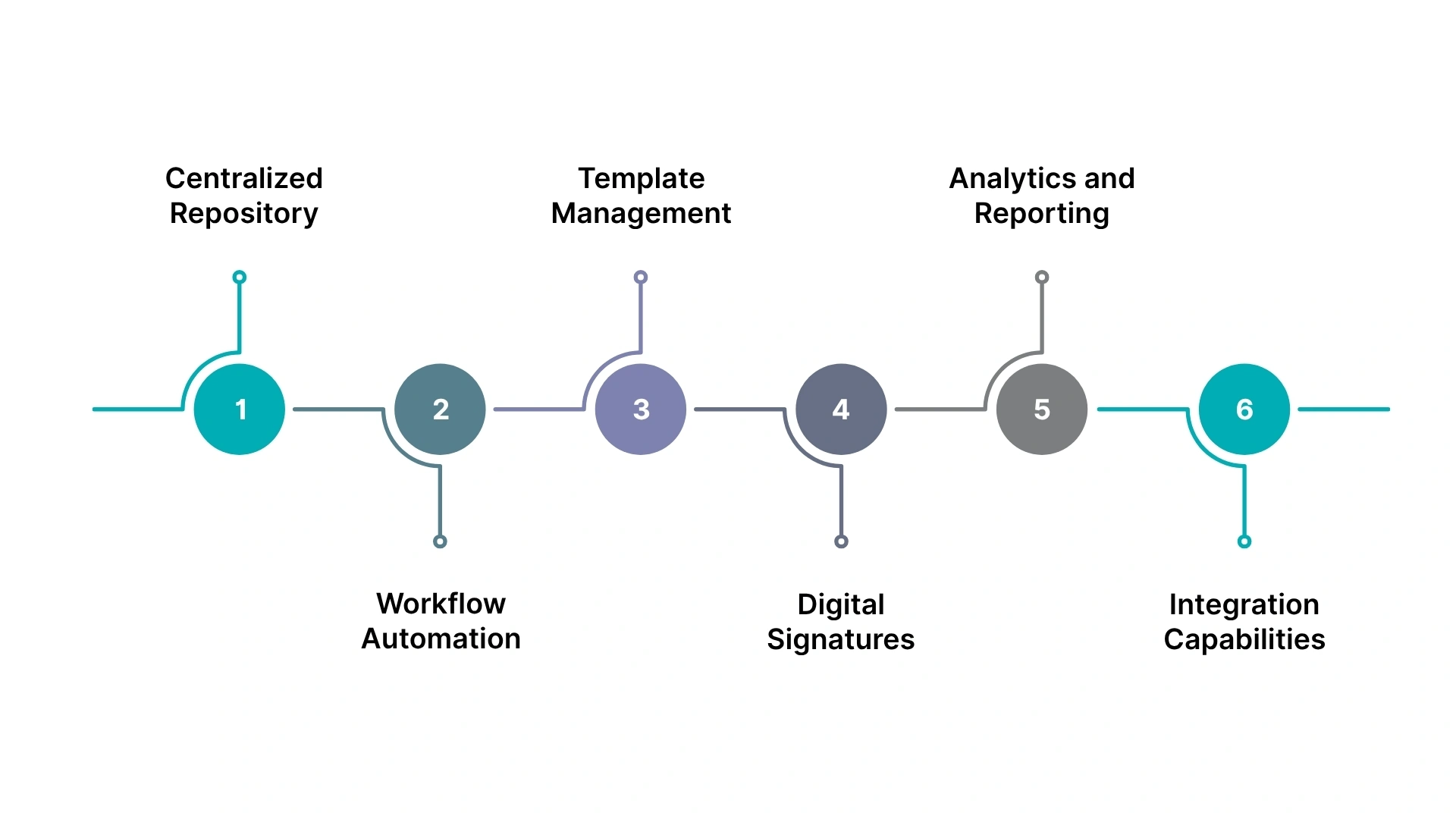
تعمل أنظمة إدارة دورة حياة العقود (CLM) على توحيد وأتمتة إدارة العقود من خلال مجموعة من الميزات المصممة لتبسيط كل مرحلة:
تُعد الميزات وسير العمل مهمة، ولكن لفهم الصورة الكاملة، نحتاج إلى استعراض مراحل العقد من البداية إلى النهاية.
إن إدارة العقود بفعالية تتجاوز مجرد الأعمال الورقية؛ فهي تضمن أن كل اتفاقية تحقق قيمة مضافة، وتحد من المخاطر، وتدعم أهداف عملك من البداية إلى النهاية. ويمكن أن يساعد تصور العملية بصريًا في تسهيل فهمها وتحسينها. إليك مخططًا لعملية إدارة دورة حياة العقود:
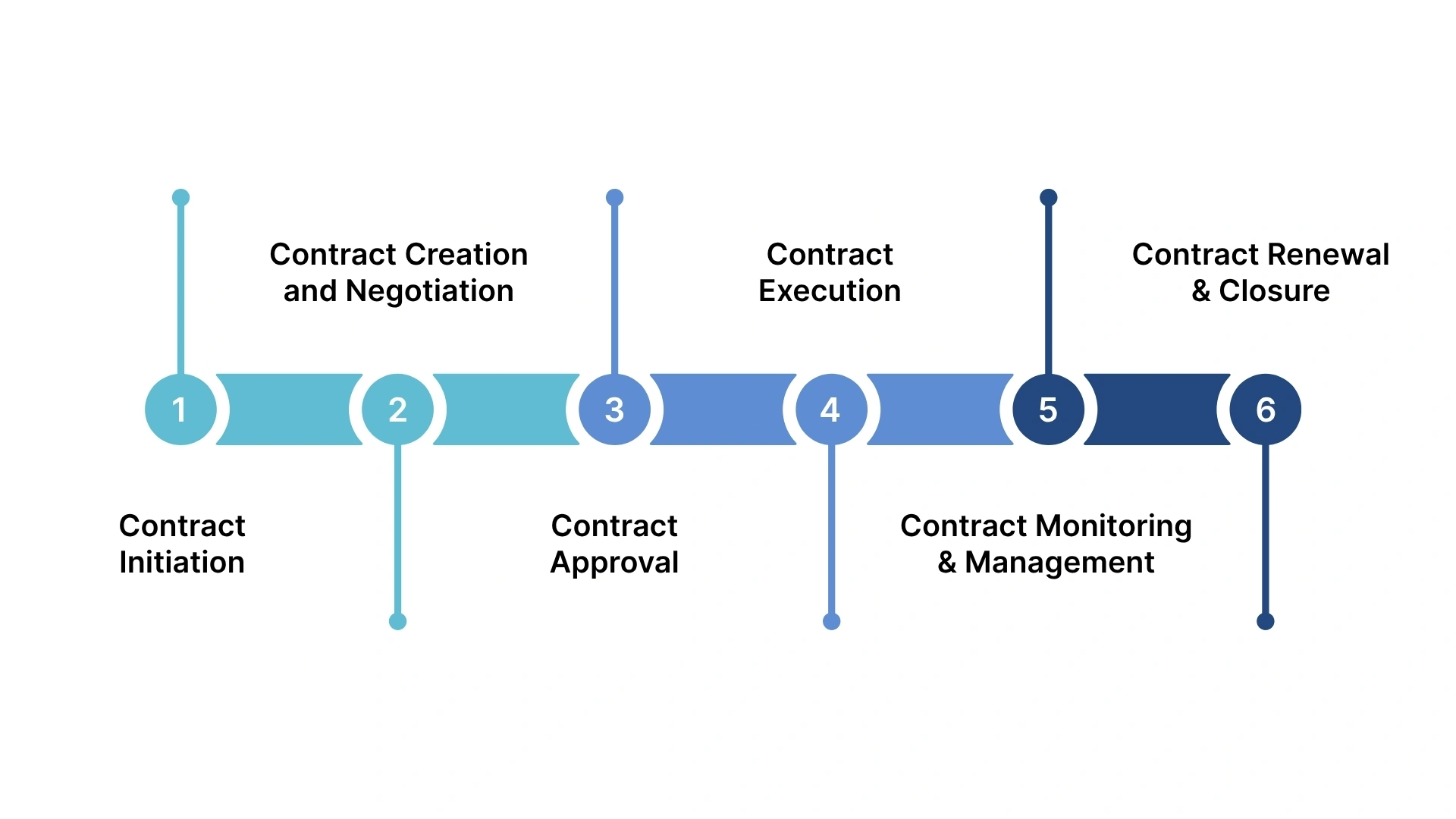
يبدأ كل عقد بمرحلة البدء، حيث يتم تحديد الحاجة إلى اتفاقية وجمع التفاصيل الأساسية، بما في ذلك:
بعد تقييم المخاطر والفوائد، يتم تقديم طلب العقد للموافقة. وتساعد أتمتة هذه المرحلة باستخدام برامج مثل HAL ERP على تقليل التأخيرات والأخطاء والمتابعات اليدوية.
بعد الموافقة على الطلب، تتم صياغة العقد. وتشمل الاعتبارات الرئيسية ما يلي:
أثناء التفاوض، يراجع الطرفان شروطًا مثل نطاق العمل، والدفع، والمدة، ومؤشرات الأداء. ويتمثل الهدف في مواءمة العقد مع أهداف العمل مع حماية مصالح جميع الأطراف.
تنتقل المسودة النهائية عبر مراحل الموافقة الداخلية، حيث يقوم رؤساء الأقسام والمستشارون القانونيون والمسؤولون التنفيذيون بمراجعتها. وتضمن تقييمات المخاطر، ومراجعات الميزانية، والتحقق من الامتثال استيفاء العقد للمعايير التنظيمية للمؤسسة.
بعد الموافقة، يتم تنفيذ العقد من خلال التوقيعات. ويمكن إجراء ذلك بشكل ورقي أو رقمي. وتساعد التوقيعات الرقمية باستخدام HAL ERP على تبسيط العملية، مما يجعلها آمنة وسريعة وسهلة التتبع.
بعد تنفيذ العقد، يتحول التركيز إلى إدارة الالتزامات وضمان الامتثال:
تعمل أدوات إدارة دورة حياة العقود (CLM) على أتمتة التنبيهات والتذكيرات، مما يساعد الفرق على الالتزام بالخطط والحفاظ على الامتثال للمتطلبات التنظيمية مع تقليل المخاطر.
مع اقتراب العقد من نهايته، يتم تقييم ما إذا كان سيتم تجديده أو إعادة التفاوض عليه أو إنهاؤه:
تعود العقود المجددة إلى دورة الحياة، بدءًا من الإنشاء أو التفاوض بناءً على أي تغييرات.
تتطلب إدارة كل مرحلة بفعالية الأدوات والبرامج المناسبة. والآن، دعونا نستكشف كيف تساعد برامج إدارة دورة حياة العقود (CLM) الشركات الناشئة والمؤسسات على إدارة العقود بكفاءة واستراتيجية.
اقرأ أيضًا: أبرز تحديات إدارة عقود المشتريات وحلولها
تُحدث برامج إدارة دورة حياة العقود (CLM) تحولًا في طريقة إنشاء المؤسسات للعقود وإدارتها وتتبعها. ومن خلال أتمتة سير العمل، وتقليل الأخطاء اليدوية، وتجميع جميع الاتفاقيات في نظام آمن ومركزي، توفر هذه البرامج رؤية فورية، وموافقات أسرع، وتحكمًا أفضل في عمليات التجديد والالتزامات.
وباختصار، تحول برامج إدارة دورة حياة العقود العقود من مستندات ثابتة إلى أصول استراتيجية تعزز الكفاءة، وتقلل المخاطر، وتسرّع نمو الأعمال.
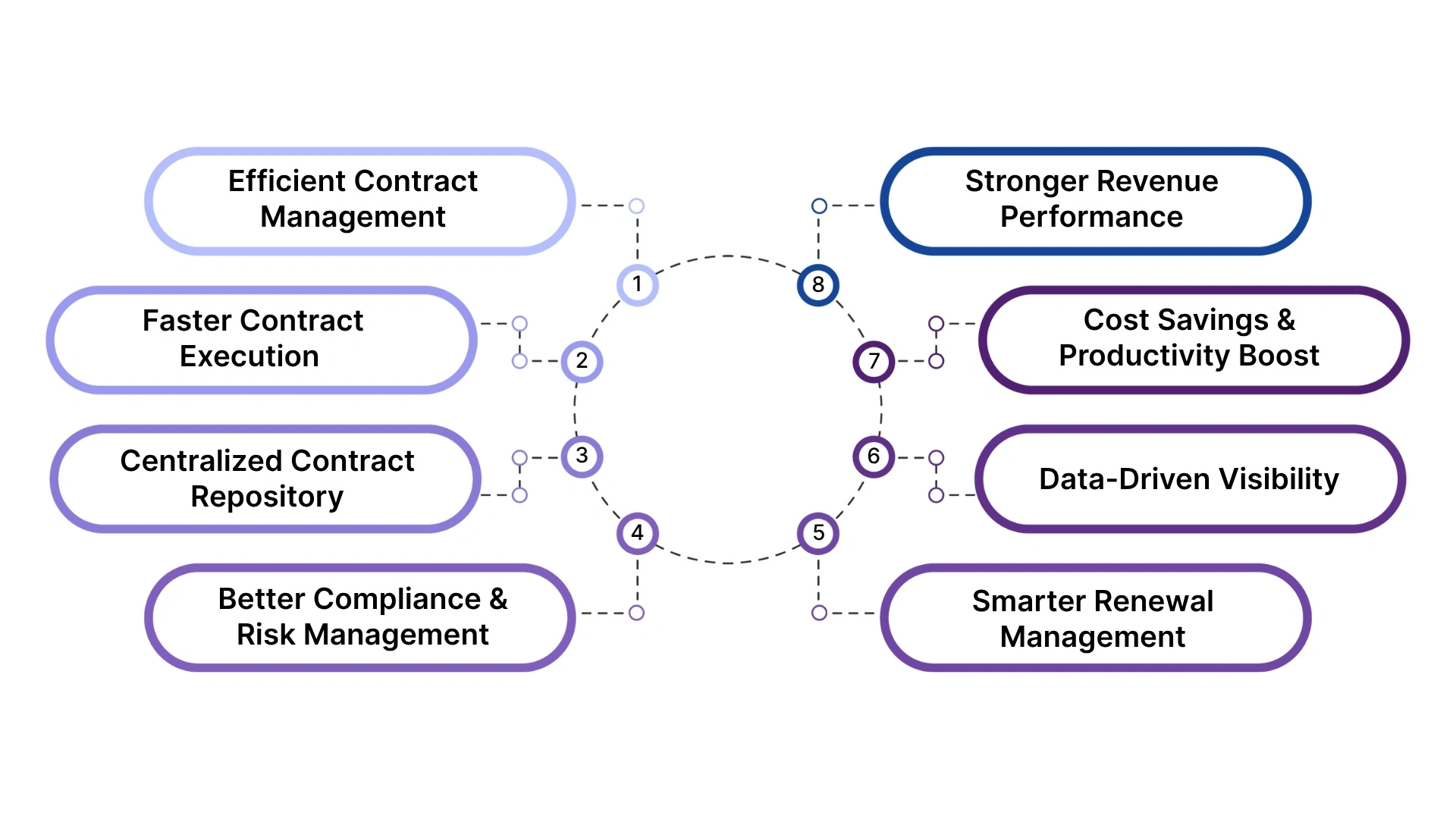
يذهب نظام قوي لإدارة دورة حياة العقود (CLM) إلى ما هو أبعد من تنظيم العقود؛ فهو يعزز الكفاءة، ويضمن الامتثال، ويدعم التعاون عبر جميع مراحل العقد. ووفقًا لـ KPMG، يمكن أن تكلف الإدارة السيئة للعقود الشركات ما يصل إلى 40% من قيمة العقد. إليك كيفية مساهمة إدارة دورة حياة العقود في إضافة قيمة إلى أعمالك:
1. إدارة العقود بكفاءة: احصل على رؤية شاملة عبر جميع المراحل، بدءًا من الصياغة والتفاوض وصولًا إلى الموافقات والتوقيعات والتجديدات. تقلل مسارات العمل المؤتمتة من المتابعات اليدوية، وتحافظ على سير العقود، وتضمن الالتزام بالمواعيد النهائية، مما يؤدي إلى إبرام الصفقات بشكل أسرع وتقليل الأخطاء.
2. تنفيذ العقود بشكل أسرع: غالبًا ما تحتاج فرق المبيعات والشؤون القانونية والمشتريات إلى التعاون، مما قد يؤدي إلى إبطاء الموافقات. تربط برامج إدارة دورة حياة العقود هذه الفرق من خلال المراجعات المؤتمتة، وتتبع الإصدارات، والموافقات الرقمية، مما يساعد على إتمام الصفقات بسرعة تصل إلى خمسة أضعاف.
3. مستودع مركزي للعقود: يتم تخزين جميع العقود في منصة آمنة وقابلة للبحث. وتتيح بعض الحلول أيضًا استيراد العقود بشكل جماعي من البريد الإلكتروني أو أنظمة CRM أو SharePoint، باستخدام الذكاء الاصطناعي لاستخراج التفاصيل الرئيسية وتبسيط عملية الإدارة.
4. امتثال وإدارة أفضل للمخاطر: تعمل القوالب الموحدة والتنبيهات المؤتمتة وسجلات التدقيق على تقليل الأخطاء وضمان الالتزام باللوائح. ويمكن للفرق تتبع البنود الرئيسية وتواريخ التجديد والموافقات، مما يعزز الامتثال ويقلل المخاطر.
5. إدارة أكثر ذكاءً لتجديد العقود: تضمن التذكيرات المؤتمتة تجديد العقود في الوقت المناسب، مما يمنع الغرامات أو انقطاع الخدمات أو خسارة الإيرادات، مع الحفاظ على سير العمليات بسلاسة.
6. رؤية قائمة على البيانات: توفر لوحات المعلومات والتحليلات رؤى حول أداء العقود ونقاط الاختناق والمخاطر المحتملة. ويمكن لصنّاع القرار تحديد المشكلات مبكرًا واتخاذ قرارات واثقة تستند إلى البيانات.
7. خفض التكاليف وتعزيز الإنتاجية: تقلل الأتمتة الوقت المستغرق في المهام المتكررة مثل صياغة العقود، ومراجعة التعديلات، والموافقات. ووفقًا لـ Deloitte، أفادت 78% من المؤسسات التي تستخدم إدارة دورة حياة العقود بتحقيق مكاسب كبيرة في الإنتاجية وكفاءة التكلفة، مما يتيح للفرق التركيز على المبادرات الاستراتيجية.
8. تحسين أداء الإيرادات: تمنع إدارة العقود بكفاءة تسرب الإيرادات، وتضمن الامتثال، وتسرّع عمليات الأعمال، مما يحول العقود إلى أدوات تدعم النمو والربحية.
الآن بعد أن تعرفنا على مزايا إدارة دورة حياة العقود، كيف تختار البرنامج المناسب الذي يلبي احتياجات أعمالك، خاصة في السوق السعودي؟
قد يبدو اختيار برنامج إدارة دورة حياة العقود (CLM) المناسب أمرًا معقدًا. فليس كل حل مناسبًا لعملك، وقد يؤدي اختيار الحل الخاطئ إلى خلق المزيد من العمل بدلًا من تقليله.
إليك ما يجب البحث عنه، خاصة إذا كنت تدير نشاطًا تجاريًا في السعودية:
يساعد برنامج إدارة دورة حياة العقود المناسب فريقك على العمل بكفاءة، والحفاظ على الامتثال، وتحويل العقود إلى أصول استراتيجية، دون الحاجة إلى جهد يدوي غير ضروري. لنستكشف كيفية تطبيق نظام إدارة دورة حياة العقود لتبسيط مسارات العمل وتعظيم قيمة كل عقد.
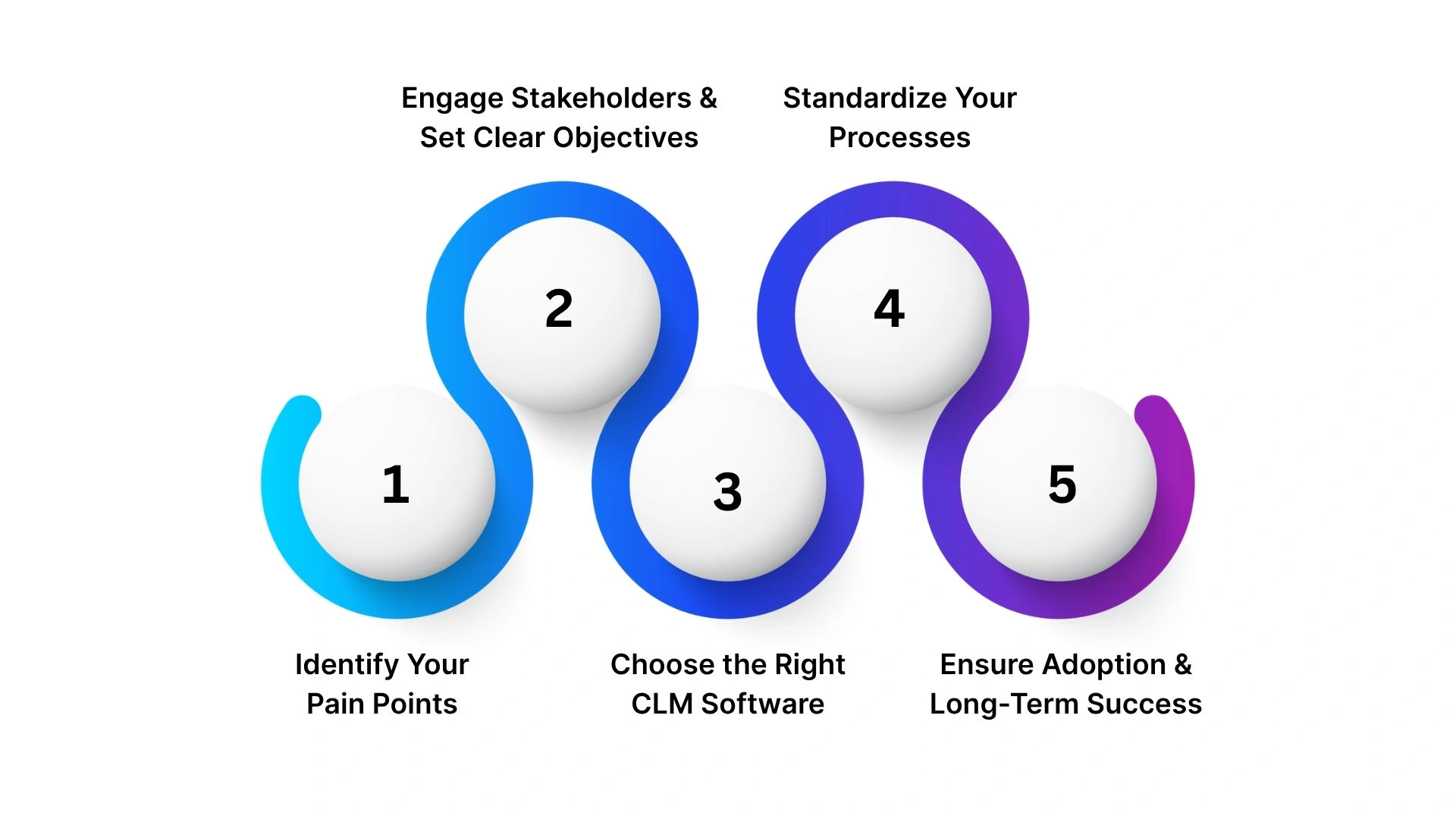
إن تطبيق نظام إدارة دورة حياة العقود (CLM) يمكن أن يُحدث تحولًا في طريقة تعامل مؤسستك مع العقود، مما يجعل العملية أسرع وأكثر شفافية وأقل اعتمادًا على الإجراءات اليدوية. إليك نهجًا خطوة بخطوة:
ابدأ بفهم أوجه القصور في نظام إدارة العقود الحالي لديك. ركّز على الجوانب التي تسبب التأخير أو عدم الكفاءة، مثل:
إن معالجة نقاط الضعف هذه أولًا تضمن أن تستهدف عملية إدارة دورة حياة العقود التحديات الأكثر أهمية بالنسبة لك.
أشرك أصحاب المصلحة الرئيسيين في شركتك الصغيرة أو المتوسطة لضمان تلبية النظام لاحتياجات الجميع. ضع في اعتبارك ما يلي:
يضمن النهج التعاوني اعتماد النظام بسلاسة أكبر ويحقق أقصى استفادة من نظام إدارة دورة حياة العقود.
يُعد اختيار البرنامج المناسب أمرًا بالغ الأهمية لتحقيق النجاح على المدى الطويل. عند تقييم أدوات إدارة دورة حياة العقود، ابحث عن:
يعمل برنامج إدارة دورة حياة العقود المناسب كركيزة أساسية لعملية إدارة العقود، مما يحسن الكفاءة عبر مختلف الفرق.
لا يكفي استخدام البرنامج وحده؛ فالعمليات الموحدة هي المفتاح لتحقيق نتائج متسقة. ركّز على:
يساعد توحيد العمليات نظام إدارة دورة حياة العقود على العمل بفعالية ويضمن الامتثال في جميع أنحاء مؤسستك.
لا يحقق النظام قيمة حقيقية إلا إذا استخدمه الأشخاص فعليًا. شجّع على اعتماده من خلال:
يضمن التحسين المستمر بقاء عملية إدارة دورة حياة العقود ملائمة وفعالة، وتحقيق الكفاءة والتحكم على المدى الطويل.
على الرغم من أهميتها، تواجه العديد من الشركات تحديات في إدارة دورة حياة العقود بفعالية. لنستكشف التحديات الشائعة في إدارة دورة حياة العقود وكيفية التغلب عليها.
اقرأ أيضًا: تخطيط إدارة مشاريع البناء: دليل شامل
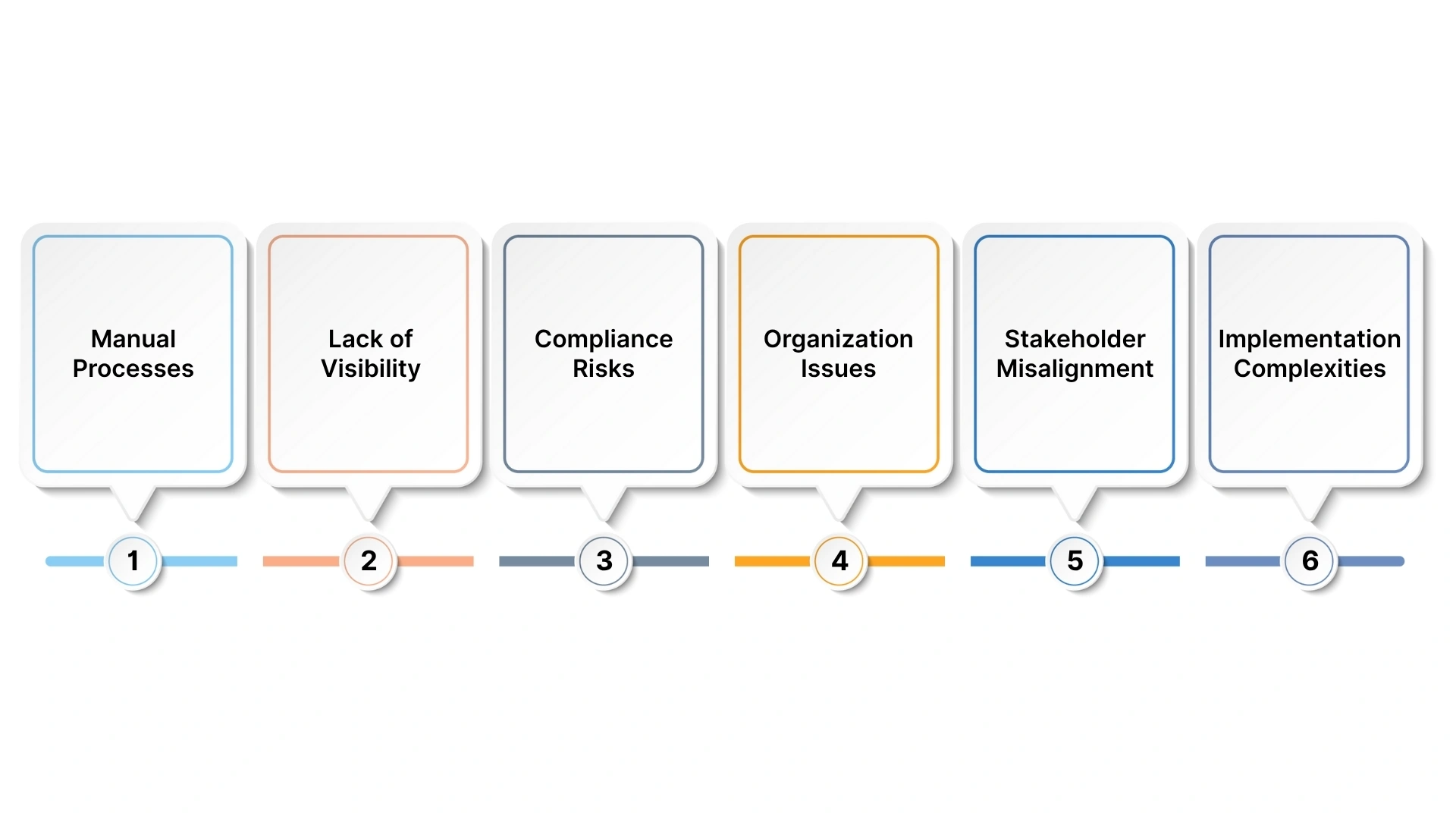
قد يكون تطبيق نظام فعال لإدارة دورة حياة العقود (CLM) والحفاظ عليه أمرًا صعبًا. تواجه العديد من الشركات الناشئة والشركات الصغيرة والمتوسطة أوجه قصور وأخطاء ومخاطر تتعلق بالامتثال بسبب ممارسات إدارة العقود القديمة أو اليدوية.
فيما يلي أبرز التحديات الشائعة والطرق العملية لمعالجتها:
يؤدي الاعتماد على جداول البيانات أو رسائل البريد الإلكتروني أو مسارات العمل الورقية إلى إبطاء إدارة العقود وزيادة الأخطاء.
الحل: أتمتة مسارات العمل باستخدام برامج إدارة دورة حياة العقود لتبسيط عمليات الصياغة والموافقات والتجديدات، مما يقلل الأخطاء ويوفر الوقت.
بدون نظام مركزي، تصبح متابعة أداء العقود والالتزامات والامتثال أمرًا صعبًا، مما يؤدي إلى تفويت المواعيد النهائية وسوء الفهم.
الحل: استخدام مستودع مركزي وآمن ولوحات معلومات للحصول على رؤى فورية حول حالة العقود والمراحل الرئيسية والمخاطر المحتملة.
يمكن أن يؤدي عدم الالتزام بشروط العقود أو المتطلبات التنظيمية إلى مشكلات قانونية وعقوبات.
الحل: تطبيق قوالب موحدة وتنبيهات مؤتمتة وعمليات تحقق مدمجة من الامتثال لضمان استيفاء جميع العقود للمعايير الداخلية والتنظيمية.
يمكن أن تؤدي إدارة عدد كبير من العقود إلى الفوضى وفقدان المستندات وصعوبة استرجاع المعلومات.
الحل: تجميع العقود في مستودع قابل للبحث، مع استخدام استخراج البيانات المدعوم بالذكاء الاصطناعي لتسهيل الوصول إلى المعلومات وتحسين التنظيم.
يمكن أن تؤدي اختلاف الأولويات بين الفرق، مثل الشؤون القانونية والمبيعات والمشتريات والمالية، إلى حدوث تأخيرات ونزاعات.
الحل: تحديد أدوار واضحة، وإنشاء قنوات للتواصل، ومواءمة الأهداف منذ البداية لضمان توافق جميع الأطراف.
قد يمثل إعداد نظام إدارة دورة حياة العقود وتدريب الموظفين والتكامل مع الأدوات الحالية تحديًا، خاصة بالنسبة للشركات الصغيرة.
الحل: اختيار برنامج قابل للتوسع وسهل الاستخدام، وتوفير التدريب المناسب، وتطبيق العمليات تدريجيًا لضمان اعتماد النظام بسلاسة.
حتى الشركات الصغيرة قد تواجه مخاطر كبيرة نتيجة هذه التحديات، لكن المنصة المناسبة يمكن أن تُحدث فرقًا كبيرًا. باستخدام أدوات مثل HAL ERP، تصبح إدارة العقود أكثر سلاسة وكفاءة وامتثالًا، مما يحول ما كان يمثل عبئًا إلى ميزة استراتيجية.
يحوّل HAL ERP إدارة العقود من مهمة معقدة وتستغرق وقتًا طويلًا إلى سير عمل منظم وفعال ومتوافق مع المتطلبات. إليك كيف يبسّط عملية إدارة دورة حياة العقود:
من خلال هذه الإمكانات، يساعد HAL ERP المؤسسات على إبقاء العقود منظمة وقابلة للتنفيذ، مما يحسن الكفاءة والرقابة عبر جميع مراحل دورة حياة العقد.
واجهت Jash Holding، وهي شركة رائدة في مجال إدارة المرافق في السعودية، تحديات في إدارة العمليات عبر عدة شركات تابعة وأكثر من 4,000 موظف. وساعد HAL ERP في تبسيط عمليات الموارد البشرية، وأتمتة المعاملات بين الشركات، وتوفير رؤى فورية حول القوى العاملة وتكاليف المشاريع.
ونتيجة لذلك، حسّنت Jash Holding الكفاءة التشغيلية، وحصلت على تحكم أفضل في المشاريع، ووحّدت مسارات العمل عبر شركاتها التابعة، محققةً وفورات ملموسة في التكاليف وعائدًا على الاستثمار (ROI) بنسبة 60%. لمعرفة المزيد، اقرأ دراسة الحالة الكاملة هنا.
إليك ما يقوله العميل: JASH HOLDING COMPANY، السعودية - YouTube
يمكن للعقود التي تتم إدارتها بشكل سيئ أن تستنزف موارد مؤسستك بشكل غير ملحوظ. ويساعد فهم مخطط عملية إدارة دورة حياة العقود على تصور كل مرحلة، مما يمنحك تحكمًا أفضل ويضمن أن تحقق كل اتفاقية قيمة حقيقية.
من خلال برنامج متكامل مثل HAL ERP، يمكن لفرقك تبسيط إدارة العقود، وأتمتة المهام الأساسية، والحفاظ على الامتثال الكامل للأنظمة، بما في ذلك متطلبات ضريبة القيمة المضافة وZATCA. حوّل عقودك من أعباء إدارية إلى أصول استراتيجية.
اطلب عرضًا تجريبيًا مجانيًا اليوم لتبسيط إدارة عقودك باستخدام HAL ERP.
1. ما هي عملية إدارة دورة حياة العقد؟
تدير عملية إدارة دورة حياة العقود (CLM) العقود بدءًا من مرحلة البدء والإنشاء، مرورًا بالتنفيذ والمراقبة، وصولًا إلى التجديد. وتضمن هذه العملية امتثال العقود وكفاءتها وتحقيقها لقيمة مضافة للأعمال طوال دورة حياتها.
2. ما هي العناصر الخمسة للعقد؟
العناصر الخمسة للعقد هي: الوضوح، والإيجاز، والصحة، والاكتمال، والاتساق. وتضمن هذه المبادئ أن تكون العقود مفهومة وسليمة من الناحية القانونية وقابلة للإنفاذ.
3. فيمَ تُستخدم برامج إدارة دورة حياة العقود؟
تُستخدم برامج إدارة دورة حياة العقود لأتمتة إنشاء العقود والموافقات والتتبع والامتثال. كما تعمل على تجميع العقود في مكان واحد، وتقليل الأخطاء، وتحسين الكفاءة، وتوفير رؤى قابلة للتنفيذ.
4. هل تقتصر إدارة دورة حياة العقود على المؤسسات الكبيرة؟
لا، تستفيد الشركات من جميع الأحجام من إدارة دورة حياة العقود. ويمكن للشركات الصغيرة والمتوسطة تبسيط مسارات عمل العقود، وضمان الامتثال، ومنع تسرب الإيرادات باستخدام أدوات إدارة دورة حياة العقود مثل HAL ERP.
5. كم يستغرق تطبيق برنامج إدارة دورة حياة العقود؟
تستغرق عملية التطبيق عادةً من بضعة أسابيع إلى بضعة أشهر، وذلك اعتمادًا على مدى تعقيد الأعمال واحتياجات التكامل. ومع التخطيط المناسب، يمكن للمؤسسات البدء في تحقيق الفوائد بسرعة.
6. كيف يمكن لبرامج إدارة دورة حياة العقود تحسين إدارة العقود؟
تعمل برامج إدارة دورة حياة العقود على تجميع العقود في مكان مركزي، وأتمتة مسارات العمل، وتمكين التوقيعات الرقمية، وتتبع الالتزامات، وتوفير التحليلات. وتساعد أدوات مثل HAL ERP على تقليل الأخطاء، وتسريع الموافقات، ومنح الفرق رؤية شاملة لأداء العقود.