

هل كنت تعرف لماذا تتمكن بعض الشركات دائمًا من توفير المنتجات المناسبة بينما تواجه شركات أخرى رفوفًا فارغة أو أكوامًا من المخزون غير المباع؟ الفرق غالبًا ما يعود إلى مدى فعالية إدارتها لعنصر حاسم، وهو المخزون. التقديرات تشير إلى أن سوء التخطيط يكلف تجار التجزئة العالميين حوالي 1.77 تريليون دولار أمريكي سنويًا، ويعاني 95% من الشركات الصغيرة من مشاكل في التحكم في المخزون تؤثر بشكل مباشر على الإيرادات. في المملكة العربية السعودية، هذه التحديات أكبر حيث يتوسع قطاع البيع بالتجزئة، والخدمات اللوجستية، والتجارة الإلكترونية بسرعة. هذا التعقيد المتزايد يدفع أيضًا للاستثمار في أنظمة إدارة المخازن، مع توقع نمو السوق من 47.32 مليون دولار أمريكي إلى 385.28 مليون دولار أمريكي بحلول عام 2033. إذا كنت تدير عملًا تجاريًا في التجارة أو التجزئة أو التصنيع أو التوزيع في المملكة العربية السعودية، فإن فهم المخزون أمر أساسي. في هذا الدليل، ستتعلم تعريفه، وأنواعه الرئيسية، وأمثلة من العالم الواقعي.
المخزون يشمل جميع السلع والمواد والمنتجات التي تخزنها الشركات للبيع أو لاستخدامها في عملياتها اليومية. يمكن أن يكون المخزون عبارة عن مواد خام للتصنيع، أو عناصر قيد المعالجة، أو منتجات تامة جاهزة للعملاء.
ببساطة، المخزون هو ما تحتفظ به الشركة اليوم لضمان سير العمليات بسلاسة وتحقيق الإيرادات في المستقبل.
يساعد المخزون في الحفاظ على إمدادات ثابتة، ويجنب نفاد المخزون، ويدعم تنفيذ الطلبات في الوقت المناسب. عندما يتم إدارته بشكل جيد، فإنه يقلل من التكاليف ويحسن رضا العملاء.
مع هذا الفهم الأساسي، دعونا نناقش الآن لماذا يعتبر المخزون أمرًا مهمًا، خاصة بالنسبة للأعمال التجارية في اقتصاد المملكة العربية السعودية الذي يشهد نموًا سريعًا.
اقتصاد المملكة العربية السعودية يشهد تحولًا سريعًا في إطار رؤية 2030. القطاعات مثل البيع بالتجزئة، والخدمات اللوجستية، والتصنيع، والتجارة الإلكترونية تتوسع بوتيرة تتطلب تحكمًا أكثر دقة في العمليات. في هذا المشهد الجديد، لم يعد المخزون وظيفة خلفية؛ بل أصبح أصلًا استراتيجيًا يؤثر بشكل مباشر على الربحية، وثقة العملاء، والقدرة التنافسية.
إليك لماذا يعتبر المخزون مهمًا الآن أكثر من أي وقت مضى:
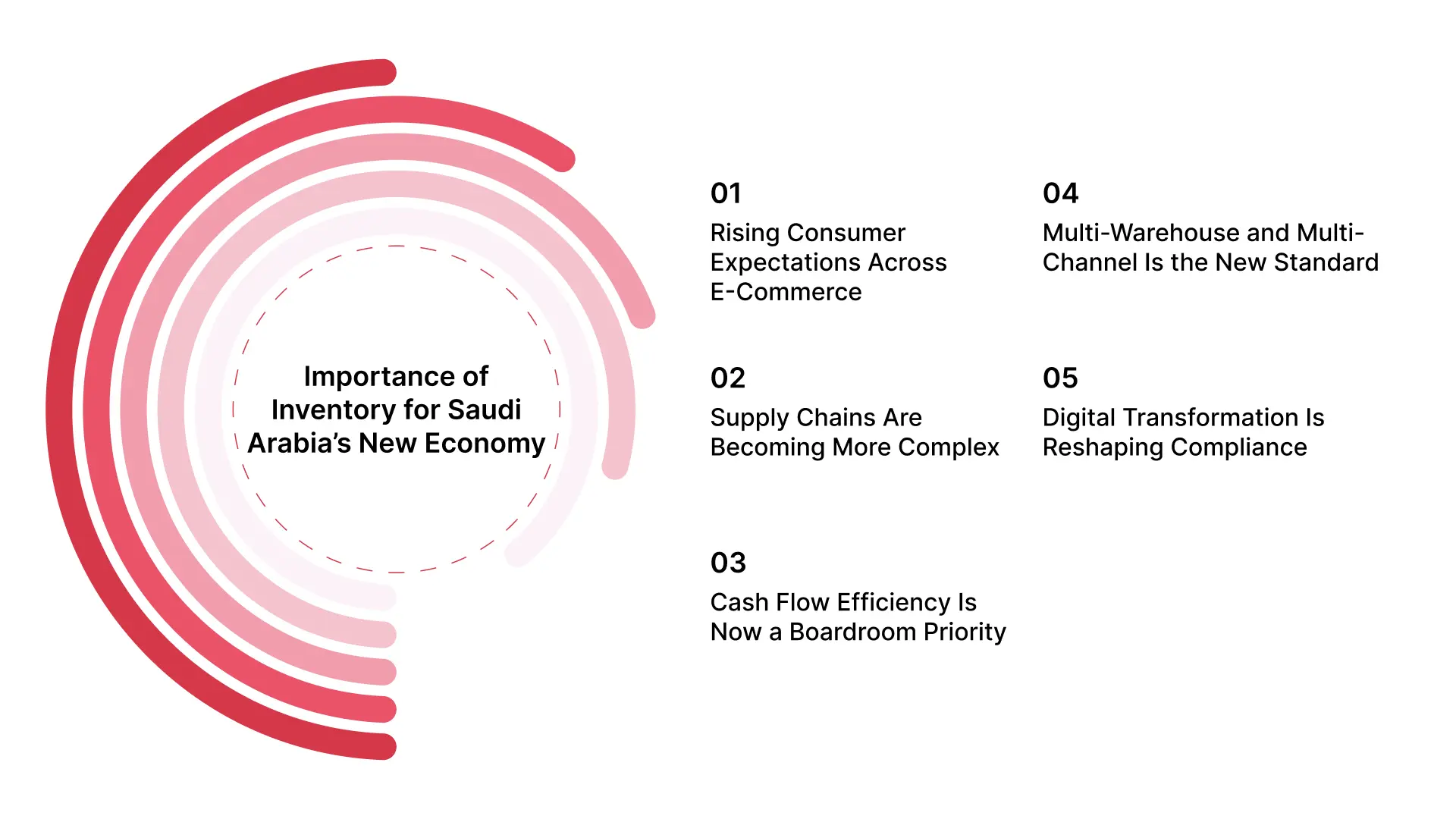
المتسوقون في السعودية يتوقعون الآن إتمام الطلبات بسرعة، بدقة، وبشكل موثوق، ولديهم الكثير من الخيارات. مع توسع التجارة الإلكترونية وسوق الخدمات اللوجستية وإدارة المخازن في المملكة الذي من المتوقع أن يصل إلى 38 مليار دولار أمريكي بحلول عام 2030، أصبحت الضغوط على العلامات التجارية أكثر شدة. حتى الأخطاء الصغيرة في المخزون يمكن أن تؤدي إلى إلغاء الطلبات، أو فرض عقوبات من السوق، أو تقييمات سلبية.
إدارة المخزون بدقة لم تعد مهمة في الأقسام الخلفية؛ بل أصبحت محركًا مباشرًا لتجربة العملاء وثقة العلامة التجارية.
الشركات اليوم تتعامل مع العديد من الموردين (محليين ودوليين)، وأوقات تسليم متقلبة، واضطرابات غير متوقعة.
يعمل المخزون كأداة لامتصاص الصدمات التي تحافظ على سير العمليات رغم التأخيرات العالمية، أو مشاكل الشحن، أو الارتفاعات المفاجئة في الطلب، خاصة خلال المواسم الرئيسية مثل رمضان، العودة إلى المدرسة، وأحداث التخفيضات الكبرى.
قرارات المخزون تؤثر بشكل مباشر على التدفق النقدي. المخزون الزائد يربط رأس المال، بينما نفاد المخزون يستنزف الإيرادات ويعطل دورات الشراء. بالنسبة للعديد من الشركات الصغيرة والمتوسطة في السعودية، يمكن أن تؤدي ممارسات المخزون السيئة إلى خسارة تصل إلى 11% من الإيرادات السنوية، أساسًا من الفائض في المخزون وفرص المبيعات المفقودة.
لهذا السبب، تعتبر الشركات سريعة النمو الآن المخزون كأصل مالي، وليس مجرد شيء مخزن في مستودع. أولئك الذين يخططون بشكل أكثر ذكاءً، ويشترون بشكل أكثر ذكاءً، ويتابعون المخزون بشكل أفضل، يشهدون تحسنًا في مواقعهم المالية وهوامش ربحهم.
العلامات التجارية السعودية الآن تعمل عبر المتاجر الإلكترونية، الأسواق، محلات التجزئة، ومراكز التوزيع. بدون نظام مخزون موحد، تفقد الشركات تتبع المخزون، تنقل البضائع يدويًا، وتتخذ قرارات عمياء.
الرؤية المركزية تضمن أن المخزون الصحيح متاح في الموقع الصحيح، في الوقت الصحيح.
مع تحول الشركات السعودية إلى الأنظمة الرقمية المتوافقة مع الهيئة العامة للزكاة والدخل (ZATCA)، لم يعد المخزون يمكن أن يعمل بمعزل عن باقي الأنظمة. عندما لا تتصل بيانات المخزون مع المبيعات أو الشراء أو المحاسبة، يؤدي ذلك إلى فجوات في الامتثال، وتقييمات خاطئة، وتأخيرات في التقارير المالية. أصبحت التدفقات البيانية المتكاملة الآن أمرًا أساسيًا للتكلفة الدقيقة، والمراجعات الأكثر سلاسة، والرؤى في الوقت الفعلي.
أدوات مثل HAL VAT CARE، وهو حل فواتير إلكترونية متوافق مع المرحلة الثانية من ZATCA، تدعم هذا التحول من خلال ضمان بيانات مالية نظيفة ومنظمة وجاهزة للتكامل. عندما يعمل الامتثال والعمليات معًا، يصبح التحكم في المخزون أسهل وأكثر شفافية عبر جميع أنحاء الشركة.
اقرأ أيضًا: إدارة المشتريات الفعّالة من حيث التكلفة: كيف يمكن للبرمجيات المساعدة؟
كل هذه التحولات تظهر أن التحكم في المخزون أصبح قدرة استراتيجية في اقتصاد المملكة العربية السعودية المتنامي. الآن، دعونا نلقي نظرة على الأنواع الرئيسية للمخزون التي تديرها يوميًا.
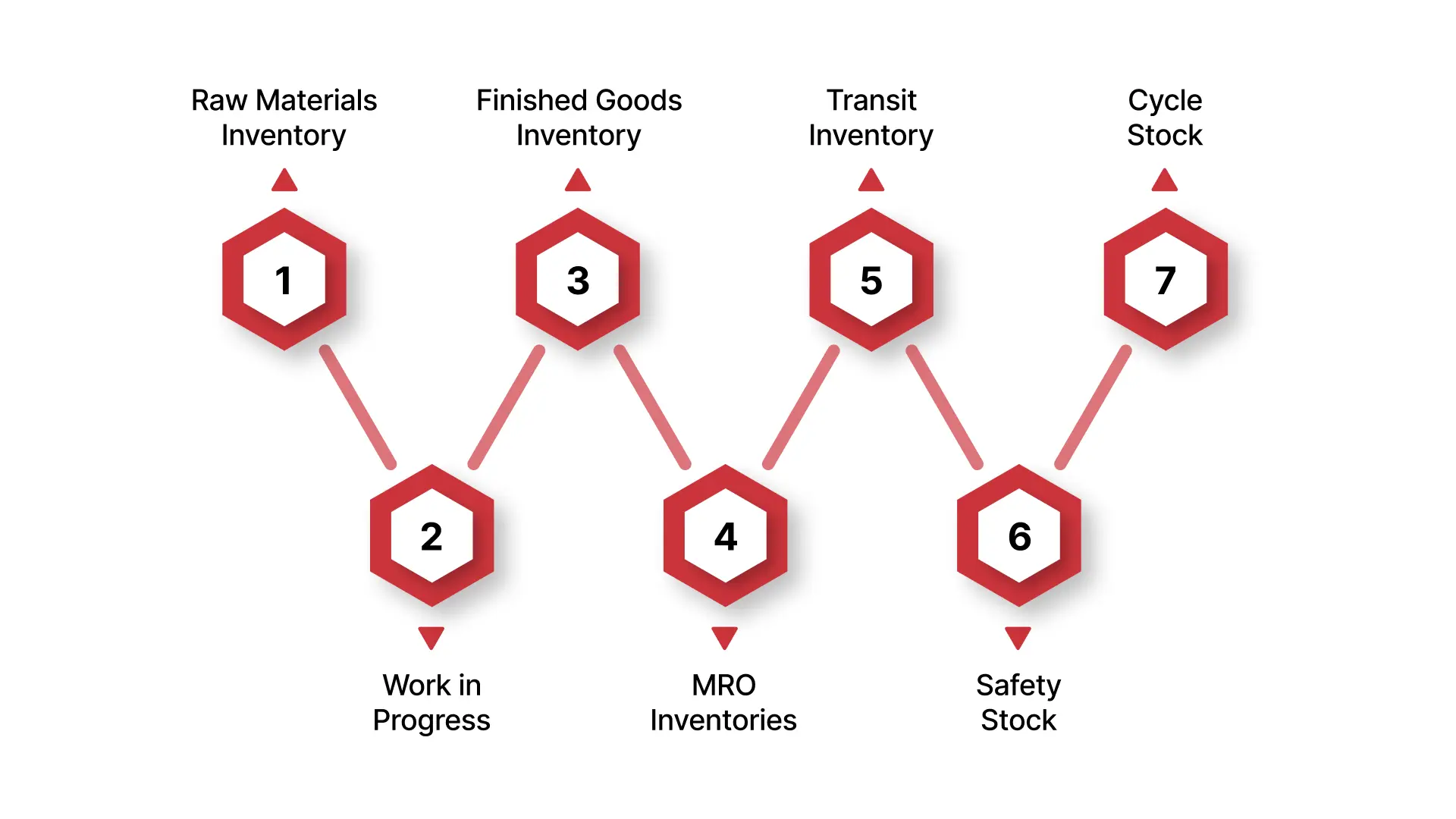
فهم الأنواع المختلفة من المخزون يساعد الشركات على التخطيط بشكل أفضل، وتقليل الفاقد، والحفاظ على العمليات بشكل مرن وفعّال. إليك الفئات الرئيسية التي يجب أن يعرفها كل منظمة:
قراءة موصى بها: لماذا يعتبر HAL ERP أمرًا لا غنى عنه لإدارة المخزون في الشركات الصغيرة
كل فئة تلعب دورًا حيويًا في خلق عمليات مستقرة وقابلة للتنبؤ وجاهزة للعملاء.
الآن بعد أن فهمت الأنواع الرئيسية للمخزون، دعنا نستعرض بعض الأمثلة الواقعية من صناعات مختلفة في المملكة العربية السعودية.
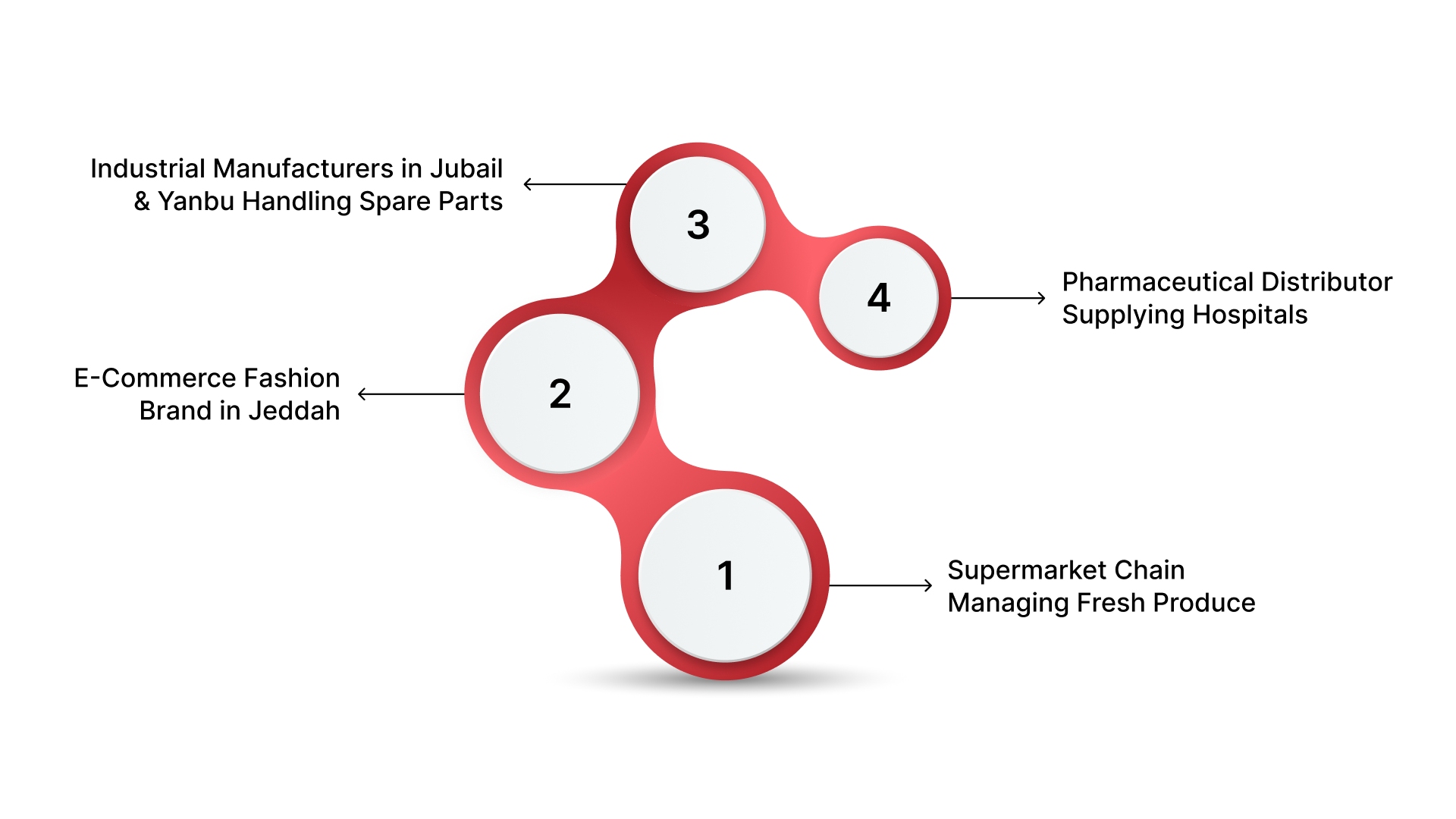
لتوضيح مفاهيم المخزون بشكل أفضل، إليك أمثلة بسيطة مأخوذة من العمليات اليومية عبر المملكة:
تدير مجموعة سوبر ماركت في الرياض المواد القابلة للتلف يوميًا مثل الألبان، اللحوم، والمنتجات الطازجة. التقدير المفرط للطلب يؤدي إلى الفاقد، بينما التقدير القليل يسبب نفاد المخزون. تساعد التنبؤات الدقيقة في تحقيق التوازن بين الطلبيات وتقليل الخسائر.
تخزن علامة تجارية للأزياء جميع الملابس والأحذية والإكسسوارات في مستودع مركزي في جدة. غالبًا ما يتسبب عد المخزون غير الصحيح في إلغاء الطلبات. يضمن التزامن الفوري للمخزون أن يعرض الموقع الإلكتروني فقط العناصر المتاحة فعليًا.
يعتمد منتج الآلات الذي يخدم عملاء في صناعة الفولاذ والبناء على الصفائح المعدنية والمحركات وقطع الغيار الأساسية. غياب القطعة الصحيحة يزيد من وقت تعطل العملاء. يساعد تتبع قطع الغيار المنظمة في الحفاظ على استجابة سريعة للخدمة.
يقوم موزع طبي في تبوك بتوصيل الأدوية واللقاحات والأجهزة عبر المملكة. يجب عليهم تتبع تواريخ انتهاء الصلاحية، والدفعات، والمنتجات التي تحتاج إلى سلسلة تبريد. يضمن التحكم الجيد في المخزون منع بيع المنتجات منتهية الصلاحية ويسهل عمليات الاسترجاع.
بدون سجلات مخزون منظمة، يصبح من الصعب للغاية إدارة العمليات والبقاء ملتزمًا باللوائح.
هل كنت تعلم أن تجار التجزئة السعوديين يمكنهم تحقيق عائد استثمار يصل إلى 145% وتوفير ما يصل إلى 70 مليون ريال سعودي في تكاليف التشغيل ببساطة عن طريق تحديث إدارة المخزون والعمليات؟
المشاكل الشائعة في المخزون في الشركات السعودية وكيفية حلها
تسحب مشكلات المخزون الأرباح بشكل أسرع مما يدرك معظم الشركات الصغيرة والمتوسطة. مع اعتماد 43% من الشركات الصغيرة على طرق المخزون اليدوية أو القديمة، تتراكم الكفاءات غير الفعالة والخسائر في الإيرادات بسرعة.
إليك أبرز المشاكل التي تواجهها الشركات في المملكة العربية السعودية وكيفية تجنبها:
المخزون الزائد يربك رأس المال ويشوش التخزين، خاصة في القطاعات الموسمية. في الواقع، يعاني 42% من الشركات الصغيرة من مشكلة الفائض في المخزون، وعالميًا يؤدي ذلك إلى خسائر تتجاوز 562 مليار دولار أمريكي سنويًا.
الحل:
يمكن لتجار التجزئة في السعودية تقليل هذا الخطر باستخدام تنبؤات الطلب الأكثر دقة بناءً على دورات المبيعات السابقة، وسلوك الشراء الإقليمي، وأوقات التسليم الدقيقة من الموردين.
تواجه المنتجات سريعة الحركة نفادًا في المخزون خلال مواسم مثل رمضان، العودة إلى المدارس، وأوقات الذروة في عطلات نهاية الأسبوع. إنها مشكلة كبيرة، حيث يعاني 73% من الشركات من نفاد المخزون في الفترات الذروية، وتصل خسائر نفاد المخزون عالميًا إلى 1.2 تريليون دولار أمريكي.
الحل:
يمكن لتجار التجزئة السعوديين تجنب هذه الفجوات من خلال تتبع الاتجاهات البيعية في الوقت الفعلي وتحديد مستويات المخزون الدنيا للمنتجات ذات الطلب العالي (SKUs).
تسبب جداول البيانات وعدّ المخزون يدويًا في حدوث تطابق غير دقيق، خاصة مع نمو الفروع.
الحل:
يمكن للشركات الصغيرة والمتوسطة في السعودية تقليل الأخطاء بالانتقال إلى تتبع عبر الرموز الشريطية (باركود) ودمج جميع بيانات المبيعات والمشتريات والمدخلات في المستودعات في سجل موحد.
التشغيل عبر مدن مثل الرياض، جدة، أو الدمام يجعل من الصعب رؤية المخزون بشكل واضح.
الحل:
يمكن للشركات تجنب الاختلالات من خلال الحفاظ على رؤية مركزية للمخزون وتحليل أي المناطق تقدم أفضل أداء قبل نقل أو تجديد البضائع.
المخزون المنفصل يؤدي إلى أخطاء في حساب تكلفة البضائع المباعة (COGS)، وأخطاء في ضريبة القيمة المضافة (VAT)، ومشاكل في التسوية.
الحل:
يمكن أن يضمن نظام موحد يربط بين المخزون، والمشتريات، والمبيعات، والفواتير المتوافقة مع ZATCA تحديد تكلفة دقيقة وتسوية مريحة أثناء التدقيق.
الخلاصة:
تؤدي هذه التحديات إلى استنزاف الإيرادات وتعطيل العمليات، ولكن من خلال العمليات المنظمة والبيانات المتكاملة، يمكن للشركات السعودية الحفاظ على مستويات مخزون صحية وتحقيق تحكم مالي أقوى.
لكن كيف يمكن للشركات السعودية حل هذه المشكلات دون إضافة المزيد من التعقيد أو التكاليف؟
هنا يأتي دور منصة HAL الموحدة التي تُحدث فارقًا حقيقيًا.
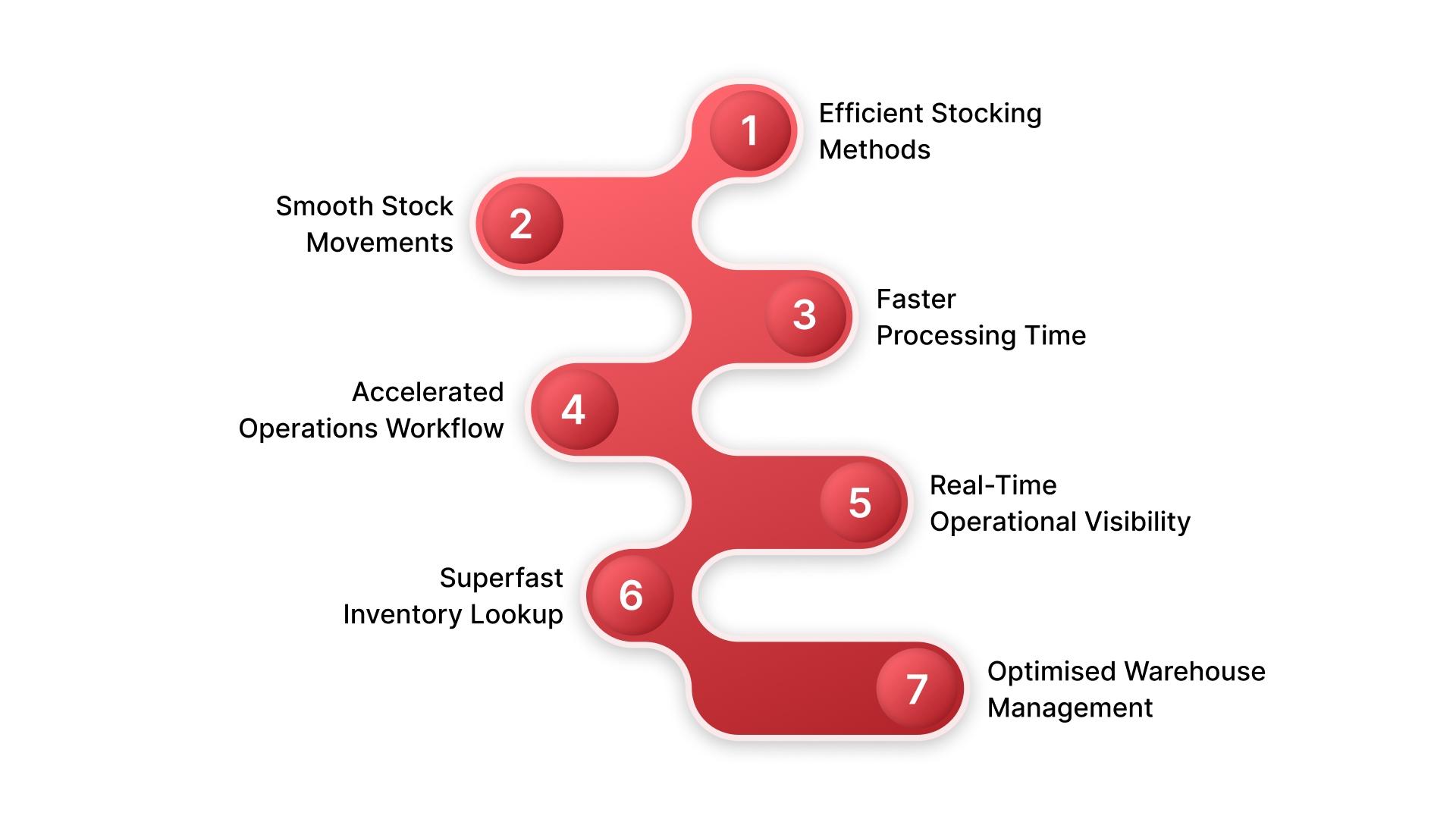
HAL ERP هو برنامج إدارة أعمال شامل تم تصميمه خصيصًا للشركات الصغيرة والمتوسطة في السعودية التي ترغب في عمليات بسيطة وموثوقة وسريعة.
يجمع HAL بين عمليات المخزون، والمبيعات، والمالية، والمشتريات، والموارد البشرية، والمستودعات في منصة واحدة مدعومة بالذكاء الاصطناعي، مما يزيل الأعمال اليدوية ويساعد الفرق على اتخاذ القرارات باستخدام البيانات الفعلية في الوقت الفعلي.
سواء كنت تدير متجرًا للتجزئة، أو شركة تجارة، أو شبكة توزيع، أو علامة تجارية تجارة إلكترونية تنمو بسرعة، فإن HAL ERP يضمن أن مخزونك دقيق دائمًا، ومتوافر، ومتوافق مع الطلب.
كانت مجموعة الحميضي، وهي شركة تجزئة فاخرة كبيرة في السعودية تضم أكثر من 80 متجرًا، تعاني من أنظمة قديمة تسببت في تقارير غير متسقة، ورؤية ضعيفة للمخزون، وقنوات مبيعات غير متصلة. كانت هذه الفجوات تزيد من التكاليف التشغيلية وتضعف تجربة العملاء.
من خلال تنفيذ HAL Retail، قامت الشركة بتوحيد المبيعات، والمخزون، والتسعير، والمدفوعات عبر جميع المتاجر. سهلت الرؤى في الوقت الفعلي، والتسعير الديناميكي، والإيصالات الرقمية، والتكامل الكامل عبر القنوات العمليات اليومية.
كانت النتيجة مذهلة: توفير 70 مليون ريال سعودي، وتحسن بنسبة 61% في الكفاءة، وهوامش ربح أقوى، وعائد استثمار استثنائي بنسبة 145%، مما وضع مجموعة الحمادي في موقع قوي لتحقيق نجاح طويل الأمد في مجال التجزئة.
يمنحك HAL ERP الرؤية والتحكم اللازمين لتشغيل عمليات المخزون بكفاءة، مما يساعد الشركات السعودية على تقليل الجهد وزيادة الدقة في إدارة المخزون. إذا كانت إدارة المخزون، والمالية، والعمليات لا تزال تتم عبر أدوات منفصلة، فقد حان الوقت للانتقال إلى HAL ERP لتحسين جميع جوانب الأعمال في منصة واحدة.
المخزون هو جوهر عمليات كل شركة سعودية. إنه يؤثر على التدفق النقدي، واتخاذ قرارات التسعير، وتجربة العملاء، والربحية طويلة الأجل. عندما يتم التحكم في المخزون بشكل جيد، تعمل الشركات بكفاءة أكبر، وتستجيب بسرعة للطلب، وتحرر رأس المال العامل الذي يمكن استخدامه للنمو.
تتعامل الشركات السعودية أيضًا مع أنواع مختلفة من المخزون كل يوم: المواد الخام، والعمل الجاري، والبضائع الجاهزة، وإمدادات الصيانة والإصلاح والتشغيل، وقطع الغيار. كل نوع له احتياجاته التشغيلية الخاصة، وتعتمد الصناعات من التجزئة إلى التجارة إلى التصنيع على التتبع الدقيق لتجنب الخسائر غير الضرورية.
لكن التحديات ما زالت شائعة في المملكة. الفائض في المخزون، والمخزون الميت، ونفاد المخزون خلال المواسم الذروية، والتتبع اليدوي، والتنبؤ غير الدقيق بالطلب تستمر في استنزاف الهوامش للعديد من الشركات الصغيرة والمتوسطة. تحديد هذه المشكلات مبكرًا يمنح الشركات فرصة لإصلاح الفجوات قبل أن تؤثر على التدفق النقدي أو ثقة العملاء.
إذا كانت فرقك لا تزال تواجه صعوبة في الرؤية، أو الدقة، أو التحكم في المخزون في الوقت الفعلي، أليس من الوقت المناسب أن ترى كيف يمكن لنظام ERP حديث أن يغير ذلك؟ تواصل مع خبرائنا في HAL اليوم واختبر كيف يمكن لإدارة المخزون المبسطة أن تعزز عملك بالكامل.






.png)