
هل تُثقل تكاليف الموردين وعدم الاتساق كاهل استراتيجية المشتريات لديك في المملكة العربية السعودية؟ ومع توجه المملكة نحو تعزيز مرونة سلاسل الإمداد في إطار رؤية 2030، تتعرض فرق المشتريات لضغوط متزايدة لتحسين الكفاءة والشفافية. كما تشهد المملكة العربية السعودية اعتمادًا رقميًا متسارعًا، حيث تُقدَّر قيمة سوق المشتريات السحابية بنحو 1.2 مليار دولار أمريكي. ونتيجة لذلك، تتجه المزيد من الشركات إلى إدارة علاقات الموردين (SRM) لتحقيق قدر أكبر من التحكم والرؤية والأداء.
تشمل إدارة علاقات الموردين (SRM) الإدارة الاستراتيجية للتفاعلات مع الموردين بهدف تحسين التعاون، ومراقبة الأداء، وتقليل المخاطر. ومن خلال ذلك، يمكن للمؤسسات تحسين عمليات التوريد، وتعزيز المفاوضات، وبناء شراكات أكثر مرونة.
في هذا الدليل، ستتعرف على ما تغطيه إدارة علاقات الموردين في المشتريات فعليًا، ولماذا تُعد ضرورية للأعمال الحديثة، ومكوناتها الأساسية، وأفضل الأساليب المثبتة لتحويل قاعدة الموردين لديك إلى ميزة استراتيجية.
إدارة علاقات الموردين (SRM) في المشتريات هي عملية إدارة كيفية تعامل أعمالك في المملكة العربية السعودية مع مورديها على المدى اليومي والطويل. وتشمل اختيار الموردين المناسبين، ووضع توقعات واضحة، ومتابعة أدائهم، والحفاظ على تواصل مفتوح يضمن عمل الطرفين بسلاسة.
يمكن تشبيهها بإدارة شراكة طويلة الأمد: فإذا كان أحد الموردين يتأخر باستمرار في تسليم المواد، تساعدك إدارة علاقات الموردين على تحديد المشكلة مبكرًا، ومناقشة الحلول، أو التحول إلى شريك أفضل قبل أن تؤثر على الجداول الزمنية لمشاريعك أو تكاليفك.
وعند تطبيقها بشكل جيد، تضمن إدارة علاقات الموردين تسليمات متوقعة، وتسعيرًا أفضل، ومفاجآت تشغيلية أقل.
هذا الفهم الواضح لإدارة علاقات الموردين يجعل من السهل إدراك سبب تحولها إلى جزء مهم من عملية المشتريات الحديثة.
.webp)
إن بناء علاقات قوية مع الموردين ليس مجرد «ممارسة جيدة»؛ بل يؤثر بشكل مباشر على كفاءة وموثوقية وفعالية التكلفة في وظيفة المشتريات لديك. فعندما يثق الموردون بك ويفهمون أولوياتك، يصبحون أكثر استجابة وشفافية والتزامًا بطبيعتهم.
وعندما تنضج هذه العلاقات، فإنها تؤثر على عدة مجالات للأداء، من بينها ما يلي:
إمداد أكثر استقرارًا واضطرابات أقل: الموردون الموثوقون يعطون أولوية لطلباتك، ويتواصلون مبكرًا بشأن المخاطر، ويتكيفون بشكل أسرع مع تقلبات السوق. وهذا يقلل من التأخيرات ونقص المخزون والحلول الطارئة في اللحظات الأخيرة.
تسعير أفضل وكفاءة تكلفة طويلة الأجل: العلاقات القوية غالبًا ما تفتح المجال للحصول على خصومات تفاوضية، وقيم مضافة، وشروط تعاقدية أفضل. ومع مرور الوقت، تستفيد فرق المشتريات من تسعير يمكن التنبؤ به وانخفاض في إجمالي تكلفة الملكية.
جودة أعلى ومعايير متسقة: الموردون الذين يشعرون بالتقدير يبذلون جهدًا أكبر للالتزام بتوقعات الجودة. كما تساعد حلقات التغذية الراجعة المنتظمة الطرفين على الحفاظ على الاتساق وتقليل الرفض وإعادة العمل وتكاليف الفحص.
تحسين الابتكار والعمليات: الموردون الموثوقون يشاركون أفكارًا جديدة وتقنيات وتحديثات للعمليات قد لا تتاح للمشترين بغير ذلك. ويسهم هذا التعاون في حلول أكثر ذكاءً وتحقيق ميزة تنافسية.
امتثال أقوى ومخاطر تشغيلية أقل: العلاقات المتكاملة مع الموردين تعزز التوثيق وقابلية التتبع والاستعداد لعمليات التدقيق. ويُعد ذلك ضروريًا للشركات السعودية للوفاء بمتطلبات الامتثال لهيئة الزكاة والضريبة والجمارك (ZATCA)، ومعايير الحوكمة البيئية والاجتماعية والمؤسسية (ESG)، والالتزامات التعاقدية.
قراءة موصى بها: لماذا يُعد برنامج إدارة المشتريات ضروريًا لنمو الأعمال؟
في النهاية، تجعل العلاقات القوية مع الموردين عملية المشتريات أكثر سلاسة وذكاءً وقابلية للتنبؤ. بعد ذلك، دعونا نلقي نظرة على المكونات الأساسية التي تُشكّل إطارًا فعالًا لإدارة علاقات الموردين.
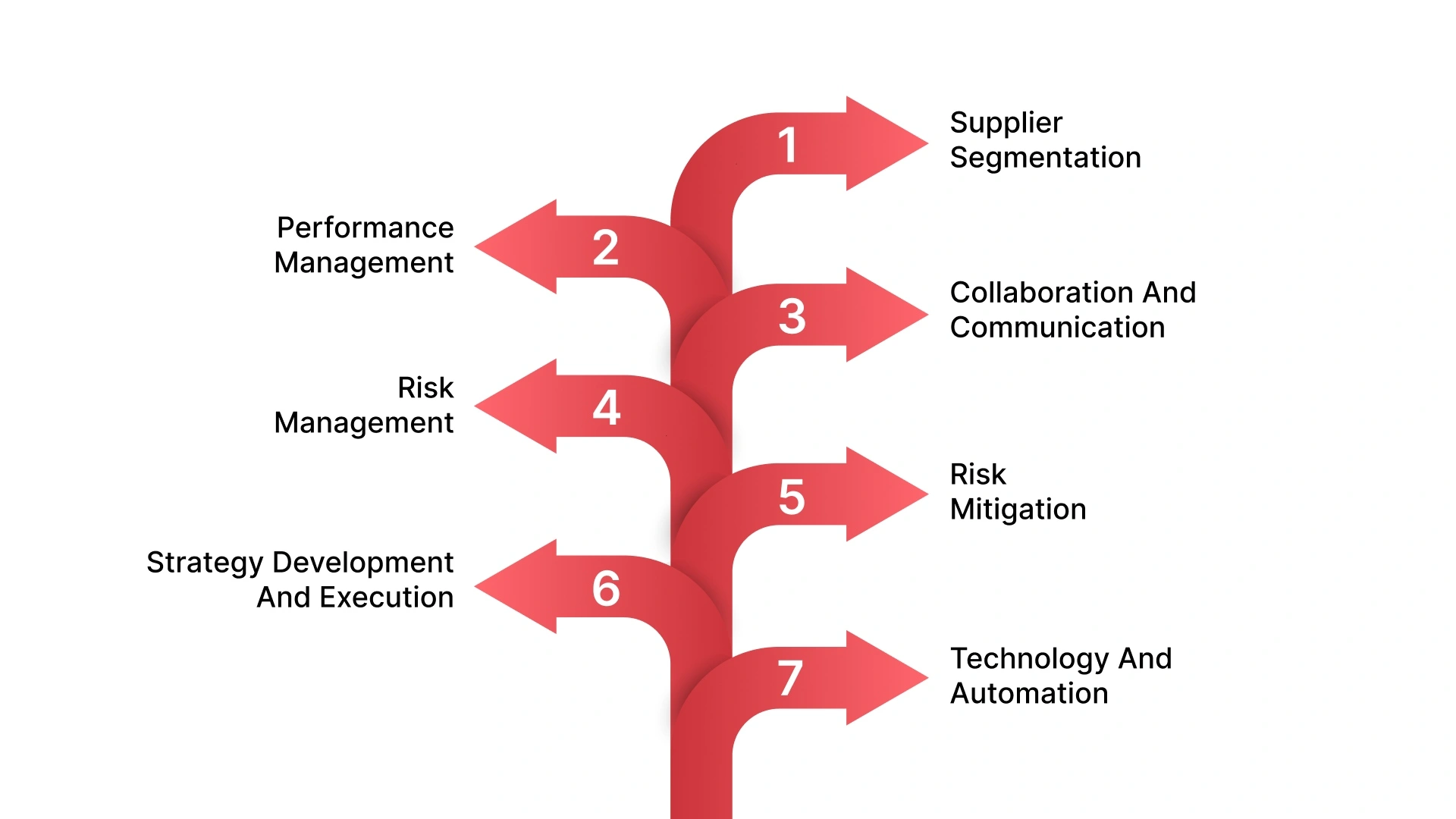
توفر استراتيجية قوية لإدارة علاقات الموردين (SRM) للفِرق المسؤولة عن المشتريات الهيكل اللازم لإدارة الموردين بشكل متسق وواضح. فهي تحول التفاعلات المتفرقة إلى عملية محددة، مما يساعد الشركات على تحسين الأداء وتقليل المخاطر التشغيلية. لتحقيق ذلك بشكل فعّال، تعتمد إدارة علاقات الموردين على مجموعة من المكونات الأساسية التي تعمل معًا.
فيما يلي الأعمدة السبعة التي تشكل إطار عمل فعّال لإدارة علاقات الموردين:
1. تقسيم الموردين:
معاملة كل مورد بنفس الطريقة يؤدي إلى هدر الجهود. يجب تقسيم الموردين حسب الأهمية، والمخاطر، والقيمة، حتى تتمكن فرق المشتريات من تركيز وقتها على الأماكن التي تُحدث فرقًا حقيقيًا: الفئات ذات التأثير العالي والمخاطر العالية.
هل تواجه شركتك في منطقة الشرق الأوسط وشمال إفريقيا صعوبة في تقسيم الموردين بدقة والحفاظ على تحديث البيانات؟
الفرق التي تستخدم أدوات ذكاء اصطناعي متقدمة مثل HALA AI تحصل على رؤى فورية عن الموردين، واستيراد قوائم أسعار أذكى، وفحص التوافر، وأتمتة سلسة من طلب العروض وحتى الاستلام. جرب HALA AI الآن واحصل على مراجع لاتخاذ قرارات ذكية بناءً على العروض، والكميات، وشروط العقود.
2. إدارة الأداء:
المؤشرات الرئيسية الواضحة (KPIs) تجعل الموردين مسؤولين عن أدائهم. متابعة جداول التسليم، ومستويات الجودة، واستقرار الأسعار، واستجابة الخدمة يضمن أن فرق المشتريات تعرف من يفي بالتوقعات ومن يحتاج إلى تدخل.
3. التعاون والتواصل:
تعمل إدارة علاقات الموردين فقط عندما يكون التواصل صادقًا ومتسقًا. تساعد المراجعات المنتظمة، والأهداف المشتركة، والتحديثات الشفافة على منع سوء الفهم وخلق علاقة عمل صحية مع الموردين.
هل تواجه صعوبة في تنظيم المحادثات مع موردك في الرياض عبر البريد الإلكتروني والدردشات والمكالمات؟
الفرق التي تستخدم ReachApp تقوم بمركزة التحديثات، وأتمتة المتابعات الروتينية، والتعاون في الوقت الفعلي دون فقدان الرسائل أو المهام المهمة. جربها الآن لتنظيم الفرق حسب المشروع، أو الموضوع، أو أي معيار وجعل التواصل مع الموردين سلسًا.
4. إدارة المخاطر:
يمكن أن تؤدي مشاكل التوريد، أو تراجع الجودة، أو التغيرات الجيوسياسية إلى تعطيل العمليات. توفر إدارة علاقات الموردين معايير واضحة، وأنظمة مراقبة، ومؤشرات إنذار مبكر للكشف عن المخاطر قبل تفاقمها.
5. التخفيف من المخاطر:
بعيدًا عن مجرد تحديد المخاطر، تحتاج فرق المشتريات إلى خطط احتياطية منظمة. وقد تشمل هذه الاستراتيجية التوريد المزدوج، واتفاقيات المخزون الاحتياطي، والأمان التعاقدي، أو بروتوكولات استجابة محددة مسبقًا للمواد الحرجة.
6. تطوير الاستراتيجية وتنفيذها:
بعد تقسيم الموردين، يمكن لفرق المشتريات وضع استراتيجيات مخصصة، سواء لرعاية الشركاء الاستراتيجيين أو تشديد الرقابة على الموردين ذوي المخاطر العالية. ويجب مراجعة هذه الاستراتيجيات وتحسينها بانتظام.
7. التكنولوجيا والأتمتة:
تعتمد إدارة علاقات الموردين الحديثة بشكل كبير على الأدوات الرقمية. تساعد المنصات المركزية مثل HAL ERP في متابعة الأداء، وأتمتة سير العمل، وإدارة العقود، وتوفير رؤية فورية لأنشطة الموردين، مما يجعل العملية بأكملها أكثر موثوقية
تعمل استراتيجية إدارة علاقات الموردين (SRM) المنظمة جيدًا على جلب النظام لإدارة علاقات الموردين وتساعد الفرق على التوسع بثقة. الخطوة التالية هي فهم كيفية ترجمة هذه المكونات إلى سير عمل المشتريات اليومي، من التقييم إلى التعاون المستمر.
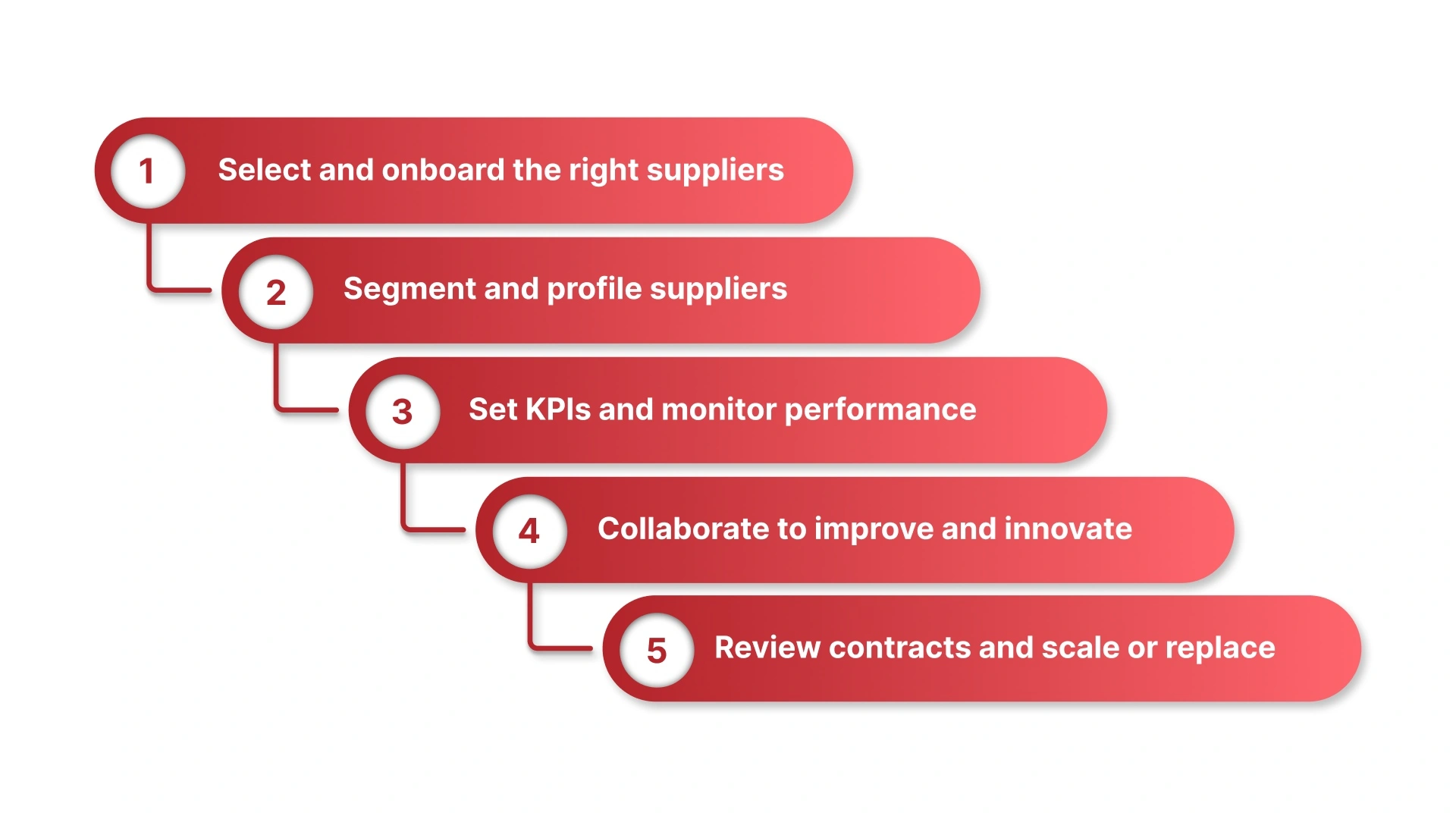
برنامج إدارة علاقات الموردين (SRM) يحول العلاقات مع الموردين من تفاعلات عشوائية إلى عملية قابلة للتكرار وتحقق قيمة. يتبع البرنامج تسلسلًا واضحًا: اختيار الشركاء المناسبين، قياس الأداء، التعاون لتحسينه، ثم تعديل العقود والخطط بناءً على النتائج.
فيما يلي الخطوات العملية التي تتبعها معظم فرق المشتريات:
1. اختيار الموردين المناسبين وإدراجهم:
ابدأ بتأهيل الموردين وفق معايير موضوعية: القدرة، الصحة المالية، تاريخ الالتزام باللوائح، وأداء التسليم. قم بإجراء الفحوص الخلفية، وطلب عينات، والتحقق من الشهادات (بما في ذلك المتطلبات المحلية مثل التسجيل لدى ZATCA عند الحاجة).
يجب أن يشمل إدراج الموردين شروط العقود، ومستويات الخدمة (SLAs)، وبروتوكولات التواصل، ووثيقة توقعات مشتركة بحيث يبدأ الجميع وفق نفس المعايير.
2. تقسيم وتوصيف الموردين:
قم بتجميع الموردين حسب القيمة الاستراتيجية والمخاطر: رئيسي، مفضل، تعاملي، واحتياطي. أنشئ ملفات تعريف تسجل أوقات التسليم، ونماذج التسعير، والمكونات الحرجة، ومستويات الاعتماد.
يركز التقسيم الموارد: يحصل الموردون الاستراتيجيون على مديري علاقات وخطط تطوير مشتركة، بينما يتبع الموردون التعامليون ضوابط أداء أكثر صرامة وأوامر تلقائية.
3. تحديد مؤشرات الأداء الرئيسية (KPIs) ومراقبة الأداء:
حدد مجموعة صغيرة من مؤشرات الأداء القابلة للقياس (مثل التسليم في الوقت المحدد، معدل العيوب، تباين أوقات التسليم، تباين التكاليف) واجمع البيانات باستمرار. استخدم لوحات متابعة أو أدوات إدارة علاقات الموردين لعرض الاتجاهات، والإشارة إلى الاستثناءات، وإنشاء بطاقات أداء.
تحافظ القوائم المرجعية المنتظمة على حوار قائم على الحقائق وتضمن أن الإجراءات التصحيحية تستهدف الأسباب الجذرية بدلاً من المشاكل السطحية.
4. التعاون للتحسين والابتكار:
عقد مراجعات أداء منظمة، وورش عمل مشتركة للتحسين، وجلسات حل المشكلات مع الشركاء الاستراتيجيين.
قدم توقعات الطلب، أو الالتزامات المبكرة للشراء، أو حوافز الاستثمار المشترك لضمان القدرة وتقليل التكاليف. يحوّل التعاون الموردين إلى مساهمين نشطين بدلًا من كونهم بائعين سلبيين.
5. مراجعة العقود والتوسع أو الاستبدال:
استخدم بيانات الأداء لاتخاذ قرار بتوسيع العلاقة، أو إعادة التفاوض، أو إنهائها. حدّث العقود لتعكس مستويات الخدمة الجديدة، أو شروط التسعير، أو بنود مشاركة المخاطر.
للفجوات الحرجة، فعّل خطط الطوارئ، أو التوريد المزدوج، أو العقود قصيرة المدى لضمان استمرار العمليات أثناء العثور على مورد بديل وإدراجه.
هل تفشل شركتك في متابعة فواتير الموردين أو مستندات الشراء بين الفرق، خاصة عندما تتحرك العمليات بسرعة؟
العديد من الشركات في الرياض أو الدمام تستخدم HAL Document وتحفظ ملفاتها في مساحة عمل واحدة منظمة وذكية. يمكن للفرق الوصول إلى ما تحتاجه فورًا، مع تتبع واضح وعدد أقل من المتابعات، مما يؤدي إلى تعاون أكثر سلاسة، وموافقات أسرع، وعمليات موردين أكثر تحكمًا.
اتباع هذه الخطوات يحوّل إدارة الموردين إلى دورة قابلة للقياس والتكرار تقلل المخاطر وتحسن القيمة. عندما تصبح هذه الهيكلية جزءًا من عمل المشتريات اليومي، تبدأ الفوائد في الظهور بسرعة عبر التكلفة، والجودة، والاستقرار التشغيلي.
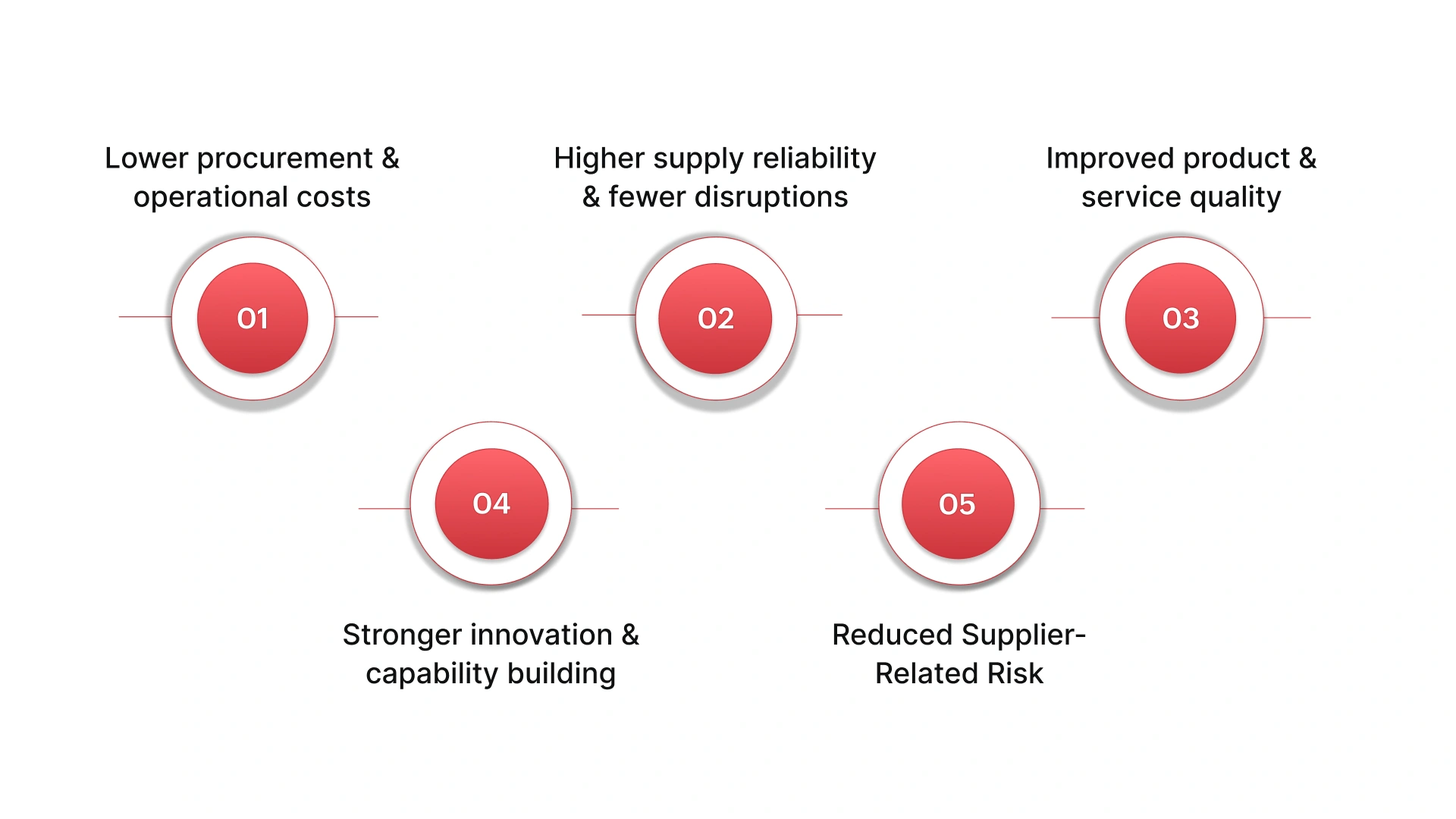
تمثل ممارسات إدارة علاقات الموردين القوية أكثر من مجرد تنظيم بيانات الموردين؛ فهي تعيد تشكيل الطريقة التي تتحكم بها الشركات في التكلفة والجودة والاستقرار طويل المدى. عندما تنتقل الفرق من الشراء التبادلي إلى المشتريات المرتكزة على العلاقات، يصبح التأثير واضحًا في العمليات.
فيما يلي الفوائد العملية التي تلاحظها الشركات عند تطبيق إدارة علاقات الموردين بشكل جيد:
خفض تكاليف المشتريات والعمليات:
تفتح العلاقات القوية فرصًا للحصول على أسعار أفضل، واستقرار طويل المدى في الأسعار، وتقليل المشتريات الطارئة. يكون الموردون أكثر استعدادًا لتقديم خصومات على الحجم، واتفاقيات بأسعار ثابتة، وحل المشكلات بسرعة، وكلها تقلل من إجمالي الإنفاق على المشتريات.
زيادة موثوقية التوريد وتقليل الانقطاعات:
من خلال التواصل المستمر، والتوقعات المشتركة، وتوضيح التوقعات، يخطط الموردون للإنتاج بشكل أفضل ويقدمون التسليم بشكل منتظم. هذا يقلل التأخيرات، ويحد من نفاد المخزون، ويضمن استمرار المشاريع أو خطوط الإنتاج دون انقطاع.
تحسين جودة المنتجات والخدمات:
تضمن إدارة علاقات الموردين التزام الموردين بمؤشرات الأداء الرئيسية الصارمة، وفحوص الجودة، وبروتوكولات الإجراءات التصحيحية. مع مرور الوقت، يقل معدل العيوب، وتنخفض تكاليف إعادة العمل، وتتحسن اتساقية المنتجات التي تدخل سلسلة التوريد.
تعزيز الابتكار وبناء القدرات:
يكون الموردون ذوو القيمة العالية أكثر انفتاحًا على مشاركة التقنيات الجديدة، وتحسين العمليات، وفرص التطوير المشترك. هذا يمكن الشركات من اعتماد مواد أفضل، وتقليل زمن الدورة، والحفاظ على التفوق على المنافسين.
تقليل المخاطر المرتبطة بالموردين:
يساعد الرصد الاستباقي فرق المشتريات على اكتشاف عدم الاستقرار المالي، والفجوات في الالتزام، وتأخيرات التسليم، أو المخاطر الجيوسياسية في وقت مبكر. ويتيح ذلك للشركات تفعيل موردين بديلين أو إعادة التفاوض على الشروط قبل تصاعد أي تعطيل.
هل تواجه فرق المشتريات لديك غالبًا نقصًا في المواد في اللحظة الأخيرة بسبب تشتت البيانات عبر الأدوات والفرق؟
تستخدم الشركات في جدة الآن HAL Suite لجمع جميع تخطيطات المواد للمشاريع تحت سقف واحد. وهم يحققون سيطرة أفضل على مخزون الموقع، وتتبع وإدارة تكاليف المشاريع بوضوح، وتخطيط المواد مبكرًا، والحفاظ على تنفيذ المشاريع وفق الجدول الزمني.
عندما تتراكم هذه الفوائد، تتحول المشتريات من مركز تكلفة إلى عامل استراتيجي يعزز المرونة والنمو. ومع ذلك، فإن تبني إدارة علاقات الموردين ليس دائمًا سهلاً، وغالبًا ما تواجه العديد من المؤسسات تحديات متوقعة تحتاج إلى معالجة مدروسة.
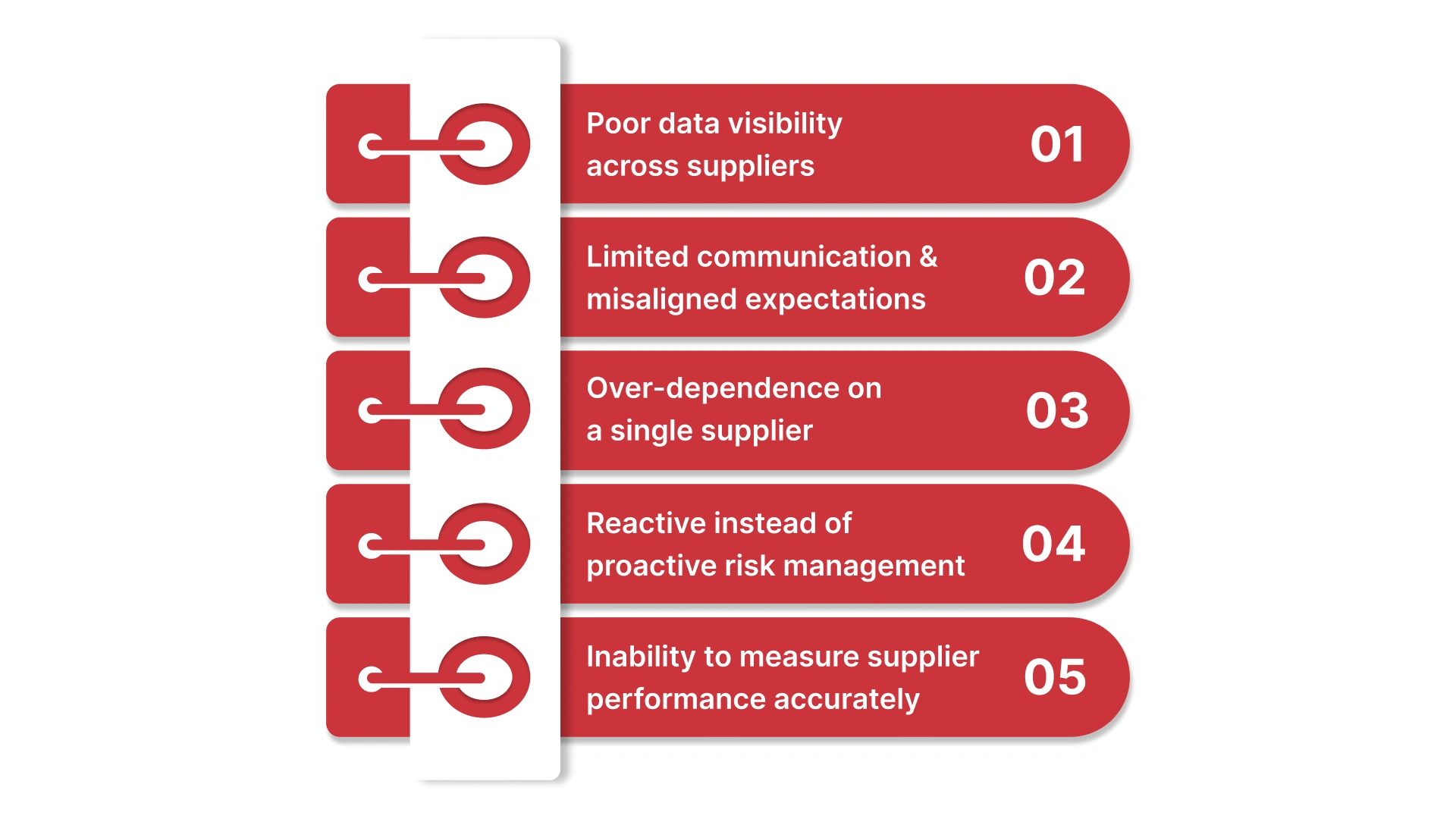
حتى مع أفضل النوايا، تواجه العديد من فرق المشتريات صعوبة في الحفاظ على علاقات منظمة ومستقرة مع الموردين. غالبًا ما تنشأ المشاكل من قلة الرؤية، أو عدم وضوح التواصل، أو العمليات القديمة، خاصة في سلاسل الإمداد سريعة الحركة. معالجة هذه التحديات مبكرًا تمنع تحول عدم الكفاءة إلى مخاطر تشغيلية أكبر.
فيما يلي أكثر العقبات شيوعًا التي تواجه الفرق عند تنفيذ إدارة علاقات الموردين (SRM) بفعالية:
اقرأ أيضًا: إطلاق الكفاءة والتوفير من خلال المشتريات الاستراتيجية
التغلب على هذه التحديات يتطلب مزيجًا من العمليات المنظمة، والتواصل المستمر، والتقنية المناسبة لدعم الرؤية والتحكم.
بعد ذلك، دعونا نناقش كيف يساعد HAL المؤسسات على تبسيط إدارة علاقات الموردين وبناء شراكات أكثر قوة وموثوقية مع الموردين.
HAL هو منصة تشغيل أعمال حديثة مدفوعة بالذكاء الاصطناعي، مصممة للشركات التي تحتاج إلى عمليات مشتريات سريعة ودقيقة وقابلة للتوسع. تم تصميمها للشركات الصغيرة والمتوسطة، والمؤسسات الكبرى، والعمليات متعددة الفروع في دول مجلس التعاون الخليجي، خاصة في المملكة العربية السعودية، حيث توحّد المشتريات والمالية والمخزون وإدارة الموردين ضمن منصة ذكية واحدة.
فيما يلي القدرات التي تجعل HAL داعمًا قويًا لإدارة علاقات الموردين (SRM):
منصة مثل HAL لا تقوم فقط برقمنة المشتريات؛ بل تعيد تشكيل طريقة بناء الفرق لعلاقات الموردين وصيانتها وتحسينها.
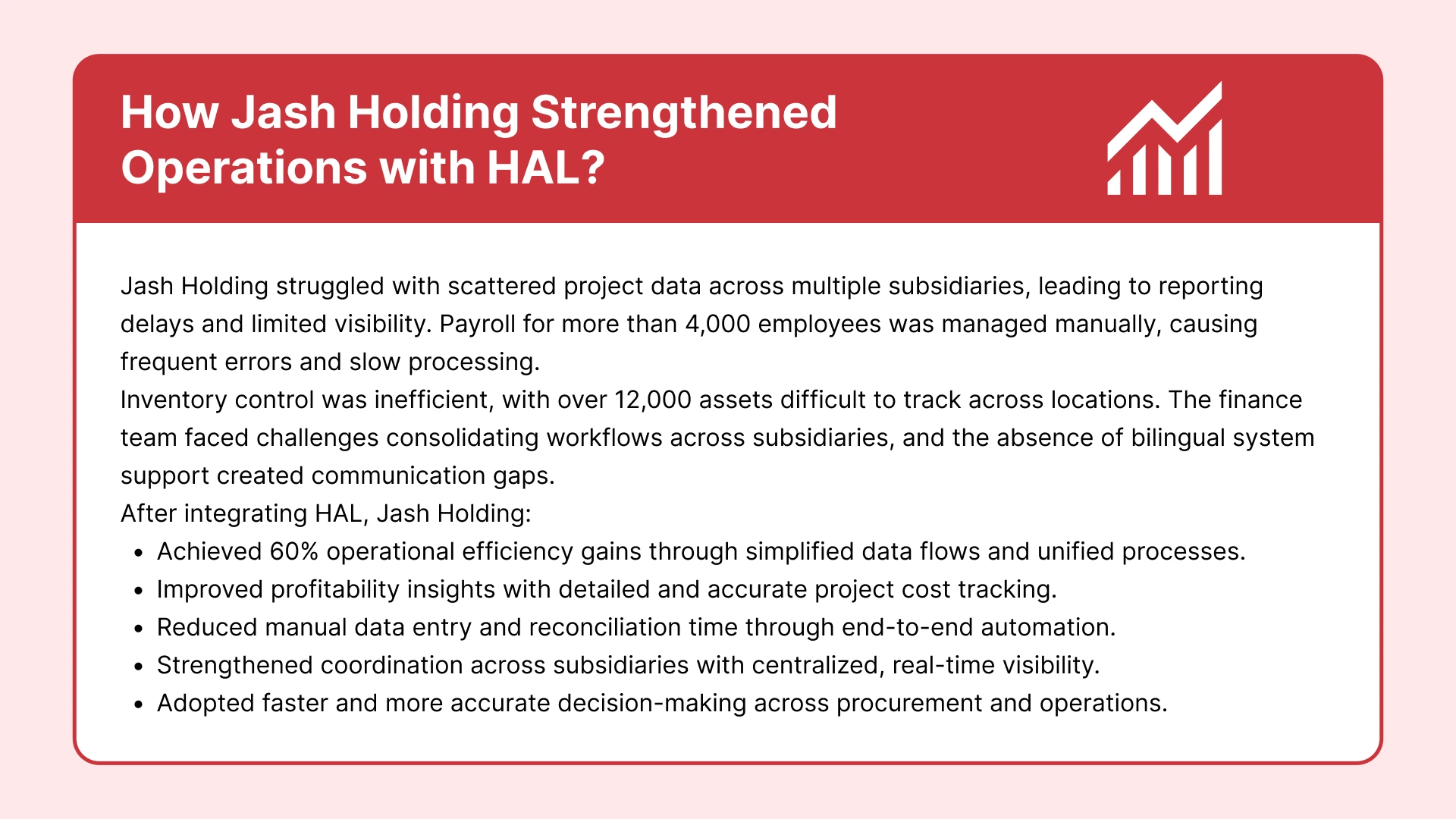
واجهت شركة جاش القابضة صعوبة في التعامل مع البيانات المتفرقة للمشاريع عبر العديد من الشركات التابعة، مما أدى إلى تأخيرات في التقارير وقلة الرؤية الشاملة. كان يتم إدارة رواتب أكثر من 4000 موظف يدويًا، مما تسبب في أخطاء متكررة وبطء في المعالجة. كما كان التحكم في المخزون غير فعال، مع أكثر من 12,000 أصل يصعب تتبعها عبر المواقع. وواجه فريق المالية تحديات في توحيد سير العمل بين الشركات التابعة، كما أن غياب دعم النظام ثنائي اللغة خلق فجوات في التواصل.
بعد دمج HAL، قامت شركة جاش القابضة بـ:
هل يواجه فريق المشتريات الخاص بك صعوبات مع العمليات القديمة، أو ضعف رؤية الموردين، أو أوقات تسليم غير متوقعة؟ تعرّف على كيف يمكن لـ HAL تبسيط رحلتك في إدارة علاقات الموردين (SRM). تواصل مع فريقنا اليوم.
أصبحت إدارة علاقات الموردين جزءًا أساسيًا من المشتريات الحديثة، خاصة في الأسواق سريعة الحركة مثل المملكة العربية السعودية. فهي تساعد الشركات على بناء شراكات أقوى مع الموردين، وتقليل المخاطر، والحفاظ على استقرار سلاسل الإمداد، مما يجعل المشتريات أكثر توقعًا وكفاءة ومتوافقة مع الأهداف طويلة المدى.
يعتمد النهج القوي لإدارة علاقات الموردين على مكونات واضحة وعمليات منظمة. فتصنيف الموردين، وإدارة الأداء، والتعاون، وتخفيف المخاطر، وتنفيذ الاستراتيجية، وتكامل التكنولوجيا تعمل جميعها معًا. وعند تطبيقها خطوة بخطوة، بدءًا من تحديد الموردين إلى التقييم والتجديد، تحول إدارة علاقات الموردين التفاعلات اليومية مع الموردين إلى نظام منضبط وقابل للقياس.
مع ممارسات SRM الصحيحة، تشهد الشركات موثوقية أعلى في الإمدادات، وتحكمًا أفضل في التكاليف، وتفاعلًا أقوى مع الموردين. لكن التحديات مثل ضعف الرؤية، والتواصل غير المتسق، والفجوات في البيانات، ومؤشرات الأداء غير الواضحة يمكن أن تبطئ التقدم بدون الهيكل والأدوات المناسبة.