

Small businesses in Saudi Arabia need accounting software to do more than record income and expenses.
A useful system may also need to handle VAT, Arabic invoicing, bank reconciliation, receivables and payables, financial reporting, ecommerce or POS integrations, and ZATCA e-invoicing.
That localization is increasingly important in 2026 because ZATCA's Integration Phase continues to expand. The latest announced Wave 25 covers taxpayers whose VAT-subject revenues exceeded SAR 187,500 during 2022, 2023, 2024, or 2025, with affected taxpayers required to integrate their e-invoicing solutions with FATOORA by February 1, 2027. Read ZATCA's Wave 25 announcement
That means small businesses should distinguish between software that can calculate VAT and software with documented support for the Saudi e-invoicing workflow they actually need.
This guide compares current accounting-software options for Saudi small businesses in 2026 based on accounting functionality, Saudi localization, e-invoicing, integrations, scalability, and current pricing where the vendor publishes it.
Spreadsheets can be sufficient for very simple bookkeeping, but they become harder to control as transaction volume, customers, suppliers, VAT records, bank accounts, and reporting requirements increase.
Accounting software can help businesses manage:
For Saudi businesses, the system may also need to support the applicable ZATCA e-invoicing workflow.
This should not be described as software “ensuring compliance.” The business still remains responsible for correct tax treatment, records, filings, and regulatory obligations.
HAL's current accounting product, for example, documents automated journal entries, bank reconciliation, financial reports, user-access controls, bulk processing, ready-to-file VAT reports, and integration with ZATCA e-invoicing. Review HAL Accounting's current functionality
If you retain the Al Haram example, describe it specifically as an e-invoicing implementation case, not proof that HAL automatically makes all accounting more accurate or guarantees compliance.

Choosing the right accounting software is key to your business’s success. The right software improves efficiency, reduces mistakes, and keeps you compliant with tax laws. The wrong choice, on the other hand, can create additional complexities and lead to costly mistakes.
Here are the top reasons you need the right accounting software:
Let’s now explore some of the best accounting software options for small businesses in Saudi Arabia.
Here's a look at some of the best accounting software options available to small businesses in Saudi Arabia:
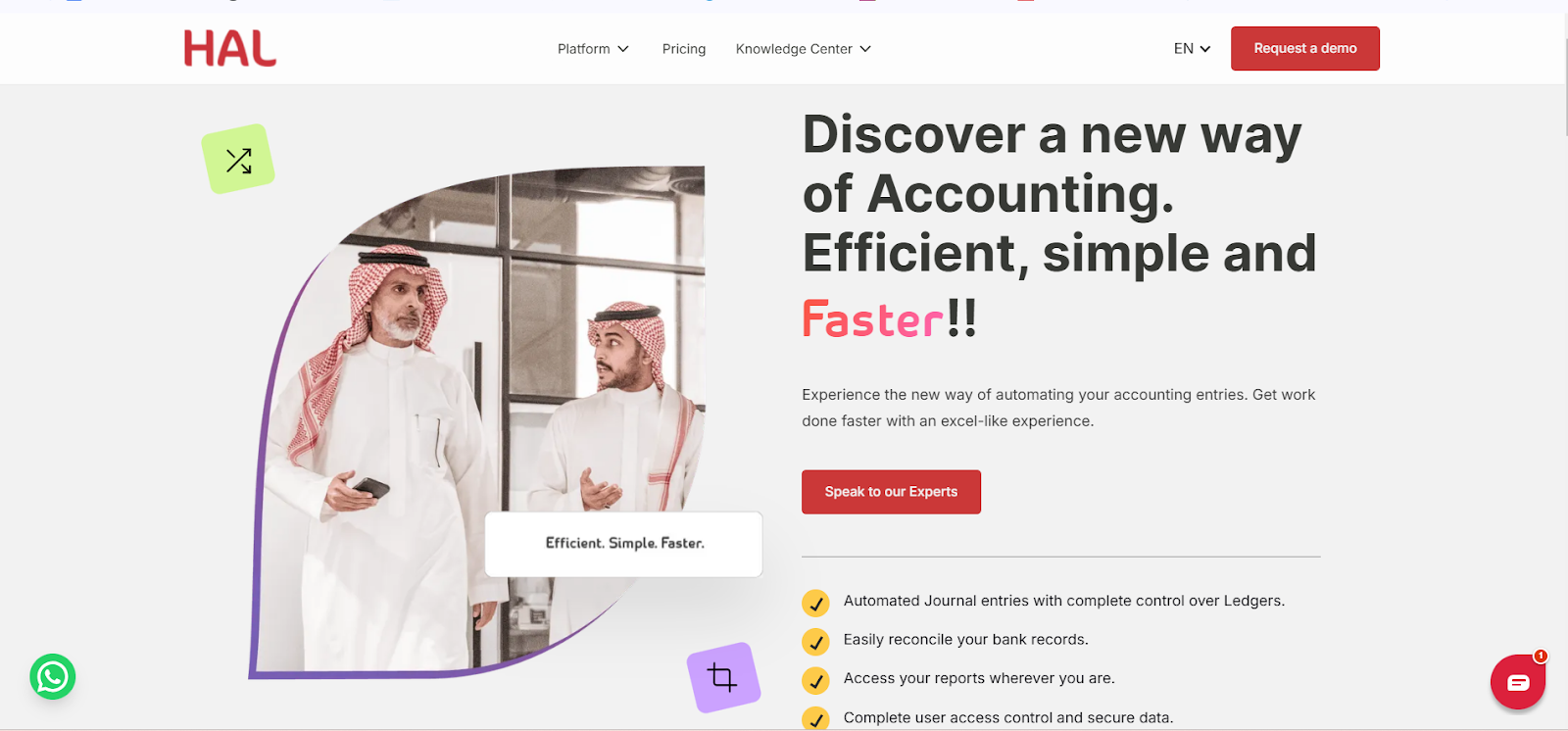
HAL Accounting is a cloud-based accounting environment connected with HAL's wider Saudi ERP suite.
Its current accounting documentation includes:
HAL also has a broader [integration ecosystem] covering banking, ecommerce, POS, payments, and communication platforms. Current integrations listed by HAL include Salla, Zid, Shopify, Magento, Foodics, Total Pay, Tabby, Tamara, WhatsApp, and Noon. See HAL Integrations
Best suited for: Saudi SMEs that expect accounting to connect with inventory, procurement, sales, HR, retail, manufacturing, or other operational functions.
Current public pricing: HAL currently lists its Gold plan at SAR 1,999 per user/year. See current HAL pricing
Consideration: Do not say HAL “guarantees VAT, Zakat, or ZATCA compliance.” Describe the documented accounting and e-invoicing functionality instead.
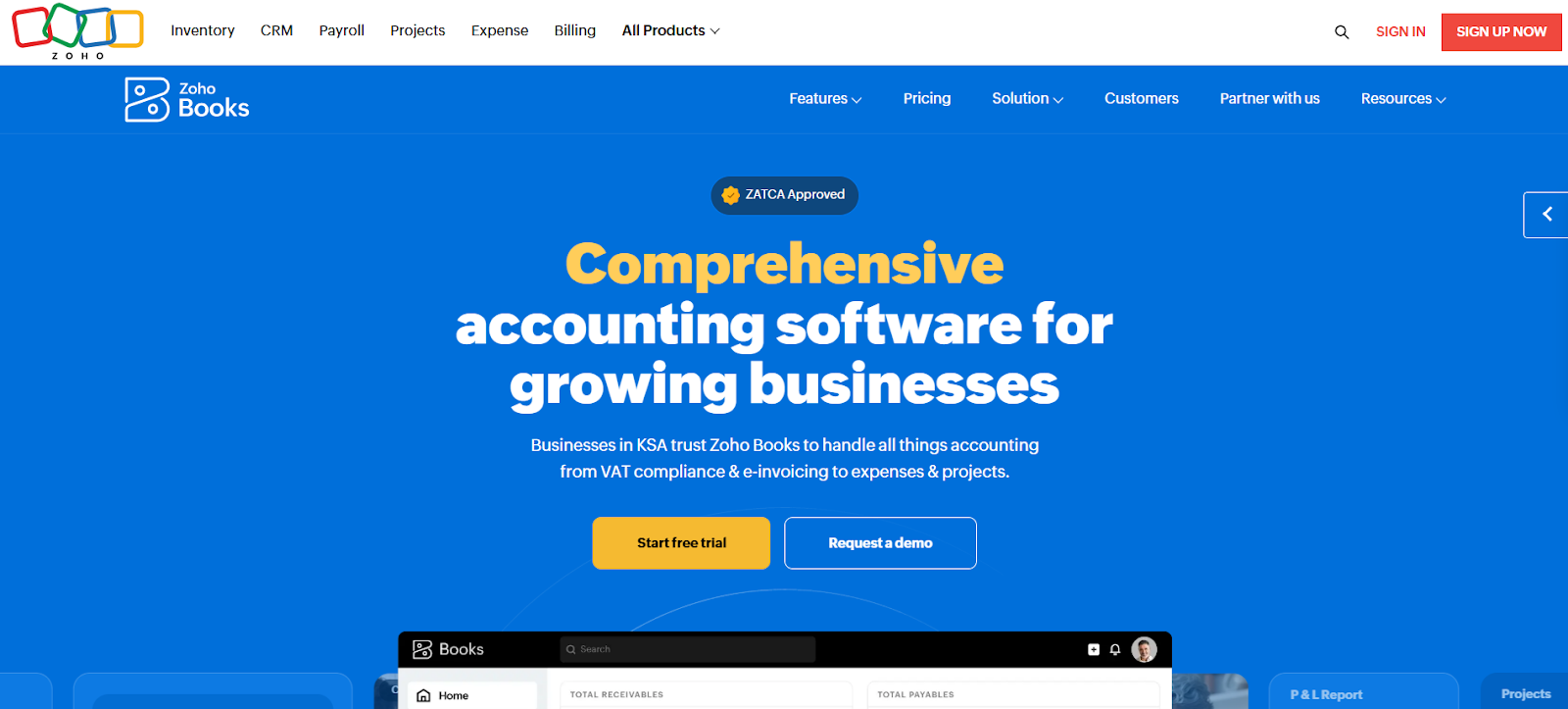
Zoho Books now has substantially stronger Saudi functionality than the old article suggests.
Its current Saudi product page and pricing documentation include:
Best suited for: Small businesses primarily seeking cloud accounting rather than a broader operational ERP.
Current annual-billing pricing:
This is a major correction from the current article, which says the Plus plan costs SAR 1,440/year/user.
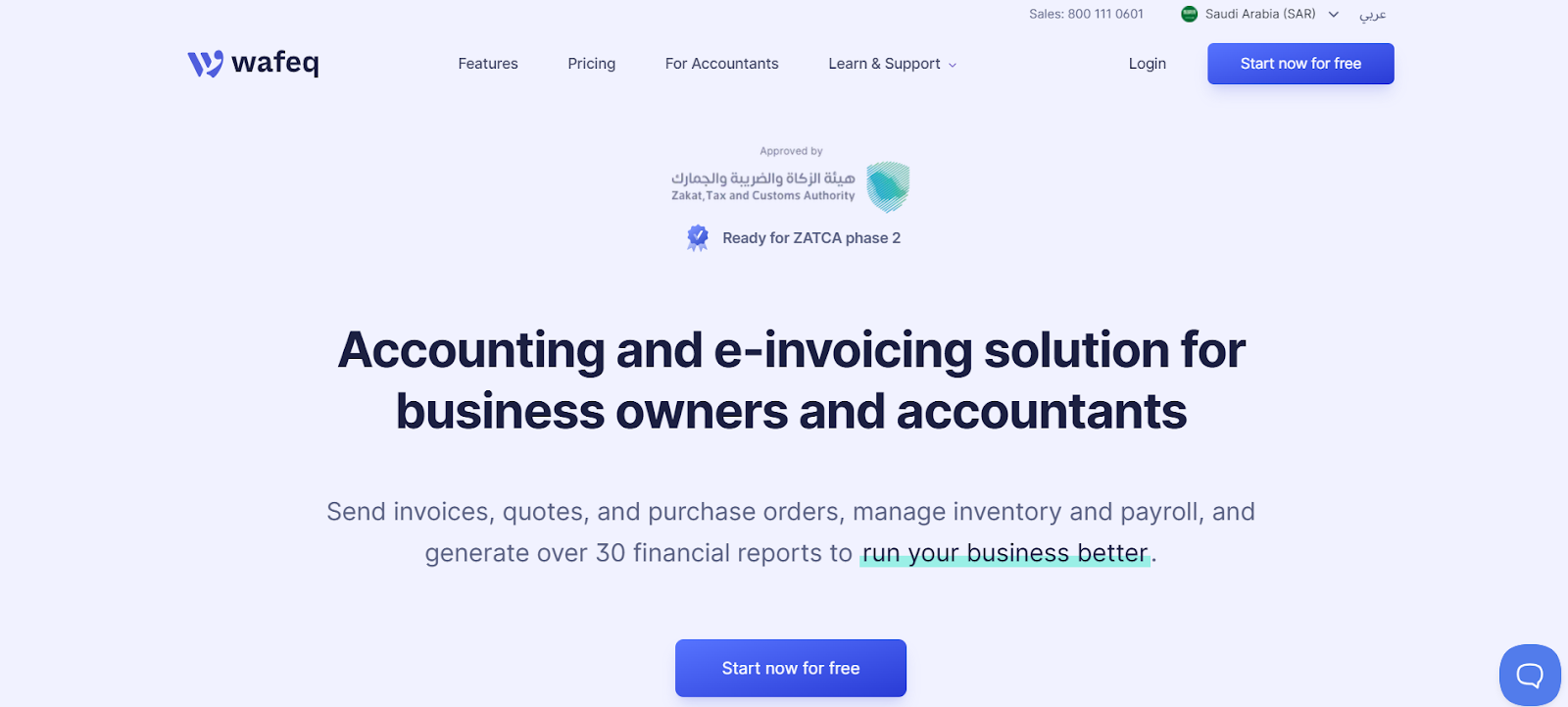
Wafeq is built specifically around accounting and invoicing for Saudi and regional businesses.
Its current Saudi accounting product documents cloud accounting and local e-invoicing functionality, while Wafeq's current materials emphasize:
Best suited for: Saudi SMEs prioritizing localized accounting, bilingual workflows, and a finance-focused product.
Current annual-billing pricing shown by Wafeq:
The old article's SAR 1,188/year “Plus” figure should therefore be removed. Pasted markdown
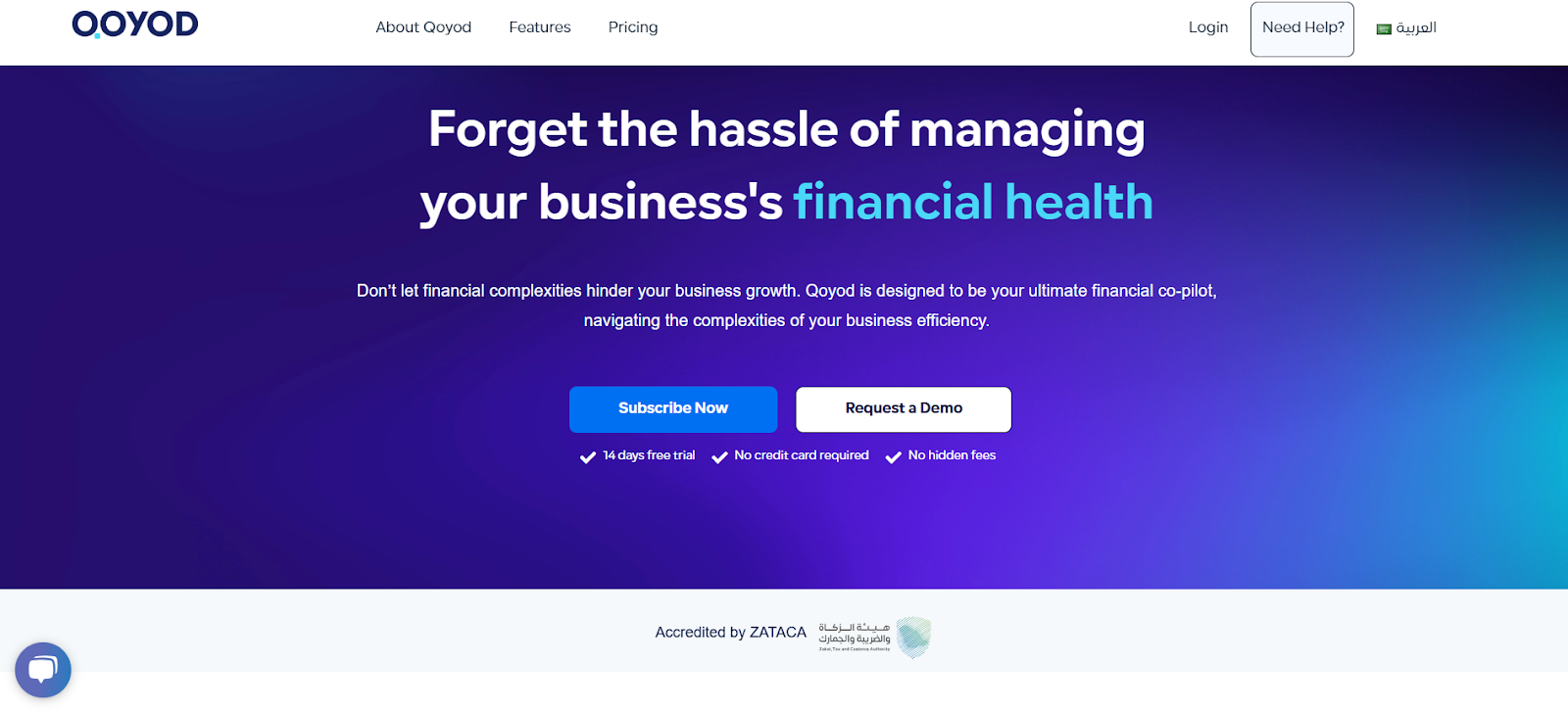
Qoyod is a Saudi-focused cloud-accounting platform aimed at business owners and accounting professionals.
Its current product documentation highlights:
Important pricing/compliance nuance: Qoyod's current plan material shows the Basic plan at SAR 1,200/year before VAT, but its support documentation also states that Basic includes Phase One and does not include Phase Two integration. Phase Two availability therefore needs to be checked at the plan level rather than describing the whole product as automatically Phase Two-ready.
Best suited for: Saudi small businesses wanting locally oriented accounting and support.
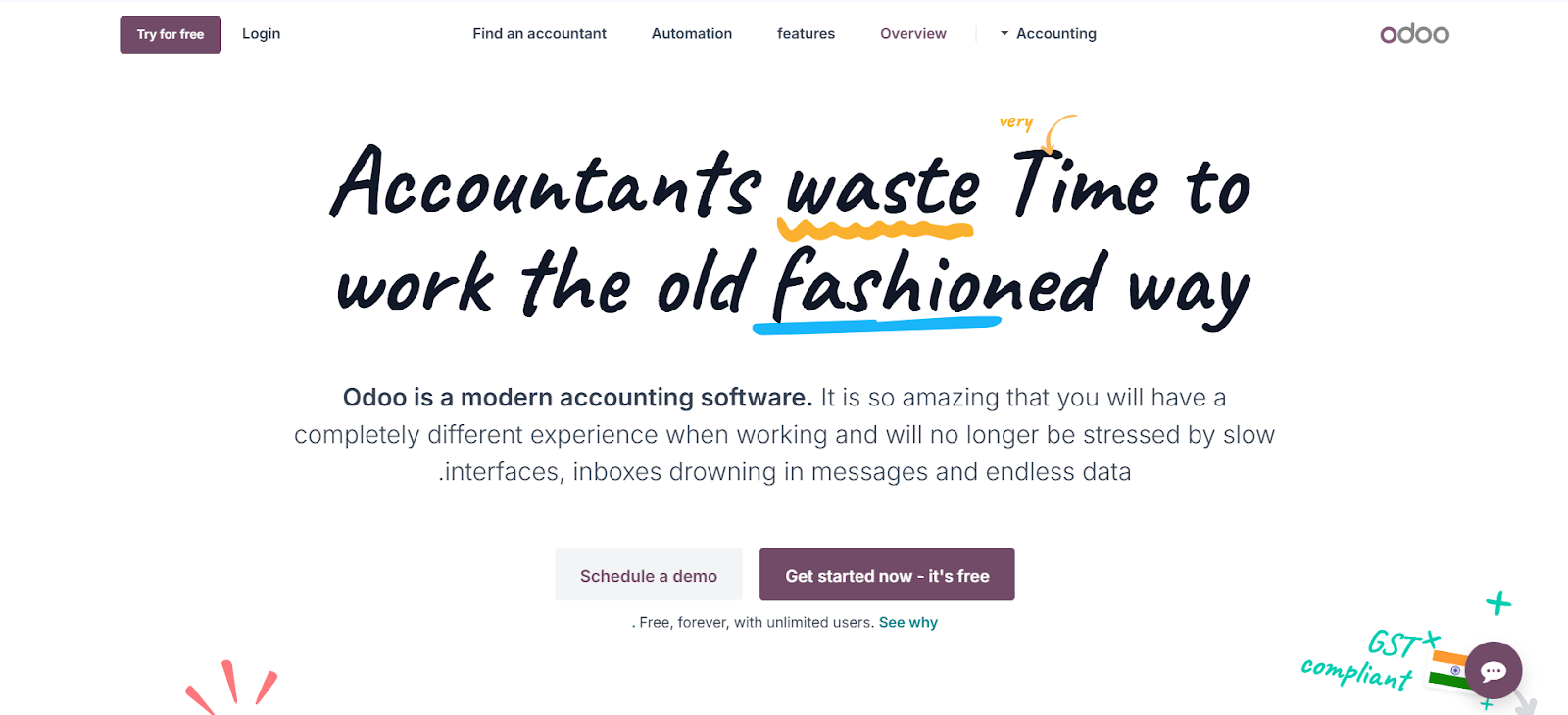
Odoo should be upgraded materially in this comparison.
Its current Saudi localization documentation includes:
Odoo is broader than standalone accounting software because its plans can also include CRM, inventory, ecommerce, HR, projects, POS, and other applications.
Current annual-billing pricing:
The displayed Standard and Custom prices currently include an introductory discount for initial users for the first 12 months. Odoo Pricing
The old SAR 3,380/year/user figure should be removed.
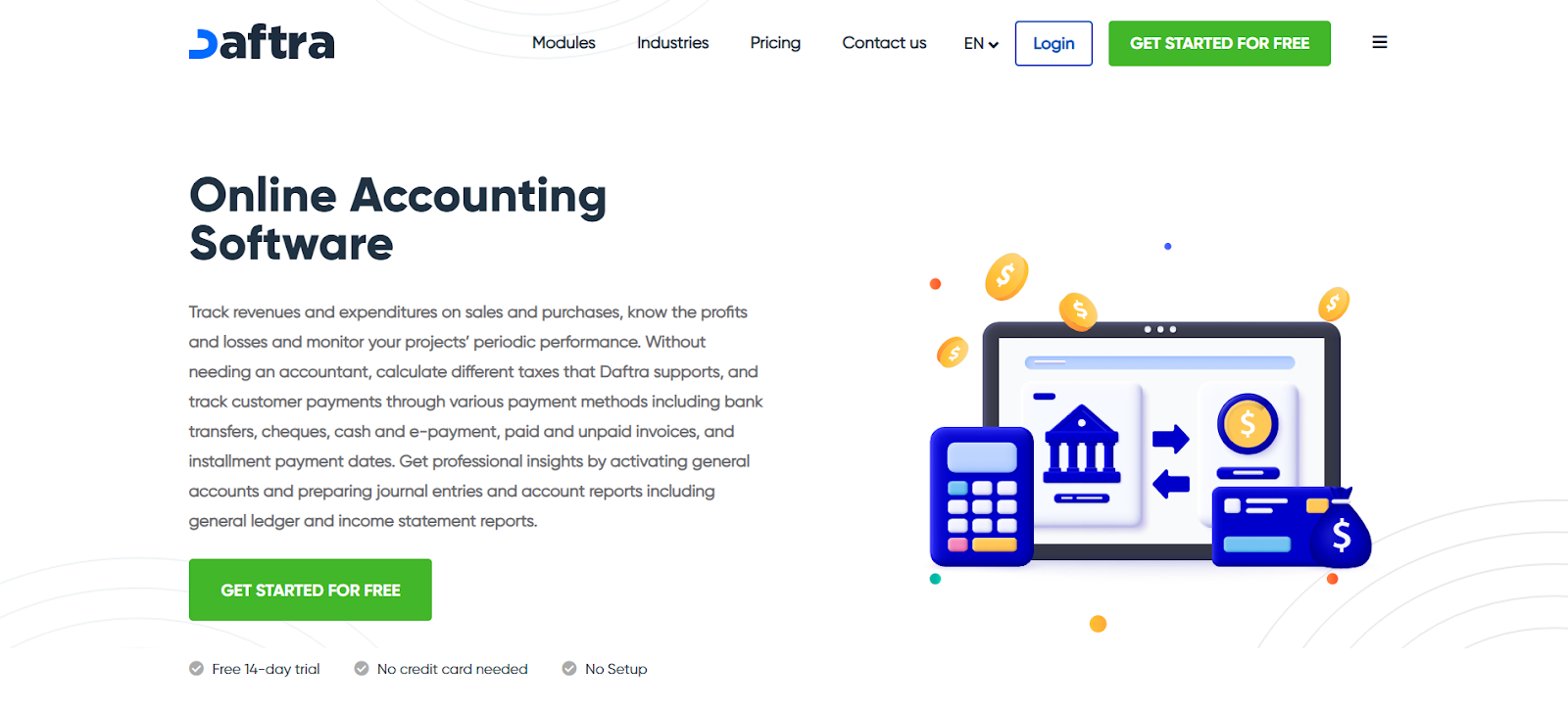
Daftra combines accounting with wider operational functionality.
Its current Saudi-oriented material includes accounting, invoicing, expenses, purchasing, inventory, HR/payroll, reporting, and e-invoicing functionality, with Phase Two functionality available on applicable plans. Daftra's current Saudi accounting guide
Best suited for: Small businesses wanting accounting together with additional business-management functions.
Daftra currently publishes several promotional/plan figures across its own pages, so I would not hard-code one price into this article unless the team commits to checking it periodically.
Instead use:
Pricing: Daftra publishes tiered Saudi pricing that varies by plan and billing term; check its current pricing before purchase.
This is safer than retaining the old $480/year/user Premium figure.
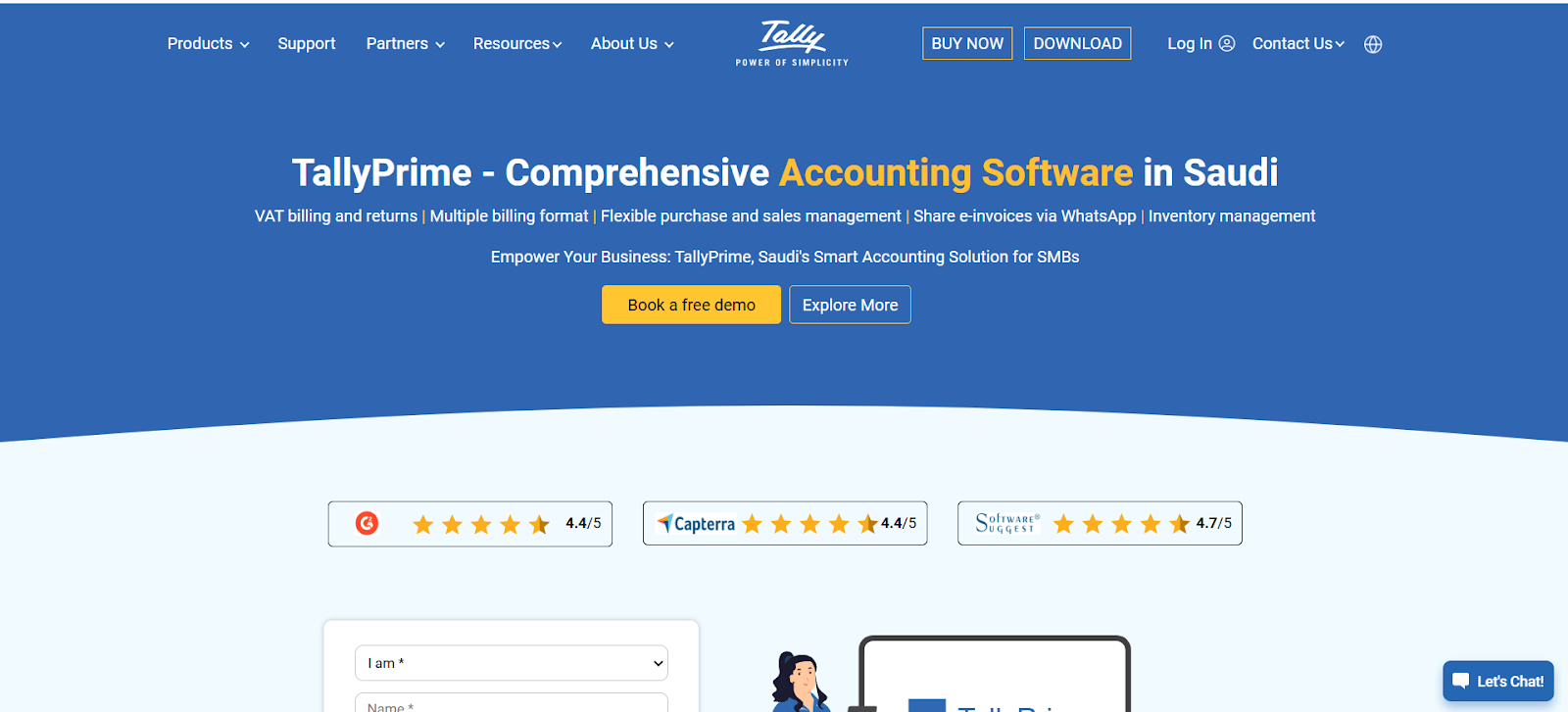
TallyPrime remains relevant in Saudi Arabia and now has current KSA-specific e-invoicing documentation.
Tally's May 2026 KSA documentation covers both the Generation Phase and Integration Phase and includes:
Tally's current KSA integration setup requires the latest supported TallyPrime version, active TSS, and the KSA e-invoicing plug-in.
Best suited for: Businesses comfortable with Tally's desktop-oriented operating model that need accounting, inventory, and Saudi VAT/e-invoicing functionality.
Current international license pricing: Tally currently lists TallyPrime Silver at USD 630 and Gold at USD 1,890 for international licenses, rather than the old @@CODE0@@ subscription figure. TallyPrime international pricing
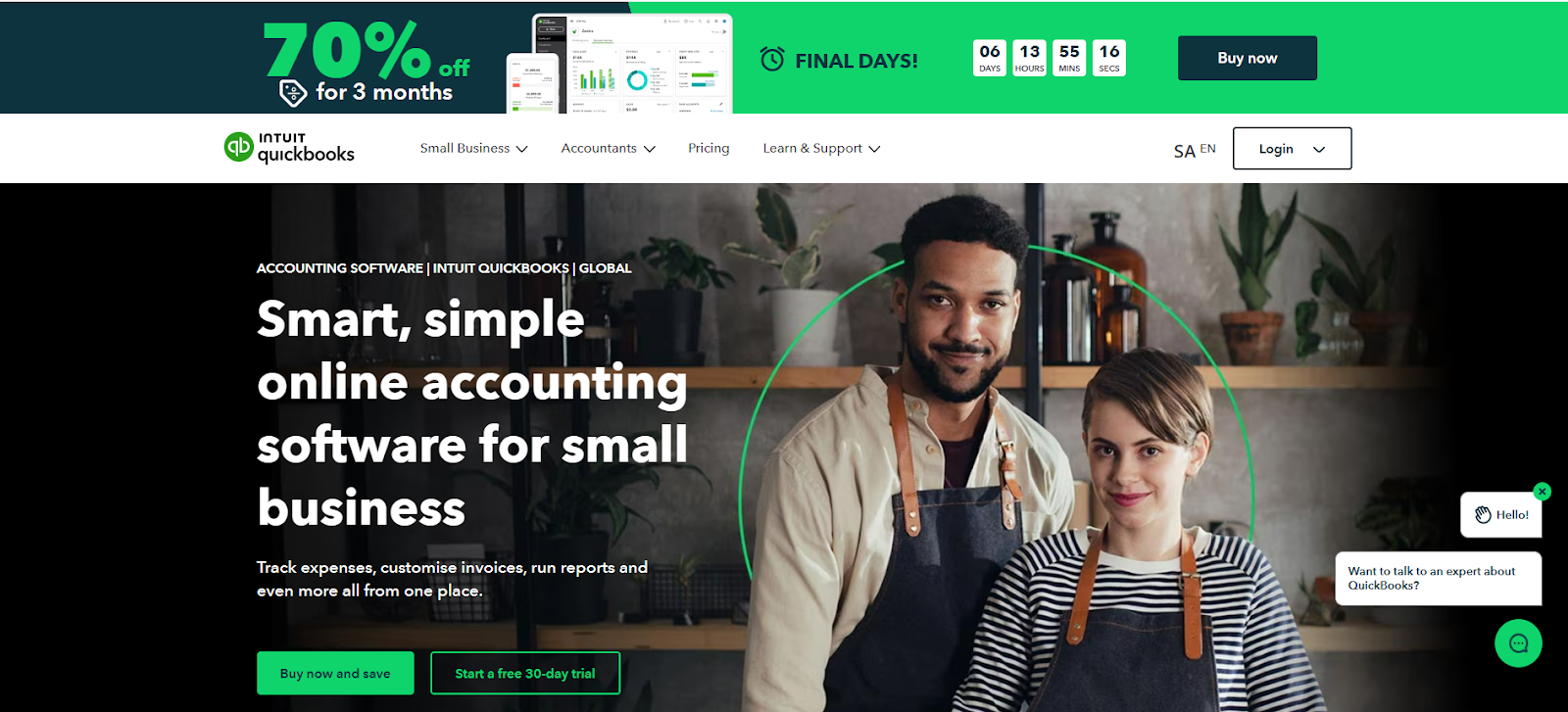
QuickBooks Online Global remains a strong general small-business accounting platform.
Its current global plans include:
However, the current article overstates its Saudi fit.
QuickBooks has documentation for Saudi customers being charged Saudi VAT on their QuickBooks subscription, but I did not find equivalent current first-party documentation showing native Saudi ZATCA Phase Two integration.
This is much more useful than comparing products using generic “VAT compliant: yes/no” labels.
At minimum, the system should handle:
Look for transaction import, matching, reconciliation controls, and support for the banks or data formats your business actually uses.
HAL, for example, documents bank-record reconciliation, Excel uploads, multiple banks, and AI-assisted matching/postings. HAL Accounting reconciliation features
The software should support appropriate Saudi VAT rates and provide the records/reports required by your finance team.
Do not assume that VAT calculation alone means the system supports every ZATCA requirement.
If the business is subject to Phase Two, verify the actual Integration Phase functionality.
ZATCA's latest Wave 25 extends Phase Two to additional taxpayers through February 1, 2027. Check the current Wave 25 criteria
For Saudi businesses, confirm whether the solution can generate the required Arabic or bilingual invoices and reports.
Odoo's current Saudi localization, for example, explicitly documents Arabic invoice requirements and bilingual invoice support.
Evaluate the systems the business actually uses:
HAL's current [integrations ecosystem] includes Salla, Zid, Shopify, Magento, Foodics, Total Pay, Tabby, Tamara, and other local/regional platforms. HAL Integrations
Finance teams should be able to control who can enter, approve, edit, or view transactions and reports.
Check how pricing and functionality change when the business adds:
Compare more than the headline subscription.
Include:
Now that you know the key features to look for, let’s explore some alternative methods for managing your business finances if accounting software isn’t right for you.
Dedicated accounting software is one option, but the right approach depends on transaction volume, regulatory requirements, internal finance skills, and the complexity of the business.
While spreadsheets may work in the short term, they lack the automation and accuracy of dedicated accounting software, making them inefficient for long-term use.
Spreadsheets, outsourced accountants, and free software can all be appropriate in some circumstances. However, VAT-registered businesses and companies with increasing transaction volume should make sure their chosen process provides sufficient records, controls, reconciliation, and applicable e-invoicing capability.
The best accounting software for a Saudi small business depends on what the business actually needs.
A microbusiness focused mainly on invoicing may be well served by a lightweight cloud-accounting product.
A company managing inventory, procurement, multiple departments, ecommerce, payroll, or other operational processes may benefit more from an accounting system connected with a broader ERP environment.
Saudi businesses should pay particular attention to:
[HAL Accounting] is particularly relevant for Saudi SMEs that want accounting connected to broader business operations. Its current product documentation covers automated journals, reconciliation, reporting, AR/AP, multiple banks, VAT reports, ZATCA e-invoicing integration, and broader connections through the HAL ERP ecosystem. Explore HAL Accounting
HAL's Gold plan is currently listed at SAR 1,999 per user/year, giving smaller businesses a published entry point. Review HAL pricing
That does not make HAL automatically the right product for every business. Zoho Books may suit businesses wanting a narrower cloud-accounting product, Odoo offers deeper modularity and Saudi localization, while Wafeq and Qoyod offer strong regionally focused alternatives.
Businesses comparing HAL against those requirements can request a HAL ERP demo.
There is no universal winner.
HAL is particularly relevant for businesses that want accounting connected with inventory, sales, procurement, HR, or other ERP functions, while Zoho Books, Wafeq, Qoyod, and Odoo are strong alternatives depending on budget and requirements.
Several current products document Saudi Phase Two functionality.
For example, [Odoo's Saudi localization] explicitly includes a ZATCA Phase Two API integration, while Zoho Books includes Phase Two e-invoicing from its Standard Saudi plan. Odoo Saudi localization
HAL also documents ZATCA e-invoicing integration through its accounting/VAT Care environment. HAL VAT Care
Always verify that the specific plan and configuration supports the phase and invoice flows your business needs.
Pricing varies significantly.
Current examples include:
Compare included users, branches, Phase Two functionality, integrations, and add-ons before comparing headline prices.
QuickBooks Online Global offers strong general accounting functionality, and Intuit has specific billing guidance for Saudi customers.
However, I did not find current first-party documentation comparable to Odoo or Zoho's Saudi materials showing native ZATCA Phase Two integration.
Saudi businesses considering QuickBooks should therefore verify the separate localization/e-invoicing setup they would need.
Possibly for a very small or low-complexity business.
For example, Zoho Books currently offers a Saudi Free plan with invoicing, expenses, journals, reconciliation, and financial reports, but Phase Two e-invoicing begins on its Standard plan.
The relevant question is whether the free plan supports the business's actual tax, invoicing, user, branch, and transaction requirements.
No.
Software can calculate taxes, generate records, and support e-invoicing integrations, but the taxpayer remains responsible for applying the correct tax treatment and meeting applicable filing and invoicing obligations.
Consider ERP when accounting is becoming tightly connected with operational problems such as:
At that stage, keeping finance separate from operational systems may create more integration and reconciliation work.




%20in%202026.png)