ERP ROI Calculation for Saudi Enterprises That Want Measurable Growth
Published By
Mohamed Azher
Finance
Dec 22, 2025
Across Saudi Arabia, mid-sized enterprises are investing heavily in ERP systems, a market now valued at over SAR 656 million (approx.). Yet the question many executives overlook isn’t which ERP to choose, but whether the numbers justify the investment. Efficiency alone doesn’t pay for licenses, training, or implementation time; measurable ROI does.
Before signing contracts or approving budgets, leaders need to translate expectations into data on how much time, money, and compliance effort the system will actually save. As Saudi Arabian businesses adapt to ZATCA rules, VAT reforms, and rising competition, an accurate ERP ROI calculation turns digital transformation into a measurable, profit-driven strategy.
In this guide, we look at how Saudi Arabia-based companies can calculate ERP ROI precisely, from defining investment inputs to measuring tangible and compliance-driven returns.
Key Takeaways
ROI as a Strategic Benchmark: ROI calculation helps Saudi Arabian businesses assess ERP investments based on measurable financial, operational, and compliance-driven outcomes.
Multi-Department Accountability: Finance, operations, IT, and management collaborate to track ROI drivers such as cost savings, productivity, and compliance readiness.
Compliance as a Profit Lever: ZATCA and VAT automation reduce penalties, audit risks, and manual workload, directly improving long-term ERP ROI in Saudi Arabia.
Industry-Specific ROI Ranges: Saudi industries typically achieve ERP ROI between 15% and 40%, with payback periods averaging 12 to 30 months based on scale and adoption.
HAL ERP’s Measured Framework: HAL tracks every Riyal saved through efficiency, compliance, and reporting gains, transforming ERP ROI into an ongoing performance metric.
Why ROI Calculation Should Come First in Every ERP Investment in Saudi Arabia
ROI, or Return on Investment, measures the financial gain achieved compared to the total cost of setting up and using an ERP system. It reflects how the project improves revenue, cuts costs, and reduces process waste in measurable terms.
In Saudi Arabia, where compliance, automation, and digital record accuracy directly affect profitability, ROI gives business leaders a clear picture of whether an ERP project justifies its budget.
Why it matters:
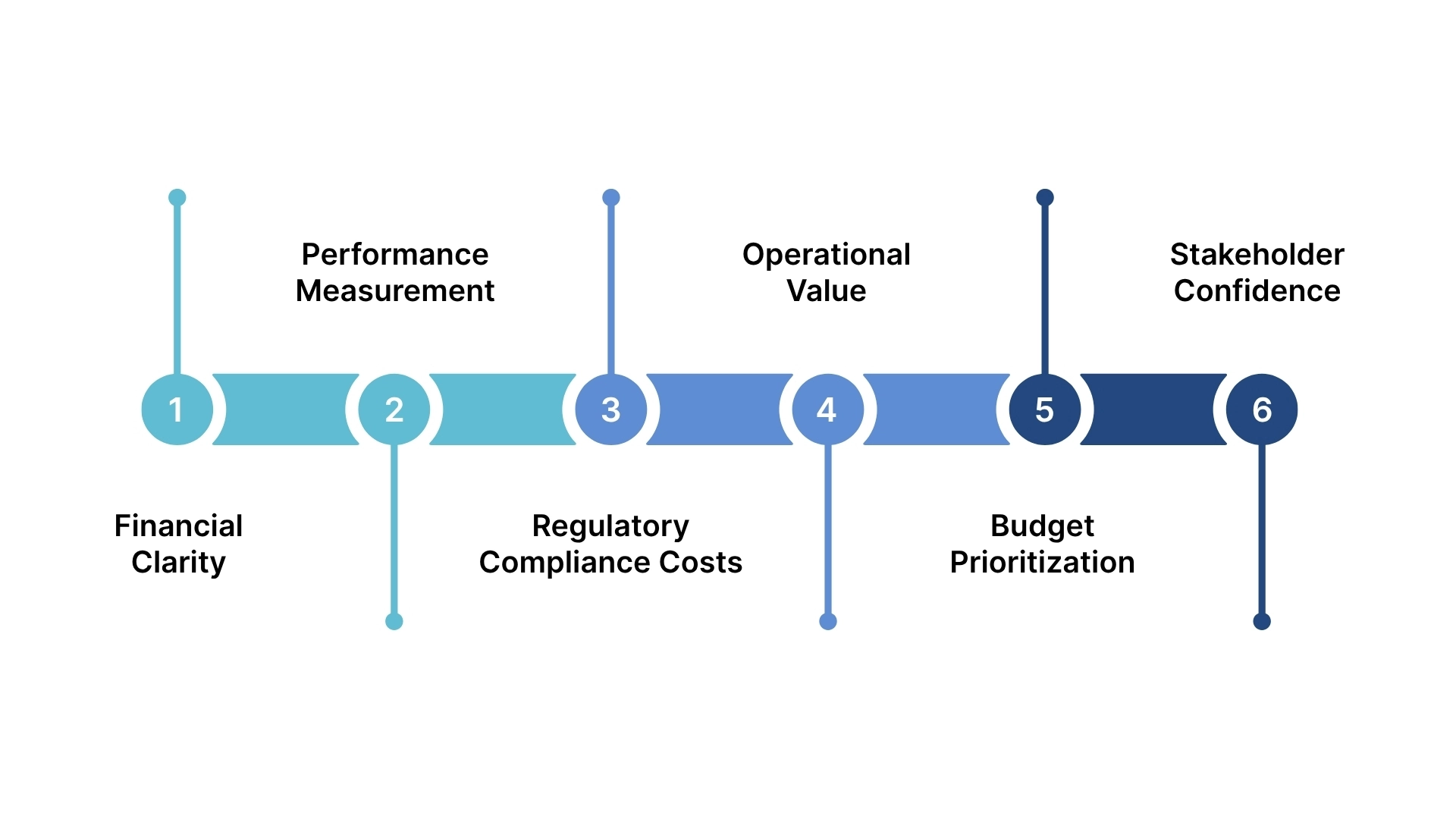
Financial Clarity: ERP projects involve licensing, setup, training, and long-term support costs. ROI allows decision-makers to track whether savings from automation and data accuracy outweigh those expenses.
Performance Measurement: A defined ROI baseline helps finance and operations teams check if the ERP delivers measurable outcomes such as shorter billing cycles, lower manual errors, or better order tracking.
Regulatory Compliance Costs: Saudi firms must meet ZATCA e-invoicing and VAT rules. ROI analysis shows how automated reporting and validation reduce penalties and administrative overhead linked to manual compliance work.
Operational Value: ROI shifts the discussion from what the system can do to what the business gains. Metrics like faster month-end closing, reduced inventory variance, and improved project tracking directly affect profit margins.
Budget Prioritization: By comparing the expected return from each ERP area, finance, inventory, HR, or sales, leaders can decide which modules to roll out first, using real financial reasoning instead of assumptions.
Stakeholder Confidence: When ROI is quantified, it strengthens internal approvals and investor trust, as the expected payback and performance metrics are visible upfront.
ROI calculation defines the financial logic of an ERP rollout and is typically handled by financial leaders or ERP consultants in Saudi Arabia.
Who Handles ERP ROI Calculation in Saudi Arabian Enterprises
ROI measurement in Saudi companies is a joint effort between finance, operations, and technology teams. Each function tracks different metrics that transform the final payback analysis.
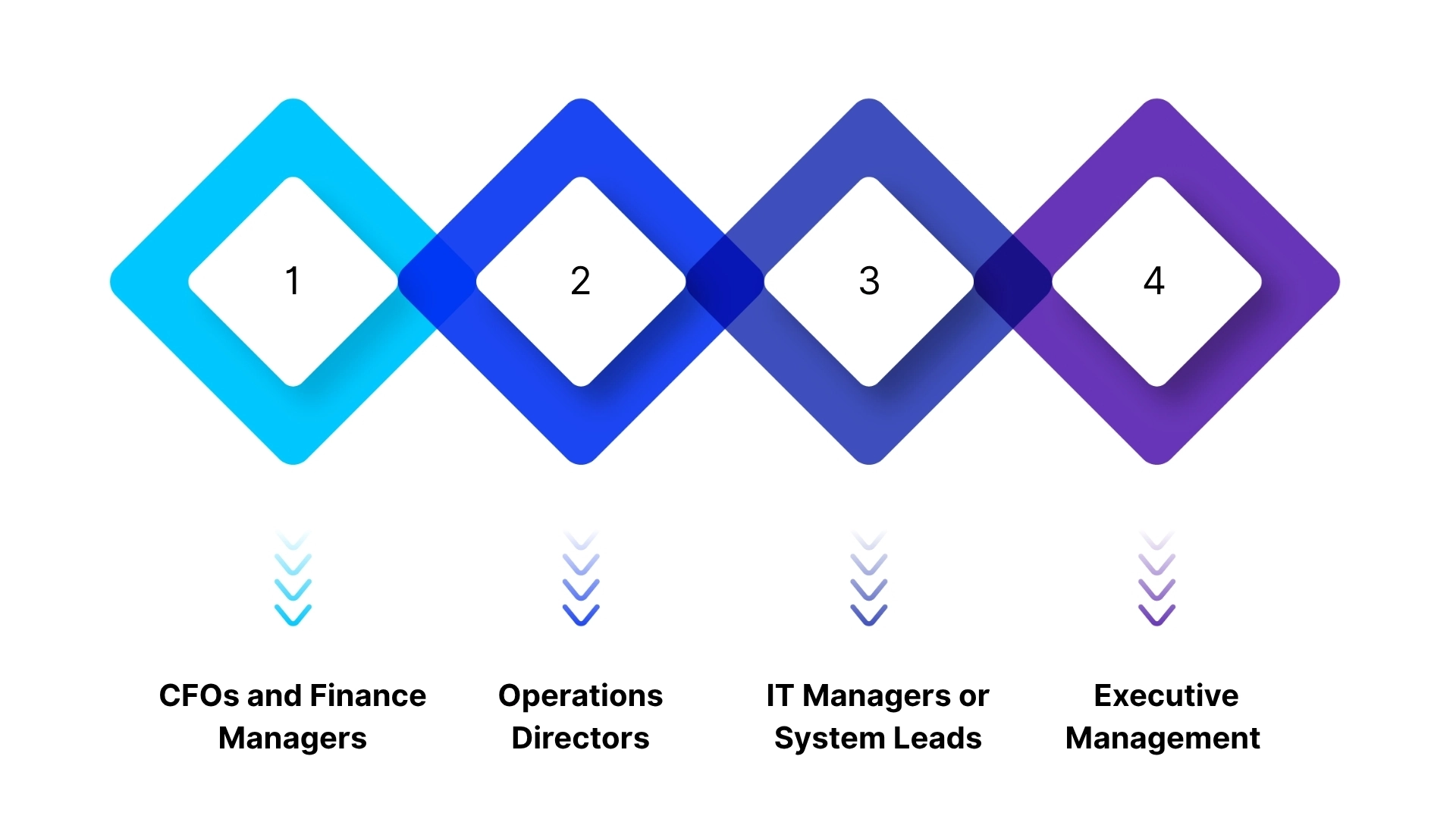
CFOs and Finance Managers: Calculate direct financial returns such as cost savings, reduced accounting errors, and faster cash flow cycles. Compare total ERP spending, license, setup, training, and support against annual financial gains. Determine payback periods and profitability ratios to support board approvals.
Operations Directors or Plant Managers: Quantify time savings in production scheduling, inventory tracking, and order fulfillment. Measure reduction in rework, stock variance, and manual paperwork. Report operational gains that translate into measurable cost avoidance or higher throughput.
IT Managers or System Leads: Track user adoption rates, uptime, and module utilization to confirm actual usage versus planned scope. Measure integration accuracy with e-commerce, logistics, and payment systems. Estimate the reduction in data duplication and maintenance costs from legacy software.
Executive Management or Owners: Review consolidated ROI reports from all departments. Use ROI as a financial checkpoint before expanding ERP coverage or adding new modules. Compare projected gains with industry benchmarks to validate long-term sustainability.
Once the key stakeholders are identified, the focus shifts to how ROI is actually measured and validated across each stage of an ERP project in Saudi Arabia.
Partner with HAL VAT Care, the trusted compliance ally behind Motamayiz ERP’s two-week go-live and 1M+ invoice success. Request a demo
Step-by-Step ERP ROI Calculation Framework for Saudi Businesses
Accurate ERP ROI calculation connects every Riyal spent to measurable business value. The process below helps Saudi Arabia-based leaders align financial, operational, and compliance factors for a clear return assessment.
Here’s how to approach it step by step.
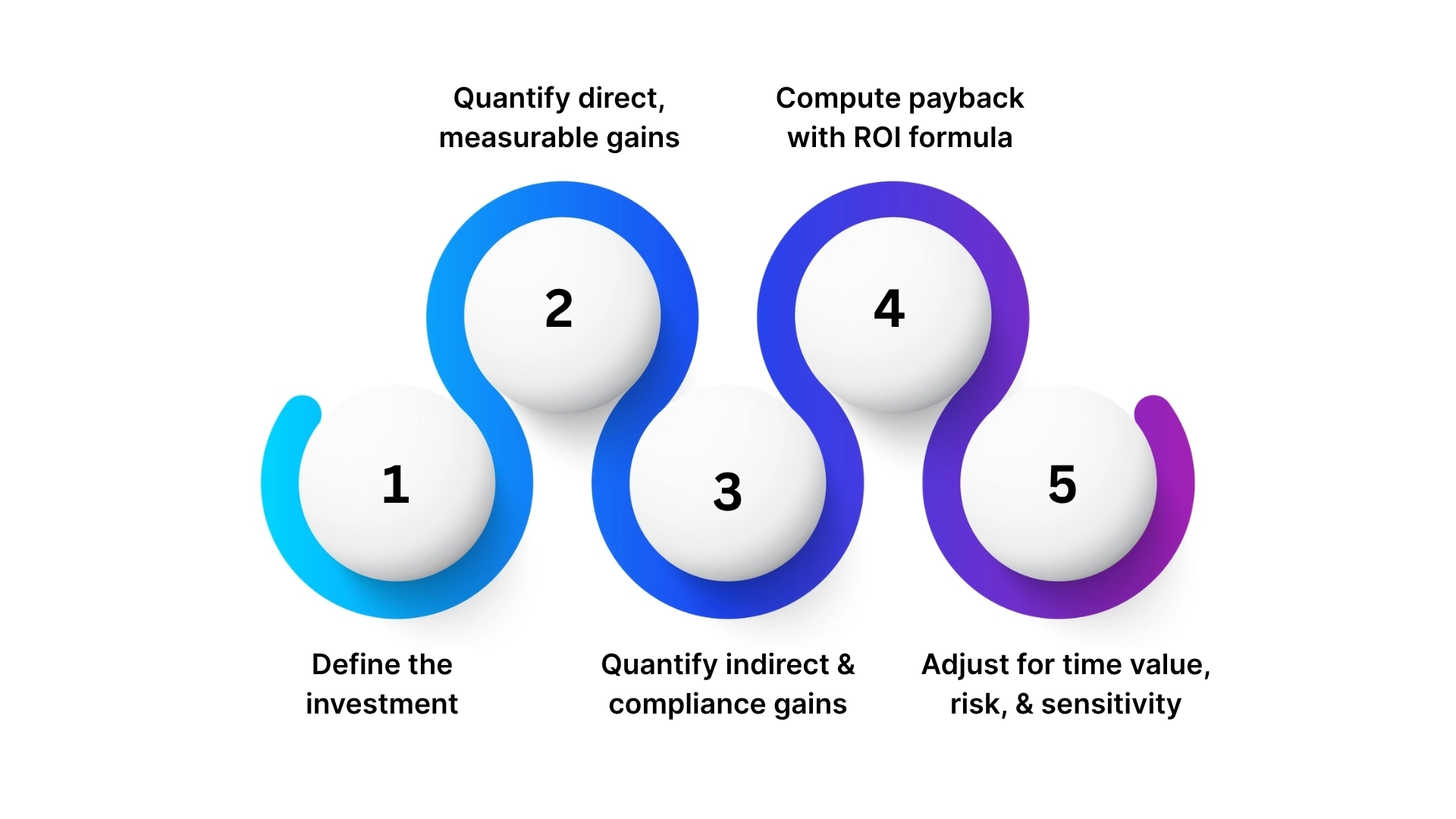
Step 1: Define the investment (what you spent)
List every one-time and recurring expense that makes up the project cost so the ROI denominator reflects the full outlay in SAR.
Key details
Project setup & configuration: vendor fees, partner support, licence deposit, and any system setup contracts; include one-time onboarding payments and initial consultancy costs.
Data migration & cutover: data cleanup, transfer tools, historic data mapping, and dry-run costs that occur before go-live and affect total spend.
Training & first-year support: user training days, internal training payroll, and the first year of external support or maintenance subscriptions counted as initial investment.
Step 2: Quantify direct, measurable gains
Record savings that convert cleanly to SAR; these are the primary inputs for the ROI numerator and should be supported by baseline measurements.
Key details
Labor hours saved: sum hours reduced across finance, operations, and admin; multiply by local hourly cost (SAR) to produce annual SAR savings.
Process cost reductions: fewer corrections, lower rework, and reduced transaction fees measured in SAR per month, then annualized for ROI maths.
Inventory and working capital gains: lower holding costs and faster turnover converted into SAR savings from reduced stock levels and shorter cash conversion cycles.
Step 3: Quantify indirect and compliance gains
Translate secondary improvements and compliance avoidance into conservative SAR estimates so the ROI reflects realistic, verifiable benefits beyond direct savings.
Key details
Compliance cost avoidance: estimated reduction in penalty risk, fewer tax adjustments, and lower audit fees from automated VAT and e-invoicing processes.
Faster financial close: value of days shaved off the month-end close equated to staff cost savings and quicker access to usable financial reporting.
Reduced external spend: lower dependence on consultants, manual reconciliations, and external reporting services converted into annual SAR savings.
Step 4: Apply the ROI formula and compute payback
Use the standard formula with a clearly separated numerator (total annual gains) and denominator (total initial spend). Produce percentage ROI and months to recover cost.
Key details
Formula & calculation: ROI% = (Annual net gains ÷ Total project cost) × 100. Plug verified SAR totals for both numerator and denominator.
Payback period: Payback (months) = Total project cost ÷ Monthly net gains. Report conservative and best-case scenarios for comparison.
Example: If total cost = SAR 400,000 and annual net gains = SAR 160,000 → ROI = 40% and payback ≈ 30 months (2.5 years).
Step 5: Adjust for time value, risk, and sensitivity
Account for multi-year benefits and uncertainty by applying discounting and scenario testing so ROI reflects likely outcomes over the chosen horizon.
Key details
Discounted cash flows: calculate NPV using a conservative discount rate (for mid-market Saudi firms, 8–10% is common) to compare multi-year returns.
Sensitivity checks: model ±20% swings in annual gains and ±10–20% in costs to show best, base, and worst cases for ROI and payback.
Compliance and rollout risk: add one-off contingency for delayed adoption or extra compliance work (ZATCA/VAT) and recompute ROI to reflect realistic timelines.
Each step in the ERP ROI process reveals how technology impacts financial outcomes, which sets the stage for comparing it with traditional business investments in Saudi Arabia.
How ERP ROI Calculation Differs from Traditional Business Investments in Saudi Arabia
ROI from ERP projects functions differently from conventional financial investments. While a typical investment delivers returns based on market performance, ERP ROI builds progressively through operational improvement, compliance accuracy, and time savings.
In Saudi Arabia, where digital compliance and automation are tied to business stability, ERP ROI reflects both fiscal impact and regulatory preparedness.
Aspect
Regular Business Investment
ERP Investment
Return Pattern
Fixed or market-driven returns based on financial products or assets.
Compounding gains through reduced rework, faster reporting, and better data accuracy.
Measurement Cycle
Short-term, calculated annually or quarterly.
Continuous, measured across usage milestones like go-live, adoption, and full module utilization.
Primary Benefit
Monetary gain or asset appreciation.
Operational reliability, cost reduction, and compliance readiness.
Risk Type
Market and external factors.
Adoption, data migration, and process alignment challenges.
Cash Flow Impact
Depends on investment value and external performance.
Frees working capital through improved billing, inventory control, and procurement accuracy.
Time to Realize ROI
Immediate to short-term.
Gradually, strengthens as workflows, users, and analytics stabilize.
While ERP ROI follows a broader financial logic, its success depends on several localized and operational factors that shape real outcomes across Saudi organizations.
Key Factors That Influence ERP ROI Calculation Accuracy in Saudi Arabia
For Saudi enterprises, ROI accuracy depends on identifying both upfront and recurring variables that transform long-term financial returns. Each input reflects how deeply the ERP integrates with core business activities and regulatory systems such as ZATCA e-invoicing and VAT compliance.
Factor
Description
Typical Impact on ROI
System Setup & Configuration
One-time spend covering installation, localization, and module setup to match internal workflows and Saudi compliance rules.
Forms the primary investment baseline for ROI calculation.
Training & Data Migration
Effort and cost of preparing teams, importing legacy data, and validating accuracy before go-live.
Short-term cost that determines how quickly measurable gains begin.
Operational Savings
Reduction in hours, rework, and manual reconciliations across finance, procurement, and production.
High — directly converts into annual SAR savings.
Compliance Automation
Auto-generated VAT reports, ZATCA e-invoices, and digital audit trails replacing manual submissions.
Medium to High — reduces penalty exposure and audit expenses.
Productivity Uplift
Faster approvals, shorter production cycles, and clearer reporting visibility across departments.
High — supports recurring gains beyond year one.
Support & Feature Expansion
Ongoing partner support, software updates, and added modules for scaling operations.
Sustains ROI growth by extending the system’s usable lifespan.
Among these influencing factors, regulatory compliance plays a major role, especially as ZATCA and VAT requirements directly affect ERP cost structures and return calculations in Saudi Arabia.
How ZATCA and VAT Regulations Shape ERP ROI Calculation in Saudi Arabia
ZATCA compliance plays a decisive role in determining ERP ROI for Saudi businesses. Since every invoice, filing, and audit process is governed by strict e-invoicing and VAT mandates, compliance accuracy directly influences cost savings, operational control, and financial predictability.
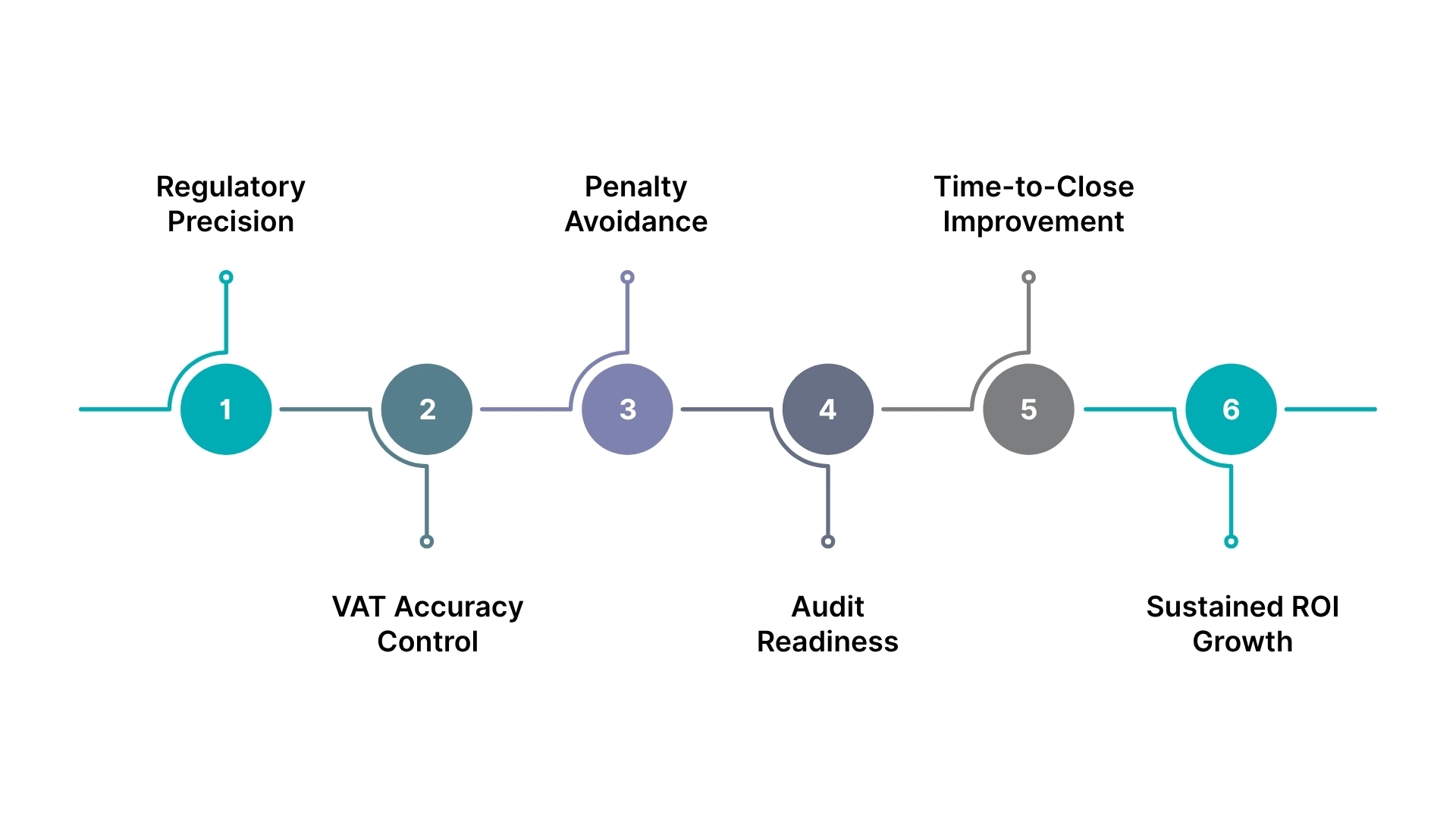
Regulatory Precision: Automated e-invoice generation in ZATCA-approved XML and PDF formats minimizes rejection risks and supports continuous regulatory alignment.
VAT Accuracy Control: Embedded validation rules check taxable entries, VAT brackets, and return formats, reducing audit flags and rework.
Penalty Avoidance: Auto-tracked submission timelines and error alerts prevent late filings, safeguarding margins from compliance fines.
Audit Readiness: Centralized and timestamped digital records simplify authority reviews, minimizing audit preparation time and manual follow-ups.
Sustained ROI Growth: Reduced administrative burden, lower penalty exposure, and predictable reporting cycles lead to steady return growth across financial years.
With HAL ERP, these compliance processes are embedded natively, helping Saudi businesses maintain accuracy, meet ZATCA mandates, and translate compliance control into measurable ROI.
The financial impact of regulatory compliance creates a baseline for measuring ERP performance, which becomes clearer when comparing ROI benchmarks across Saudi industries.
ERP ROI Calculation Benchmarks Across Saudi Industries
ERP returns vary by sector because each industry captures value differently: manufacturing saves on materials and downtime; trading improves stock turns and billing accuracy; contracting benefits from tighter job costing.
Industry
Estimated ROI Range (Year 1–3)
Typical Payback Window
Key ROI Drivers
Manufacturing
15%–25% (Year 1), 25%–40% (Year 3)
18–36 months
Inventory reduction, waste decrease, and production scheduling
Trading & Distribution
20%–30% (Year 1)
18–30 months
Improved billing, stock turn, and fewer stock-outs
Contracting & Project-Based
8%–15% (Year 1)
24–48 months
Job-costing accuracy, progress billing, variance control
Scheduling automation, billing efficiency, and resource tracking
Industry benchmarks reveal what strong ERP returns should resemble, but many Saudi businesses fall short due to recurring calculation errors that can distort actual ROI outcomes.
Simplify e-invoicing across all branches and POS devices with HAL VATCare, cut manual effort by 70% and eliminate audit delays. Schedule a demo
Common ERP ROI Calculation Mistakes Saudi Businesses Must Avoid
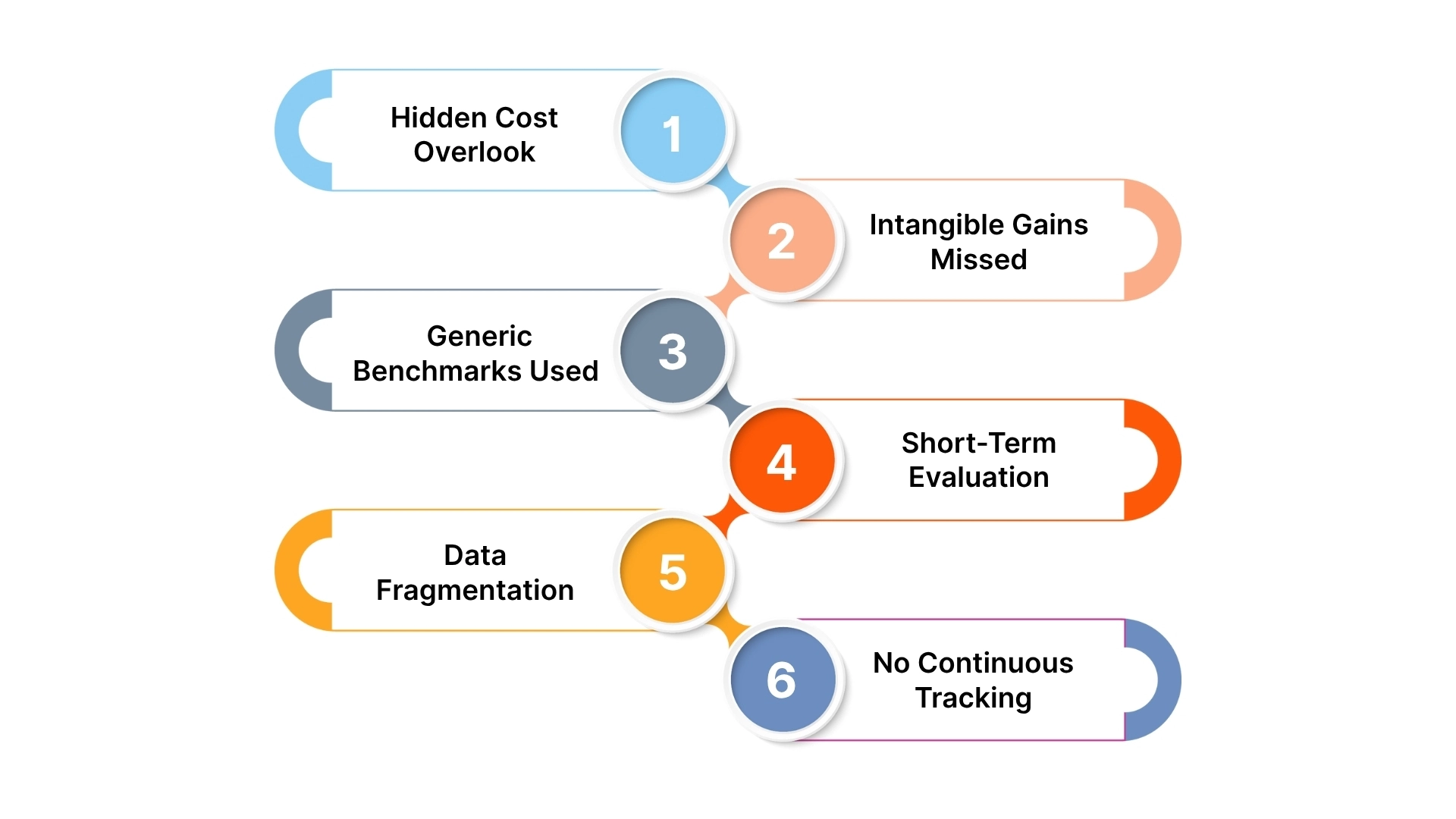
Many Saudi businesses misjudge ERP ROI because they focus on surface-level numbers rather than operational realities. A precise ROI analysis requires complete visibility across costs, adoption challenges, and local compliance variables.
Hidden Cost Overlook: Ignoring expenses from user adoption delays, training gaps, or temporary downtime can distort ROI calculations and inflate payback expectations.
Intangible Gains Missed: Faster reporting, smoother audits, and improved visibility often deliver the biggest long-term returns but are rarely quantified in financial models.
Generic Benchmarks Used: Applying global ROI averages without accounting for Saudi-specific factors like ZATCA, VAT, or Arabic localization leads to unrealistic forecasts.
Short-Term Evaluation: Measuring ROI only during the initial rollout fails to capture the compounding gains realized as automation stabilizes over time.
Data Fragmentation: Tracking results in spreadsheets or across departments limits accuracy and creates inconsistencies between finance and operations metrics.
No Continuous Tracking: Treating ROI as a one-time project instead of an ongoing KPI prevents management from identifying emerging savings or efficiency trends.
Avoiding these common missteps creates the foundation for applying a structured and proven framework like HAL ERP’s to measure ROI with accuracy and confidence.
HAL ERP Proven Framework for Measuring ERP ROI
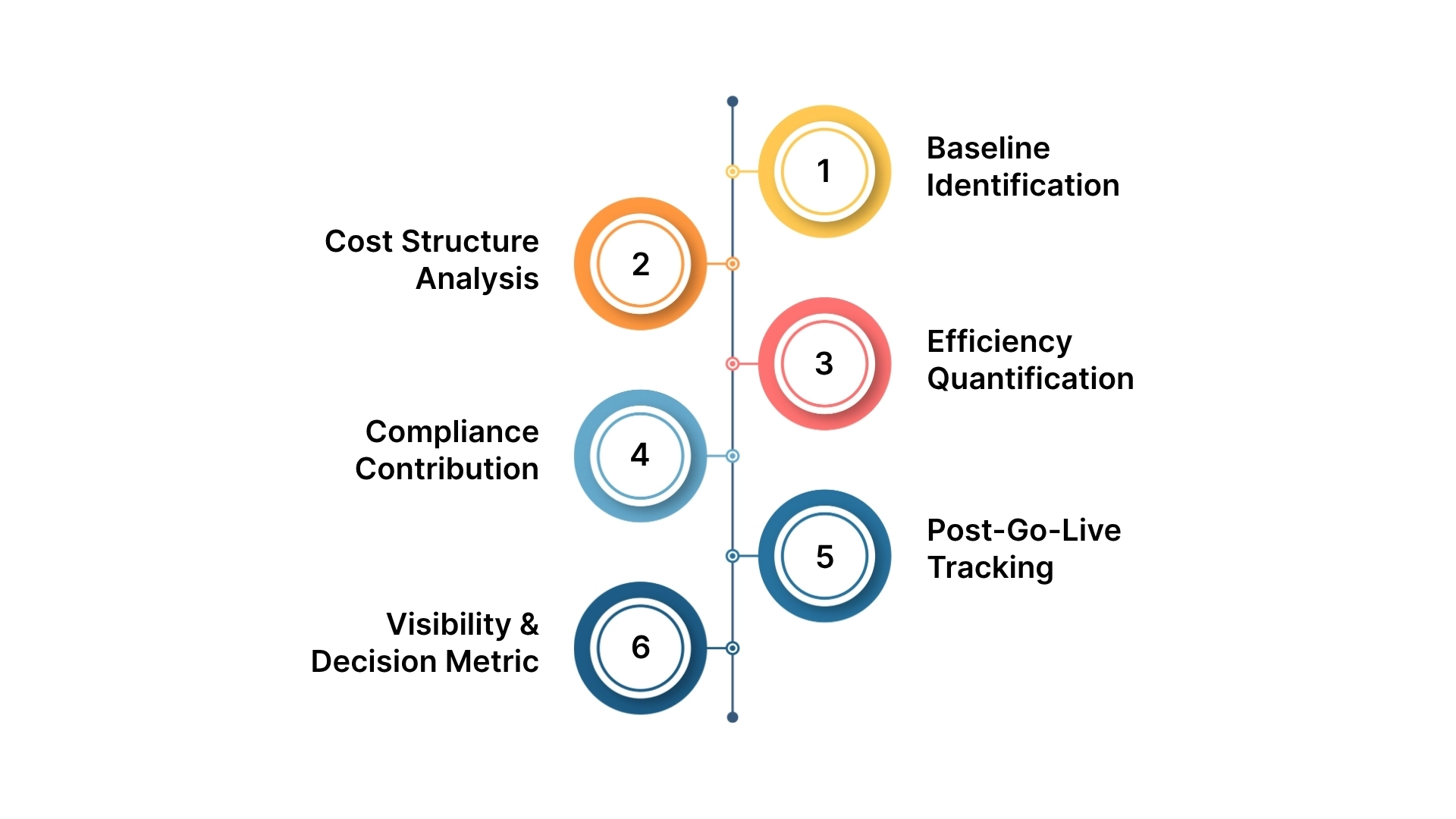
ERP investments deliver returns only when the financial and operational impact is measured with precision. HAL ERP applies a structured ROI evaluation model specifically designed for Saudi businesses, accounting for real costs, compliance gains, and sustained value creation across financial years.
Baseline Identification: Captures pre-ERP benchmarks, time spent on manual entries, reconciliation hours, and reporting delays, to quantify every minute and riyal saved post-deployment.
Cost Structure Analysis: Accounts for total investment, including setup, migration, training, and customization to create a transparent cost foundation before measuring gains.
Efficiency Quantification: Translates improvements like faster reporting cycles, reduced rework, and shorter audit preparation times into measurable SAR values.
Compliance Contribution: Includes tangible benefits from ZATCA-compliant e-invoicing, VAT-ready filing, and error-free audit trails, a major factor for ROI growth in the Kingdom.
Post-Go-Live Tracking: Evaluates results 90–180 days after system activation to calculate payback periods and validate recurring annual returns.
Visibility & Decision Metrics: Monitors business health through real-time dashboards, giving CFOs and managers measurable insight into cost control and revenue efficiency.
Al Haram Retail Case Study
Al Haram, a leading Saudi retail chain with 7 stores, 50+ POS devices, and 300M+ invoices, partnered with HAL ERP to simplify E-invoicing compliance for Phase I & II without disrupting existing operations.
Key ROI & Impact:
Go-live in under 2 weeks, ensuring rapid compliance with ZATCA regulations.
1,000+ transactions processed per hour, handling high-volume B2C invoices efficiently.
Hundreds of man-hours saved, translating to hundreds of thousands of SAR in operational cost savings.
Seamless integration with Fatoora portal, maintaining full ERP functionality and operational continuity.
HAL ERP’s VAT Care solution provided flexible online/offline integration, automated QR and cryptographic stamp generation, and robust reporting, empowering Al Haram to achieve compliance quickly while maintaining operational efficiency.
Conclusion
A precise ROI calculation isn’t about predicting profits; it’s about proving direction. For Saudi Arabia’s fast-growing enterprises, it validates whether ERP investments are driving measurable gains in compliance, cash flow, and operational agility. The strongest ROI models connect every riyal spent to long-term visibility and regulatory confidence, not just cost cuts.
That’s where HAL ERP creates impact, by combining automation, ZATCA-ready compliance, and financial intelligence into one measurable framework. It transforms ERP ROI from a static number into a growth narrative that compounds each quarter.
1. How does localization affect ERP ROI calculation in Saudi Arabia?
Localization, such as Arabic interfaces, ZATCA-ready invoicing, and Saudi VAT configuration, directly influences ROI by reducing customization time, improving adoption rates, and minimizing compliance risks that could erode profitability.
2. Can ERP ROI calculation in Saudi Arabia include intangible benefits like audit readiness?
Yes. While often overlooked, improved audit preparedness and faster month-end closings deliver measurable ROI through reduced external audit costs and fewer post-filing penalties.
3. How do ZATCA and VAT updates impact ERP ROI over time?
Regular ZATCA or VAT mandate changes can affect long-term ROI. Systems with built-in compliance automation maintain accuracy without reimplementation costs, preserving sustainable financial returns.
4. Why should ERP ROI be re-evaluated annually in Saudi enterprises?
As operations expand or regulations grow, annual ROI reassessment makes sure that the system continues to deliver optimized value, aligning with new business models, tax rules, or regional reporting formats.
5. How can CFOs improve ERP ROI accuracy during multi-system integrations?
By aligning financial data from accounting, inventory, and HR modules before integration, CFOs prevent reconciliation delays and gain a truer reflection of post-implementation ROI across the Saudi business landscape.
Mohamed Azher
Mohamed Azher is an accomplished IT professional with over 14 years of expertise in Saudi Arabia’s technology landscape, specializing in ERP delivery, business transformation, and digital innovation. His track record spans leadership roles at Deloitte and Saudi enterprises, making him a trusted architect of scalable solutions for the Kingdom’s most ambitious digital initiatives.









%20in%202026.png)