
Best Accounting Software for Midsize Businesses in 2026

Best Accounting Software for Midsize Businesses in 2026

Published By

Issam Siddique
Accounting
Jan 22, 2025

In Saudi Arabia, midsize businesses play a crucial role in driving economic growth and achieving Vision 2030 goals. However, with expansion comes new challenges—rising transaction volumes, regulatory compliance, and the ever-present need to secure sensitive data. Accounting software, or ERP, offers a simple, modern way to solve these issues, making managing finances easier and staying competitive.

Globally, Gartner defines midsize businesses as those with 100 to 999 employees or annual revenue between $50 million and $1 billion. In Saudi Arabia, the Small and Medium Enterprises General Authority (Monsha'at) uses a slightly different scale:

Business Size

Number of Employees

Annual Revenues (SAR)

Micro

1 to 5

Up to 3 million

Small

6 to 49

3 to 40 million

Medium

50 to 249

40 to 200 million

Large

250+

Over 200 million

Knowing where your business fits is the first step to finding the right tools to support your growth. If you're managing one of these growing businesses, you know how important it is to have reliable accounting software that can keep pace with your growth.

Quick Summary

  • The best accounting software for a midsize business should support automation, multi-entity reporting, integrations, scalability and Saudi VAT requirements.
  • HAL ERP is a strong option for Saudi businesses that want accounting connected with invoicing, inventory, procurement, sales, HR and other operations.
  • NetSuite and Sage Intacct are better suited to companies with complex global or multi-entity financial requirements.
  • Acumatica offers broad cloud ERP functionality without traditional per-user pricing.
  • Wafeq and Zoho Books provide localized accounting and ZATCA e-invoicing capabilities for Saudi SMEs.
  • QuickBooks and Xero may work for simpler or internationally focused accounting needs, but Saudi businesses should verify local tax and ZATCA support.
  • Compare implementation, customization, integrations, support and total cost—not only the advertised subscription price.

Below, we review the best accounting software for medium-sized businesses, highlighting their key features. Let’s dive in!

Why Do Midsize Businesses Need Cloud Accounting Software?

As your business grows, so does the complexity of your finances. Manual accounting methods or spreadsheets quickly become inefficient and error-prone. Cloud accounting software for medium-sized businesses is specifically designed to handle this complexity.

With the right software, you can:

  • Streamline financial operations to save time and reduce errors.
  • Stay compliant with Saudi Arabia’s regulatory requirements, including VAT.
  • Make smarter financial decisions that support your business goals.

Unlike tools designed for small businesses, accounting software for midsize businesses offers scalability, robust integrations, and industry-specific capabilities. When searching for the best accounting software for your midsize business, certain core features are a must. Let’s explore them.

Core Features of Midsize Business Accounting Software

To go beyond basic bookkeeping, midsize business accounting software provides essential features that simplify processes and save time. Here are the core features to prioritize:

  • Core Accounting: Features like tracking accounts payable and receivable and managing the general ledger keep your finances organized. Look for software that automates these tasks to reduce errors and free up valuable time.
  • Billing and Invoicing: Good software automates invoicing, sends reminders for late payments, and even lets customers pay directly. This improves cash flow and ensures you get paid on time.
  • Inventory Management: If your business involves products, inventory management is key. Accounting software with inventory tracking helps you manage stock levels, track sales, and place orders when needed—all in real-time. This keeps your supply chain running smoothly and ensures you don’t run out of important products.
  • Payroll: Managing payroll is easier with software that calculates wages, generates tax reports, and deposits salaries directly into accounts. This ensures accuracy and compliance with Saudi laws.
  • Tax Management: Tax and E-invoicing Compliance: Look for automated VAT calculations, VAT-ready reports and support for Saudi Arabia’s e-invoicing requirements. ZATCA Phase 2 is being implemented in waves and requires notified taxpayers to integrate their e-invoicing solutions with ZATCA’s systems. Confirm that the vendor supports your applicable phase, taxpayer wave and invoice workflows rather than relying on a general “VAT-ready” claim.
  • Mobile Access: Cloud-based software with mobile apps allows business owners to access financial data, approve tasks, and track reports on the go.
  • Audit Trail: A robust audit trail ensures all transactions are traceable and secure, which is vital for maintaining transparency and compliance during audits.

Apart from these core features, midsize businesses often need advanced tools to handle complex financial tasks and gain deeper insights into their performance. Let’s examine them.

Advanced Features To Consider in Accounting Software 

For midsize businesses, advanced features in accounting software can help manage complexity and improve efficiency. Here are the key ones to look for:

  • Business Intelligence: BI tools in accounting software can help you analyze your financial data more deeply. With features like historical reporting and predictive analysis, you can spot trends, forecast future performance, and make smarter financial decisions.
  • Budgeting and Forecasting: Good accounting software helps you plan for the future by creating budgets and forecasts. You can set financial goals, track progress, and adjust plans as needed. These tools give you a clear view of your future revenues and expenses.
  • Currency Exchange: If your business deals with international clients or suppliers, currency exchange features are important. Accounting software can automatically handle currency conversions and track international transactions. This helps you manage global finances without the hassle of manual calculations.
  • CRM Integration: CRM integration connects your financial data with customer information. It allows you to track sales, manage finances, and store customer details in one place for better customer relationships.
  • Workflow Automation: Approval workflows for expenses, invoices, and purchase orders can be automated to reduce delays and improve efficiency across teams.
  • AI and ML Capabilities: AI-driven features, like expense categorization and anomaly detection, help automate repetitive tasks and identify irregularities in financial data.
  • Customizable Dashboards: Personalized dashboards allow users to access real-time KPIs and financial insights, offering quick, actionable overviews tailored to specific roles or departments.
  • Industry-Specific Features: Some industries, like retail or manufacturing, may require niche capabilities, such as POS(Point of Sale) integration or production cost tracking.

With these advanced features in mind, you’ll be better equipped to choose the best accounting software for your business.

8 Best Accounting Software for Medium-sized Businesses

We compared these platforms across six practical factors: Saudi VAT and ZATCA readiness, accounting depth, multi-entity scalability, reporting and automation, integrations, and suitability for midsize operations.

HAL Simplify publishes this guide and offers HAL ERP. Businesses should therefore validate every shortlisted option—including HAL—through product demonstrations, customer references, implementation scope, support commitments and total cost of ownership.
1. HAL ERP 

HAL ERP

Best for: Saudi midsize businesses that need an adaptable, locally implemented ERP connecting accounting with wider business operations. 

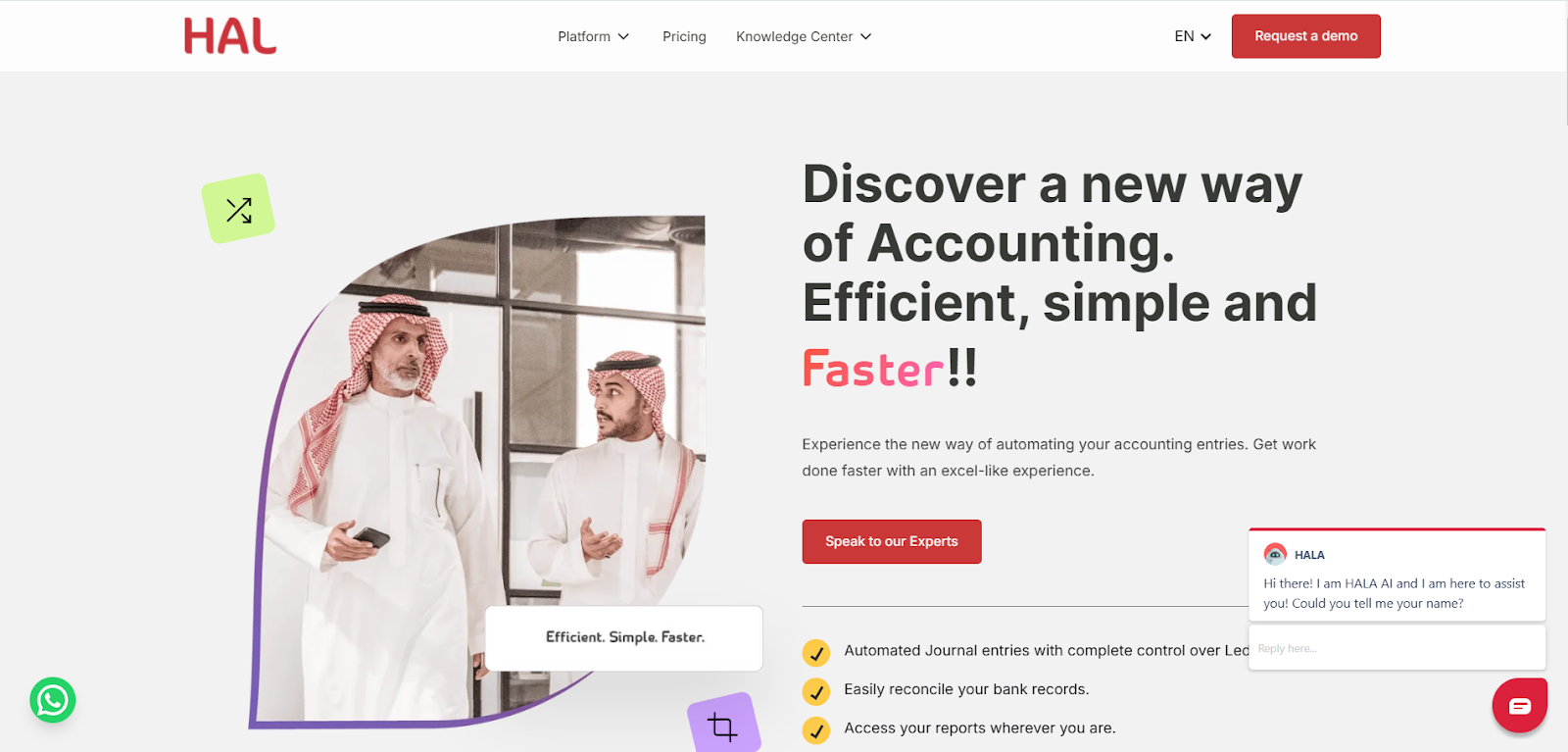
HAL ERP’s accounting platform supports automated journal entries, accounts receivable and payable, bank reconciliation, reporting and bulk financial processing. As part of the broader HAL ERP suite, businesses can connect finance with invoicing, expenses, procurement, inventory, sales, HR, projects and other operational workflows.

HAL also offers VAT CARE, an integration-ready ZATCA Phase 2 e-invoicing solution that can work with HAL ERP or connect to an existing ERP through APIs or Excel/CSV uploads.

Key features of HAL ERP:

  • Automated journal entries, accounts payable, accounts receivable and bank reconciliation
  • VAT-ready reports and ZATCA e-invoicing capabilities
  • Bulk processing for expenses, journals and transfers
  • Group-company and intercompany finance capabilities
  • AI-assisted reconciliation and transaction analysis
  • Scheduled reports, expense submissions and approvals through Conversational ERP on WhatsApp
  • Integrations with platforms including Arab National Bank, Salla, Zid, Shopify, Magento, Foodics, Tabby, Tamara, Noon, Outlook and WhatsApp

Explore HAL’s customer success stories to understand how the platform is used across different industries and operating models.
2. NetSuite

NetSuite

Best for: Global midsize companies with expansion plans

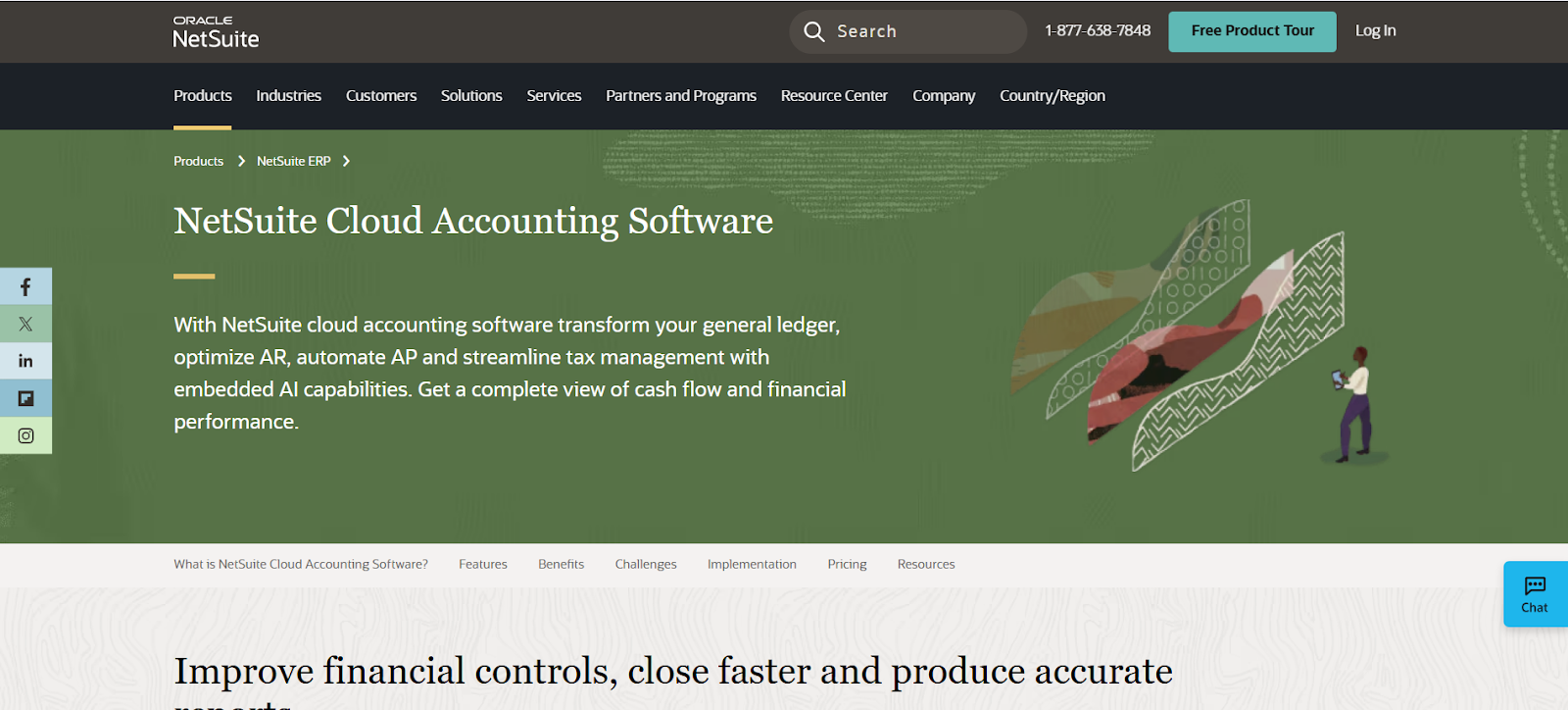
NetSuite, by Oracle, is a cloud-based ERP solution designed to help growing businesses. It offers tools for managing operations, finances, and supply chains in one platform. For businesses expanding globally, the NetSuite OneWorld module supports international accounting and multi-unit management.

Key Features of NetSuite ERP:
  • Manages finances, revenue, and compliance
  • Simplifies order management and supply chain processes
  • Combines CRM and financial data
  • Supports multi-currency, multi-language, and multi-subsidiary operations
  • Provides real-time analytics for smarter decisions

3. Sage Intacct

Sage Intacct

Best for: Multi-entity finance teams that prioritize dimensional reporting, financial controls and global accounting capabilities. 

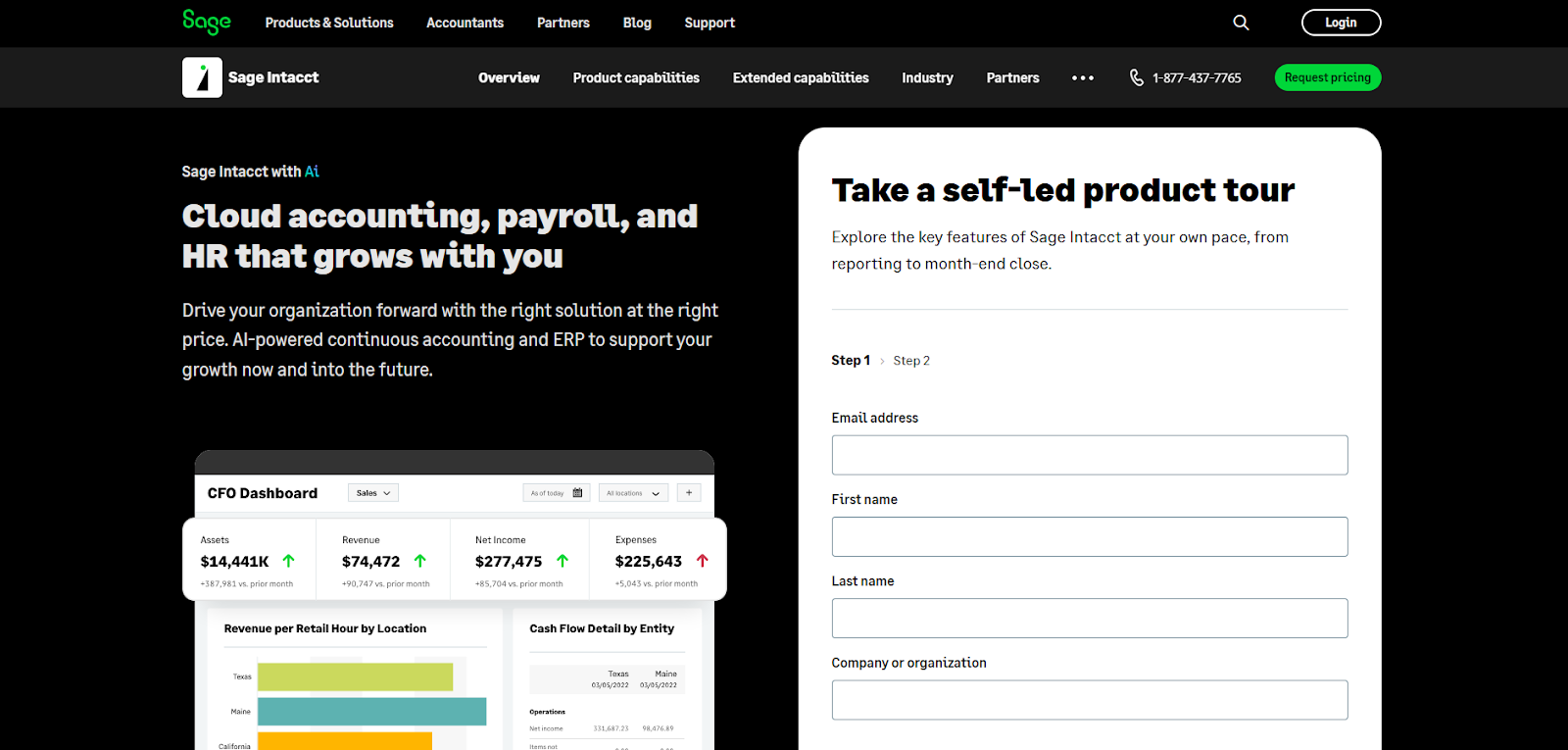
Sage Intacct is a cloud financial management platform designed for growing and midsize organizations. It supports multi-entity consolidation, dimensional reporting, accounts payable automation, budgeting, planning and real-time financial visibility.

Sage describes Intacct as the only AICPA-preferred finance solution. The platform also offers more than 350 integrations and extended capabilities across analytics, planning, human capital management and payroll.

Key features of Sage Intacct:
  • General ledger, accounts payable, accounts receivable and cash management
  • Multi-dimensional reporting and interactive dashboards
  • Multi-entity consolidation and intercompany accounting
  • Budgeting, forecasting and financial planning
  • AI-supported anomaly detection, transaction analysis and finance insights
  • Integrations with platforms such as Salesforce, SAP Concur and ADP
  • Optional HR, payroll and expense-management capabilities

4. Acumatica

Acumatica

Best for: Growing businesses that want an industry-focused cloud ERP without per-user seat pricing. 

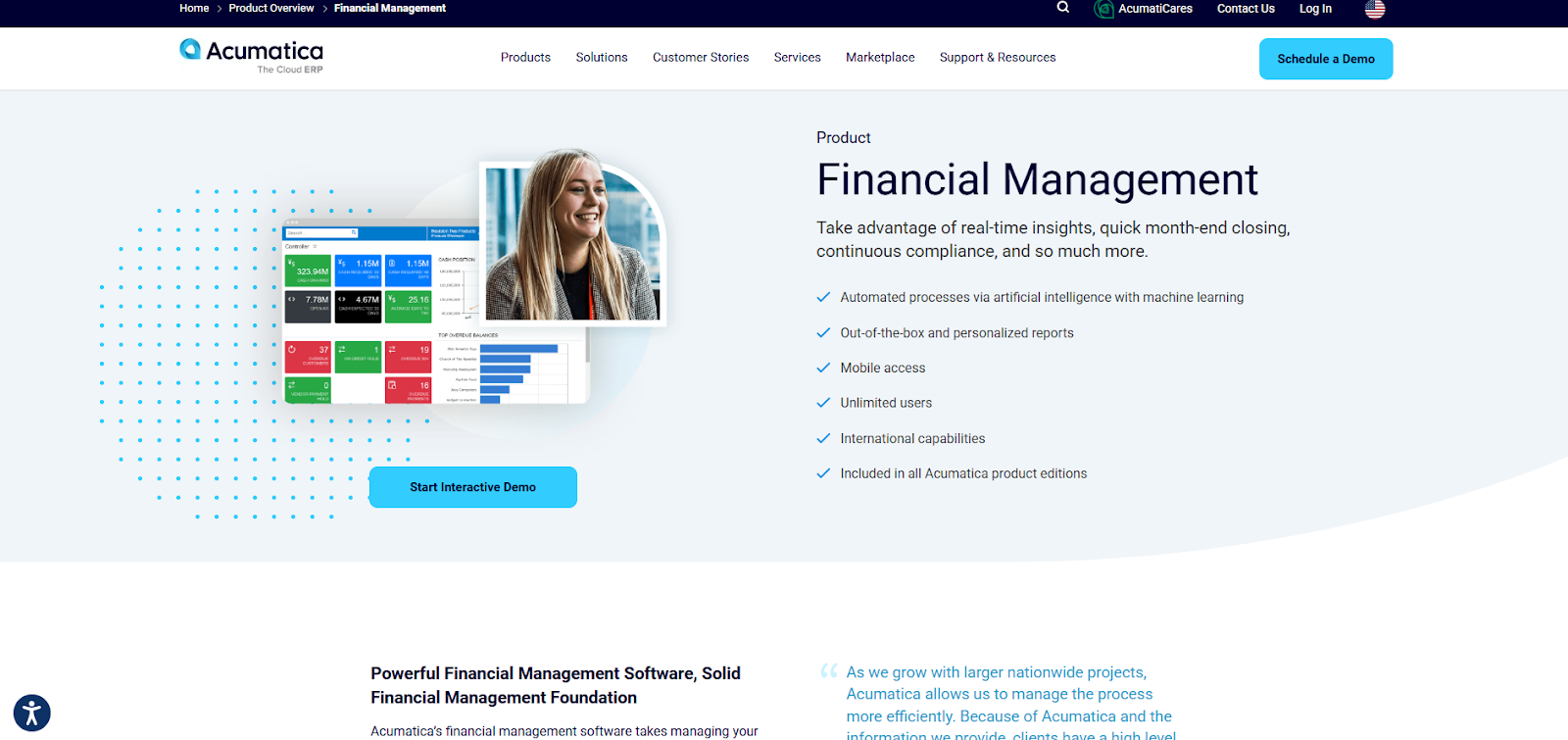
Acumatica is a cloud ERP platform that connects finance, inventory, projects, CRM and operational workflows. It offers industry editions for areas such as construction, distribution, manufacturing, retail and professional services.
Acumatica allows unlimited users under a pricing model based on the applications selected, expected transaction usage and resources, and deployment preferences. This can benefit companies that need broad system access, although buyers should still request a detailed usage-based cost estimate.
Key features of Acumatica:
  • Accounting, cash-flow management and financial reporting
  • Project accounting and budget tracking
  • Inventory, purchasing and supply-chain management
  • Built-in CRM and sales workflows
  • Custom dashboards and mobile access
  • Unlimited users without per-seat licensing
  • Pricing based on applications, usage/resources and deployment

5. QuickBooks Enterprise

QuickBooks Enterprise

Best for: U.S.-centric midsize businesses that need desktop accounting, advanced inventory, job costing and optional hosted access.

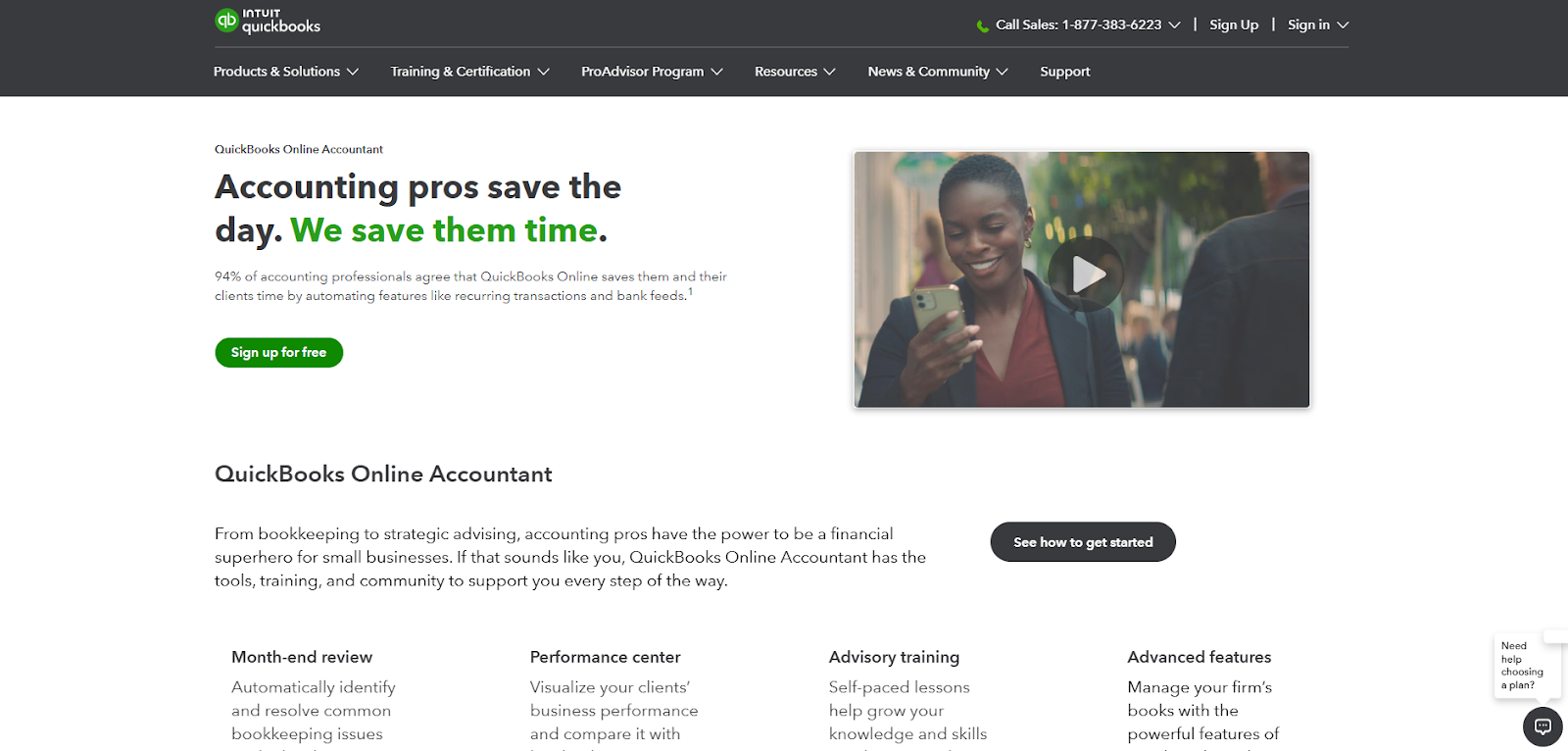
QuickBooks Desktop Enterprise is a business-management and accounting product rather than the same platform as QuickBooks Online. It offers industry-specific editions, advanced inventory, order management, job costing, multi-company features and more than 200 reports.

Cloud hosting is available as an additional subscription, and selected plans support up to 40 users. However, Saudi businesses should independently confirm ZATCA integration, Arabic invoicing, local tax support and regional implementation services before selecting it.

Key features of QuickBooks Desktop Enterprise:

  • Core accounting and financial reporting
  • Advanced inventory and order management
  • Job costing and project-related reporting
  • Multi-company management
  • More than 200 built-in reports
  • Industry editions for manufacturing, distribution, construction, retail and professional services
  • Optional cloud hosting for remote access
  • Support for up to 40 users on selected subscriptions

You can also explore the top alternatives to QuickBooks here.
6. Wafeq 

Wafeq

Best for:  Saudi SMEs that want accounting, payroll, inventory and ZATCA e-invoicing in one accessible platform. 

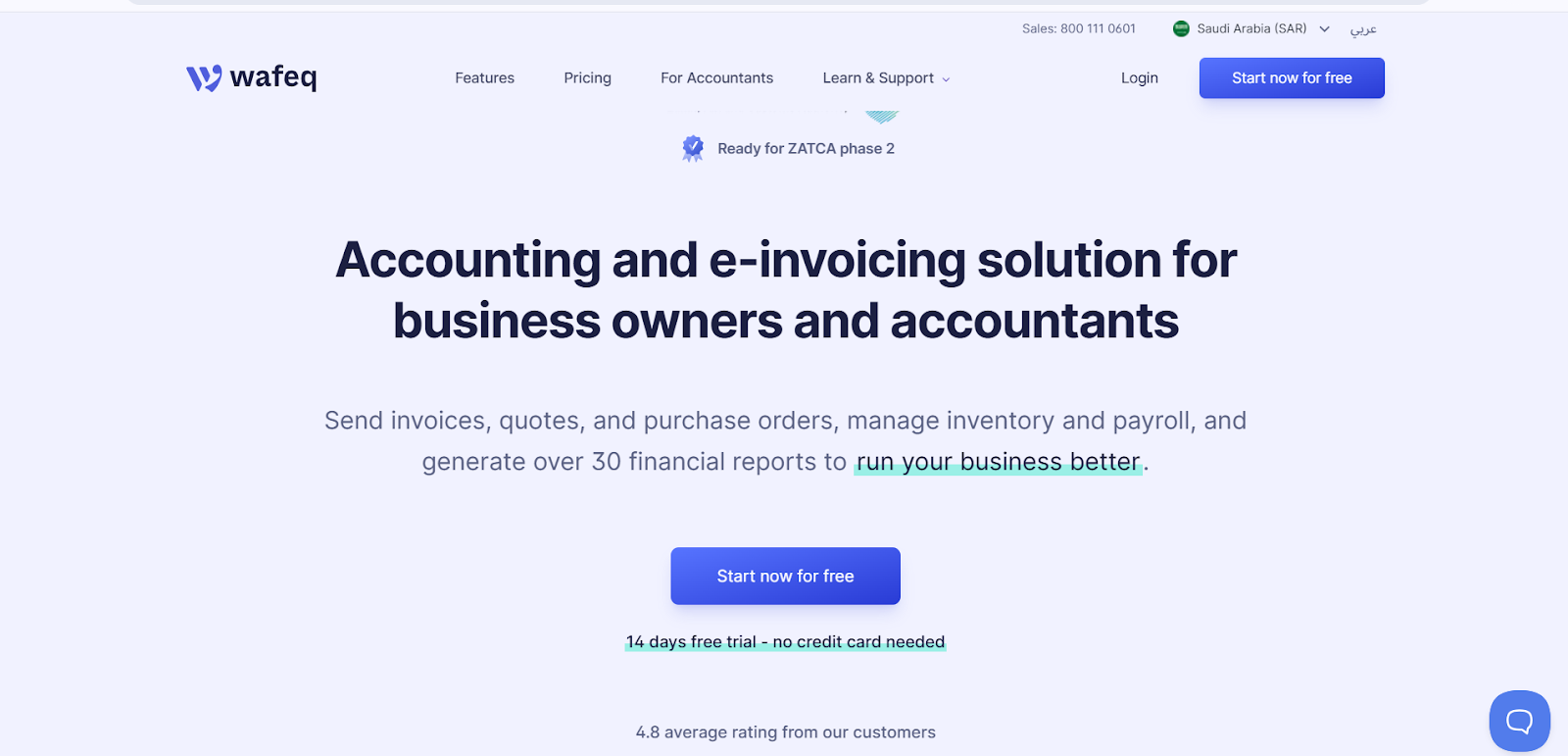
Wafeq is cloud accounting and e-invoicing software designed for businesses in Saudi Arabia and other regional markets. Its current platform combines accounting, ZATCA Phase 2 e-invoicing, payroll, inventory and financial reporting.

Wafeq may suit companies that want a focused accounting platform rather than a heavily customized, organization-wide ERP. Midsize businesses should assess its fit against their entity structure, approval workflows, industry requirements and integration complexity.

Key features of Wafeq:
  • ZATCA Phase 2-ready e-invoicing
  • Automated VAT-return preparation
  • Payroll and employee expense claims
  • Inventory and cost-of-goods tracking
  • More than 40 financial reports
  • Consolidated reporting across multiple organizations
  • AI-powered invoice and bill data extraction
  • 14-day free trial

7. ZohoBooks

ZohoBooks

Best for: Saudi SMEs already using the Zoho ecosystem and looking for localized accounting and ZATCA Phase 2 e-invoicing. 

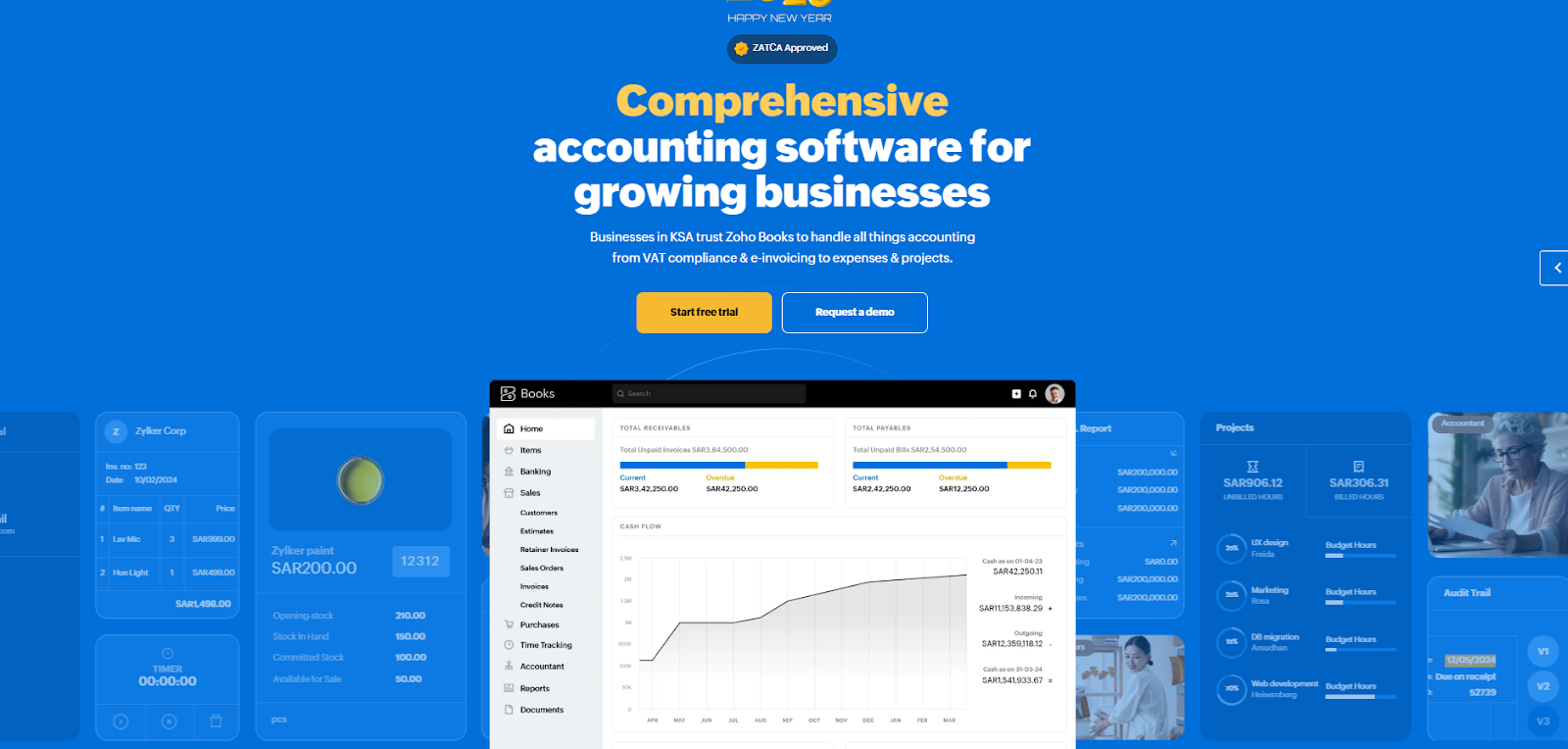
Zoho Books is cloud accounting software with a localized Saudi edition. Zoho states that its platform is a ZATCA-approved Phase 2 e-invoicing solution and supports bilingual invoices, invoice-status tracking, validation and QR-code requirements.
Its integration with other Zoho applications can benefit businesses already using Zoho CRM, Inventory, Projects or related products. Midsize companies should still evaluate multi-entity consolidation, customization, implementation support and industry-specific workflows before selecting it.
Key features of Zoho Books:
  • ZATCA Phase 2-compliant e-invoicing
  • Arabic and English invoice support
  • Automated bank feeds and reconciliation
  • Multi-branch accounting
  • Role-based user permissions
  • More than 70 financial reports
  • Integration with Zoho CRM, Inventory and Projects
  • Invoice validation, status tracking and QR-code support

8. Xero

Xero

Best for: Smaller internationally active businesses that prioritize usability, core cloud accounting and a broad application ecosystem.
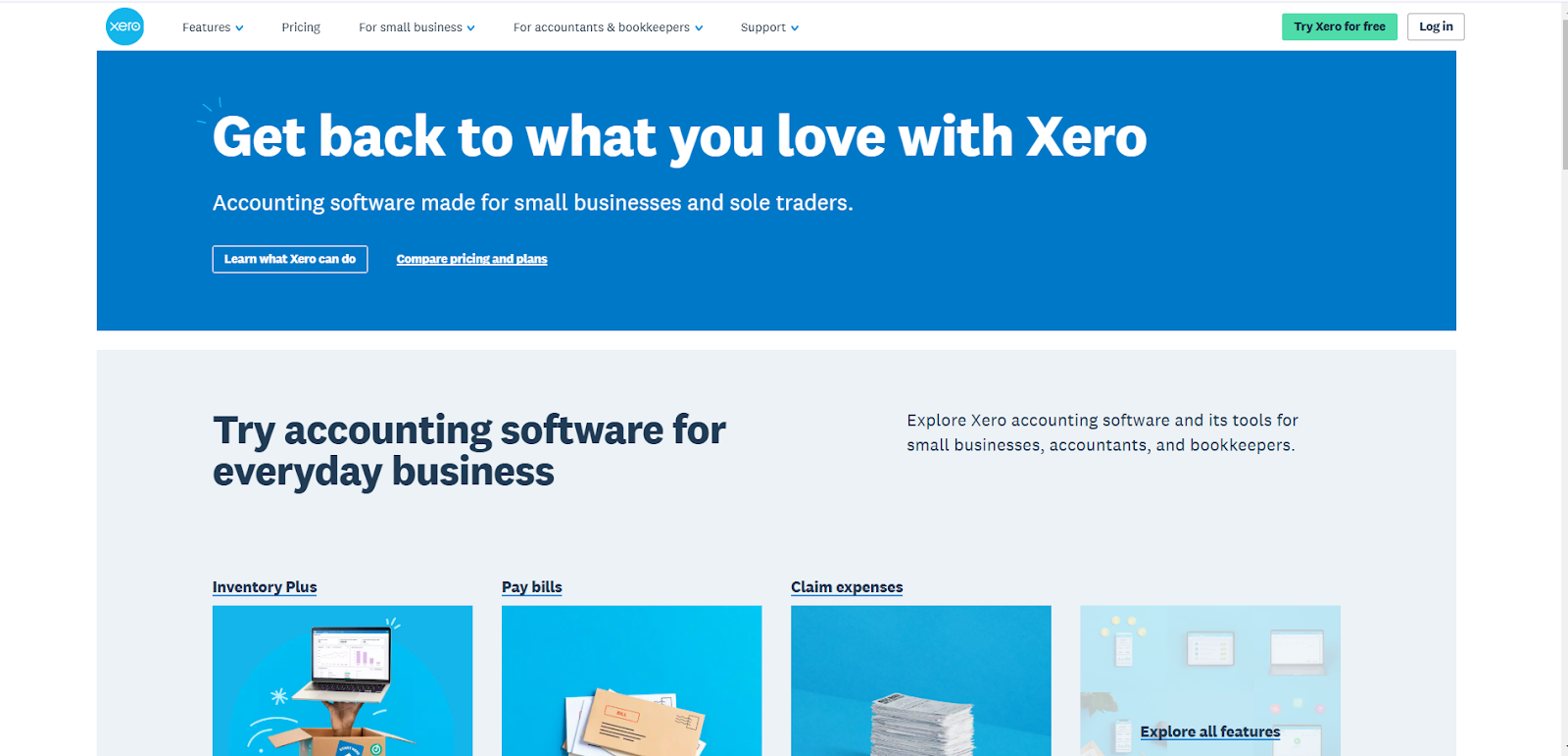
Xero is cloud accounting software designed primarily for small businesses, accountants and bookkeepers. It offers invoicing, bank feeds, reconciliation, expense management, reporting and integrations with third-party applications.
Xero may be useful for international accounting requirements, but Saudi businesses should not assume that general VAT functionality provides native ZATCA Phase 2 integration. Confirm whether a separate local solution, integration partner or e-invoicing platform will be required.
Key features of Xero:

  • Online invoicing and payment tracking
  • Automated bank feeds and reconciliation
  • Expense and bill management
  • Financial dashboards and reporting
  • Multi-currency capabilities on eligible plans
  • Third-party application integrations
  • AI-supported financial assistance through JAX

Before shortlisting a platform, review its current product documentation and request a Saudi-specific demonstration. Ask the vendor to demonstrate ZATCA Phase 2 workflows, Arabic or bilingual invoicing, multi-entity reporting, approval controls, audit trails, integrations, data migration and support processes.

Compare implementation fees, customization charges, user or usage limits, hosting costs and ongoing support—not only the advertised subscription price. Third-party reviews can supplement this evaluation, but they should not replace product validation and customer references from businesses with similar requirements.

Benefits of Using Accounting Software for Medium-sized Businesses

Here’s how:

  • Easy Data Storage and Access: Securely store your financial data online, ensuring your team can access and collaborate on it from anywhere. This keeps everything organized and efficient.
  • Faster Billing and Invoicing: Automated invoicing lets you create and send invoices quickly. You can also set up reminders for overdue payments, which helps improve your cash flow and reduce late payments.
  • Easier Expense Tracking: Accounting software simplifies expense tracking by automatically categorizing expenses. This helps you manage your budget, avoid overspending, and identify areas for cost savings.
  • More Accurate Financial Data: Manual accounting is prone to errors. By automating calculations, accounting software ensures your financial data is accurate, helping you make better decisions.
  • Real-Time Financial Insights: Get instant access to real-time financial data. You can easily monitor performance, spot trends, and make informed decisions without waiting for monthly reports.
  • Simplified Tax Filing: Accounting software generates tax reports automatically, ensuring compliance with tax regulations. This simplifies the VAT filing process and reduces the risk of errors or penalties.
  • Scalability for Growth: As your business grows, accounting software can grow with you. You can add more users, manage multiple locations, or track global transactions without hassle.

Having seen the benefits, the next step is choosing the accounting software tailored to your business needs.

How To Choose the Best Accounting Software for Your Medium-sized Business

When choosing the best accounting software for your midsize business, focus on a few key factors: functionality, growth potential, and pricing.

  • Essential Features: Look for software that handles core accounting tasks like invoicing, reporting, and tax compliance. Automation is key to saving time and reducing manual work.
  • Scalability: As your business grows, your software should be able to grow with you. Make sure it can handle more users, transactions, and features as needed.
  • Budget-Friendly Pricing: Choose software with a pricing model that fits your budget now, and can scale as your business expands.
  • Automation: Automated features help reduce errors, save time, and lower costs by handling repetitive tasks like payroll and invoicing.
  • Support and Integration: Ensure the software offers good customer support and integrates well with other tools you use, like CRM or inventory management.

Which Accounting Software Is Right for Your Midsize Business?

There is no single best accounting platform for every midsize business. The right choice depends on your industry, transaction volume, entity structure, operational complexity, integrations and ZATCA obligations.
A focused accounting platform may be sufficient when the main requirement is bookkeeping, invoicing and reporting. A broader ERP is more appropriate when finance must connect with procurement, inventory, sales, HR, projects, manufacturing or other operational functions.

Frequently Asked Questions

Q. What is the best accounting software for a midsize business in Saudi Arabia?

The best option is the platform that matches your financial complexity, industry workflows, integrations and ZATCA requirements. Businesses that need a locally implemented, customizable ERP may shortlist HAL ERP, while companies with different geographic, reporting or ecosystem requirements may prefer one of the other platforms covered above.

Q. Is accounting software the same as an ERP?

No. Accounting software primarily manages financial transactions and reporting. ERP software connects accounting with additional business functions such as inventory, procurement, sales, HR, projects, services or manufacturing.

Q. Does every VAT-ready accounting platform support ZATCA Phase 2?

No. General VAT functionality does not automatically include Phase 2 integration. Confirm support for invoice clearance or reporting, XML requirements, QR codes, cryptographic requirements and integration with ZATCA’s systems for your applicable taxpayer wave.

Q. Consider HAL ERP for Connected Saudi Operations

For Saudi midsize businesses that need more than standalone bookkeeping, HAL ERP connects finance with invoicing, expenses, procurement, inventory, sales, HR, projects and wider operational workflows.
Its ZATCA-ready e-invoicing capabilities, adaptable workflows, Saudi-focused implementation, local integrations and WhatsApp-based reports, claims and approvals make it a strong option for businesses seeking a connected ERP environment.
Book a HAL ERP demo to evaluate the platform against your current workflows, integration requirements and compliance needs.

Issam Siddique