

The best ERP inventory management software connects stock data with purchasing, sales, warehousing, accounting and fulfilment. This gives businesses one reliable view of inventory instead of requiring teams to reconcile spreadsheets or disconnected applications.
Demand for integrated ERP platforms continues to grow. According to Grand View Research, the global ERP software market was valued at USD 77.1 billion in 2025 and is estimated to reach USD 83.2 billion in 2026. It is projected to reach USD 157.1 billion by 2033, expanding at a compound annual growth rate of 9.5% from 2026 to 2033.
For businesses in Saudi Arabia, inventory software must also be evaluated against local requirements such as VAT, applicable ZATCA e-invoicing obligations, Arabic or bilingual document needs, local integrations and implementation support.
This guide compares seven ERP inventory management systems based on their inventory capabilities, scalability, integrations and suitability for Saudi businesses in 2026.
Inventory management is the process of overseeing the movement, storage, and availability of goods within a business. It ensures that the right products are in stock to meet demand while minimizing excess inventory and related costs. For companies in manufacturing, retail, or distribution, efficient inventory management is critical to maintaining smooth operations and customer satisfaction.
However, as businesses grow, managing inventory manually or through isolated tools becomes increasingly complex and error-prone. This is where ERP (Enterprise Resource Planning) systems add significant value.
An ERP inventory management system automates and centralizes inventory-related tasks, offering real-time visibility across procurement, warehousing, sales, and finance. It eliminates data silos, reduces manual effort, and ensures that stock levels are always accurate and up to date.
Key Capabilities of ERP-Based Inventory Management:
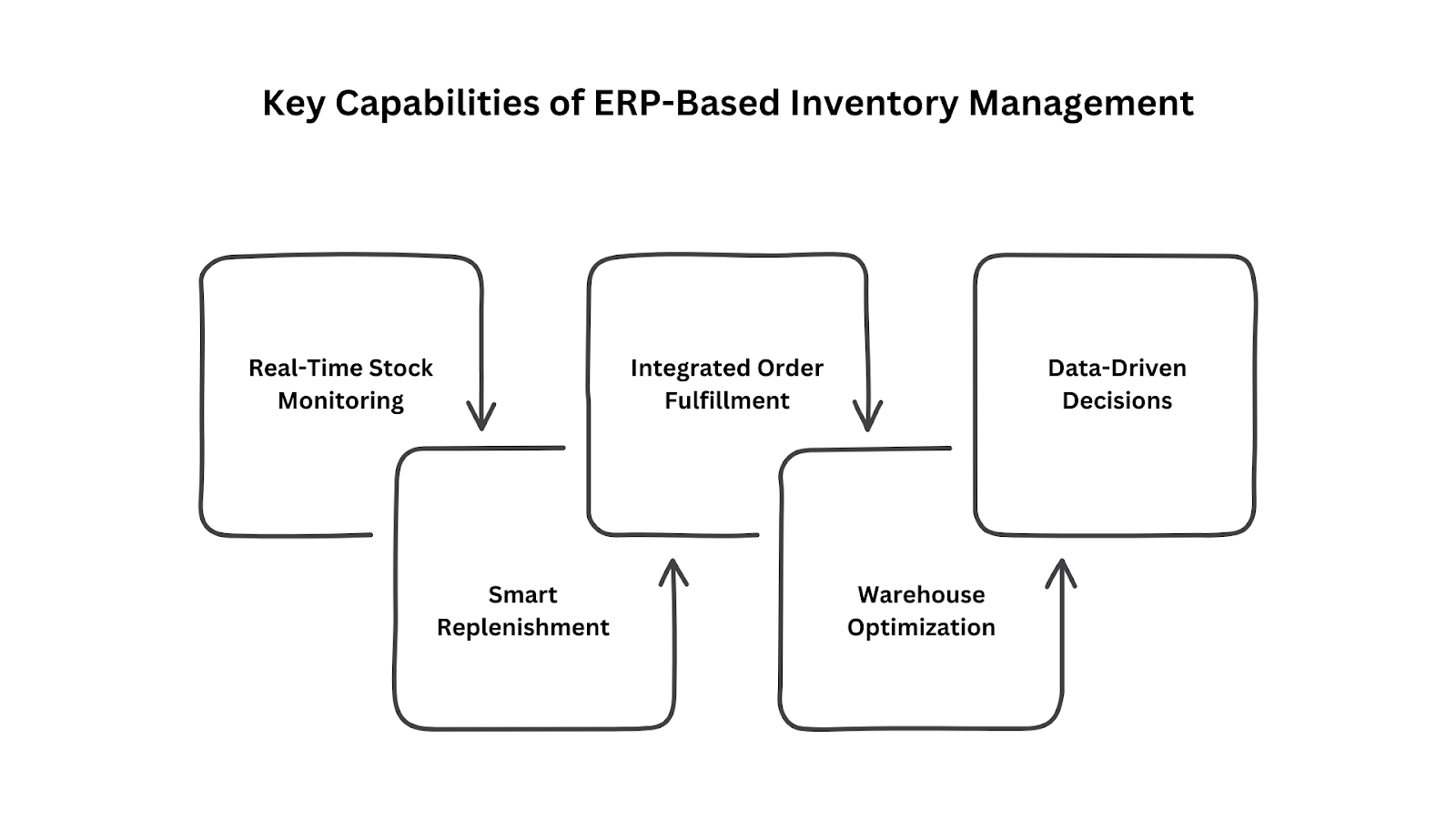
By unifying inventory processes within an ERP system, businesses gain agility, reduce stock-related issues, and improve their overall supply chain efficiency.
Also Read: Top Inventory Management Features to Look for in an ERP System
By incorporating an ERP system for inventory management, businesses can enhance their overall operational efficiency, reduce stock-related issues, and maintain a more responsive supply chain.
Now, let’s compare seven leading ERP inventory management systems and the business requirements each one serves best.
We evaluated the platforms using practical inventory-management criteria, including:
HAL Simplify publishes this guide and offers HAL ERP. Businesses should therefore verify every shortlisted platform—including HAL—through a tailored demonstration, implementation proposal, customer references and total-cost-of-ownership assessment.
HAL ERP Inventory Management provides real-time stock visibility across warehouses and companies. Its double-entry inventory model records stock movements between locations, helping businesses trace where products came from, where they moved and where they are currently stored.
The platform supports retail, trading, manufacturing, construction and other businesses that need inventory processes adapted to their existing operations rather than a rigid, standardized implementation.
Key features:
For e-invoicing, HAL VAT CARE supports ZATCA Phase 2 requirements and can work with HAL ERP or connect to another ERP through APIs and Excel or CSV uploads.
Why consider HAL ERP for Saudi inventory operations?
HAL combines broad inventory capabilities with Saudi-based implementation and support. Its adaptable workflows may be particularly relevant to companies whose inventory processes do not fit neatly into an off-the-shelf system.
Also Read: Why HAL ERP Is a Must-Have for Inventory Management in Small Businesses
Best for: Midsize and multinational businesses managing multiple subsidiaries, warehouses and complex supply chains.
Oracle NetSuite ERP is an AI-powered cloud business-management platform that connects inventory with finance, procurement, order management, production, supply-chain and warehouse operations.
Key features:
Why choose Oracle NetSuite ERP?
NetSuite is particularly suitable for businesses that require inventory and financial consolidation across multiple entities or countries. Saudi buyers should ask NetSuite or its implementation partner to demonstrate the exact ZATCA, Arabic invoicing, taxation and local-support capabilities included in the proposed configuration.
Best for: Businesses seeking a modular ERP with configurable inventory workflows and a broad application ecosystem.
Odoo Inventory connects warehousing with purchasing, sales, manufacturing, accounting and other Odoo applications. Its modular architecture allows businesses to begin with selected applications and add capabilities as their requirements expand.
Key features:
Odoo’s current Saudi Arabia localization includes Arabic and English invoice layouts and ZATCA Phase 2 API integration. Businesses should still confirm that the correct localization modules are configured and tested during implementation.
Why choose Odoo ERP?
Odoo offers significant flexibility and both open-source and subscription-based deployment options. However, buyers should evaluate the complete cost of hosting, applications, customization, migration, implementation and long-term technical support rather than focusing only on the entry-level software price.
Best for: Midsize and large organizations with complex, multinational or industry-specific supply-chain requirements.
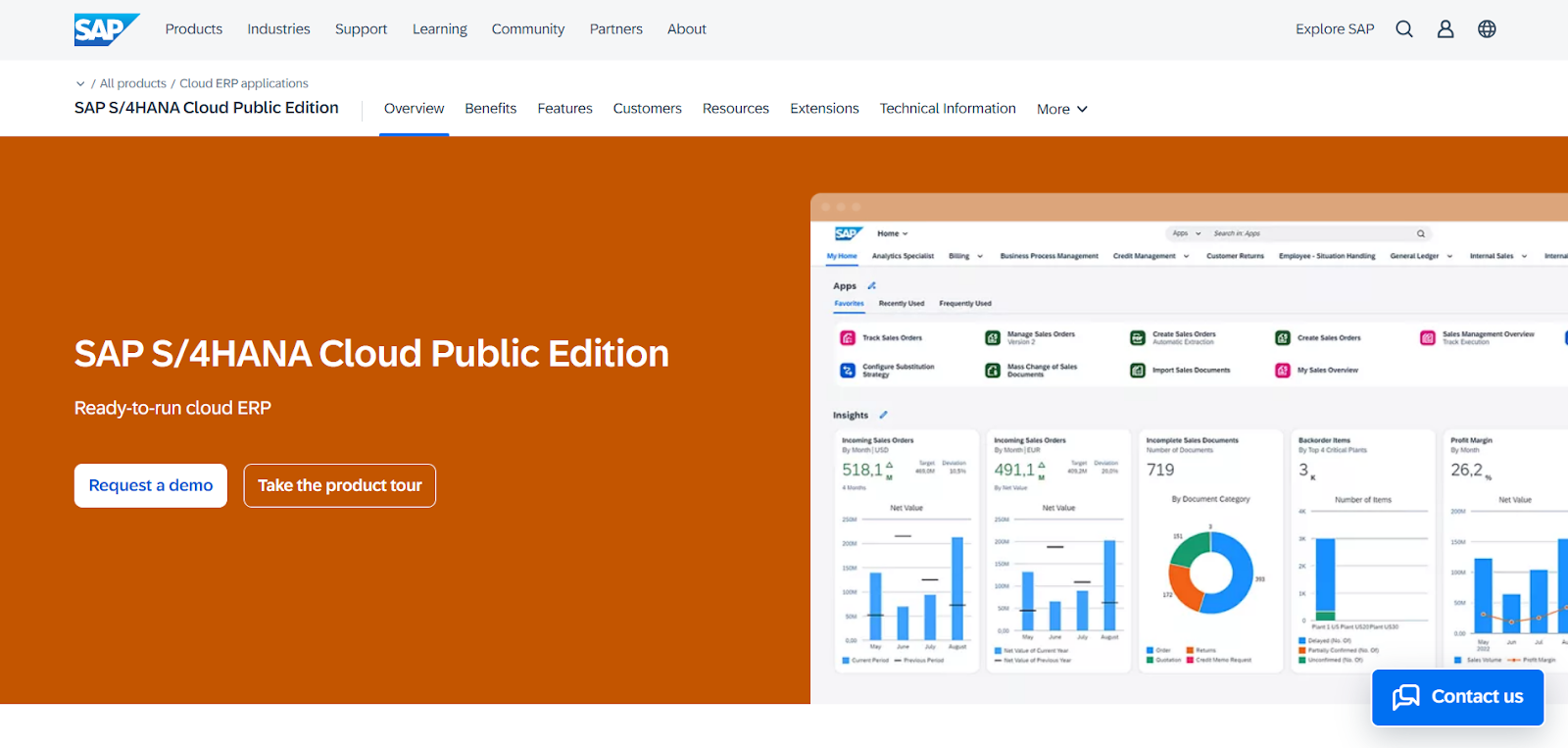
SAP S/4HANA Cloud Public Edition, a foundational application of SAP Cloud ERP, connects finance, procurement, inventory, manufacturing, sales and supply-chain processes within one cloud platform.
Key features:
Why choose SAP Cloud ERP?
SAP is well suited to organizations that require extensive process standardization, governance and supply-chain depth. Implementation is typically more involved than adopting a lightweight inventory platform, so businesses should evaluate process redesign, migration, implementation resources and ongoing administration. Saudi buyers should also request a demonstration of the specific localization and ZATCA configuration included in the proposed scope.
Best for: Cost-conscious businesses with access to internal technical expertise or an experienced implementation partner.
ERPNext is an open-source ERP platform covering inventory, accounting, sales, purchasing, manufacturing, projects and other business functions.
Key features:
Why choose ERPNext?
ERPNext’s source code is openly available, and the platform does not rely on traditional per-user licensing. However, businesses must still account for hosting, implementation, customization, migration, maintenance and support.
Saudi companies should confirm the availability and maturity of the required VAT, Arabic-document and ZATCA functionality with their selected ERPNext partner before implementation.
Best for: Organizations already invested in the Microsoft ecosystem that need advanced planning, inventory and warehouse capabilities.
Microsoft Dynamics 365 Supply Chain Management connects demand planning, procurement, production, inventory, warehousing, fulfilment and asset management.
Key features:
Why choose Dynamics 365 Supply Chain Management?
The platform is a strong option for businesses that already use Microsoft technologies or require extensive workflow extensibility. Saudi businesses should have their implementation partner demonstrate the exact VAT, ZATCA, Arabic-document and regional-support scope rather than assuming these capabilities are included in the standard configuration.
Best for: Growing distribution, manufacturing, retail or construction businesses that want cloud ERP access without per-user seat licensing.
Acumatica Cloud ERP combines financial management with inventory, order management, purchasing, manufacturing, CRM and warehouse operations.
Key features:
Why choose Acumatica Cloud ERP?
Acumatica can benefit organizations that need broad system access without purchasing a separate licence for every user. However, pricing still depends on the applications, transaction usage, resources and deployment requirements selected.
Saudi buyers should confirm Arabic support, ZATCA integration, regional implementation resources, hosting arrangements and ongoing support with the selected partner before committing.
Also Read: Cost-Effective Procurement Management: How Software Can Help?
Begin by documenting the inventory problems the system must solve. This may include inaccurate stock counts, slow replenishment, limited warehouse visibility, weak traceability, disconnected sales channels or manual order fulfilment.
When comparing platforms, ask each vendor to demonstrate:
A product demonstration based on your real processes will provide more useful evidence than a generic feature checklist.
ERP inventory management software connects stock control with other business functions such as purchasing, sales, accounting, warehousing and manufacturing. This gives teams a unified view of inventory quantities, movements, costs and orders across the organization.
The best ERP depends on the company’s size, industry, warehouse structure, integrations and compliance requirements. Saudi businesses should evaluate inventory functionality alongside VAT support, applicable ZATCA e-invoicing requirements, local implementation expertise and Arabic or bilingual document needs. HAL ERP is one option for businesses seeking adaptable inventory workflows with local Saudi support.
A strong ERP inventory system should include real-time stock visibility, multi-warehouse management, automated replenishment, barcode scanning, stock transfers, cycle counting and inventory valuation. Businesses dealing with regulated, perishable or high-value goods may also need lot, serial-number and expiration-date tracking.
ERP software can reduce inventory costs by improving demand visibility, automating replenishment and helping businesses identify slow-moving or excess stock. Better coordination between sales, purchasing and warehouse teams can also reduce emergency purchases, stockouts and unnecessary storage costs.
Yes. Most modern ERP platforms allow businesses to track stock across several warehouses, stores, branches or companies. The system may also support internal transfers, location-specific reorder rules and consolidated inventory reporting.
Standalone inventory software primarily manages stock and warehouse activities. ERP software connects inventory with finance, purchasing, sales, CRM, manufacturing, projects or other business processes. An ERP is generally more suitable when inventory decisions affect several departments.
Inventory functions themselves do not require ZATCA compliance. However, invoices and credit or debit notes generated from inventory sales may fall under Saudi e-invoicing requirements. Businesses should confirm that their ERP or connected e-invoicing solution supports the requirements applicable to their taxpayer wave.
ERP pricing depends on factors such as the number of applications, users, warehouses, transactions, integrations and customization requirements. Businesses should compare the total cost of subscriptions, implementation, migration, training, hosting, support and future upgrades—not only the advertised licence price.
Implementation time varies according to process complexity, data quality, integrations and customization. A focused deployment may take several weeks, while a multi-company or heavily customized ERP implementation can take several months. Clear requirements and clean inventory data can significantly reduce delays.
Yes. HAL ERP Inventory Management connects inventory with purchasing, sales, invoicing, accounting and other operational workflows. It also supports multiple warehouses, replenishment rules, barcode processes, traceability and configurable stock movements.
There is no single ERP inventory platform that is best for every organization. NetSuite, SAP and Microsoft may suit companies with complex multinational or enterprise-scale requirements. Odoo, ERPNext and Acumatica offer different combinations of modularity, customization and deployment flexibility.
For Saudi businesses that want inventory connected with finance, procurement, sales and other operational workflows—supported by a locally based implementation team—HAL ERP is a strong option to evaluate.
HAL supports multi-warehouse inventory, replenishment, stock traceability, barcode processes, reporting and configurable stock routes. Its VAT CARE solution can also support ZATCA Phase 2 e-invoicing within HAL ERP or alongside an existing system.
Book a HAL ERP demo to assess the platform against your actual inventory workflows, integrations and Saudi compliance requirements.