

ERP Built for Saudi Businesses

Request a demo
Request a demo

The Easy Saudi Guide to Inventory Optimisation for Retail Shops

The Easy Saudi Guide to Inventory Optimisation for Retail Shops
Mohammed Ali Khan

Published By

Mohammed Ali Khan
Retail
Dec 19, 2025

Saudi Arabia recorded the highest retail index score in the MENA region, driven by rapid growth and the push from Vision 2030. With demand rising fast, even a minor issue with stock can affect your margins.

You might feel the pressure of stock-outs, extra stock piling up, or long supplier lead times. These problems slow sales and create stress for your team. Many retailers across the Kingdom face the same struggle, as customer demand often shifts.

In this blog, we’ll explore what smart inventory planning means for Saudi retailers, the key methods for keeping stock under control, the challenges shops face, and how HAL ERP supports retail teams aiming for steady growth.

Key Takeaways

  • Clear Stock Control Matters: Retailers in Saudi Arabia need accurate stock data to avoid losses, reduce mistakes, and support steady daily operations.
  • Core Techniques Help: ABC analysis, forecasting, safety stock, SKU cleanup, and JIT support smarter planning.
  • Common Retail Challenges: Stock-outs, dead stock, long lead times, VAT gaps, and ZATCA errors affect daily work.
  • Future Retail Trends: AI forecasting, automated ordering, RFID tools, and unified stock views will guide retail decisions.
  • HAL ERP Advantage: HAL ERP gives retailers clear visibility, mobile access, strong reporting, and full multi-store support.

Why Inventory Optimisation Is Critical for Saudi Retail

Retail growth in Saudi Arabia continues to rise, yet many shops still struggle with stock clarity and timely replenishment. When stock records are off, you face cash flow pressure, missed sales, and frustrated customers. You need precise data and steady control to keep up with demand.

Common Inventory Challenges Saudi Retail Shops Face Today

As you look closer at your daily operations, you may notice several stock issues that deserve your attention. Here are the challenges many Saudi retail shops face today:

  • Unclear Stock Levels: Teams can’t confirm what’s available, leading to incorrect orders and missed sales.
  • Dead Stock: Items sit too long, tie up cash, and lose value over time.
  • Frequent Stock-Outs: Popular items run out during key seasons, leaving customers disappointed.
  • Slow Stock Counts: Manual checks take too long and often contain errors.
  • Long Supplier Lead Times: Imported goods take weeks to arrive, increasing planning risks.
  • Branch-Level Gaps: Each store may show different numbers, making decisions slow and confusing.
  • VAT Record Issues: Incorrect stock figures affect VAT reports and create compliance concerns.
  • ZATCA Documentation Errors: Manual processes result in missing or incorrect data, affecting e-invoicing and audit readiness.
  • Limited Forecasting Accuracy: Past data isn’t used well, so demand changes catch the team off guard.

Once you understand the challenges, you can start applying clear methods that bring more structure to your stock decisions.

book demo

6 Proven Techniques for Inventory Optimisation

Retail shops handle fast-moving demand, periodic supply shortages, and shifting customer patterns throughout the year. With practical techniques, you can organise stock, plan orders confidently, and reduce problems caused by unpredictable buying behaviour. 

The methods listed below provide structured steps and a reliable foundation that support long-term retail growth in Saudi Arabia.

6 Proven Techniques for Inventory Optimisation

1. ABC Analysis

ABC analysis organises products based on their impact on your business, allowing teams to prioritise the items that matter most. With this method, you assign each product to a group that reflects its sales value, usage frequency, or strategic importance to customers.

How to Conduct an ABC Analysis

  • Gather Data: Collect historical sales figures, purchase prices, and usage frequency to understand each item’s actual contribution to daily operations.
  • Assign Value Scores: Give each item a score that reflects its impact, enabling your team to classify products with greater clarity and confidence.
  • Categorize Items: Group items into A, B, or C categories, separating higher-value products from items that contribute less to overall revenue.
    • A: high value, low quantity
    • B: mid value
    • C: low value, high quantity
  • Adjust Stock Levels: Keep strong stock levels for category A items, while reducing quantities for category B and category C items as needed.

Benefits of ABC Analysis:

ABC analysis improves your ability to manage space, prioritise key items, and maintain stronger cash flow throughout the year.

2. Demand Forecasting

Demand forecasting helps retailers predict future buying behaviour by analysing patterns found in past sales and seasonal movements. With accurate forecasting, you plan purchases more confidently and reduce problems created by sudden changes in customer demand.

Methods for Demand Forecasting

  • Time Series Analysis: Uses previous sales data to estimate future demand, allowing teams to prepare for recurring seasonal patterns across Saudi Arabia.
  • Regression Analysis: Helps teams understand how different variables impact demand, supporting better decision-making during pricing or promotional changes.
  • Causal Models: Identifies relationships between demand and external factors, helping retailers prepare for shifts influenced by weather, events, or supply delays.

Benefits of Demand Forecasting:

Teams avoid ordering too much or too little while improving their ability to maintain steady product availability across all branches.

3. Safety Stock Management

Safety stock protects your business from sudden spikes in demand or delays from local or international suppliers. This buffer reduces the chance of stock-outs and helps your team maintain steady service levels during busy periods.

How to Calculate Safety Stock

  • You need three values:
    • Desired service level
    • Average lead time
    • Average demand during the lead time
  • Formula: Service Level × ADLT × Standard Deviation of Demand

Benefits of Safety Stock

A clear safety stock plan reduces risk, supports customer satisfaction, and keeps your shelves ready during unexpected demand peaks.

4. SKU Rationalisation

Too many products create confusion, slow operations, and waste storage space across branches. SKU rationalisation identifies items that no longer support your goals, helping teams maintain a clean and practical catalogue for daily operations.

How to Conduct SKU Rationalisation

  • Analyse sales performance across all stores
  • Review customer preferences based on real buying behaviour
  • Study profitability and stock movement over time
  • Remove or reduce items that no longer meet business or customer needs
  • Retain items that consistently support margins and customer satisfaction

Benefits of SKU Rationalisation

A cleaner catalogue helps teams place orders confidently, avoid storage issues, and maintain better control across multiple locations.

5. Just-in-Time (JIT)

JIT reduces storage needs by ordering products closer to the time they are required. This method works well when demand patterns are stable and supplier lead times are predictable within your region.

How to Use JIT

  • Study current ordering patterns and identify opportunities to reduce excess stock
  • Review supplier performance to ensure consistent delivery timelines
  • Track demand frequently to avoid sudden shortages
  • Order based on short-term needs and clear trend indicators
  • Use structured planning tools to support accurate timing

Benefits of JIT

Retailers reduce storage costs, keep stock fresh, and maintain better cash flow during periods of steady demand.

6. Automation

Automation helps your team maintain accuracy by reducing manual tasks and improving clarity across all sales channels. When stock updates occur automatically, your staff can focus on customers rather than fixing data errors.

How Automation Helps

  • Tracks stock movement instantly when products are sold or received
  • Sends clear alerts when items require attention or replenishment
  • Highlights slow-moving or high-performing items across branches
  • Reduces errors caused by manual input or outdated information
  • Syncs stock records across all stores for consistent visibility

With systems like HAL ERP, many of these steps run quietly in the background, giving your team clearer information with far less manual work.

Benefits of Automation

Automation supports transparent reporting, faster decisions, reduced waste, and safer stock planning during both quiet and busy periods.

After learning these methods, you may want a system that supports them with stronger data and steady performance.
Choosing the Right Inventory System for Saudi Retail

Choosing the Right Inventory System for Saudi Retail

Retail shops in Saudi Arabia deal with fast demand shifts, tight margins, and strict VAT rules. When your stock system can’t keep up, you face delays, errors, and lost sales. A solid inventory system supports your daily work, gives you precise data, and helps your team stay ahead during peak periods.

Many shops start with small tools. These work fine at first, but fall short as the business grows. Systems like Wafeq, Zoho, Xero, QuickBooks, and Qoyod are better for micro-businesses. They limit your control as you add more branches, staff, or items. At that stage, you need stronger tools that can support real stock movement across locations.

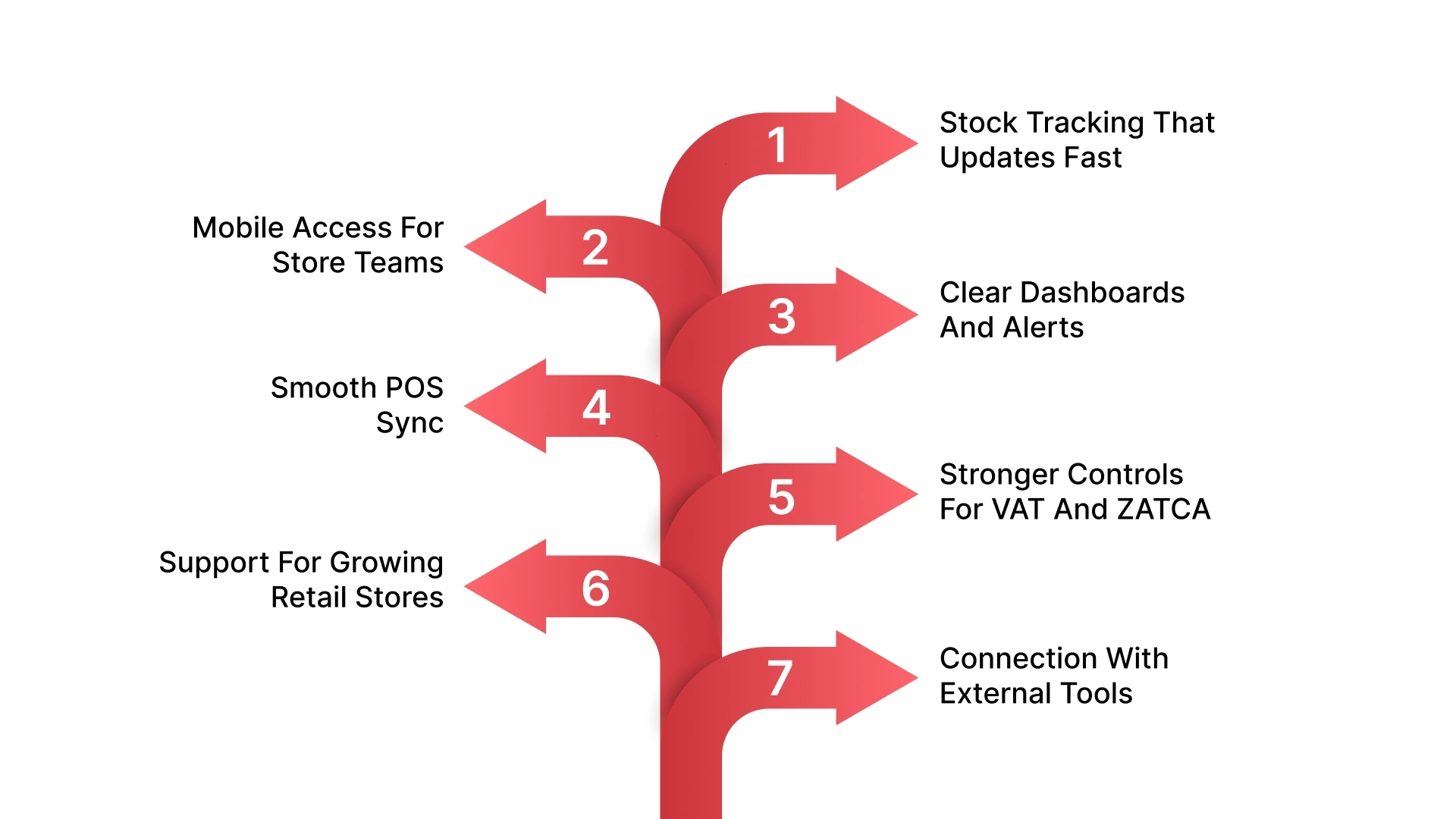
Below are the key features mid-sized Saudi retailers should look for when choosing a system:

  • Stock Tracking That Updates Fast: Your team should see the exact numbers across all branches. This helps avoid double orders and missing items.
  • Mobile Access for Store Teams: Staff should update counts, check items, and confirm stock without going back to a desk.
  • Clear Dashboards and Alerts: You need a view that shows stock levels, sales trends, and problem items at a glance.
  • Smooth POS Sync: Sales should update stock without delay. This keeps your counts clear at all times.
  • Stronger Controls for VAT and ZATCA: Your system should support clean VAT inputs, correct stock values, and proper ZATCA rules for e-invoicing.
  • Support for Growing Retail Stores: As your business grows, your system should grow with you. HAL ERP fits well here, as it supports multi-branch operations and provides your team with precise stock data at all times.
  • Connection With External Tools: Your system should connect with e-commerce, payment, and logistics platforms to ensure orders flow with fewer errors.

With the right system in place, you can prepare for upcoming trends that influence your stock decisions across Saudi Arabia.
Future Trends That Will Shape Stock Planning in Saudi Arabia

Future Trends That Will Shape Stock Planning in Saudi Arabia

Retail across Saudi Arabia is changing fast, and customer expectations keep rising. Buyers want items ready when they walk in or order online. To keep up, retailers need clearer data, faster stock insights, and systems that support steady growth without adding pressure on staff.

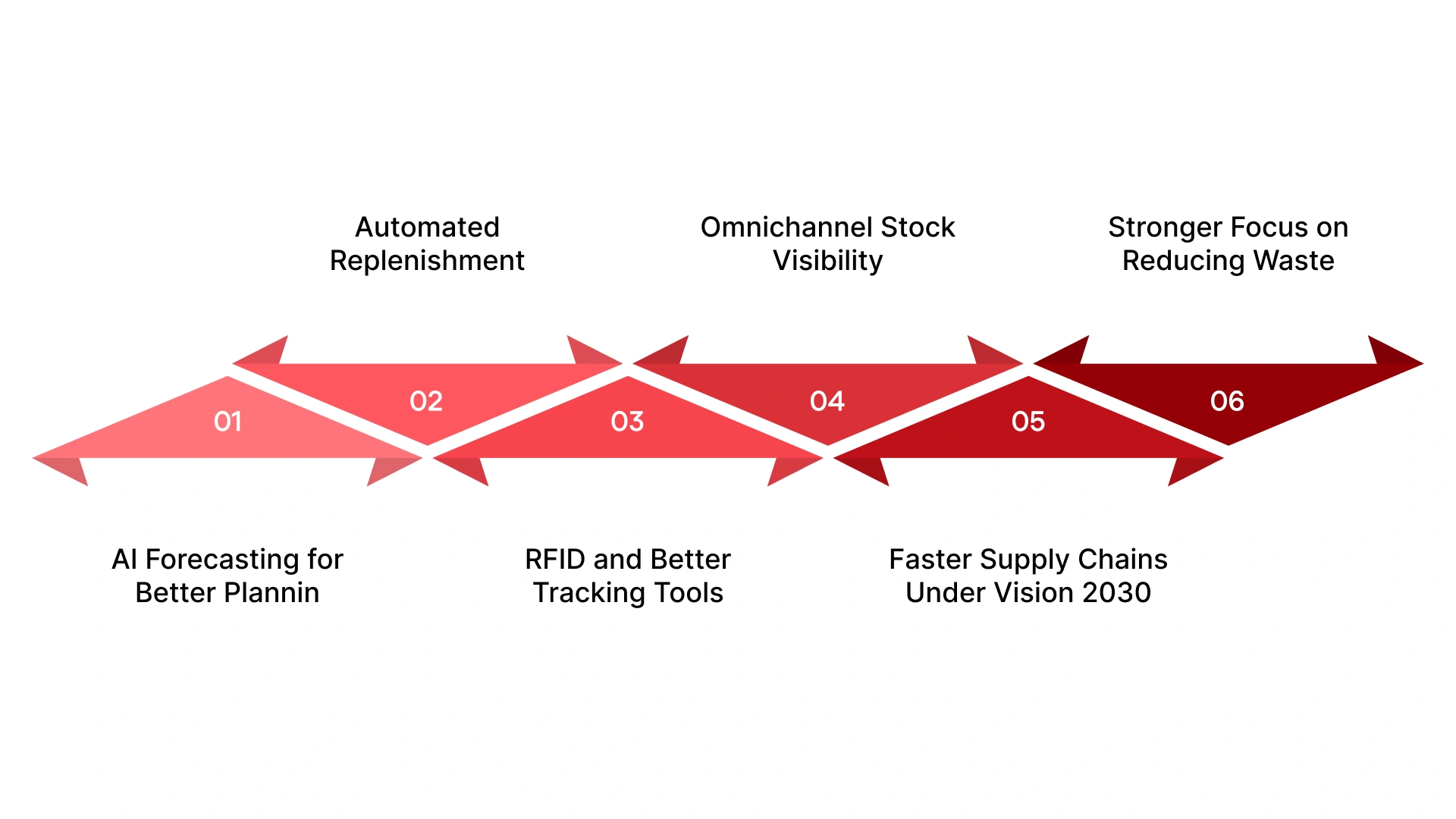
Several trends are shaping how shops prepare for demand. These trends help you plan stock with greater clarity, respond more quickly to changes, and support customers during peak seasons. Here’s what to expect in the coming years:

  • AI Forecasting for Better Planning: AI tools study sales patterns, seasonal shifts, and store activity. They help predict demand and warn you before stock issues appear. HAL ERP already supports these needs with smart alerts and pattern tracking.
  • Automated Replenishment: More retailers will use systems that suggest reorder points and create order plans. This removes guesswork and helps you keep key items ready at the right time.
  • RFID and Better Tracking Tools: RFID tags help track products faster, reduce stock mistakes, and give you a clear view of what sits on shelves or in storage.
  • Omnichannel Stock Visibility: With more shoppers buying online, retailers need a unified view of stock. This helps you serve walk-in and online customers from the same stock pool without delays.
  • Faster Supply Chains Under Vision 2030: Saudi Arabia’s growth plans are improving logistics, transport, and warehousing. This will support shorter lead times and better stock control for local retailers.
  • Stronger Focus on Reducing Waste: Retailers will rely on clearer stock data to cut slow-moving items and reduce losses. Good reporting tools help teams spot problem items before they turn into dead stock.

These trends highlight the need for tools that support your retail goals, which is where HAL ERP becomes helpful.

book demo

Enhancing Retail Operations In Saudi Arabia with HAL ERP

Retail teams need a system that removes guesswork, cuts manual steps, and gives a clear view of stock across all stores. HAL ERP supports this by bringing your sales, stock movement, pricing, and customer touchpoints into one place. With steady control and accurate data, your team can act faster and avoid daily stock issues that slow growth.

Below are the core features retailers rely on every day:

  • Inventory Control Across All Outlets: Track stock movement across branches and avoid shortages or extra stock. This helps you plan replenishment with more clarity.
  • Smart Sales Insights: View sales patterns by brand, outlet, or item. You can plan buying decisions and focus on products that matter most.
  • Clear Stock Visibility: See what’s available, what’s running low, and what needs attention. HAL ERP gives your team steady access to accurate numbers.
  • Automated Billing and Receipts: Send receipts through WhatsApp or email after each sale. This supports fast checkout and keeps your customers informed.
  • Price List and Promotion Control: Create and manage price lists for each store. Run seasonal offers or outlet-specific promotions without confusion.
  • Payment Flexibility: Offer Buy Now, Pay Later options that help improve conversions and customer comfort.
  • Connections with Common Retail Tools: Connect with platforms like Tabby, Tamara, Geidea, Shopify, WooCommerce, Salla, and bank payment terminals such as ANB, Al Rajhi, and NeoLeap.
  • Loyalty Features That Support Repeat Business: Reward customers with points or offers. This builds stronger relationships and increases return visits.
  • Mobile App for Staff: Employees can check in with biometrics, review tasks, and manage stock checks on the go.
  • Omnichannel Sales Support: Manage online sales, store pickups, and complete order flow from one system.
  • Coupon and Voucher Management: Run cross-store offers, seasonal vouchers, or discount codes with ease.

Retailers often ask how systems like HAL ERP perform in practise. Here’s a quick example from one of the most respected retail groups in the Kingdom, Al Homaidhi Group.

book deo

Conclusion

Steady stock control helps your retail business stay ready for demand, avoid costly mistakes, and keep customers happy. With clear data and simple tools, your team can focus on sales instead of fixing issues that drain time and energy. Saudi retailers face fast shifts during peak seasons, and the right system makes those moments far easier to manage.

HAL ERP gives you the clarity, speed, and support you need to run your stores with confidence. From stock tracking to promotions, payments, and reporting, every part of your retail flow becomes easier to handle.

Book your free HAL ERP demo today and see how your stores can run more accurately and with less stress.

FAQs

1. How often should retail shops update their inventory records?

Most retail shops benefit from updating records at least once a day, especially during busy sales periods. Frequent updates reduce errors and help teams maintain a clearer view of stock movement across different branches.

2. What is the best way to handle items with irregular demand patterns?

Items with unpredictable demand should be tracked with shorter review cycles and closer monitoring. Regular checks help you adjust order quantities so you avoid carrying too much or too little stock during quiet or busy weeks.

3. How can retailers reduce losses caused by product expiry?

Retailers can reduce expiry losses by tagging date-sensitive items clearly and placing them in priority picking zones. This helps staff sell items in the correct order and keep older stock moving before it becomes unsellable.

4. Why do some retailers perform mid-month stock checks?

Mid-month checks help teams catch small errors before they grow into larger discrepancies. These checks also give managers clearer insight into which items require immediate attention or adjustments before the next full cycle count.

5. How can retailers improve supplier coordination for better stock stability?

Retailers can share basic demand patterns or order expectations with suppliers to avoid sudden shortages. Strong communication helps suppliers plan deliveries that match your store’s pace, reducing the chance of delayed shipments.


Mohammed Ali Khan
Mohammed Ali Khan
Mohammed Ali Khan is a seasoned ERP Implementation Consultant with over 100 successful projects across Saudi Arabia. With expertise across diverse industries, he has spearheaded large-scale implementations for customers across Construction/Contracting and Retail industry to name a few. He is fluent with regional challenges and Saudi Specific compliance requirements