.jpg)

Is your retail business grappling with inventory issues like stockouts, overstocking, or inaccurate stock counts?
In Saudi Arabia's rapidly expanding retail sector, such challenges can significantly impact profitability and customer satisfaction. The Kingdom's retail market, valued at $282.2 billion in 2024, is projected to reach $402.7 billion by 2033, growing at a CAGR of 4.03% during 2025–2033.
As the industry grows, the need for efficient inventory management becomes a must. A retail stock management system can simplify operations, enhance accuracy, and improve decision-making.
In this guide, you'll learn the top 10 benefits of a retail stock management system, common challenges it addresses, and how modern tools can improve retail operations.
A retail stock management system helps retailers track and control inventory. It monitors stock, manages orders, and shows real-time data across locations. Accurate, up-to-date inventory prevents stockouts, overstocking, and losses.
The system is for retail owners, store managers, and operations teams who need clear stock insights. It simplifies tasks like receiving goods, processing orders, and replenishing inventory. It also provides data to make quick, informed decisions.
A retail stock management system brings transparency, efficiency, and control to retail operations, allowing businesses to maintain the right stock at the right time. Now, let’s discuss the core benefits such a system offers.
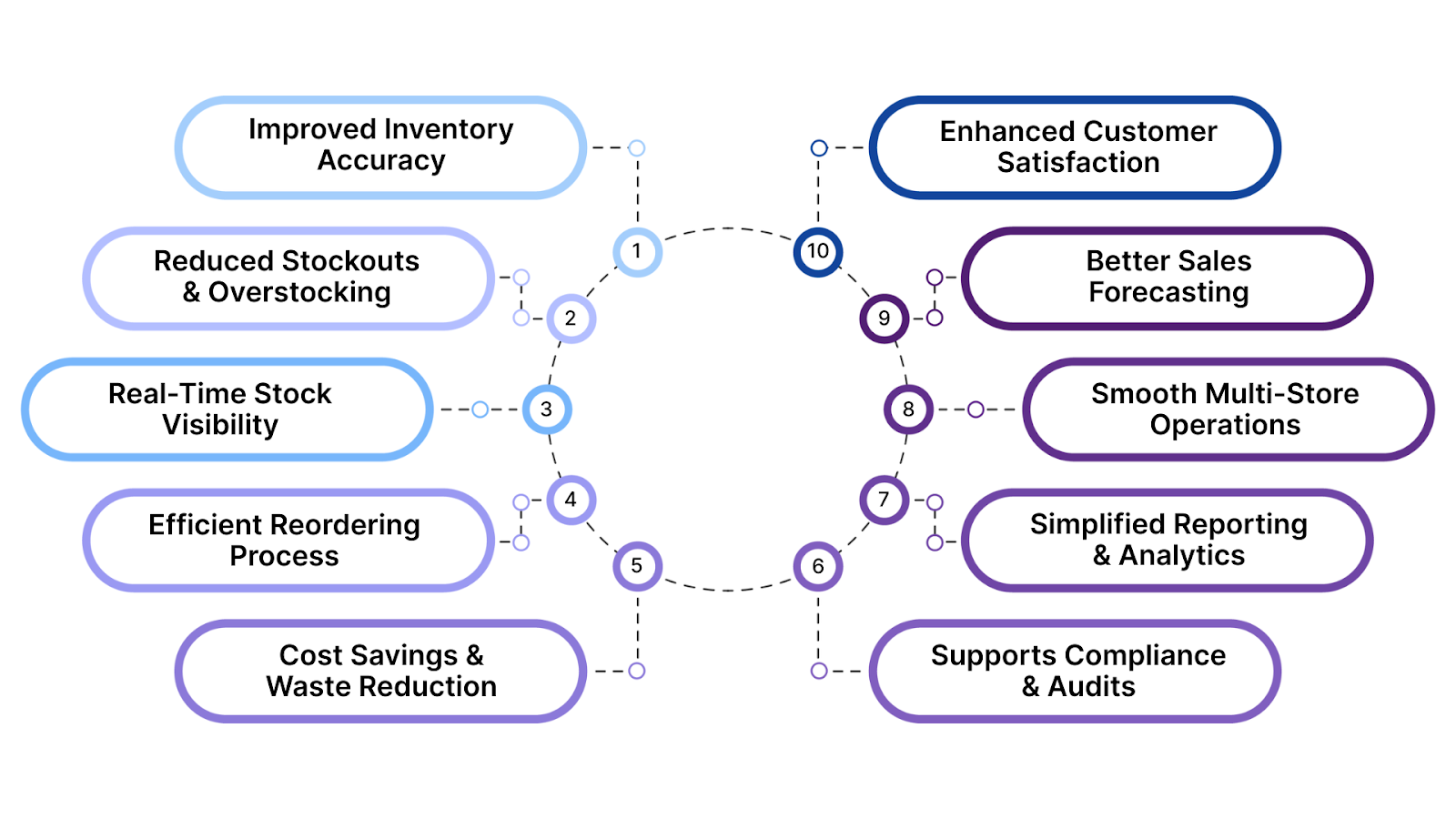
Managing inventory manually can lead to errors, stock imbalances, and lost revenue. A retail stock management system addresses these challenges by automating key processes, giving retailers real-time insights, and improving operational efficiency. With accurate stock data, retailers can reduce losses, meet customer demand, and plan resources effectively.
Here are the top 10 benefits that demonstrate how a retail stock management system transforms inventory management:
Accurate inventory data ensures that stock levels reflect reality, preventing discrepancies between physical and recorded quantities. It reduces errors in order fulfillment, avoids lost sales due to missing products, and minimizes the time spent on manual stock checks. Retail managers gain confidence in planning and allocating resources efficiently.
By tracking stock in real time, the system identifies when products are running low or overstocked. Retailers can reorder items proactively, avoiding lost sales from stockouts and reducing holding costs from excess inventory. This balance keeps shelves ready for customers and optimizes working capital.
Recommended Reading: Understanding the Supply Chain Process: Key Steps and Phases
Retailers can monitor inventory across multiple stores or warehouses instantly. This visibility allows quick decisions about transfers, replenishments, or promotions. Managers no longer rely on delayed reports, ensuring accurate stock information is always available for operational planning.
Automated reorder alerts and smart minimum stock levels streamline procurement. The system recommends quantities based on historical sales trends, reducing human error and ensuring stores maintain optimal stock. It speeds up supply chain processes while maintaining product availability.
By minimizing overstock and stockouts, retailers save money on excess inventory and avoid losses from expired or unsold products. Efficient inventory management reduces unnecessary storage costs, shrinkage, and waste, directly impacting the bottom line.
Must Read: Understanding Profit Margin and How to Calculate It
Consistently available products improve the shopping experience and customer trust. Shoppers are less likely to encounter empty shelves or delays in fulfilling orders. Reliable stock levels lead to repeat business and a stronger brand reputation.
Historical sales data combined with real-time inventory insights helps predict demand trends. Retailers can plan promotions, allocate stock seasonally, and prepare for peak periods. Accurate forecasting reduces guesswork, ensuring resources and inventory match expected demand.
The system maintains accurate records for regulatory reporting, VAT compliance, and internal audits. Retailers can easily track inventory movement, receipts, and adjustments, reducing errors during inspections and ensuring adherence to local and international regulations.
Further Insights: Top Inventory Management Features to Look for in an ERP System
Automated reports provide insights into stock levels, turnover rates, and sales performance. Managers can quickly identify trends, slow-moving items, or inefficiencies. Analytics supports informed decisions, helping businesses adjust purchasing, pricing, and promotions for maximum profitability.
Retailers managing multiple locations can coordinate stock transfers, monitor performance, and unify inventory management. The system allows managers to balance inventory across stores, reducing localized shortages and optimizing overall stock distribution.
By providing these benefits, a retail stock management system improves accuracy, efficiency, and customer experience, while reducing costs and risks.
But how do you decide which system truly fits your retail needs?

Now, let’s understand the common challenges retailers face in managing stock and how such systems can help overcome them.
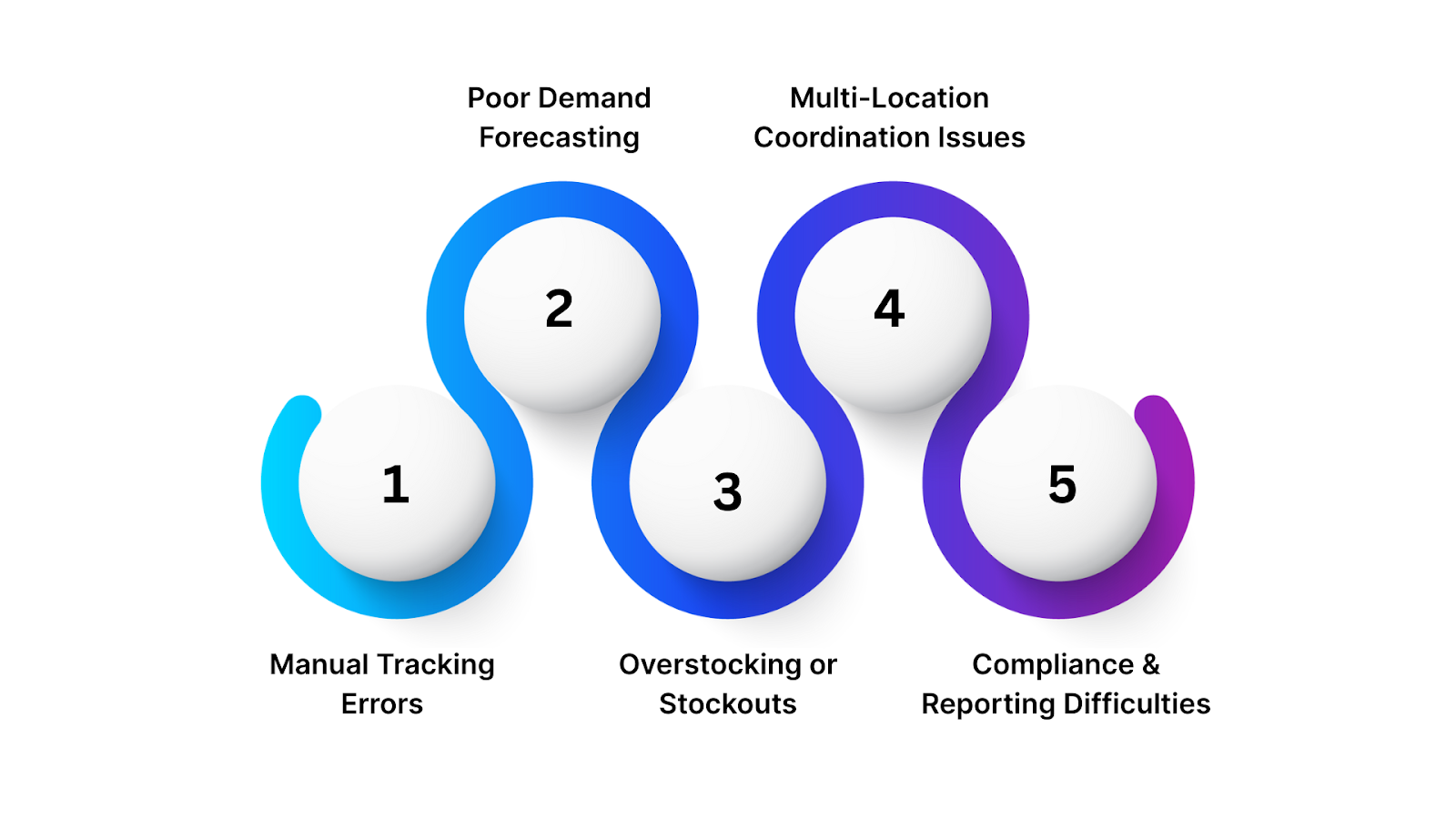
Retailers struggle with inventory accuracy, demand, and multi-location stock. These issues cause lost sales, higher costs, and inefficiency. A retail stock management system automates processes, increases visibility, and streamlines reporting.
Here are 5 common challenges retailers face and how to overcome them:
Also Read: Transforming Potential into Prosperity: Scale Your Saudi Business with HAL Trade!
By addressing these challenges, retailers can improve accuracy, reduce losses, and maintain operational efficiency. Now, let’s see how smarter inventory management, like HAL ERP can help.
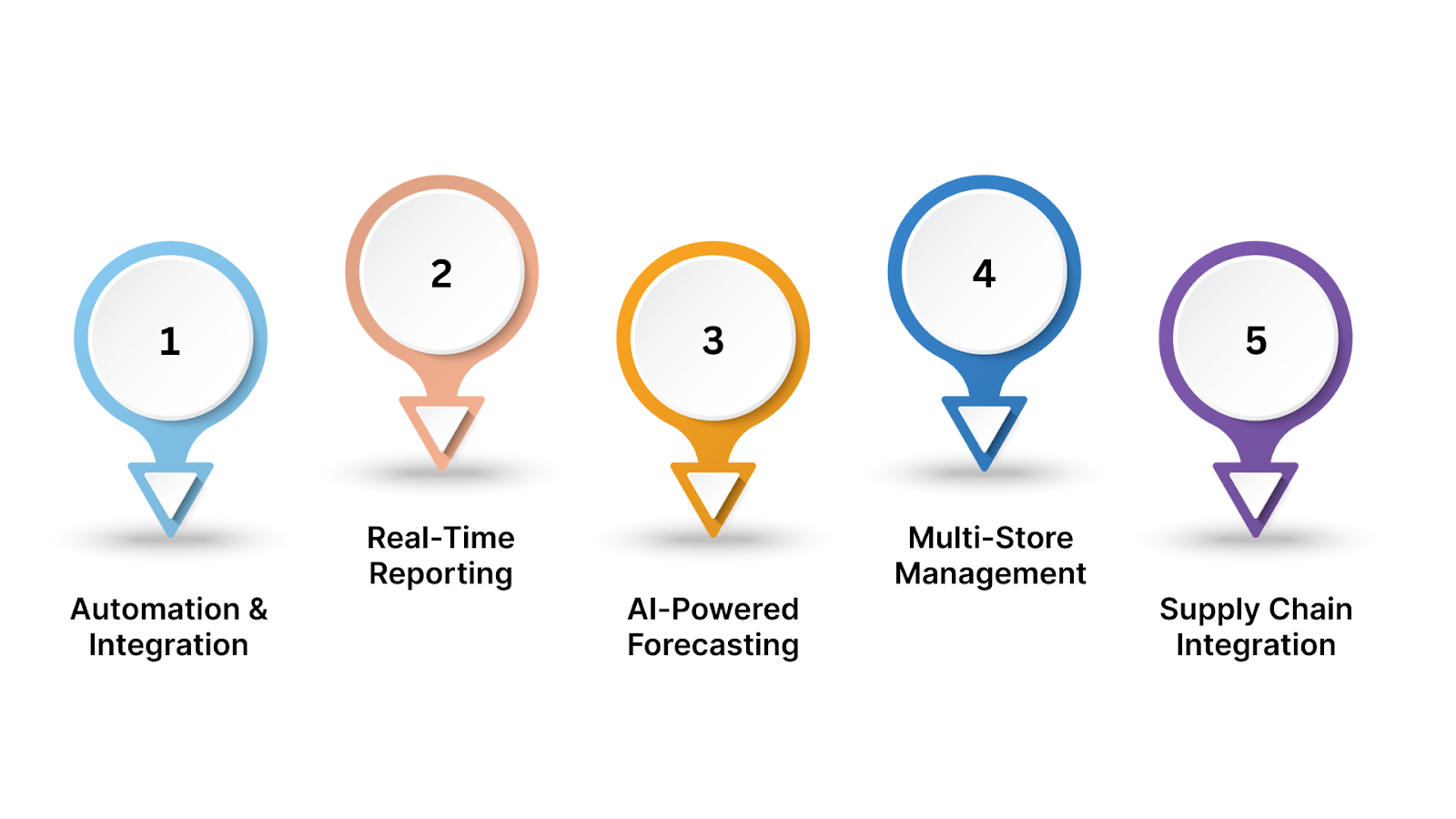
HAL is an enterprise software provider that offers HAL ERP, a comprehensive solution for retailers to manage operations efficiently. Serving businesses across Saudi Arabia and the broader Middle East, HAL ERP supports CEOs, store managers, and operations teams in automating processes, gaining insights, and improving productivity.
For retail businesses, HAL ERP transforms stock management by integrating multiple features that tackle common inventory challenges. Here is how it helps:
Before adopting HAL ERP, Jash Holding faced operational challenges, like fragmented project data, manual payroll for over 4,000 employees, and inefficient inventory control across subsidiaries. These gaps caused reporting delays, frequent errors, and poor visibility across operations.
After integrating HAL ERP, the company achieved a 60% improvement in operational efficiency, with faster decision-making, better cost tracking, and smoother coordination across departments. This transformation highlights how automation and centralized data management can drive measurable gains in performance and accuracy.
Implementation was smooth, with basic setup and training completed in 2–4 weeks, and full deployment, including custom modules, took 8–12 weeks.
Are inventory issues causing delays and lost sales in your retail business?
A retail stock management system is essential for modern retailers seeking accuracy, efficiency, and control over their inventory. It ensures that stock levels are monitored in real time, orders are managed efficiently, and operational decisions are data-driven. This system helps retail businesses reduce losses, maintain customer satisfaction, and optimize resources.
Implementing such a system offers numerous benefits, including improved inventory accuracy, real-time stock visibility, efficient reordering, cost savings, and smooth multi-store operations. Meanwhile, it also addresses common challenges like manual tracking errors, poor demand forecasting, and multi-location coordination issues.
Are inventory errors or stock shortages affecting your sales and customer experience? HAL can help you manage your retail stock efficiently with HAL ERP. Book a free demo today to see how your business can stay ahead with smarter stock management.
1. What is a retail stock management system?
A retail stock management system is software that helps retailers track inventory levels, manage orders, and simplify supply chain operations. It provides real-time visibility, reduces manual errors, and enhances decision-making, leading to improved efficiency and customer satisfaction. Such systems are essential for modern retail businesses.
2. How does a retail stock management system benefit retailers?
It improves inventory accuracy, reduces stockouts and overstocking, and enables real-time reporting. The system automates reordering processes, enhances customer satisfaction, and provides insights for better sales forecasting. These benefits lead to cost savings and more efficient retail operations.
3. What challenges do retailers face without a retail stock management system?
Without such a system, retailers may experience manual tracking errors, poor demand forecasting, overstocking or stockouts, and coordination issues across multiple locations. These challenges can lead to lost sales, increased costs, and customer dissatisfaction. An automated system addresses these issues effectively.
4. Can a retail stock management system handle multiple store locations?
Yes, modern retail stock management systems provide centralized control, allowing retailers to monitor inventory across multiple outlets in real time. They enable stock transfers, balance inventory levels, and improve coordination between locations, ensuring consistent product availability and operational efficiency across the entire retail network.
5. Is a retail stock management system suitable for medium and large retailers?
Yes, these systems scale with business needs, supporting medium and large retailers managing multiple stores, high transaction volumes, and complex supply chains. They provide advanced reporting, automation, and forecasting features that help larger operations maintain accuracy, reduce costs, and improve overall inventory management efficiency.