
Is your small business losing sales simply because leads are slipping through the cracks?
According to the Mastercard SME Confidence Index 2025, 97% of Saudi SMEs now recognize that better data and analytics are critical to strengthening their businesses. Yet most are still tracking leads in WhatsApp chats, spreadsheets, or even sticky notes.
The result? Missed follow-ups, no visibility into your pipeline, and a sales team that cannot scale. For a growing business in Saudi Arabia, it is costing you money.
With Vision 2030 pushing digital adoption and 99% of Saudi SMEs now accepting digital payments (up from 88% in 2023), customer expectations have changed. So, your sales process needs to keep up.
This blog explores the top CRM for small business sales in KSA in 2026, what makes each one tick, and most importantly, which one actually fits the needs of Saudi businesses.
Saudi Arabia's SME are going to contribute 20% to 30% to the GDP by 2030. Also, with growing digital commerce, the pressure to manage customer relationships efficiently has never been higher.
Here is why a dedicated CRM is essential for KSA small businesses right now:
A CRM is not just a software tool. For KSA small businesses, it is the bridge between your current chaos and your next stage of growth.
Also Read: 13 Reasons Your Sales Will Skyrocket With the Right CRM
Now that you understand why CRM matters, let's look at which tools actually work best for small businesses in Saudi Arabia today.
Not all CRMs are created equal, especially when your business operates in Saudi Arabia. We evaluated each tool on features, pricing, ease of use, and KSA-specific fit. Here is what you need to know.
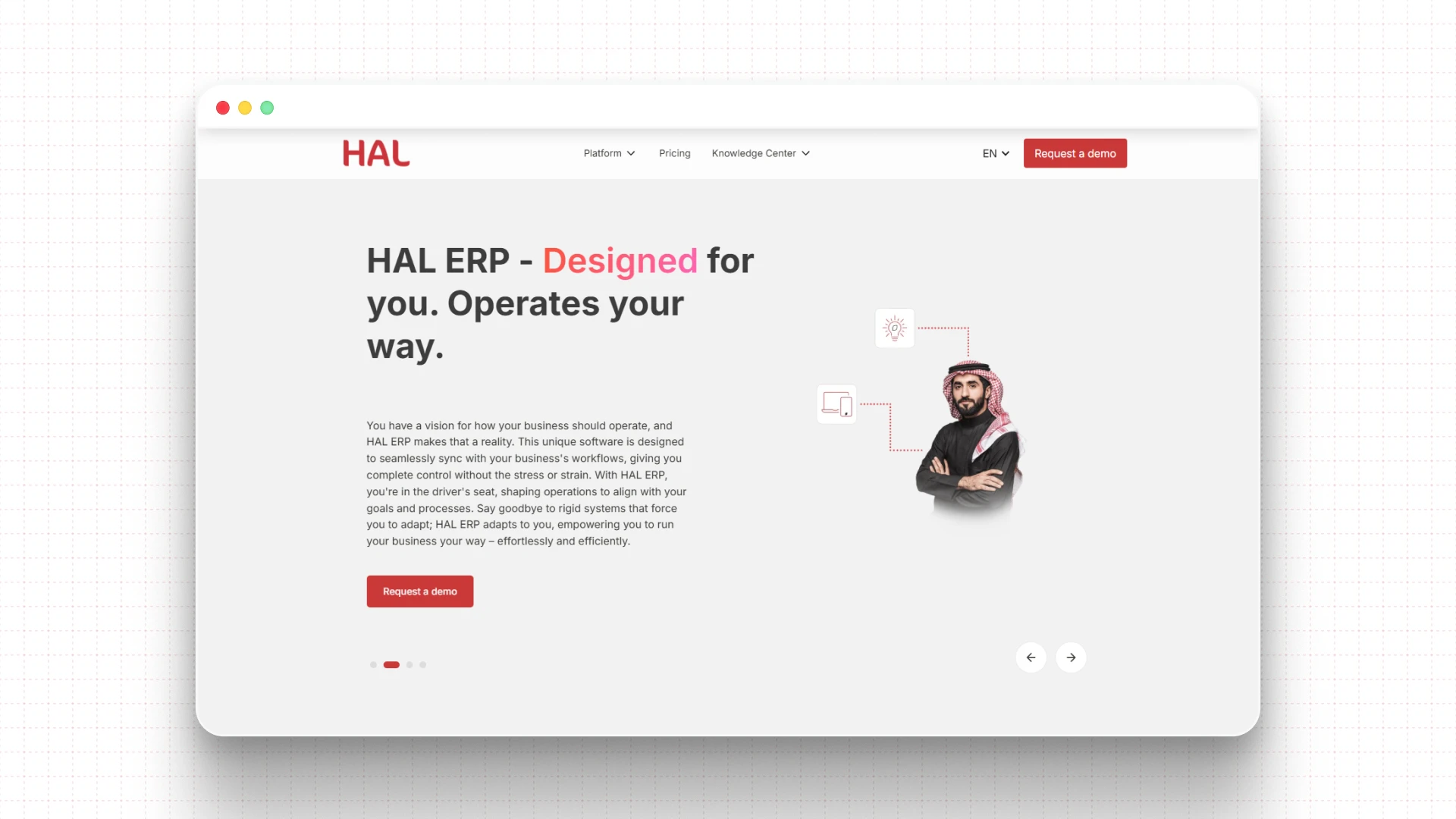
Best For: Small and mid-sized businesses in contracting, retail, manufacturing, trading, and services across KSA
HAL ERP is not a standalone CRM. It is a full business management platform built specifically for Saudi Arabia. Its CRM module is deeply integrated with sales, procurement, HR, finance, and operations, so your entire revenue cycle is connected in one place.
What It Does Well:
Pricing:
Here’s a case study that could show you how HAL can help:
HAL Case Study: Masaahaat, 10x ROI with Integrated CRM and Sales Automation
Masaahaat, a leading Saudi marketing agency managing 500+ FMCG events, was struggling with disconnected systems, manual invoicing, and no visibility into quotation conversion rates. Their sales team had no idea which leads were progressing or why deals were being lost.
After implementing HAL ERP, the company automated quotations, invoicing, and financial postings, all feeding into a unified CRM dashboard. Real-time data gave their leadership team instant visibility into pipeline health and vendor payments.
Results:
HAL is the only CRM in KSA that connects your sales pipeline directly to ZATCA-compliant invoicing, WhatsApp communication, and full ERP operations.
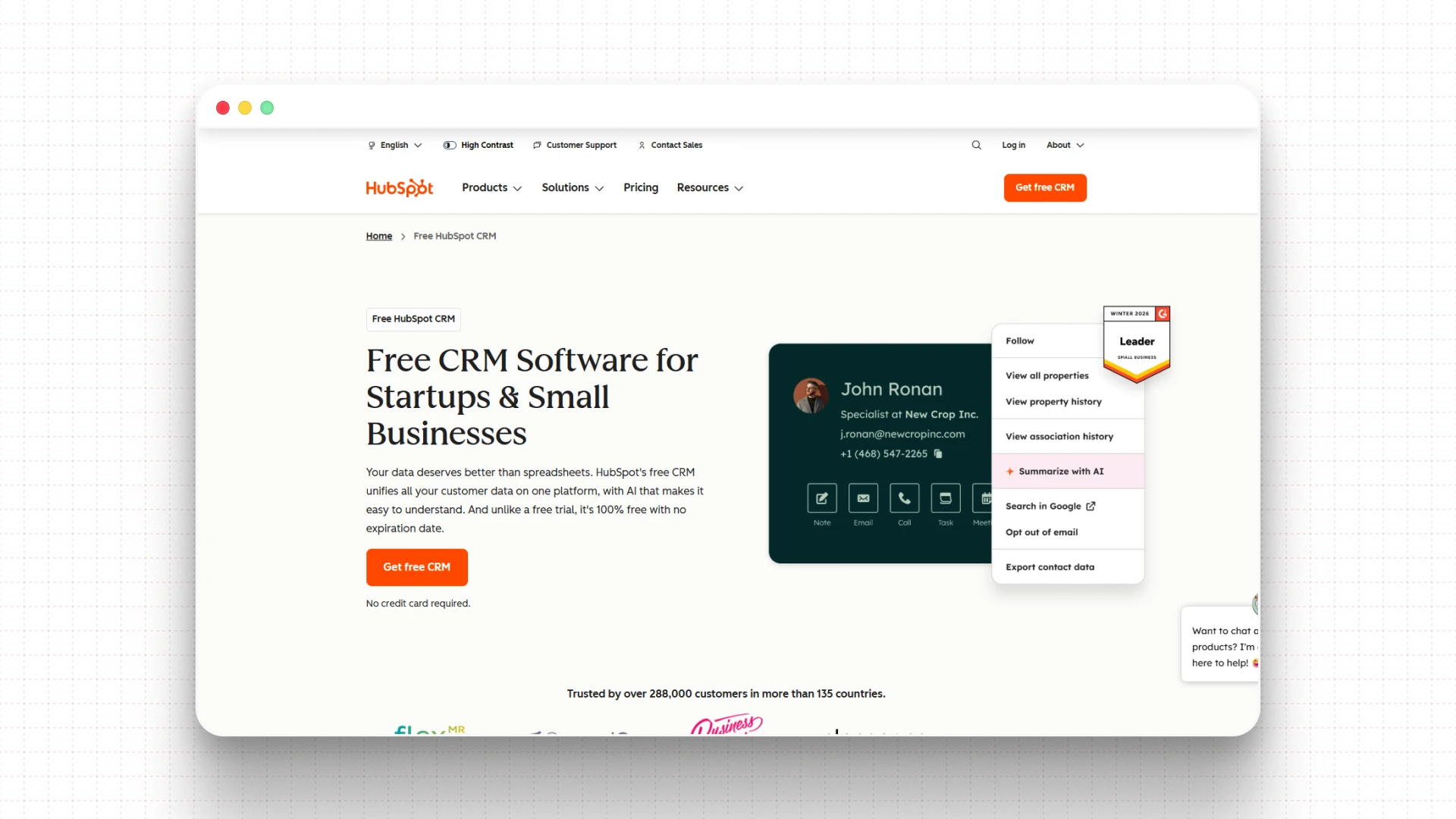
Best For: Small teams with a strong inbound marketing focus and English-speaking operations
HubSpot CRM is one of the most popular entry-level CRMs globally. Its free tier is genuinely functional, making it attractive for startups and small businesses testing the water.
What It Does Well:
KSA Limitations:
Pricing: Free plan available; paid plans start at ~USD 15/seat/month.
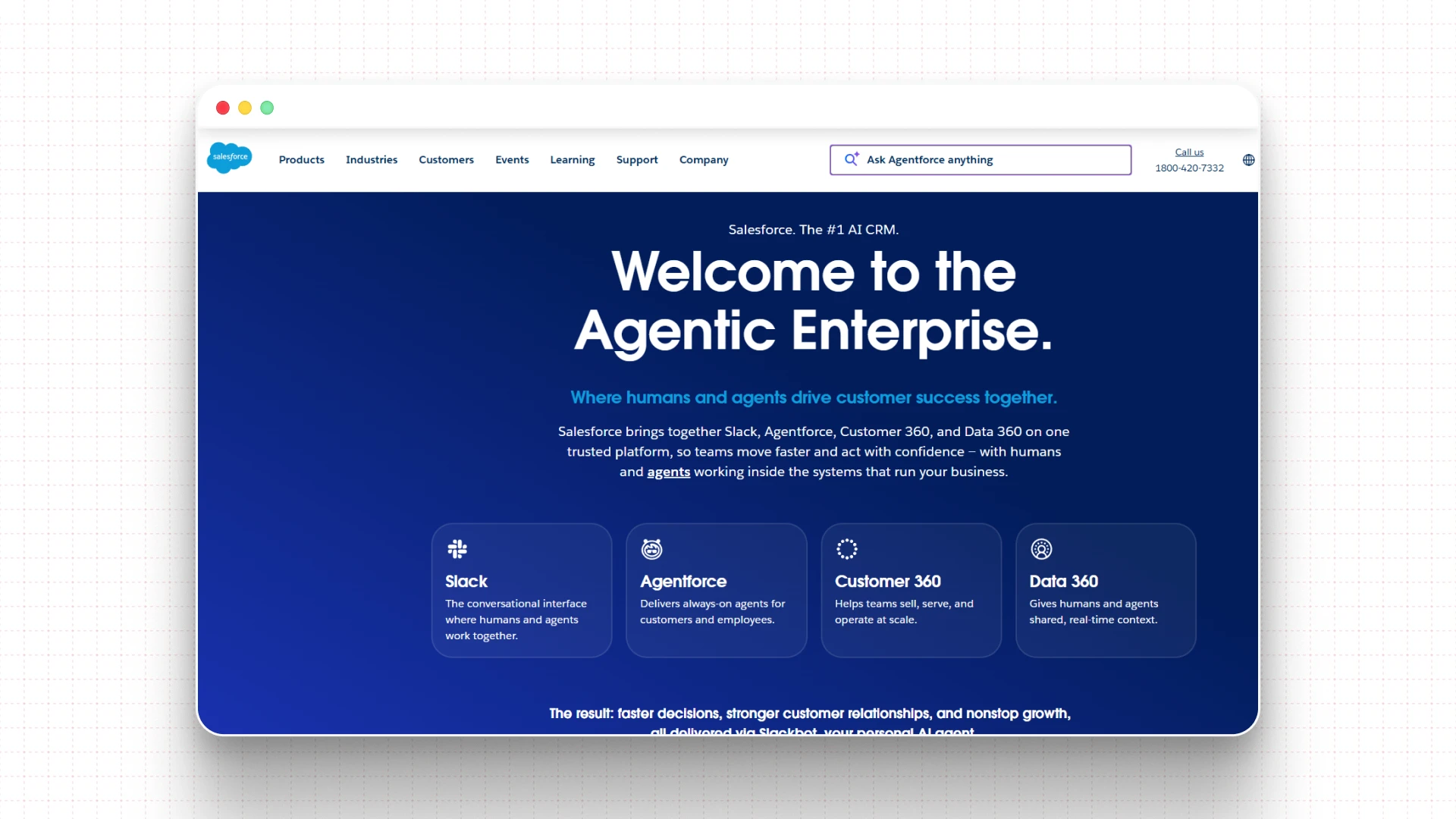
Best For: Tech-forward SMEs with budget and an eye on international expansion
Salesforce Essentials is the stripped-down version of the world's most powerful CRM. It brings enterprise-grade functionality to smaller teams if they can handle the complexity.
What It Does Well:
KSA Limitations:
Pricing: Starts at USD 25/user/month
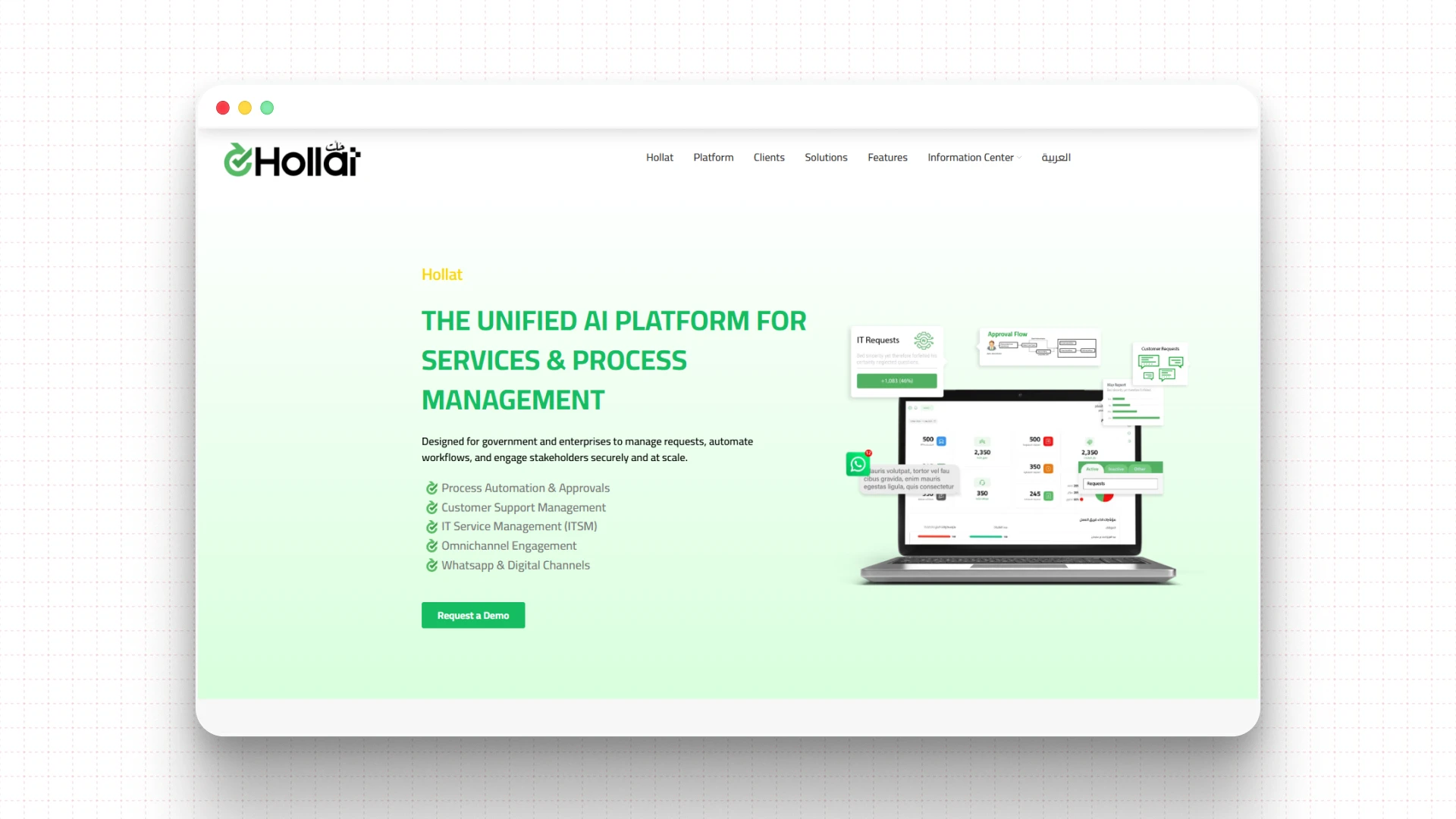
Best For: Arabic-speaking SMEs in KSA needing a simple, local CRM
Hollat is a Saudi-based CRM platform built for the local market. Its Arabic interface and local customer support make it accessible for teams not comfortable with English-only tools.
What It Does Well:
KSA Limitations:
Pricing: Competitive local pricing. Contact for current tiers.
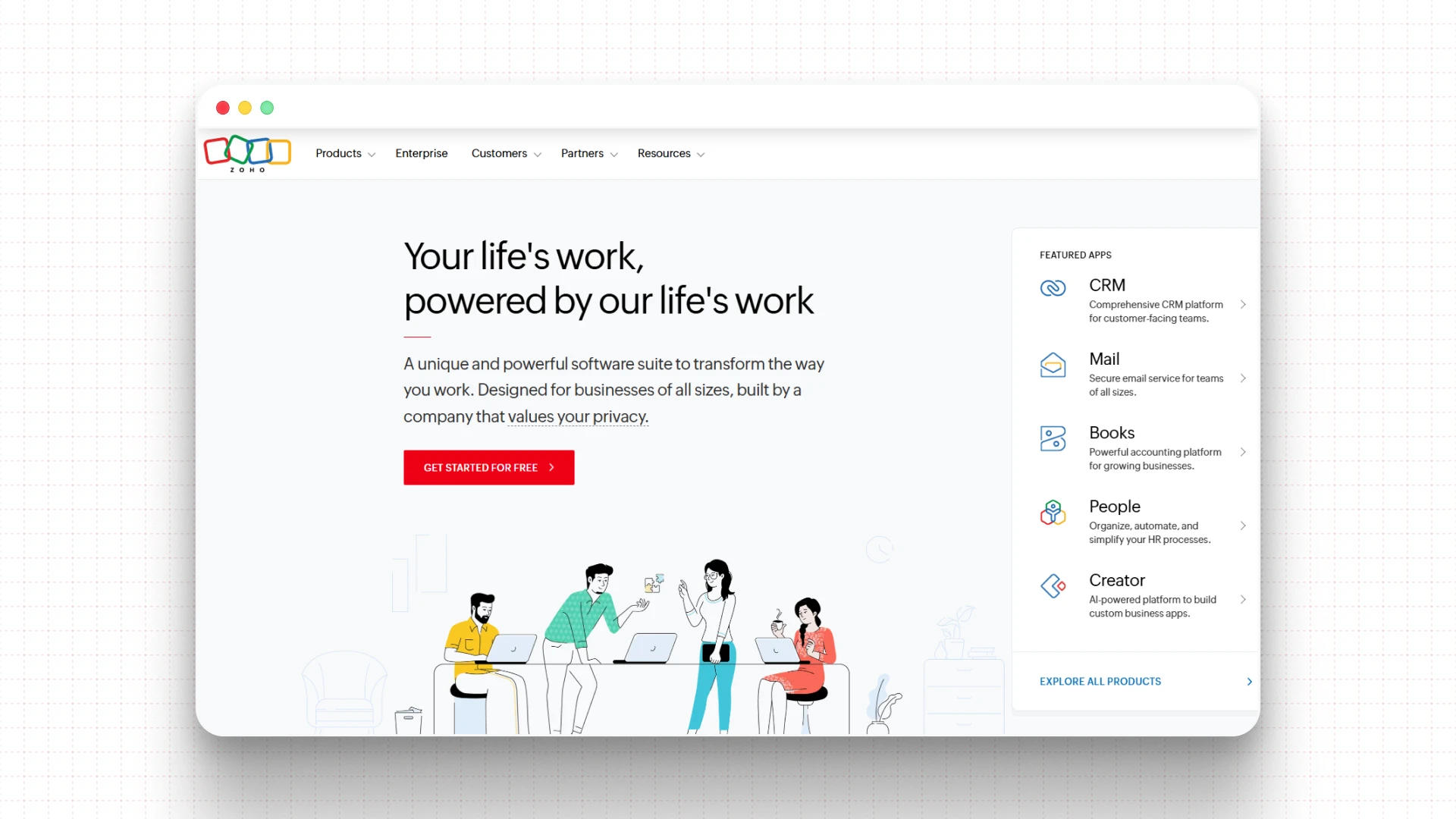
Best For: Cost-sensitive SMEs needing a broad feature set at a low price
Zoho CRM is well-known for its affordability and wide feature set. It is one of the few global CRMs with an Arabic interface option, giving it an edge in the KSA market.
What It Does Well:
KSA Limitations:
Pricing: Free for up to 3 users; paid plans from USD 14/user/month
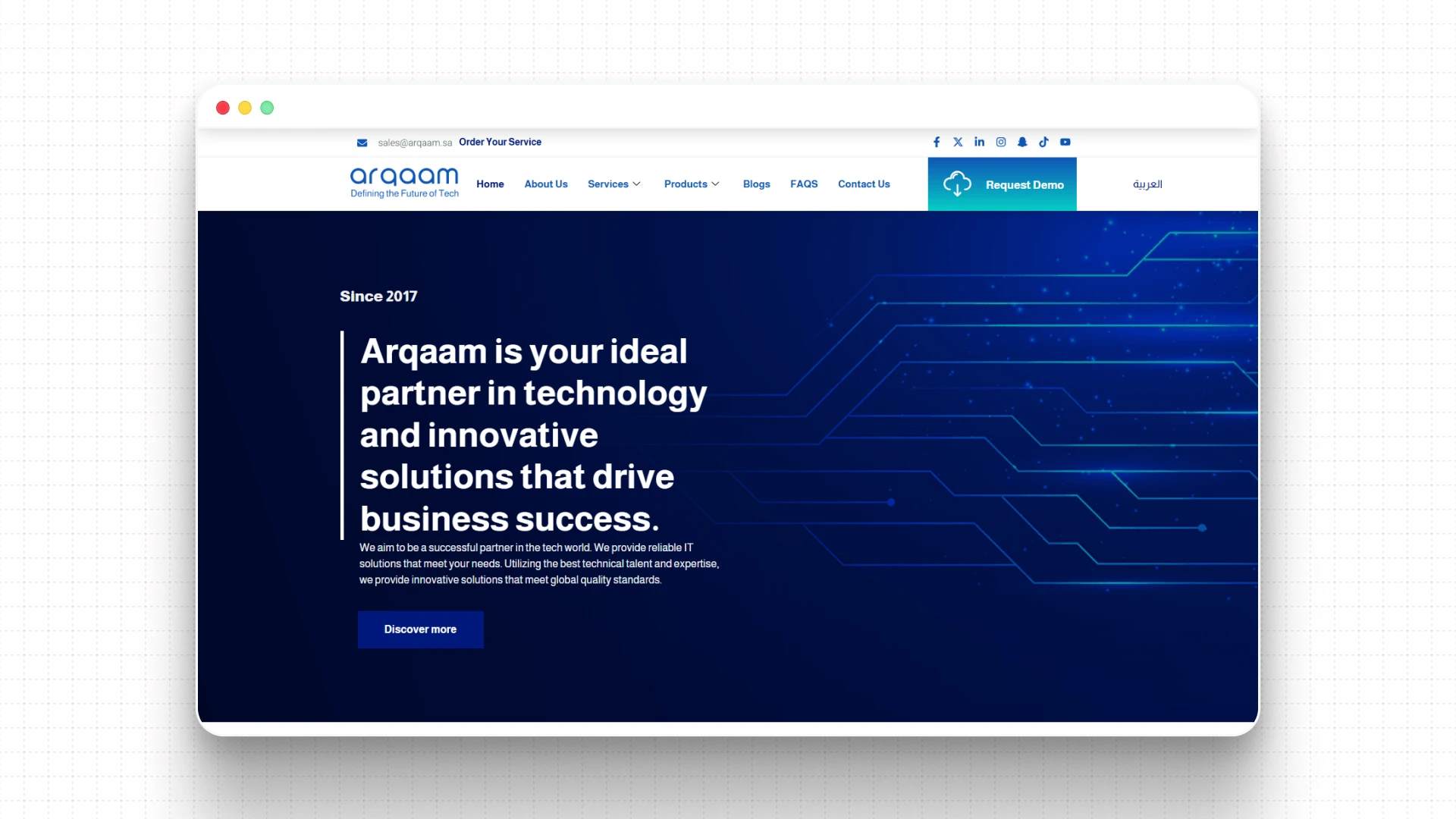
Best For: SMEs in the trading and retail sectors looking for a KSA-native option
Arqam is a Saudi-born business platform that includes CRM functionality alongside accounting and operations. Its Arabic-first design and local compliance focus make it relevant for smaller businesses.
What It Does Well:
KSA Limitations:
Pricing: Contact the vendor for current pricing.
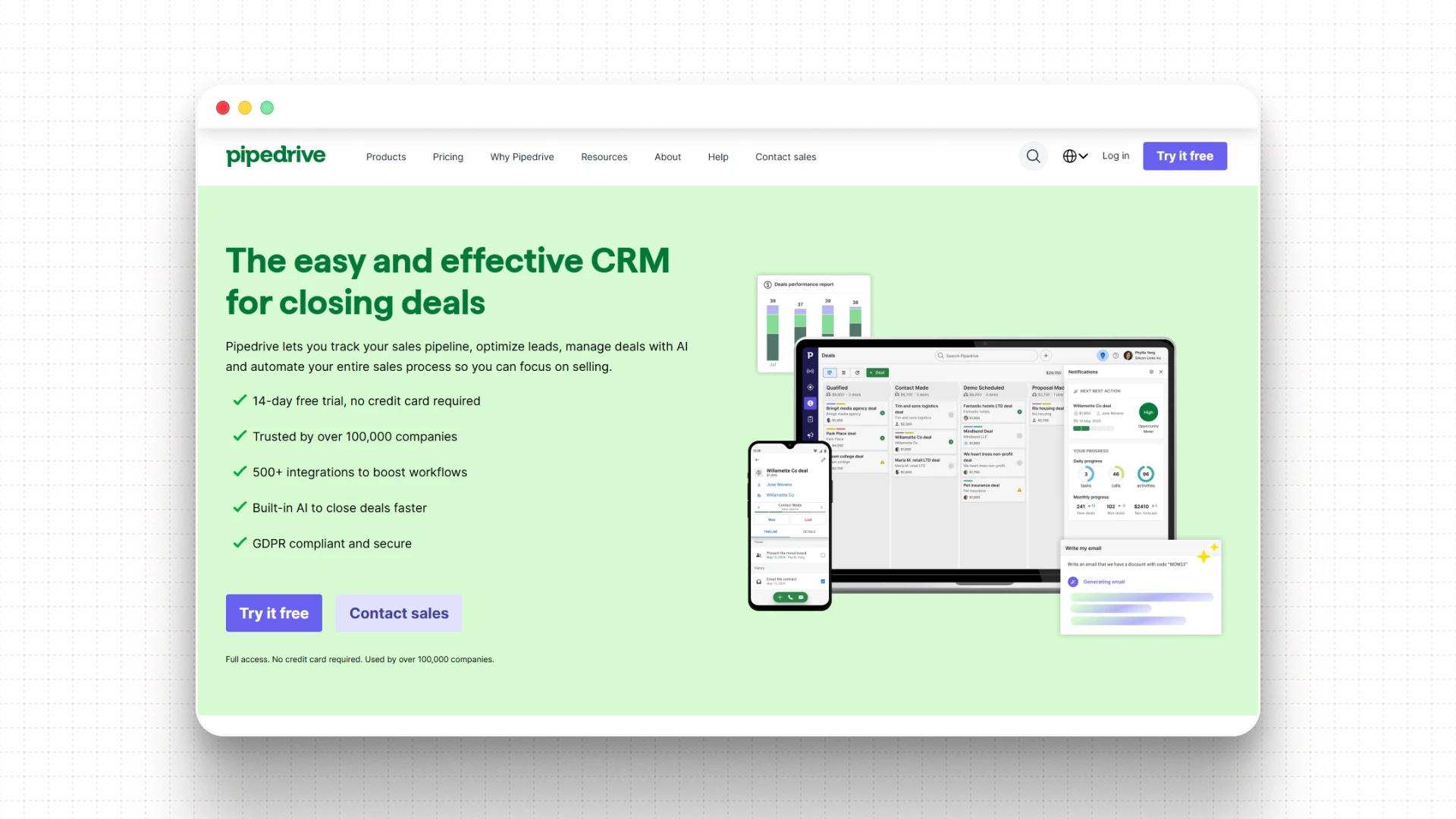
Best For: Small sales teams that want a clean, visual pipeline tool without complexity
Pipedrive is built purely for sales pipeline management. It is one of the easiest CRMs to set up and adopt, making it popular with small sales teams globally.
What It Does Well:
KSA Limitations:
Pricing: From USD 14/user/month
So now you have seen the options. But which features actually matter most when choosing a sales CRM as a small business in Saudi Arabia? Let's break it down.
Also Read: Top 5 Agentic AI CRM Platforms Redefining Customer Engagement in 2026
Choosing a CRM is not just about features on a spec sheet. For a small or mid-sized business operating in Saudi Arabia, there are specific factors that separate a tool that works from one that collects dust.
Here is what the best sales CRM for a small business in KSA must deliver:
If a CRM checks all these boxes, it is a competitive advantage built specifically for the Saudi market.
Searches for a B2B CRM platform in Jeddah, bespoke CRM software in Riyadh or a CRM implementation company in Dammam usually come from the same buyer: a Saudi B2B company that has outgrown spreadsheets and WhatsApp groups and wants a system that fits the way it already sells. Four questions decide the right choice.
A B2B CRM has to follow long deals with several people on each side: accounts with many contacts, quotations that change, internal approvals, and a pipeline that ends in an invoice. In Saudi Arabia that invoice must be a ZATCA-compliant e-invoice, so a CRM that hands won deals to the system that issues invoices saves a second round of data entry. Also check Arabic and English on the same record, mobile access for field sales, and calendar and email logging, so activity is captured without manual updates.
Fully bespoke CRM software, built from scratch for one company, fits only when your sales process is truly unusual, and you then own its maintenance and upgrades. Most companies in Riyadh, Jeddah and Dammam are better served by a configurable CRM whose stages, fields, scoring and approvals are set up around their process, with a few custom reports or integrations where needed. Ask each vendor to show your own pipeline in the demo, not a sample one.
CRM implementation usually runs in four steps: map your sales stages and approval rules; import accounts, contacts and open deals; connect email, calendars and invoicing; then train the team and review the first month's pipeline together. When you compare CRM implementation companies or consultants, ask who does the set-up and training in Arabic, how your data will be migrated, and who supports you after go-live.
Many Saudi buyers answer WhatsApp faster than email. A customer engagement platform for Saudi Arabia should log those conversations against the account, let managers approve discounts or quotations from their phone, and send marketing messages only to customers who agreed to receive them.
HAL CRM is part of HAL ERP, so quotations, approvals and ZATCA e-invoices sit on the same customer record. It syncs with Google and Microsoft calendars, logs emails through a Chrome extension, works fully in Arabic and English, and lets managers approve on WhatsApp. See HAL CRM for B2B sales teams in Saudi Arabia.
Choosing the right CRM for small business sales in Saudi Arabia in 2026 comes down to one core question: Does it actually fit how your business operates? Global tools like HubSpot, Salesforce, and Pipedrive are powerful, but they were not built for the Arabic-speaking, ZATCA-compliant, WhatsApp-driven reality of KSA's SME market.
Local tools like Zoho and Hollat close some of that gap, but often lack the depth to support growing businesses across manufacturing, contracting, or retail.
That is where HAL ERP is different. We are the only CRM and ERP platform purpose-built for Saudi SMEs, combining a full sales pipeline, WhatsApp CRM via Hala AI, ZATCA-compliant invoicing, Arabic and English interface, and industry-specific modules for contracting, retail, manufacturing, and services.
Ready to see how HAL can transform your sales operations? Get in touch today and get your quote.
A CRM (Customer Relationship Management) tool focuses specifically on managing leads, contacts, and the sales pipeline. An ERP (Enterprise Resource Planning) system covers the entire business, finance, HR, procurement, inventory, and operations. HAL ERP includes a CRM module inside a full ERP, so small businesses in KSA get both without needing two separate tools.
Yes. In fact, small teams benefit most from CRM software because every lead and every follow-up counts more at this stage. Tools like HAL ERP offer scalable plans that start small and grow with your business. You do not need a large team to justify using a CRM. You just need to be serious about not losing sales.
Your CRM itself does not need to be ZATCA compliant, but it must connect to a system that is. When a deal closes, your CRM should trigger a compliant e-invoice through your finance or ERP system. If there is a gap between your CRM and your invoicing, you risk late or non-compliant invoices. HAL ERP handles this natively.
Free CRM tools like HubSpot's free plan or Zoho's free tier can work for very early-stage businesses. However, they typically come with significant limitations. No Arabic support, no ZATCA integration, limited automation, and data hosted outside KSA. As your business grows, the cost of gaps like these usually outweighs any savings from a free plan.
CRM software adds value across all B2B and B2C industries. In KSA, the highest impact is seen in contracting (project-based sales tracking), retail (customer loyalty and repeat purchases), manufacturing (order management and customer follow-up), trading (quotation-to-invoice speed), and services (timesheet-linked billing). HAL ERP has purpose-built modules for all of these industries.