
Service companies manage profitability through people, time, capacity, project delivery, billing and client relationships. When these functions sit in separate systems, teams can struggle to track resource utilization, project margins, unbilled work and overall business performance.
A full ERP connects financial management with functions such as projects, CRM, HR, procurement and service operations. Professional services automation, or PSA, software focuses more specifically on the service-delivery lifecycle, including resource planning, time and expense tracking, project billing and profitability.
This guide compares both categories because the right choice depends on the scope of your requirements. Some businesses need a complete ERP that connects finance with the wider organization. Others need a focused PSA platform that can integrate with their existing accounting or CRM system.
We reviewed ten ERP, PSA and business-management platforms based on their service-industry capabilities, scalability, financial depth, integrations and suitability for businesses operating in Saudi Arabia.
ERP for service companies is software that connects financial management with the processes used to sell, plan, deliver and bill for services. Depending on the platform, this may include CRM, project management, resource planning, timesheets, expenses, invoicing, revenue recognition, HR and customer support.
The most important capabilities often include:
A complete ERP provides a broad operational and financial system. A PSA platform provides deeper tools for managing project-based services and may connect with a separate accounting or ERP product.
Service businesses face challenges like managing human resources, fluctuating project timelines, and client satisfaction. Professional services firms, such as consulting agencies, marketing companies, IT service providers, and creative agencies, need a system that combines project management, client management, and time tracking—all in one place.
ERP systems integrate these key functions, making collaboration easier, reducing errors, and providing real-time data for better decision-making.
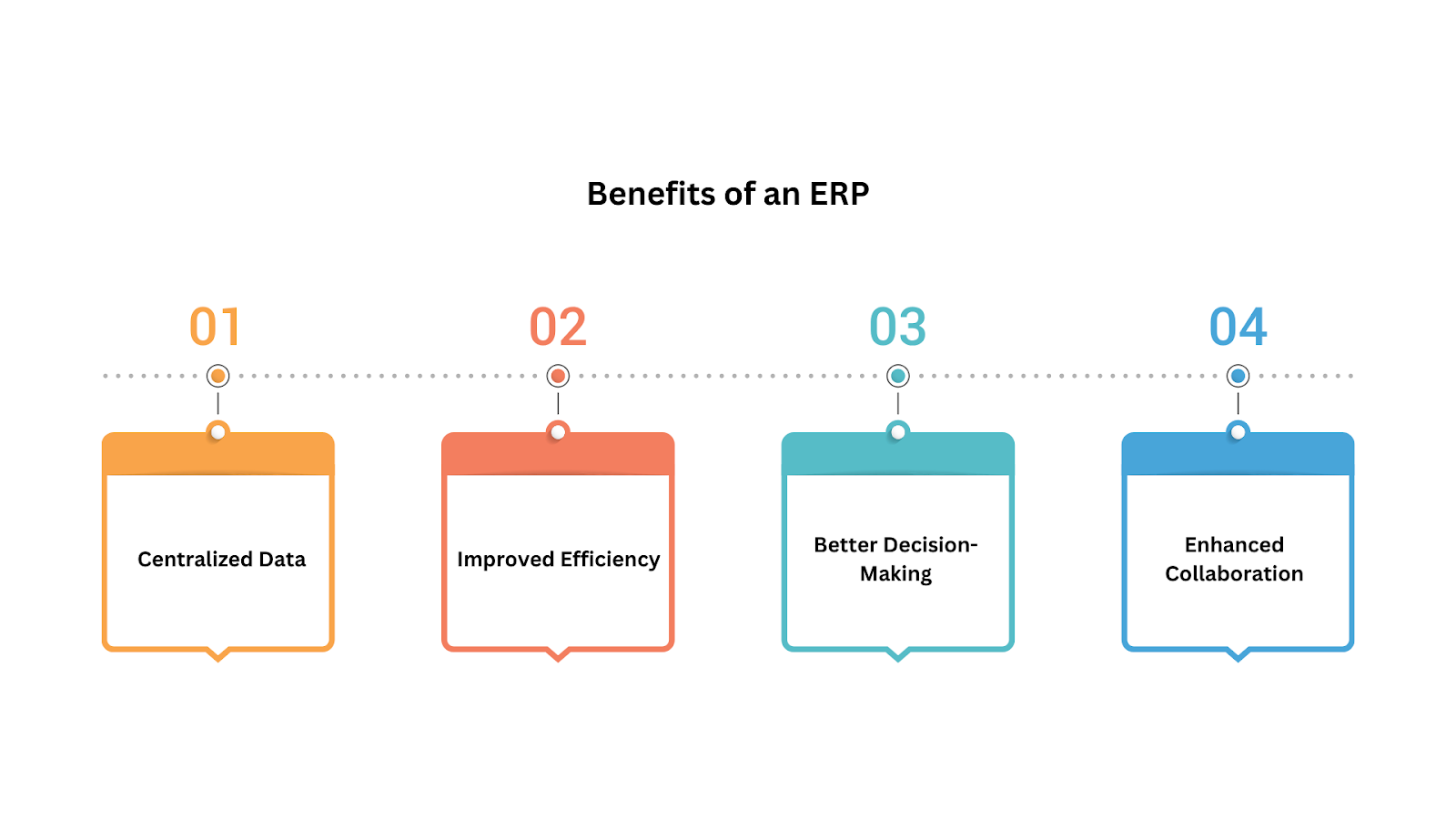
Here are the main benefits of using an ERP system for your service business:
But how do you know which ERP is right for you? Let’s explore the key features to look for in the best ERP for service companies.
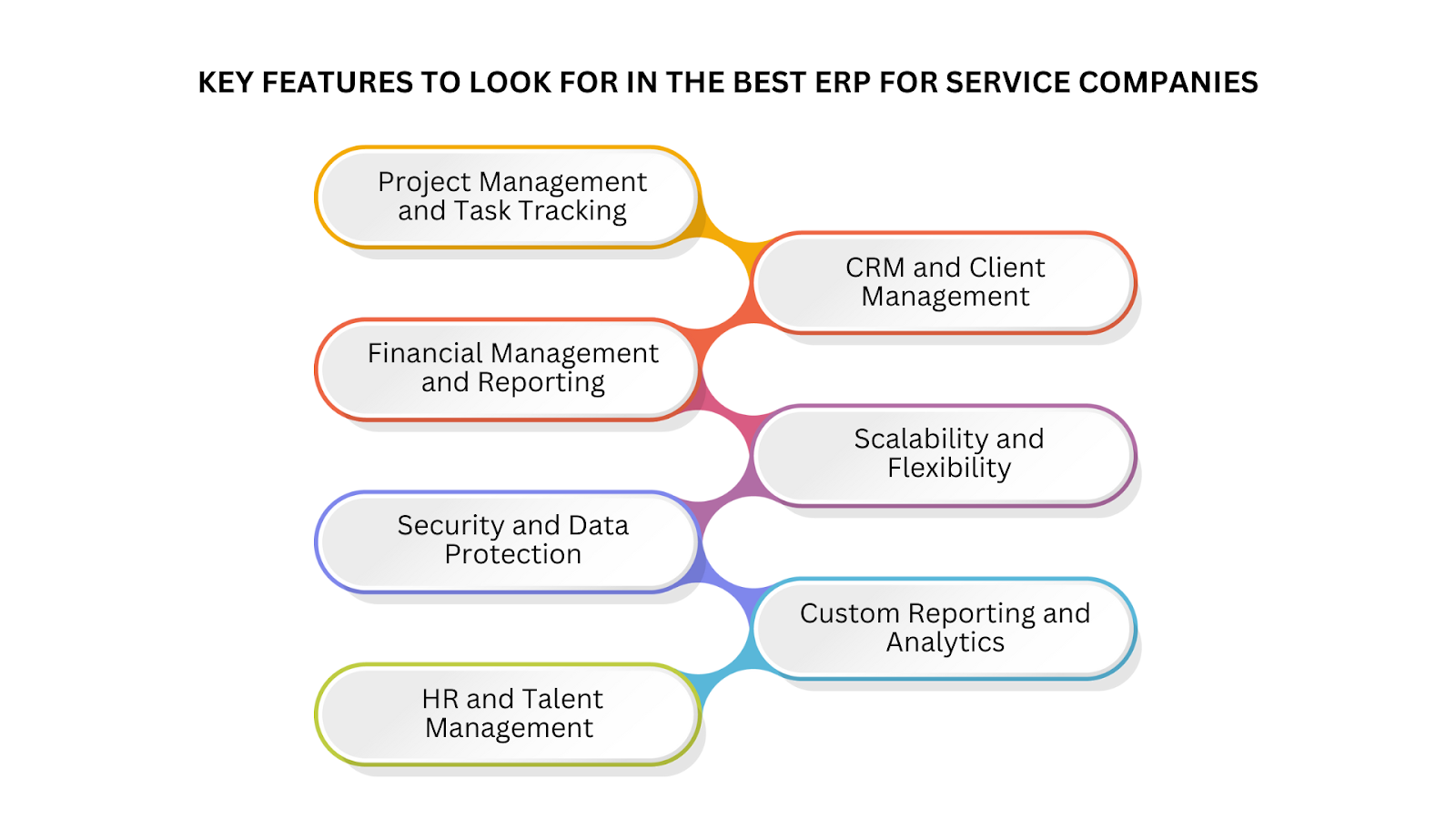
When selecting the best ERP for service companies, focus on featuresthat will simplify your day-to-day operations. Here are the key characteristics to consider:
Managing projects from start to finish is crucial for service companies. A good ERP should help you manage tasks, collaborate with your team, and stay on track with budgets and timelines.
Core Functions:
Client relationships are important in service businesses. An ERP with CRM integration gives you a complete view of client communications, helping you manage leads and improve customer satisfaction.
Core Functions:
A reliable ERP helps you track finances with real-time reports, invoicing, and expense management, ensuring you stay on top of budgets and cash flow.
Core Functions:
As your business grows, your needs will evolve. Look for an ERP that’s flexible and can adapt to new service lines, larger teams, or new markets.
Core Functions:
Service companies may store sensitive client, employee, contractual and financial information in their ERP. Buyers should evaluate the platform’s technical safeguards separately from its tax and regulatory capabilities.
Core requirements:
Requirements such as GDPR or SOX should be evaluated only when they apply to the company’s markets, ownership structure or reporting obligations. ZATCA functionality should be assessed separately because it concerns tax invoices and electronic reporting rather than general data security.
A strong ERP allows you to create custom reports and analyze key business data in real-time, helping you make better decisions.
Core Functions:
In service-based industries, talent is your most valuable asset. An ERP should offer tools for recruitment, onboarding, time tracking, and payroll to streamline HR processes.
Core Functions:
Now, let’s compare ten platforms that serve different parts of the service-business market.
We evaluated these platforms using the following criteria:
HAL Simplify publishes this guide and offers HAL ERP. Businesses should therefore evaluate every shortlisted option—including HAL—through a requirements-based demonstration, implementation proposal, customer references and total-cost-of-ownership assessment.
The products below are not identical. Some are complete ERP systems, some are PSA platforms, and others focus primarily on CRM, projects and collaboration.
Best for: Saudi service businesses that want adaptable project, finance, CRM, HR and service-management workflows supported by a locally based ERP provider.
HAL ERP is a modular cloud ERP with applications for project management, timesheets, accounting, expenses, CRM, HR, payroll and service operations. Its project tools help teams schedule work, assign tasks, monitor resource availability and compare forecasts with actual timesheet data.
Highlights:
Considerations: HAL is most differentiated for businesses operating in Saudi Arabia. Companies requiring extensive out-of-the-box localization across numerous international jurisdictions should compare HAL’s geographic coverage with global ERP providers.
Best for: Organizations using Microsoft 365, Teams, Power BI or Power Platform that want finance and service operations within the Microsoft ecosystem.
Dynamics 365 Business Central is a business-management ERP for small and midsize organizations. It includes finance, project management, purchasing, sales and service-management capabilities.
Businesses requiring deeper professional-services automation can evaluate Dynamics 365 Project Operations, which connects project-based sales, resource management, scheduling, delivery, time, expenses, project accounting and billing.
Highlights:
Considerations: Buyers must select and configure the appropriate Dynamics applications. Business Central alone does not provide every advanced PSA capability available in Project Operations, and implementation commonly depends on a qualified Microsoft partner.
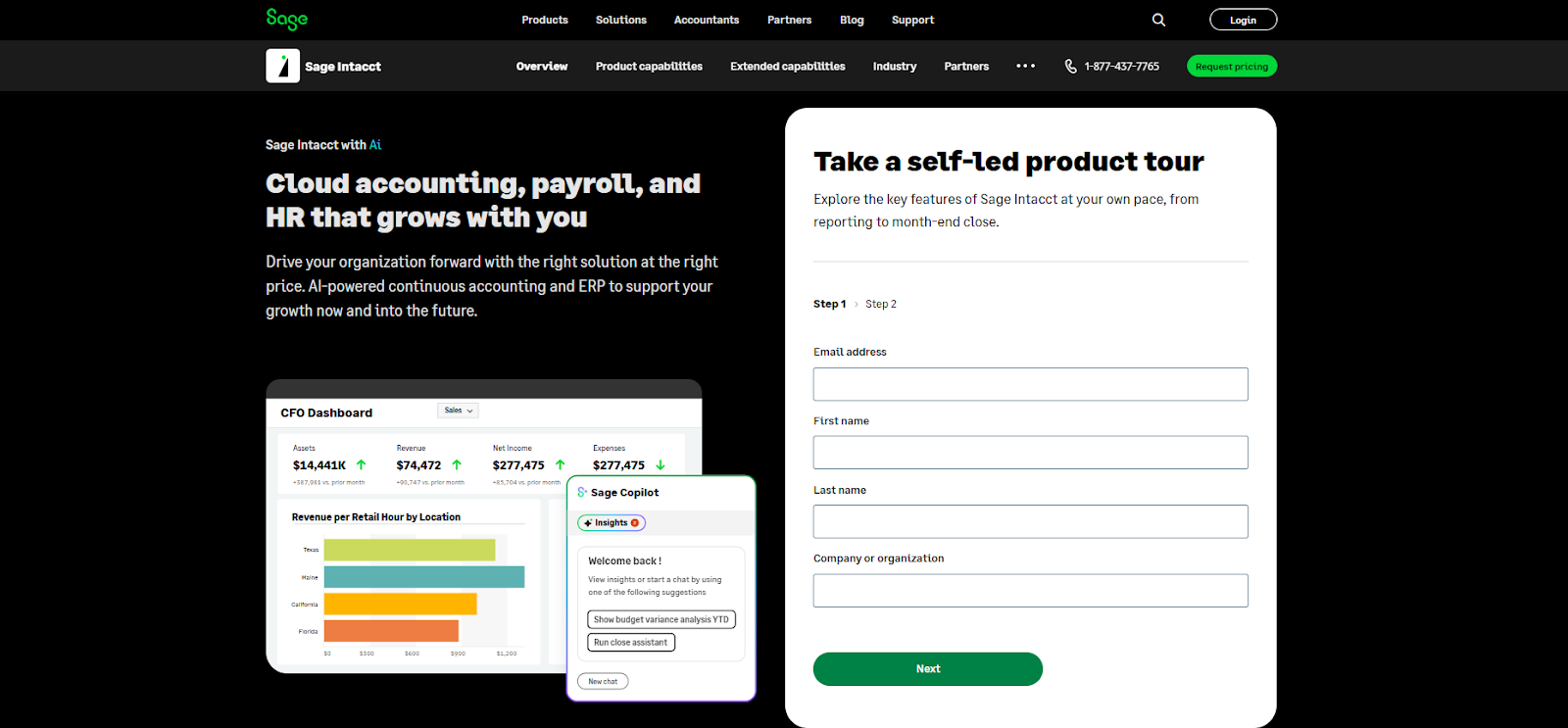
Best for: Finance-led professional services organizations that require strong project accounting, billing, revenue recognition and multi-entity reporting.
Sage Intacct is a cloud financial-management platform with project accounting and professional services automation capabilities. It supports project costing, time and expense tracking, resource management, billing, revenue recognition and financial reporting.
Highlights:
Considerations: Sage Intacct is strongest in finance and project economics. Businesses seeking broad native inventory, manufacturing or supply-chain functionality should determine whether integrations or additional products are required. Saudi companies should also verify ZATCA and local tax requirements with Sage or their implementation partner.
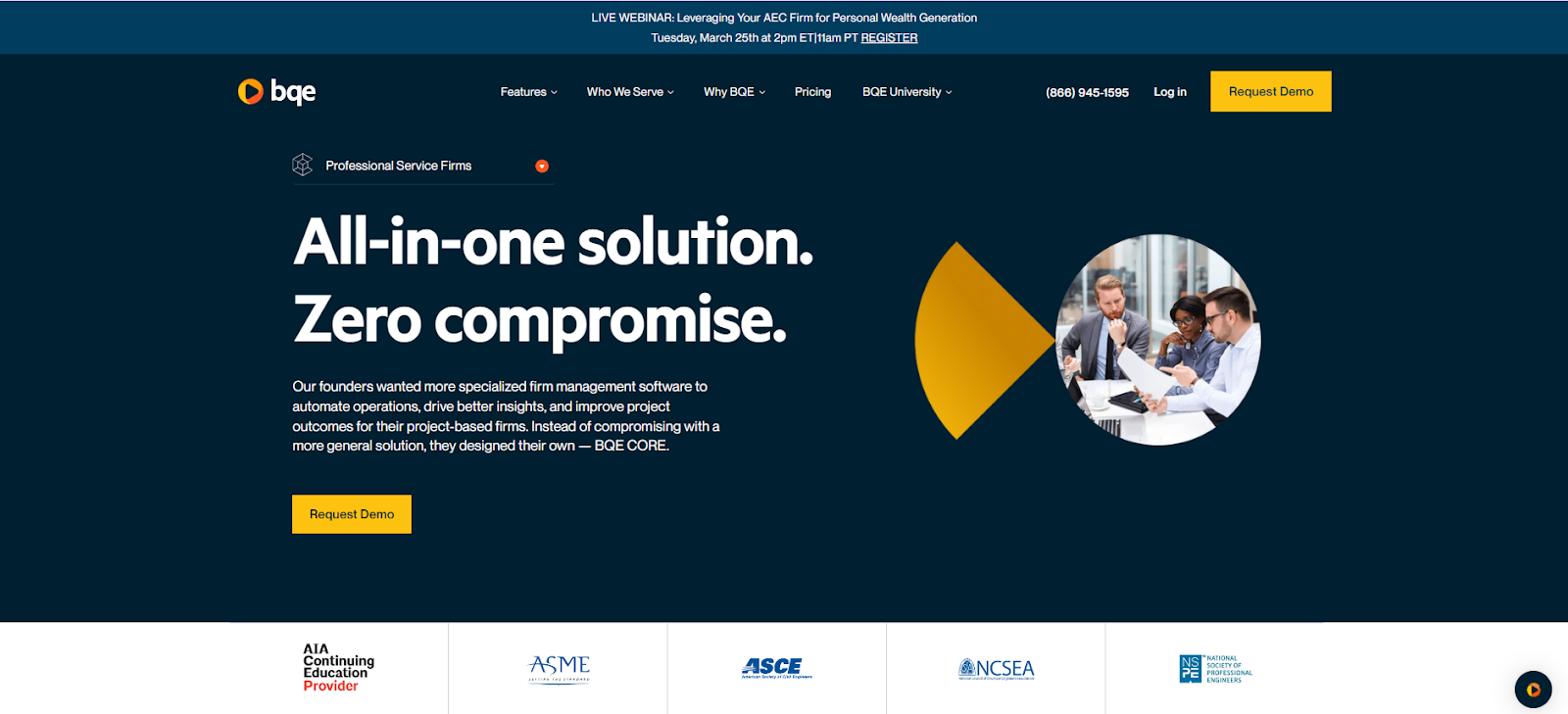
BQE CORE is a professional services automation and firm-management platform that combines project management, time and expense tracking, billing, accounting, CRM, HR and reporting. It is particularly focused on architecture, engineering, consulting and other project-based professional-services firms.
Best for: Firms that need detailed project economics, time capture, billing and practice management in one platform.
Considerations: Businesses should confirm Saudi accounting, VAT, ZATCA, payroll and regional-support requirements before treating BQE CORE as a complete local ERP replacement.
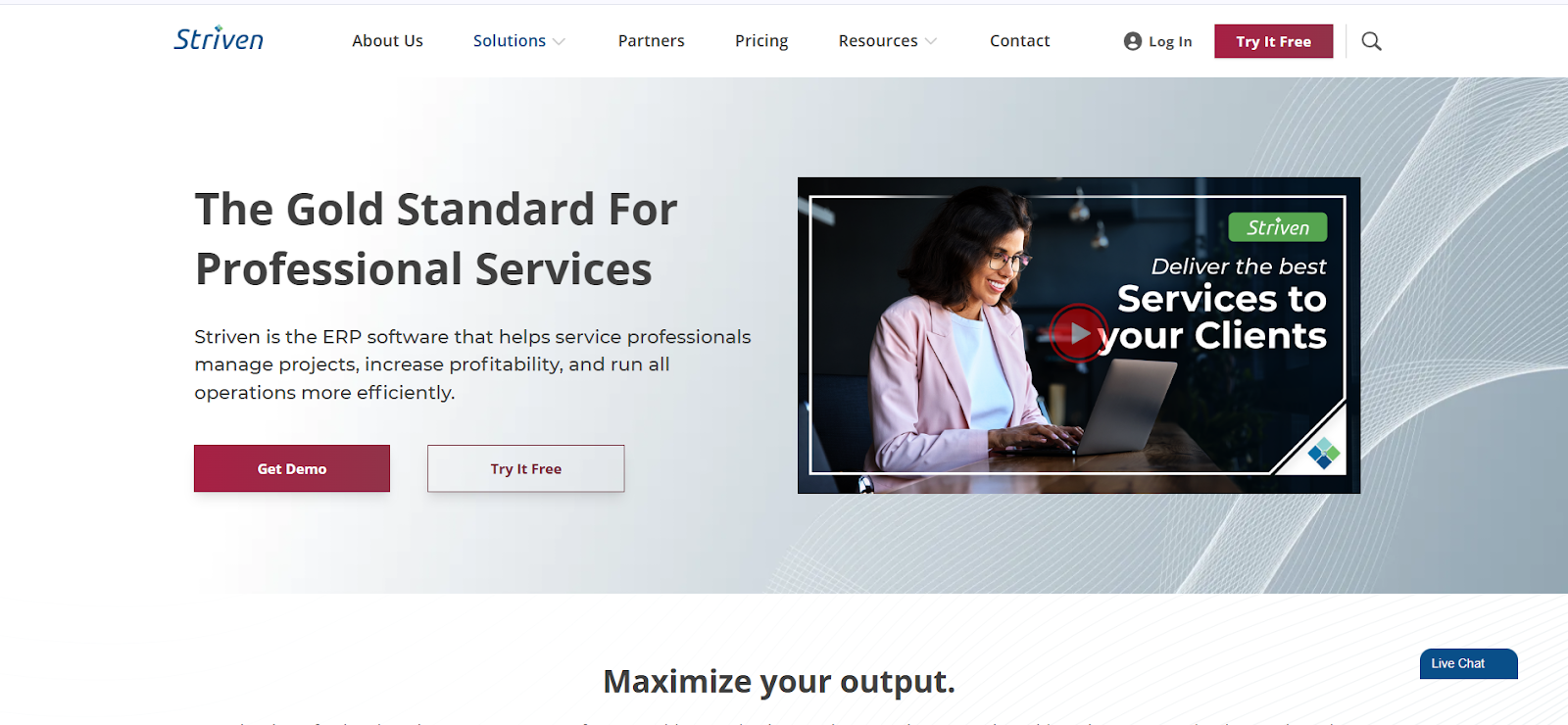
Best for: Small and midsize professional-services businesses seeking native accounting, CRM, projects, HR and workflow management within one cloud platform.
Considerations: Saudi buyers should confirm VAT, ZATCA, payroll and statutory-reporting requirements. They should also evaluate the amount of configuration, migration and training required for their chosen modules.
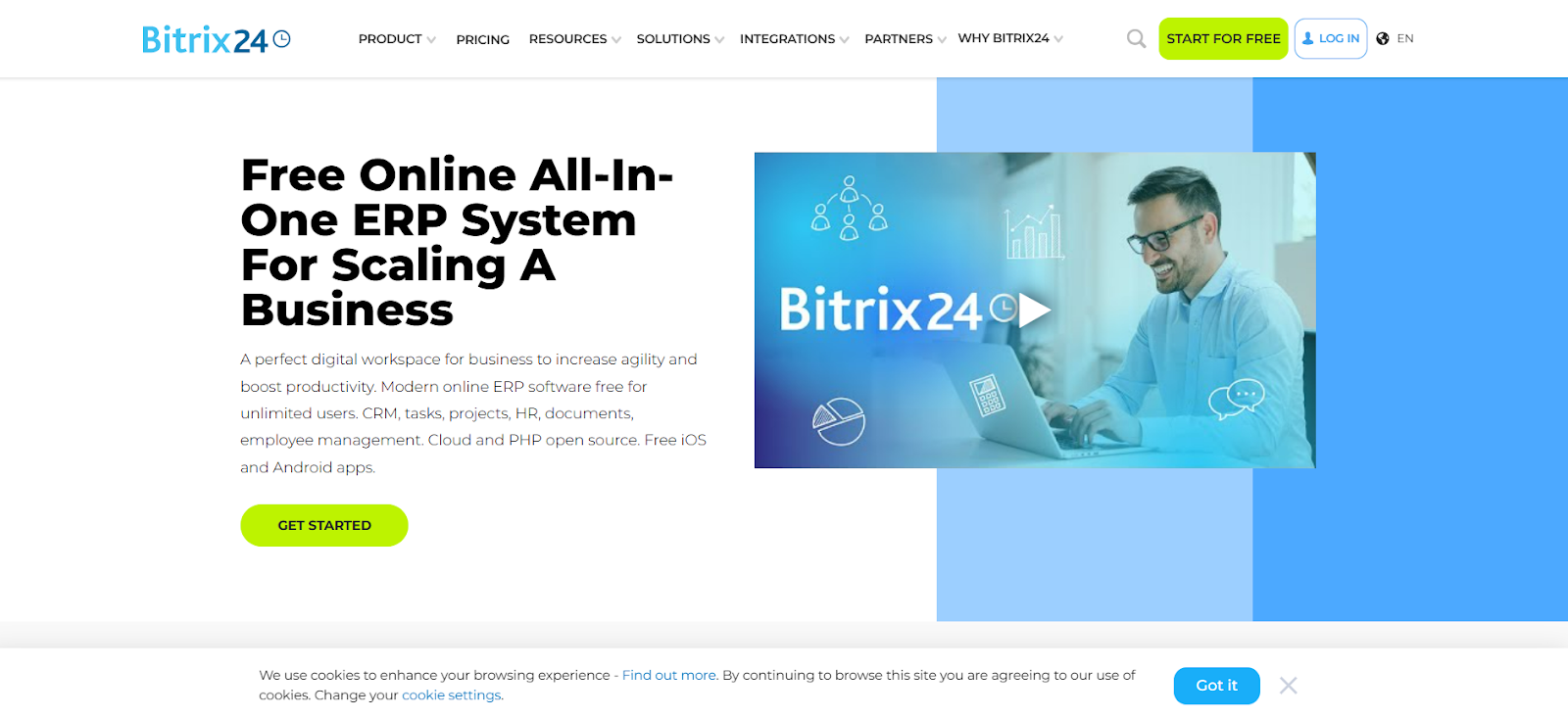
Bitrix24 is a CRM and digital-workplace platform combining sales management, projects, tasks, time tracking, client communication, workflow automation, collaboration and selected HR tools.
Best for: Small and midsize service teams that prioritize CRM, project coordination and internal communication.
Considerations: Bitrix24 should not automatically be treated as a replacement for a complete financial ERP. Buyers should determine whether its invoicing and financial tools meet their accounting needs or whether integration with a separate accounting platform is required.
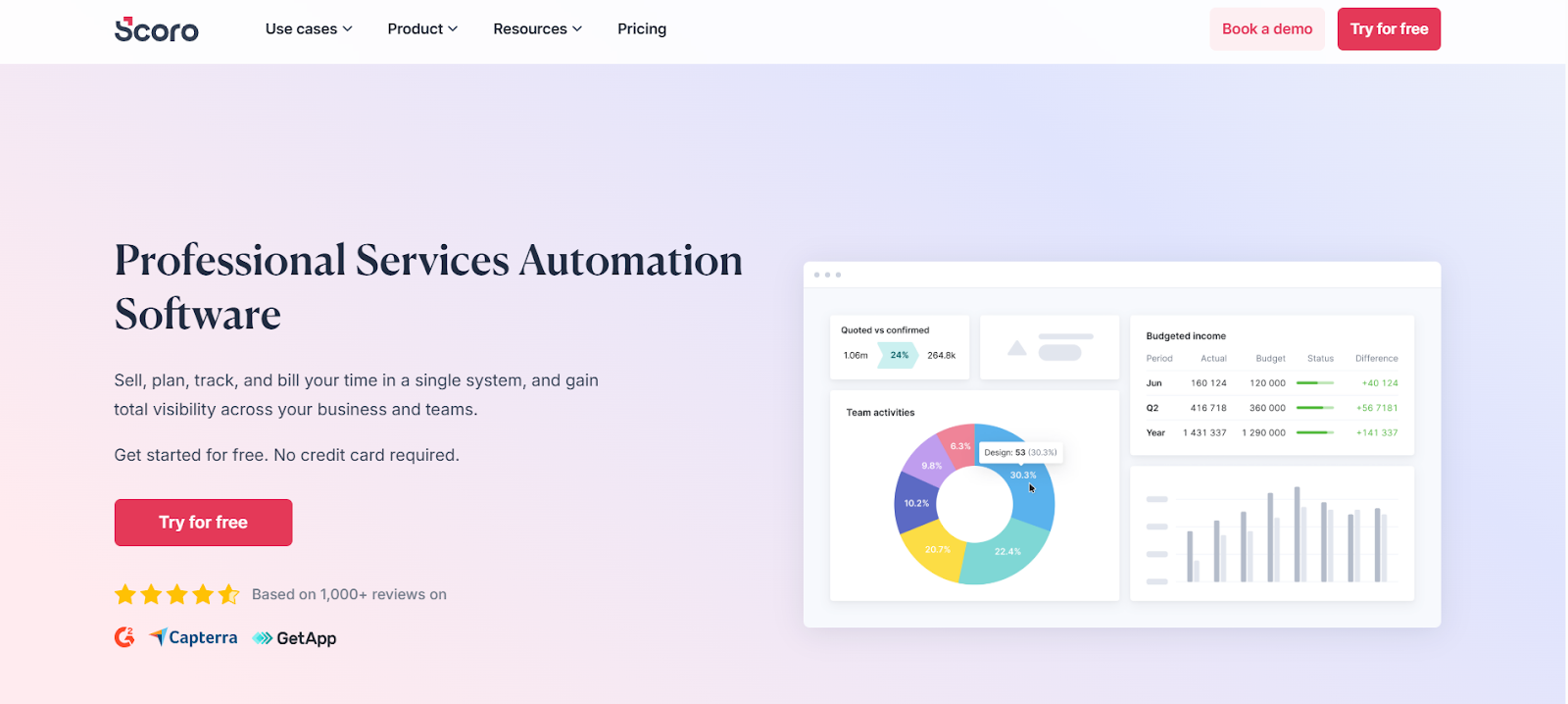
Scoro is an AI-powered professional services automation platform that connects CRM and quoting with project management, resource planning, time tracking, billing and profitability reporting.
Best for: Consultancies, agencies, IT services, architecture and engineering firms that need strong resource-capacity and project-margin visibility.
Considerations: Scoro provides invoicing and financial-performance tools but may still need to integrate with a dedicated accounting platform. Saudi businesses should verify local tax, ZATCA and accounting requirements before selection.
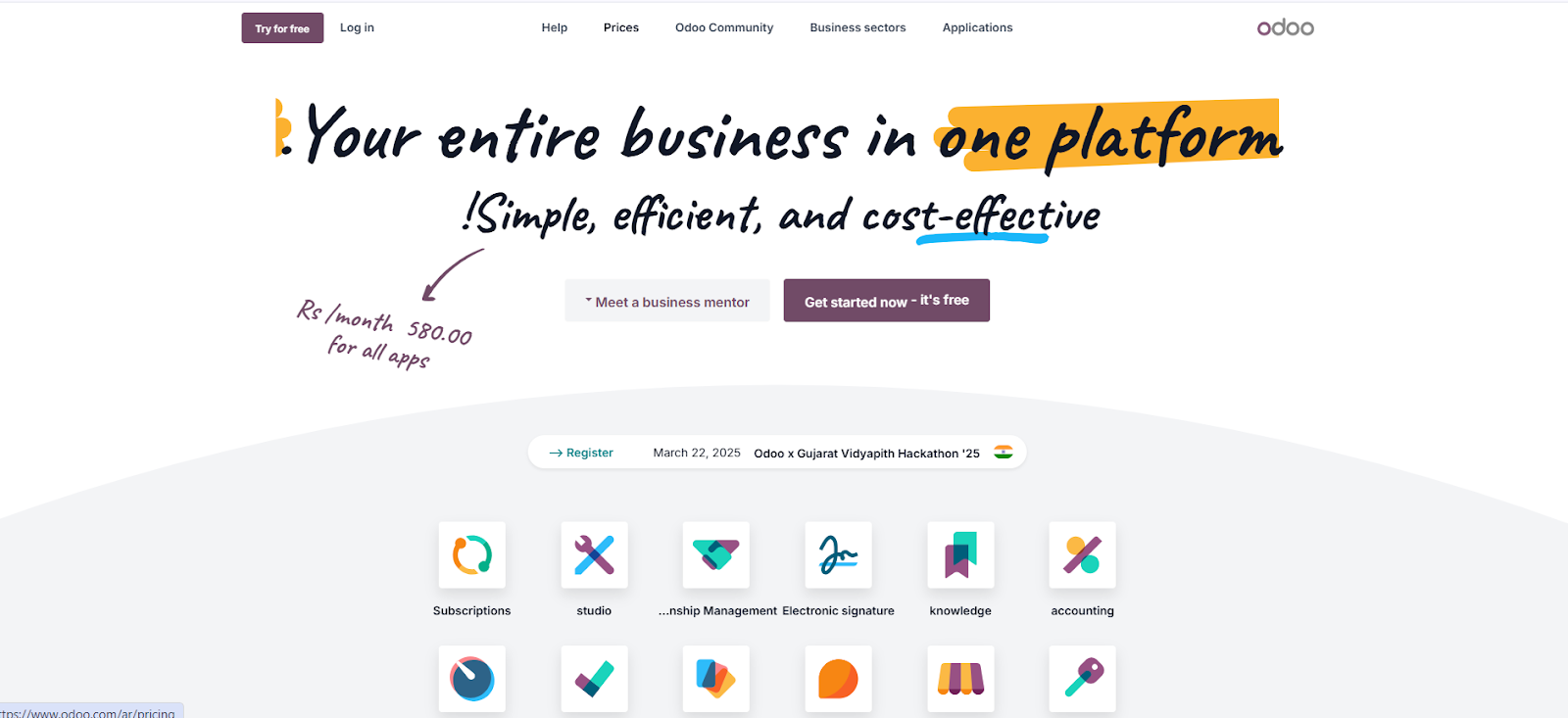
Best for: Businesses that want a modular ERP with configurable project, service, CRM and financial workflows.
Odoo is a modular ERP platform with applications for CRM, sales, projects, planning, timesheets, field service, helpdesk, accounting, HR and other business functions. Service companies can connect project delivery with time capture, customer support and invoicing.
Highlights:
Odoo’s current Saudi Arabia localization includes Saudi accounting modules and ZATCA Phase 2 API integration.
Considerations: Total cost depends on the applications, hosting, implementation, customization, migration and partner support selected. Businesses should validate that their required localization modules and workflows are correctly configured rather than assuming every requirement is enabled by default.
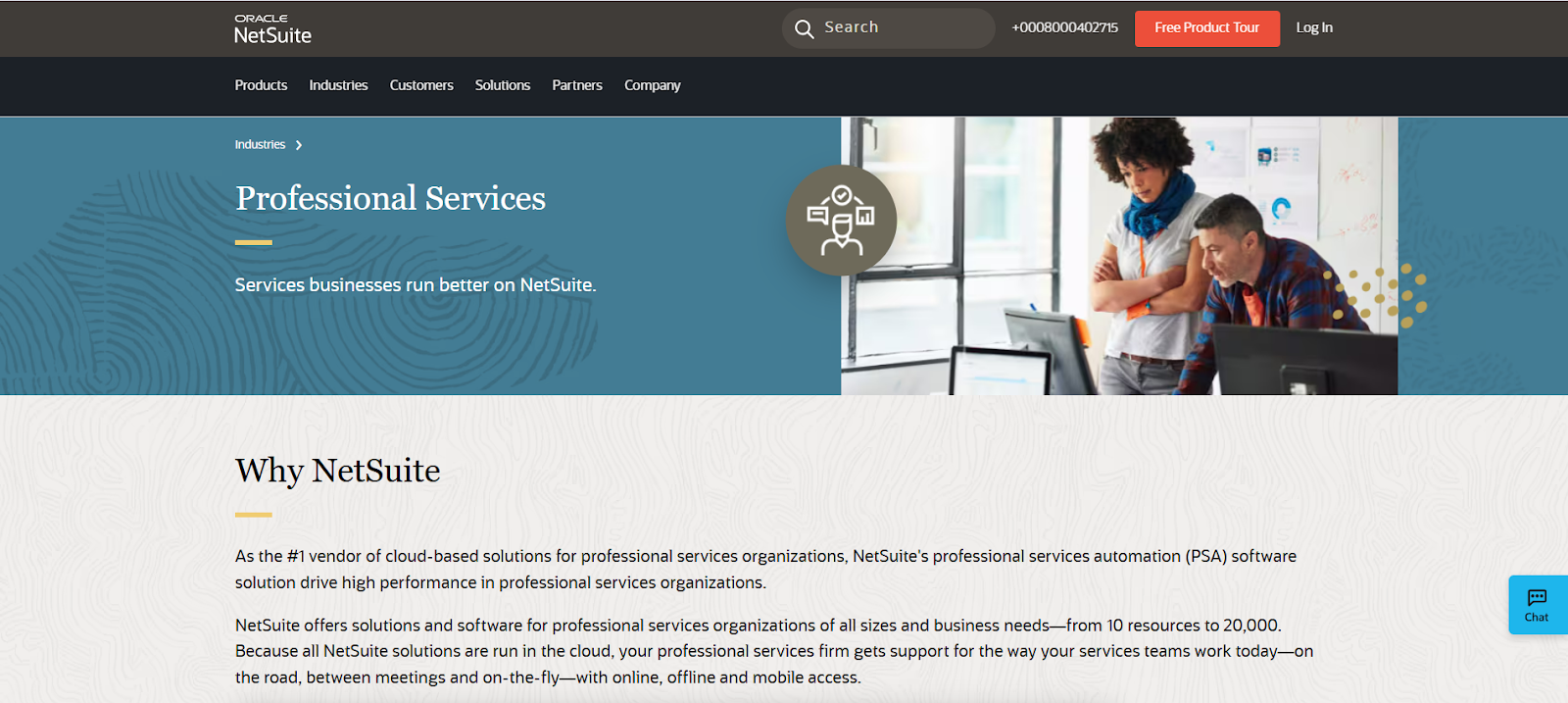
Best for: Midsize and larger service organizations that need global financial management, multi-entity consolidation and professional services automation in one cloud ecosystem.
NetSuite SuiteProjects is a PSA solution built on NetSuite ERP. It connects CRM, project planning, resource management, time and expenses, billing, revenue recognition and financial reporting.
Highlights:
Considerations: NetSuite can require a significant implementation and administration commitment. Buyers should define required modules, localization, integrations, customization and support before comparing total costs. Saudi companies should request a demonstration of the exact VAT and ZATCA configuration proposed by the vendor or implementation partner.
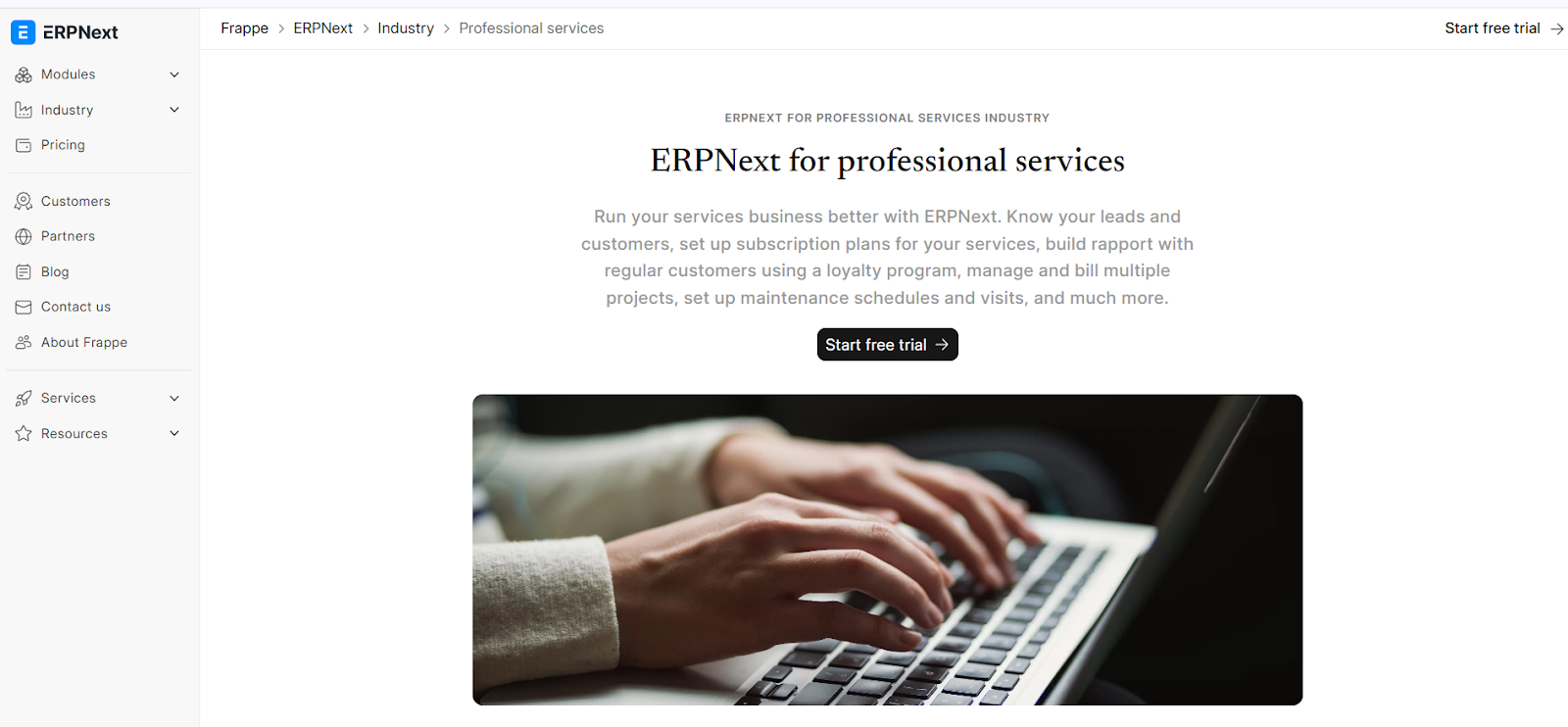
Best for: Businesses that want an open-source ERP and have internal technical capability or access to an experienced implementation partner.
ERPNext for Services combines accounting, CRM, projects, timesheets, invoicing, subscriptions, support and HR-related capabilities within the Frappe ecosystem.
Highlights:
Considerations: Although the software is open source, implementation is not automatically free. Businesses should budget for hosting, migration, customization, maintenance, upgrades and support. Saudi companies should verify local payroll, VAT, Arabic-document and ZATCA requirements with their selected implementation partner.
Do not choose a platform from its category or feature count alone. Shortlist products that fit your business model, then ask each vendor to demonstrate your real project, resource-planning, time-entry, billing, reporting and compliance workflows.
Choosing the right ERP system is important, but so is selecting the right implementation partner. Make sure the ERP Partner:
Once you’ve selected the right ERP system and implementation partner, the next step is to focus on the implementation process itself. Let’s explore.
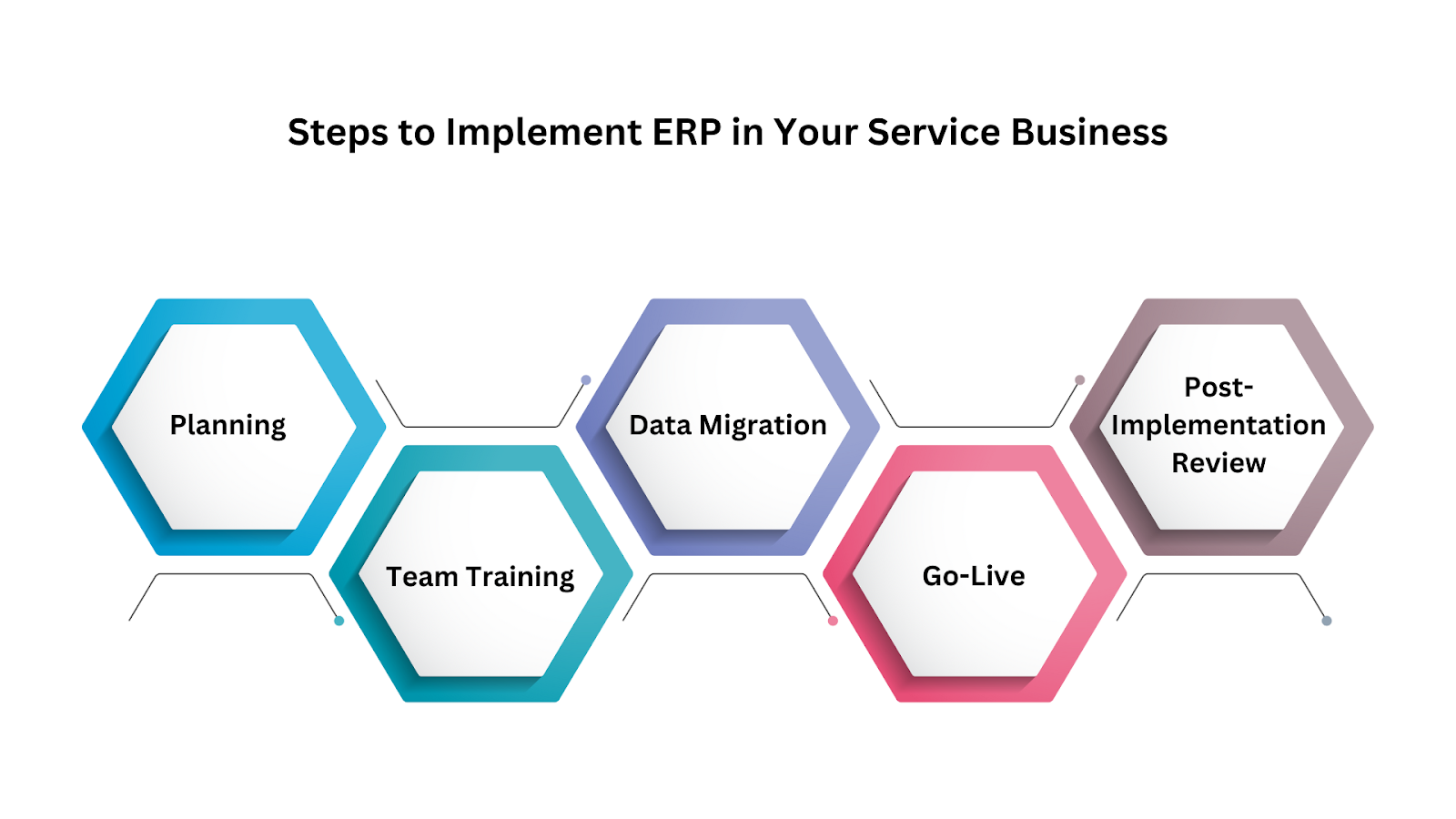
ERP implementation can be complex, but with careful planning, you can ensure a smooth transition. Here are the key steps:
For a detailed guide on how to implement ERP software, read this blog.
While these steps provide a solid foundation, it’s important to keep in mind that challenges may arise. These challenges, like resistance to change or data migration issues, can be minimized with strong planning, clear communication, and continued support from your implementation partner.
The best ERP depends on whether the company needs complete financial and operational management or focused professional services automation. Important factors include project accounting, resource planning, time tracking, billing, CRM, HR, integrations and local compliance.
ERP connects finance with multiple business functions such as HR, procurement, CRM and projects. PSA software focuses on planning, delivering and billing for professional services, including resource allocation, timesheets, utilization and project profitability.
A service ERP should include project management, resource scheduling, time and expense tracking, project costing, flexible billing, CRM, financial reporting and role-based access. Some businesses also need HR, payroll, helpdesk, field service or after-sales management.
Not every service company needs advanced inventory functionality. Consulting, legal and marketing firms may have little inventory, while repair, maintenance, healthcare, facilities-management and field-service businesses may need spare-parts, equipment or consumables tracking.
Saudi businesses issuing tax invoices must use an e-invoicing solution that meets the requirements applicable to them. Phase 2 is being introduced in taxpayer waves, and notified businesses must integrate their electronic invoicing solution with ZATCA’s systems.
Cloud ERP can simplify remote access, updates and collaboration, but deployment model alone does not determine product quality. Businesses should also assess security, availability, data location, integrations, customization and long-term cost.
Costs depend on the products and modules selected, number of users, implementation scope, integrations, customization, data migration, training, hosting and support. Compare total cost of ownership rather than only the advertised subscription fee.
A focused implementation may take several weeks, while complex multi-company or highly customized projects may take several months. Timing depends on requirements, data quality, integrations, testing, user training and decision-making speed.
The right platform should match the way your company sells, delivers and bills for services. A consulting firm may prioritize resource utilization and project margins, while an after-sales or repair business may also need service requests, spare parts, warranties and maintenance workflows.
For businesses operating in Saudi Arabia, HAL ERP is a strong option to evaluate when finance must connect with projects, timesheets, CRM, HR and service operations.
Book a HAL ERP demo and ask the team to demonstrate the platform using your actual project, billing, CRM, reporting and compliance requirements.