Top 5 Agentic AI CRM Platforms Redefining Customer Engagement in 2026
Published By
Sherif Mohamed
Sales
Mar 10, 2026
Customer engagement is shifting from automation to autonomy. Agentic AI represents a new class of artificial intelligence capable of reasoning, executing multi-step workflows, and maintaining context across interactions, allowing systems to act independently rather than simply assist. This evolution is redefining how businesses manage customer relationships.
2026 marks a clear inflection point. Organizations are moving beyond chatbots and rule-based AI toward agentic platforms that can qualify leads, trigger follow-ups, personalize outreach, and resolve issues without continuous human input. Industry research shows that over 75% of companies are expected to use AI-powered CRM tools by 2025, accelerating the shift toward autonomous engagement.
In CRM, agentic AI transforms customer interactions into proactive, intelligent workflows, driving faster responses, deeper personalization, and measurable business impact at scale.
Key Highlights
Agentic AI shifts CRM from automation to autonomy, enabling AI agents to plan, act, and execute end-to-end workflows, far beyond chatbots or rule-based systems.
2026 marks mass adoption, with over 80% of companies expected to use AI-powered CRMs, driving proactive engagement, faster resolutions, and hyper-personalization.
Key trends like autonomous service, omnichannel continuity, predictive engagement, and multi-agent coordination reshape how businesses manage customer relationships.
Leading platforms, Salesforce Agentforce, HubSpot AI Agents, Microsoft Dynamics Copilot, Creatio, and HAL, offer varying levels of autonomy, integrations, and workflow intelligence.
HAL stands out with high-autonomy execution, unified customer data, and AI agents capable of orchestrating multi-step journeys across sales, marketing, and support, making it a top choice for proactive, AI-driven customer engagement.
Key Trends Shaping Agentic AI CRM in 2026
Agentic AI is rapidly reshaping CRM by introducing autonomy, intelligence, and coordination at scale. The following trends highlight how AI-driven systems are redefining customer engagement and operational efficiency in 2026.
Autonomous Customer Service Resolution: Customer support is shifting from assisted responses to fully autonomous resolution. Agentic AI systems can identify issues, take corrective actions, and close cases end-to-end, reducing resolution times and minimizing human intervention.
Omnichannel Customer Interaction: Agentic AI enables a unified customer experience across all channels, including email, chat, voice, and social platforms. By maintaining shared context, AI agents deliver consistent, informed interactions regardless of where conversations begin or continue.
Predictive and Personalized Engagement: Using real-time data and behavioral insights, agentic AI CRM platforms drive highly personalized and predictive engagement. AI agents anticipate customer needs, recommend next-best actions, and trigger timely outreach to improve conversion and retention.
Multi-Agent Coordination: In 2026, CRM platforms increasingly rely on multiple AI agents working in coordination across sales, marketing, and support. These agents collaborate behind the scenes, ensuring seamless execution of customer workflows and breaking down organizational silos.
As agentic AI CRM platforms continue to evolve, not all solutions deliver the same level of autonomy or intelligence. Evaluating the right platform requires looking beyond surface-level automation to assess how effectively AI agents operate, integrate, and scale.
Autonomy & Workflow Automation: The most critical differentiator is true autonomy. Leading agentic AI CRM platforms can execute multi-step workflows, such as lead qualification, follow-ups, and issue resolution- without constant human input, enabling faster operations and reduced manual workload.
Integration & Unified Data Usage: Effective agentic AI depends on seamless access to data. Top platforms integrate deeply with CRM systems, analytics tools, and third-party applications, allowing AI agents to make informed decisions using a unified, real-time view of the customer.
Personalization & Predictive Insights: Strong platforms leverage data to deliver personalized and predictiveengagement. This includes real-time content personalization, accurate lead scoring, churn prediction, and intelligent recommendations that drive higher customer lifetime value.
Scalability & Customization: Agentic AI CRM solutions must scale with business growth. The best platforms support complex enterprise workflows while remaining flexible enough for small and midsize teams, offering customization without excessive implementation overhead.
Top 5 Agentic AI CRM Platforms Redefining Customer Engagement in 2026
These platforms represent the shift from assistive AI to agentic systems, AI that can plan, decide, and act across CRM workflows.
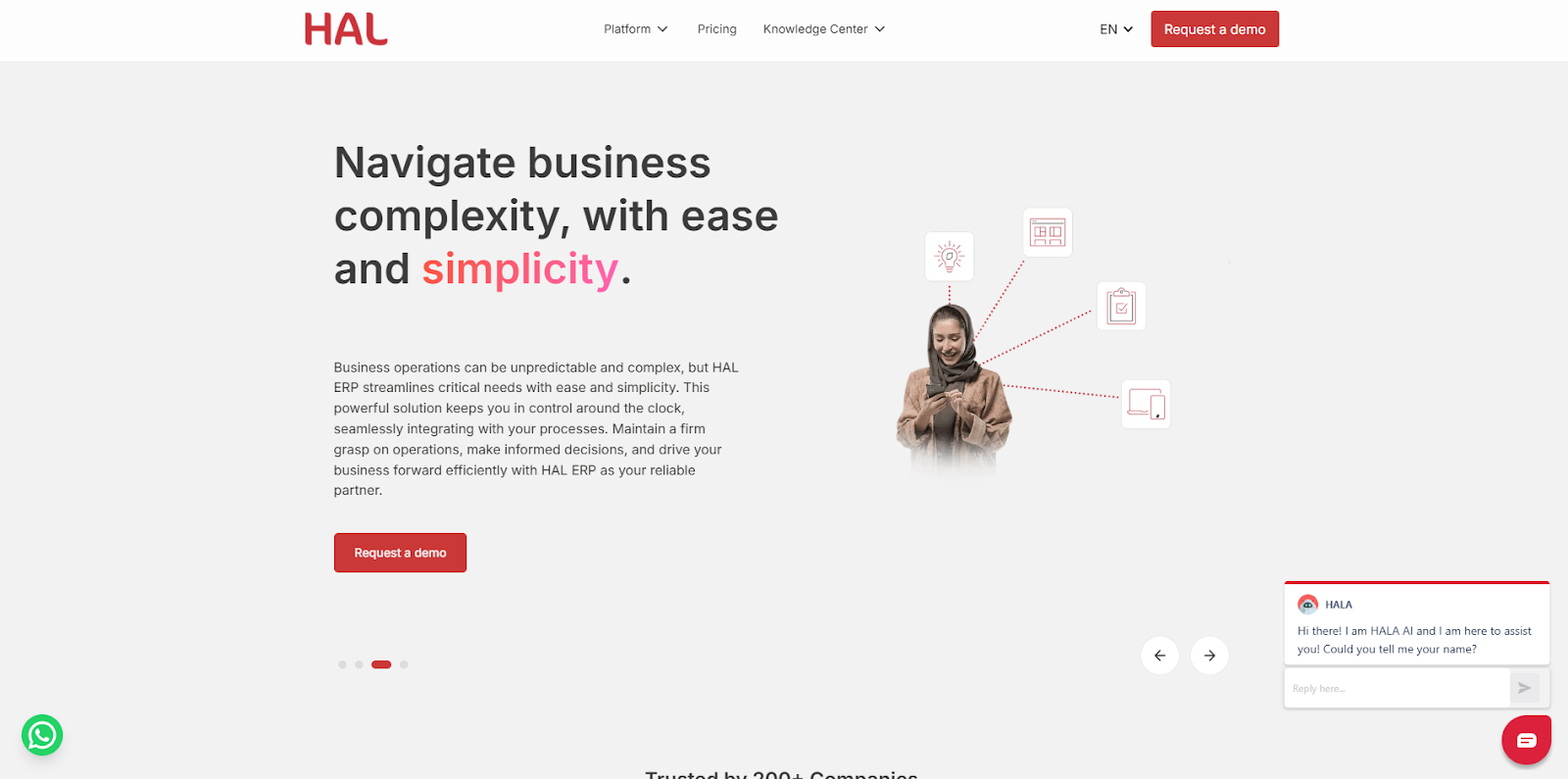
1. HAL
HAL is an agentic AI–powered CRM platform designed to automate customer engagement and internal workflows across sales, marketing, and support. The platform focuses on enabling AI agents to execute actions, not just provide insights, using unified customer data and intelligent automation.
Key Capabilities
Automated customer journey orchestration
AI-driven next-best action recommendations
Cross-channel interaction management and analytics
HAL emphasizes reducing manual effort by allowing AI agents to independently manage multi-step processes such as customer journey execution and engagement workflows. This positions the platform for teams seeking proactive, AI-driven CRM operations rather than tool-based automation.
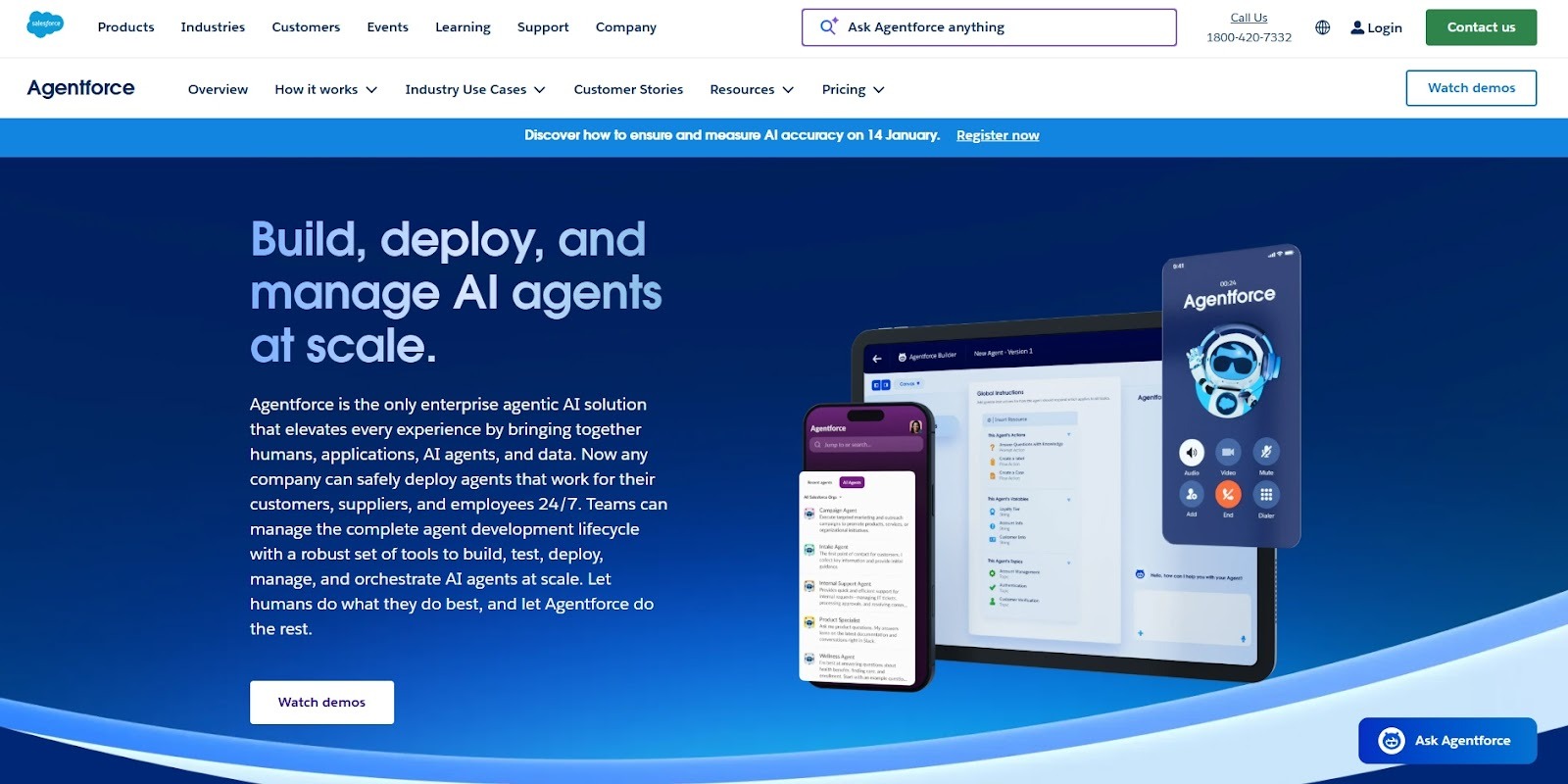
2. Salesforce with Einstein & Agentforce
Salesforce integrates agentic AI through Einstein and Agentforce, enabling AI agents to reason over CRM data and take actions across sales, service, and marketing workflows directly within the Salesforce platform.
Key Capabilities
Automated lead scoring and routing
AI-driven marketing optimization
Autonomous service case handling and resolution
Salesforce’s approach centers on deeply embedded AI agents that operate within its CRM ecosystem, enabling coordinated, end-to-end automation across customer-facing teams.
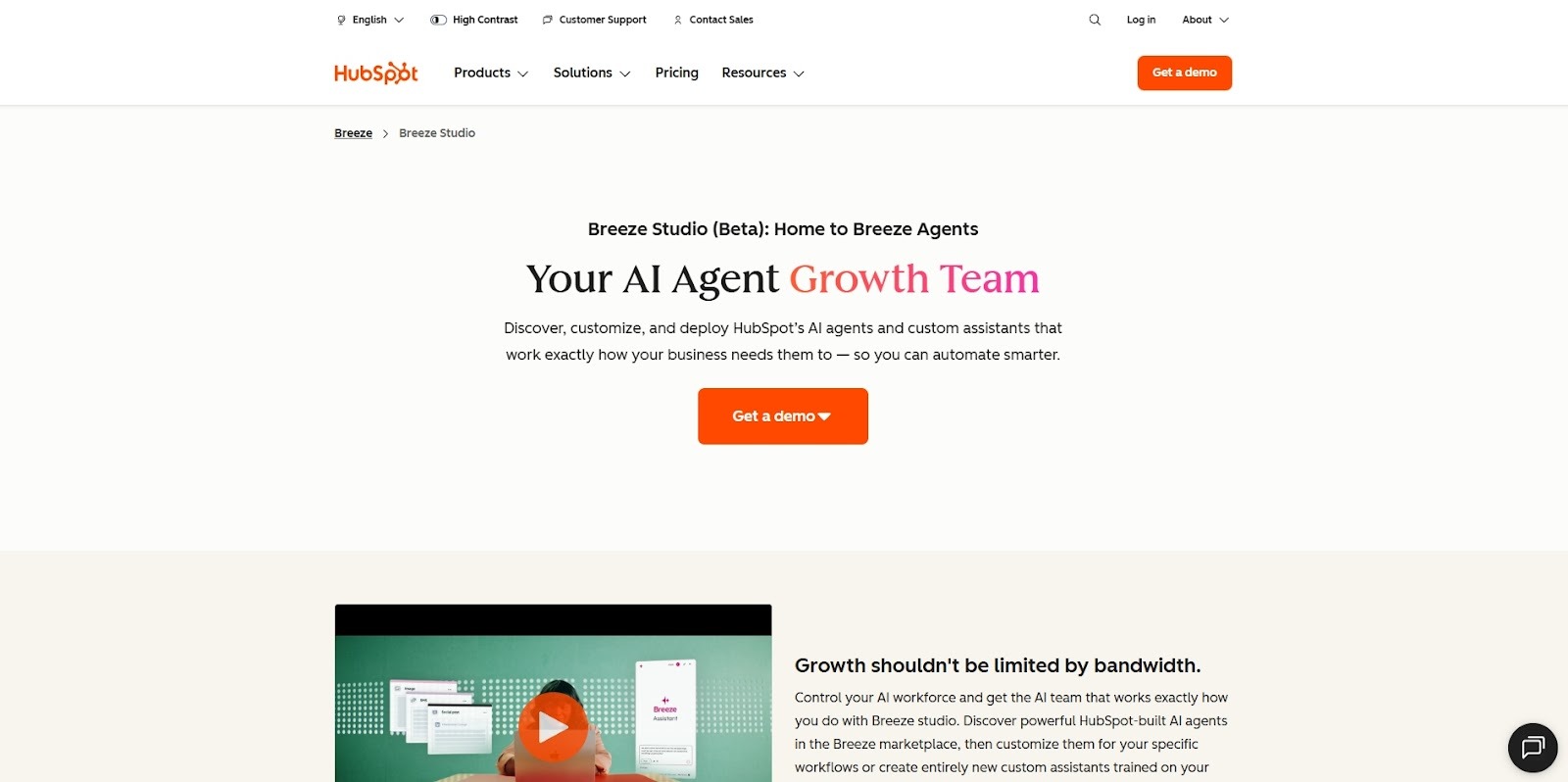
3. HubSpot CRM with AI Agents & Breeze Copilot
HubSpot integrates AI agents and Breeze Copilot into its CRM to support automated engagement, content creation, and deal management while maintaining simplicity and accessibility.
Key Capabilities
Adaptive outreach based on customer behavior
AI-generated content informed by CRM context
Predictive deal scoring and guided next steps
HubSpot focuses on delivering agentic capabilities in an easy-to-use CRM, making autonomous workflows accessible to small and mid-sized teams without heavy technical overhead.
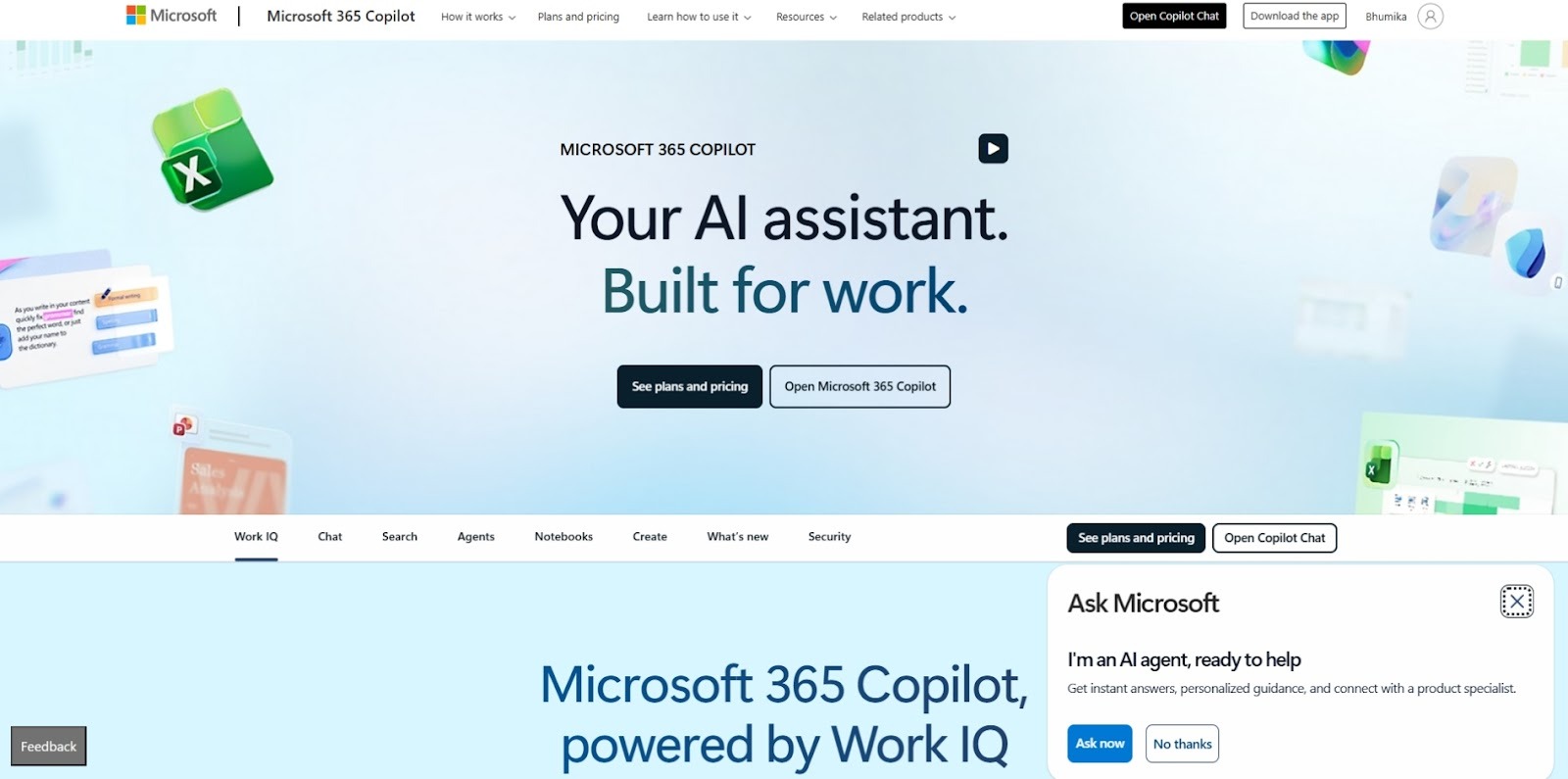
4. Microsoft Dynamics 365 with Copilot
Microsoft Dynamics 365 integrates Copilot to enable AI-assisted and autonomous actions across sales and customer service, leveraging data from across Microsoft’s ecosystem.
Key Capabilities
AI-driven insights and workflow automation
Unified customer data across Microsoft 365 applications
Proactive case management and escalation support
Tight integration with Microsoft 365, Azure, and enterprise systems makes Dynamics 365 especially well-suited for large organizations seeking agentic AI within an existing Microsoft environment.
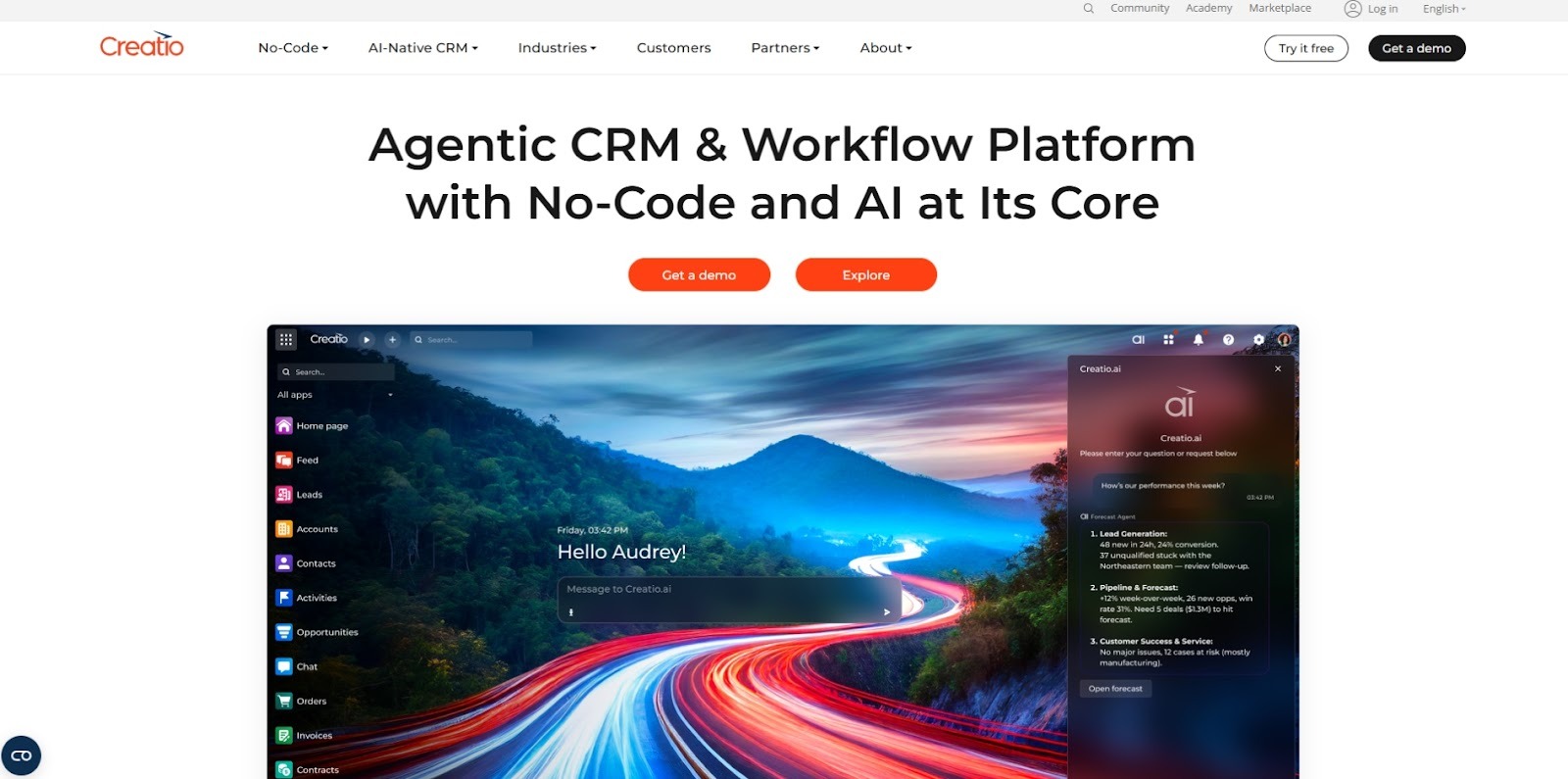
5. Creatio CRM with Intelligent Workflow
Creatio combines low-code process automation with AI-driven intelligence to build autonomous CRM workflows across sales, marketing, and service operations.
Key Capabilities
Intelligent routing of leads and tasks
AI-powered recommendations for follow-ups
Behavioral analytics to guide automated actions
Creatio’s strength lies in its flexibility, allowing organizations to design and customize agentic workflows while maintaining control over processes and governance.
High – AI-driven workflow execution and engagement automation
Multi-channel CRM with centralized customer data
Teams seeking unified customer engagement automation across sales, marketing, and support
Salesforce (Einstein & Agentforce)
Very High – Autonomous agents operating across CRM workflows
Deep, enterprise-grade integrations across Salesforce Cloud
Large enterprises managing complex, high-volume sales and service operations.
HubSpot CRM with AI Agents
Moderate to High – Guided automation with AI-assisted actions
Native integrations within the HubSpot ecosystem
SMBs and mid-market companies are prioritizing ease of use and fast adoption.
Microsoft Dynamics 365 with Copilot
High – AI-assisted and semi-autonomous CRM workflows
Tight integration with Microsoft 365, Azure, and Power Platform
Enterprises are already invested in the Microsoft ecosystem.
Creatio CRM
Moderate to High – Process-driven automation with AI support
Flexible integrations via low-code architecture
Organizations need customizable workflows without heavy development effort.
Impact on Customer Engagement
Agentic AI CRM platforms are not just improving efficiency; they are reshaping customer expectations. By enabling autonomous, context-aware interactions, these systems deliver faster, more consistent, and more meaningful engagement across the customer journey.
1. Faster Resolution Times
Agentic AI dramatically reduces time-to-resolution by handling routine issues independently.
AI agents identify intent, diagnose issues, and execute solutions without waiting for human handoffs
Common requests, such as order status, account updates, and basic troubleshooting, are resolved instantly
Faster resolutions reduce customer frustration and increase satisfaction while lowering support costs
2. Reduced Repetitive Work for Staff
By automating high-volume, low-value tasks, agentic AI allows teams to operate more strategically.
Routine queries, follow-ups, and data updates are handled autonomously
Support and sales teams spend less time on manual CRM work and more time on complex, revenue-driving activities
Reduced operational burden improves employee productivity and lowers burnout
3. Consistent Omnichannel Experiences
Agentic AI ensures continuity across all customer touchpoints by maintaining shared context.
Conversations persist seamlessly across email, chat, voice, and social platforms.
Customers no longer need to repeat information when switching channels
Unified engagement builds trust and delivers a smoother, more personalized experience
Together, these impacts translate into higher customer satisfaction, stronger retention, and scalable engagement, key advantages for organizations competing in increasingly experience-driven markets.
Implementation Recommendations
Successfully adopting agentic AI CRM requires more than enabling new features; it demands a thoughtful rollout strategy that balances speed, data readiness, and human collaboration. The following recommendations help organizations maximize impact while minimizing risk.
1. Start with High-Impact Use Cases
Focus first on workflows where agentic AI can deliver immediate and measurable value.
Prioritize repetitive, rules-driven tasks such as order tracking, lead routing, and follow-up execution.
Select use cases with clear success metrics (resolution time, conversion rate, response speed)
Early wins build internal confidence and accelerate broader adoption.
2. Ensure Data Quality and Integration
Agentic AI is only as effective as the data it can access and act upon.
Clean, structured CRM data improves decision accuracy and automation outcomes.
Integrate CRM with marketing, support, analytics, and external tools to create a unified customer view.
Strong data foundations enable more accurate personalization and predictive insights.
3. Train Teams on Hybrid Workflows
Agentic AI works best in partnership with human teams.
Define clear boundaries between autonomous AI actions and human escalation points.
Train teams to supervise, refine, and override AI decisions when needed.
Establish governance models to ensure accountability, compliance, and continuous improvement.
Organizations that approach implementation strategically, starting small, strengthening data, and empowering teams, are best positioned to unlock the full potential of agentic AI CRM.
Future Outlook
Agentic AI is rapidly moving from an emerging capability to a core requirement for modern CRM platforms. As customer expectations rise and operational complexity increases, autonomous AI agents are set to redefine how organizations manage engagement at scale.
1. Wider Adoption Across Industries
By 2026, agentic AI CRM systems are expected to see broad adoption across mid-market and enterprise organizations, especially in industries with high customer interaction volumes such as SaaS, retail, financial services, healthcare, and telecommunications.
Salesforce has stated that AI agents will become central to how businesses orchestrate customer experiences, executing actions, coordinating workflows, and operating across systems rather than acting as isolated tools.
According to Salesforce research, nearly 72% of business leaders believe AI agents will significantly reshape customer engagement models within the next two years.
Gartner predicts that by 2026, over 80% of customer service interactions will be supported or resolved by AI-driven systems, accelerating demand for autonomous CRM workflows.
Three key pressures drive this widespread adoption:
Customers expect faster, more personalized responses
Businesses must scale engagement without scaling headcount
Manual CRM operations are no longer sustainable at enterprise scale.
2. AI Agents Becoming Standard CRM Capabilities
Autonomous AI agents are transitioning from optional add-ons to foundational CRM capabilities.
AIMultiple reports that organizations adopting agentic AI workflows see higher automation depth, where AI moves beyond recommendations to direct execution
In the near future, competitive advantage will no longer come from simply using AI, but from how effectively AI agents:
Execute end-to-end customer workflows
Collaborate across sales, marketing, and support
Deliver consistent, measurable business outcomes.
CRM platforms are evolving from systems that store information to systems that take action. Organizations that invest early in agentic AI CRM will gain a lasting edge in speed, efficiency, and customer experience, while those that delay risk falling behind as autonomy becomes the new baseline.
Conclusion
Agentic AI is no longer a future concept; it’s becoming the foundation of modern customer engagement. As CRM platforms evolve from systems of record to systems of action, businesses that adopt autonomous, context-aware AI agents will be better equipped to deliver faster resolutions, personalized experiences, and scalable growth. In 2026 and beyond, the real differentiator won’t be whether a company uses AI, but how effectively its AI agents execute end-to-end customer workflows.
This is whereHALstands out. By focusing on autonomous engagement, intelligent workflow automation, and unified customer data, HAL helps teams move beyond manual CRM operations toward proactive, AI-driven execution across sales, marketing, and support.
Request a demo of HAL. to explore how agentic AI can streamline workflows, enhance customer experiences, and drive measurable business impact at scale.
FAQ
1. How is agentic AI different from chatbots or AI assistants?
Chatbots primarily respond to queries based on predefined rules or prompts. Agentic AI, on the other hand, can plan, act, and complete tasks end-to-end, such as routing leads, triggering follow-ups, or resolving support cases with minimal human involvement.
2. What types of businesses benefit most from agentic AI CRM?
Businesses with high customer interaction volumes, such as SaaS, eCommerce, financial services, and B2B enterprises, benefit the most. However, mid-sized teams also gain value by reducing manual work and scaling engagement efficiently.
3. Can agentic AI CRM replace human teams?
No. Agentic AI is designed to augment human teams, not replace them. It handles repetitive, routine workflows while humans focus on strategic decisions, relationship building, and complex scenarios.
4. How does HAL support agentic AI CRM?
HAL enables AI-driven automation across customer engagement workflows by combining intelligent agents, centralized customer data, and cross-channel execution. This helps teams operate more proactively and efficiently.
5. How can I get started with HAL?
The best way to start is by experiencing the platform firsthand. You can request a demo to see how HAL's agentic AI capabilities fit your existing workflows and business goals.
Sherif Mohamed
Sherif Mohamed is a leading ERP delivery consultant and functional expert, driving successful digital transformation projects across Saudi Arabia and the GCC. With deep experience in project management and ERP implementation at HAL Simplify, Sherif is known for enabling sustainable growth and innovation for organizations.