
Schools face challenges at three connected levels. Students may struggle with motivation, concentration and academic pressure. Parents need clear communication, manageable payment processes and reliable information about their child’s progress. School administrators must coordinate admissions, attendance, fees, examinations, staff and parent communication—often across disconnected systems.
This guide examines practical solutions for all three groups. It also gives additional attention to the operational problems faced by schools in Saudi Arabia, including manual administration, fragmented student records, slow fee reconciliation and limited visibility across departments.
Many student and parent problems require personal, academic or professional support. Administrative problems require clearer processes, accountable teams and systems that keep school data connected. Understanding that difference is the first step towards choosing the right solution.
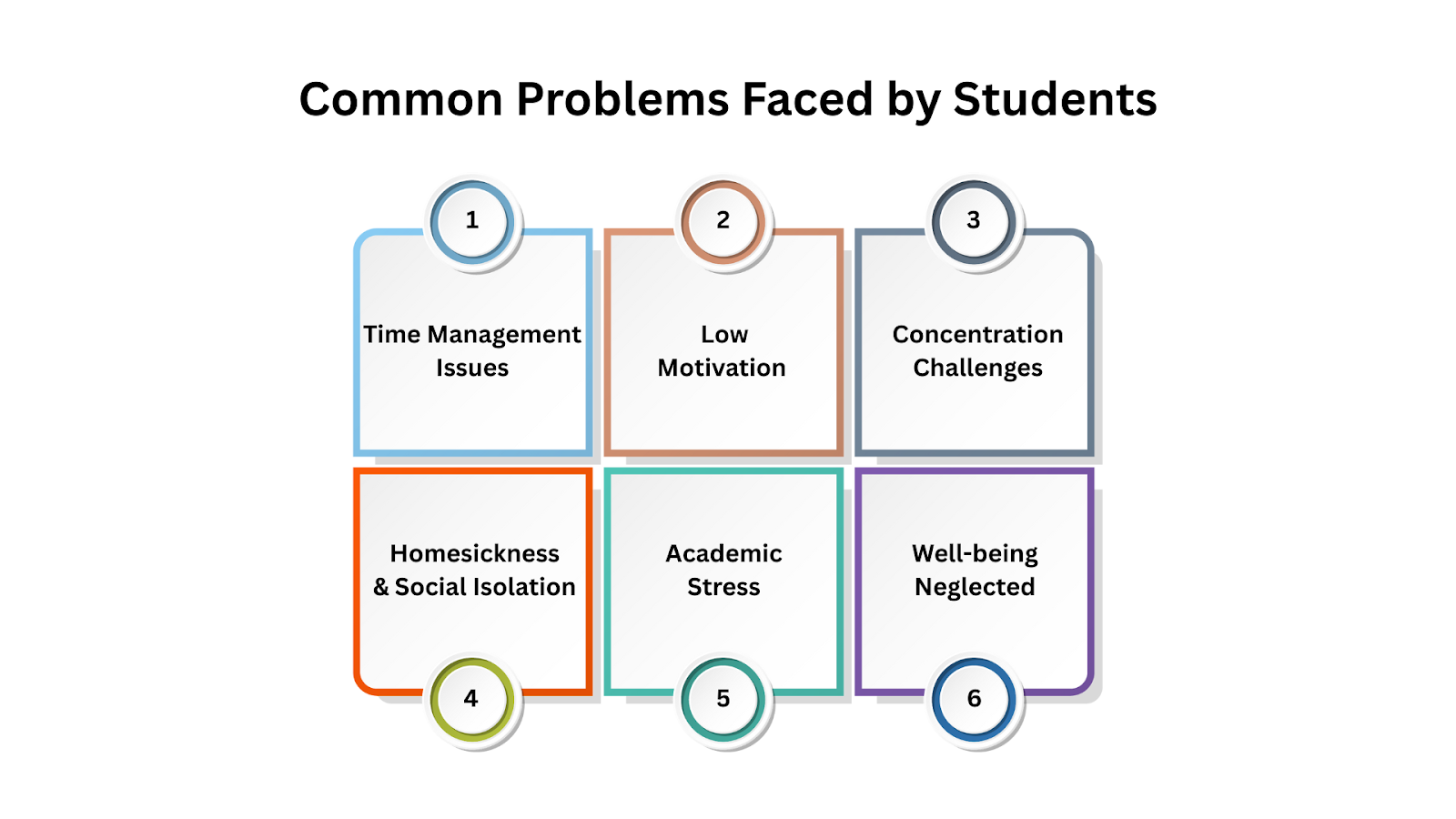
Students face various challenges that can affect their academic journey. From time management to emotional well-being, addressing these issues with practical solutions can help students overcome obstacles and succeed in their education.
Balancing school assignments, extracurricular activities, part-time jobs, and social commitments can be overwhelming for many students.
Solution: Crafting a Personalized Schedule and Prioritizing Tasks
Also Read: IISR's Digital Transformation with HAL ERP
Motivation can fluctuate, especially when faced with repetitive tasks or the pressure to perform. When motivation drops, it can severely affect performance.
Solution: Building a Support System and Celebrating Small Wins
In today’s digital age, distractions are ubiquitous, ranging from social media to constant notifications, making it challenging for students to maintain focus.
Solution: Minimizing Distractions and Enhancing Focus
Being away from home or struggling to fit in can lead to feelings of homesickness and social isolation.
Solution: Building Social Connections and Seeking Support
Stress from exams, deadlines, and the pressure to perform can lead to anxiety and burnout, making it difficult to focus on schoolwork.
Solution: Developing Effective Study Habits and Stress-Reduction Techniques
Neglecting physical and mental well-being can affect a student’s attendance, concentration, relationships and academic participation. The World Health Organization reports that one in seven adolescents aged 10–19 experiences a mental disorder. Depression, anxiety and behavioural disorders are among the leading causes of illness and disability in this age group.
Solution: Build Healthy Routines and Provide Access to Support
Important Note: These steps support student well-being, but they are not substitutes for professional assessment or treatment.
While students face a range of challenges, parents are equally involved in supporting their children through these struggles. Let’s now explore the specific challenges parents face and how they can best support their children throughout their academic journey.
Also Read: How HAL Edge is Powering Schools in KSA Toward Vision 2030 Goals
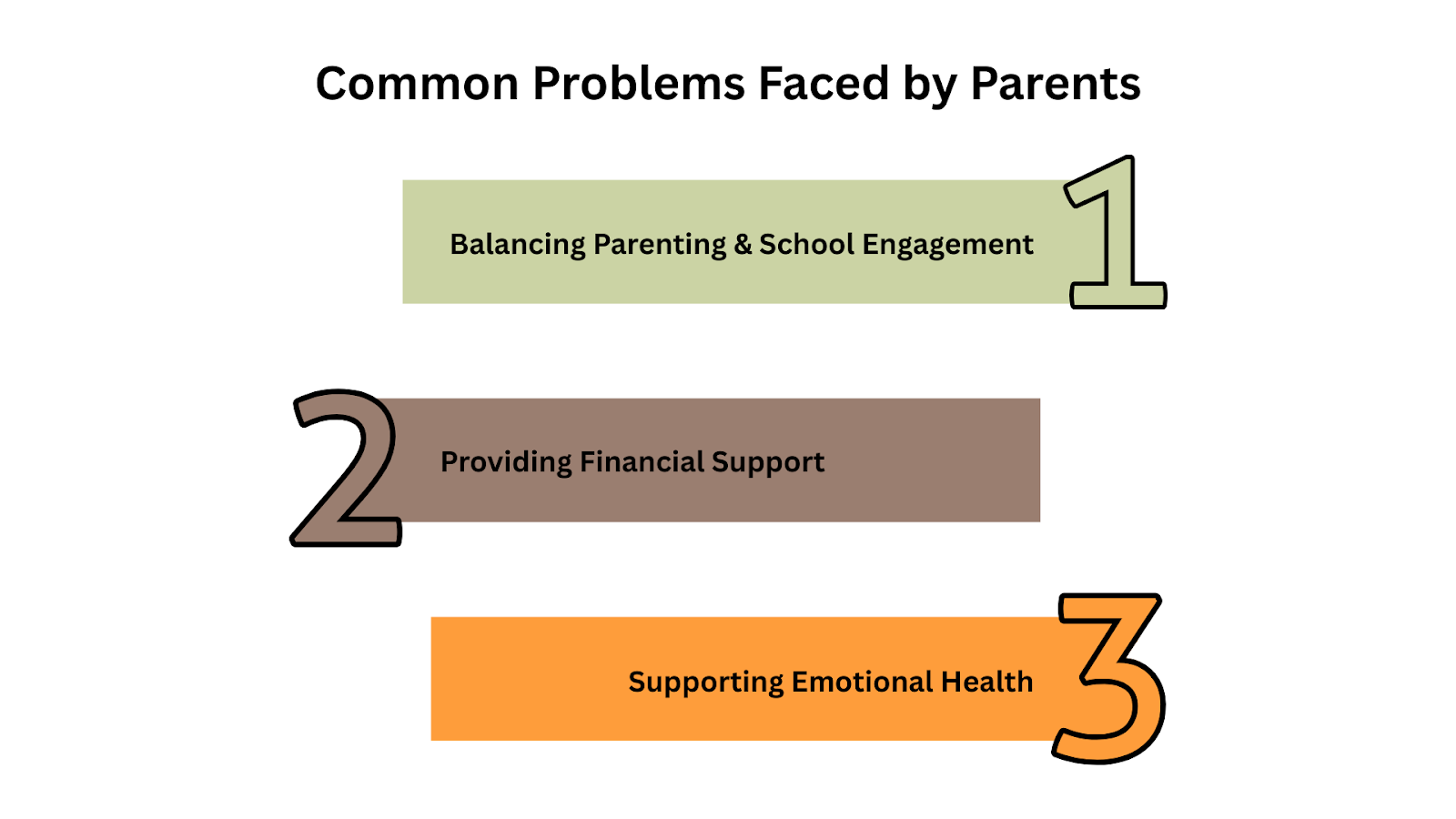
Parents play a critical role in supporting their child's educational journey. However, they too face challenges related to balancing responsibilities, managing finances, and providing emotional support.
Parents often feel torn between their personal responsibilities and the need to stay involved in their child’s education.
Solution:
The cost of education can be burdensome for families, particularly when it comes to tuition fees, textbooks, and other school-related expenses.
Solution:
Parents may notice when their child is feeling overwhelmed, stressed, or isolated. Emotional health is key to overall well-being and academic success.
Solution:
Encouraging healthy sleep habits and managing academic pressure can help your child maintain emotional well-being and improve overall academic performance.
While parents work hard to support their children’s education, schools themselves face unique challenges in managing students, staff, and resources. Let’s now explore the common problems educational institutions encounter and the solutions they can adopt to address them.
Also Read: HAL Edge: The Digital Backbone of Modern Schools in Saudi Arabia
Schools must support learning while coordinating hundreds or thousands of daily academic, financial and administrative activities. Problems often arise when departments maintain separate records, rely on repetitive manual work or lack access to timely information.
When admissions, attendance, grades, fees and parent records are stored in separate spreadsheets or applications, staff may duplicate information or work with inconsistent records.
Solution: Create a Central Student Information System
Maintain one authorized student profile covering admission details, contact information, attendance, academic history, fees and relevant documents. Role-based access should allow each department to view or update only the information required for its work.
Manual forms, document collection and repeated data entry can delay admission decisions and create unnecessary work for families and school staff.
Solution: Digitize the Admission Workflow
Use online applications, document checklists, approval stages and automated status updates. Information approved during admission should move directly into the student record so staff do not have to enter it again.
Schools may record attendance and marks without converting the data into useful information. As a result, recurring absences or performance declines can be noticed too late.
Solution: Use Timely Reports and Defined Intervention Rules
Create attendance, subject-performance and assessment reports that teachers and academic leaders can review regularly. Establish clear thresholds for contacting parents, arranging additional support or escalating a concern.
Technology can identify patterns, but educators should evaluate each student’s circumstances before making an intervention.
Schools frequently manage tuition, transport, books, activities and other charges. Manual collection and reconciliation can lead to delayed updates, unidentified payments and repeated parent enquiries.
Solution: Connect Fee Structures, Payments and Accounting Records
Define each fee category clearly, issue accurate dues, support approved payment methods and update the student account when payment is confirmed. Automated reminders can reduce repetitive follow-up, while real-time collection reports give finance teams a clearer view of outstanding amounts.
Parents may receive important information through a mixture of paper circulars, emails, messaging groups and phone calls. This makes it difficult to confirm whether notices were delivered or read.
Solution: Use a Structured Parent Communication Channel
Provide one approved channel for attendance updates, fee reminders, examination schedules, academic reports and school announcements. Communication should remain timely and relevant, with access controls that protect student information.
Creating examination schedules, entering marks, calculating grades and preparing report cards manually consumes staff time and increases the likelihood of errors.
Solution: Standardize the Examination Process
Configure grading structures and approval workflows before the examination cycle begins. Generate reports from verified marks rather than rebuilding spreadsheets for every class or assessment period.
Schools must manage teacher and employee attendance, leave, payroll, appraisals and requests while ensuring that classes and services remain adequately staffed.
Solution: Connect HR Workflows with School Operations
Use employee self-service, approval workflows and centralized HR records. Academic and administrative leaders should be able to identify absences and staffing requirements without relying on disconnected messages or paper requests.
Transport routes, library circulation and campus-level records can become difficult to monitor as a school grows or operates across multiple locations.
Solution: Assign Ownership and Centralize Operational Records
Use defined workflows for route planning, student boarding information, book circulation, overdue items and campus reporting. Multi-campus schools should maintain consistent data definitions while allowing authorized local teams to manage daily activity.
Academic data alone cannot show the full reason behind disengagement, repeated absence or behavioural changes.
Solution: Combine Early Identification with Human Support
Train staff to identify warning signs, provide confidential reporting channels and maintain referral procedures involving counsellors, safeguarding teams and families where appropriate. Peer programmes and extracurricular activities can support belonging, but serious concerns require qualified professional attention.
Student, parent, academic and financial records contain sensitive information. Shared passwords, unrestricted spreadsheets and informal communication channels increase operational and privacy risks.
Solution: Apply Role-Based Access and Documented Controls
Limit information according to job responsibility, review permissions when roles change and maintain reliable backups and activity records. Schools should also document how data is collected, used, stored and shared under the requirements applicable to their institution.
Addressing these challenges requires more than purchasing software. Schools need clear policies, trained employees, reliable data and accountable processes. Technology is most effective when it supports those foundations instead of simply digitizing an inefficient workflow.
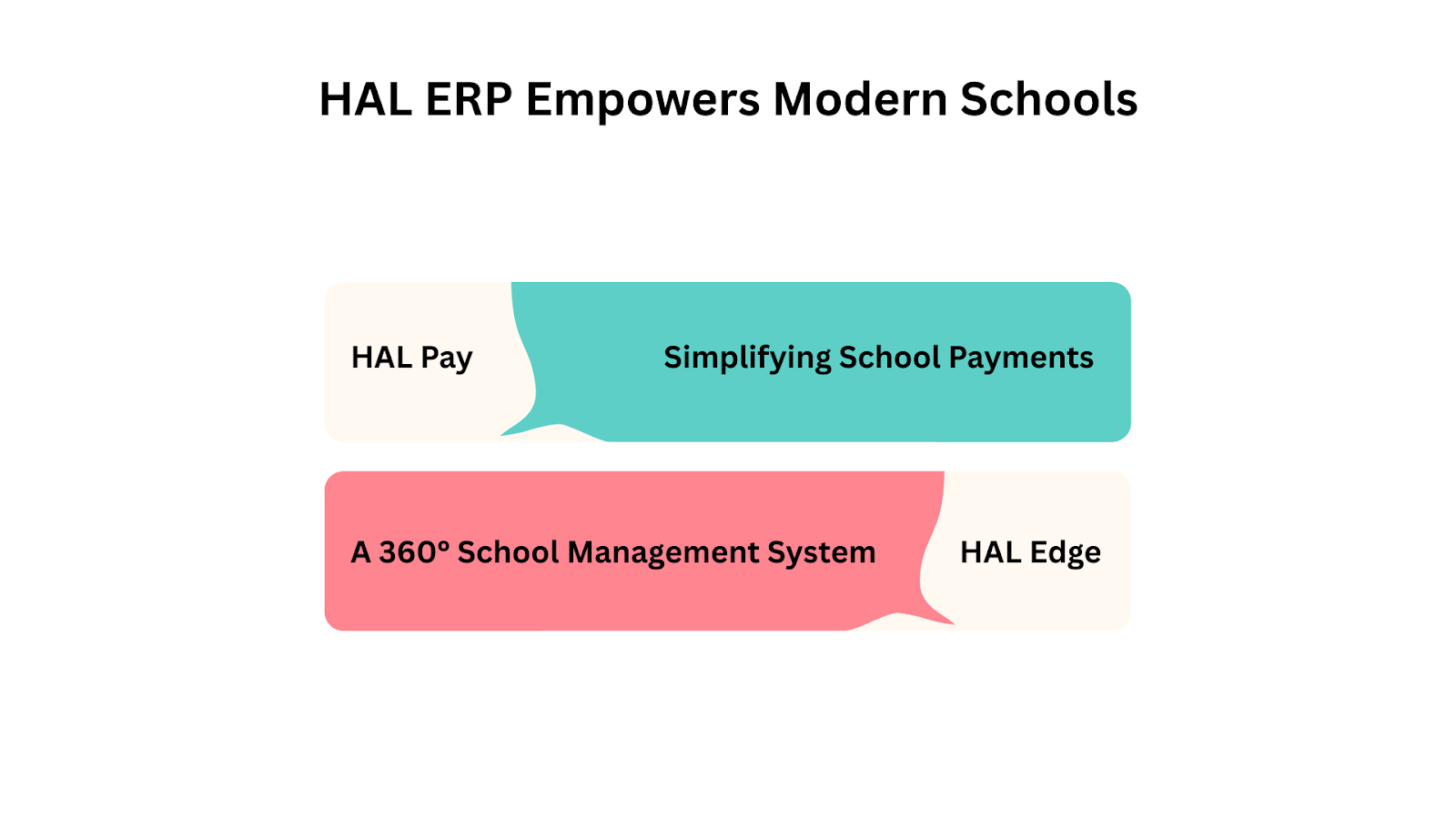
As schools across the region adapt to growing expectations from parents, educators, and regulatory bodies, having an integrated, digital-first platform is essential. Whether it’s managing fees or streamlining academic and administrative workflows, HAL ERP equips schools with everything they need to succeed in today’s competitive education environment.
HAL Pay provides a dedicated interface for managing school-related payments. Parents can view applicable dues and payment history, while school finance teams can monitor collections and outstanding balances from a more structured workflow.
For parents, HAL Pay supports:
For schools, HAL Pay supports:
Payment availability, processing time and specific methods may depend on the school’s configuration and participating financial providers.
While HAL Pay focuses on the parent and school payment experience, HAL EDGE connects a wider range of academic, financial and administrative functions.
Its current school-management capabilities include:
HAL also publishes education case studies covering institutions including IISR, JESS and IPSA. Explore HAL’s education case studies for implementation context.
Together, HAL EDGE and HAL Pay support different but connected requirements: HAL EDGE manages broader school operations, while HAL Pay simplifies the fee-payment interaction between schools and families.
The most common school problems are rarely isolated. Poor communication can affect fee collection, attendance and parent trust. Fragmented records can slow admissions, examination reporting and student support. Manual HR and administrative work can take employees away from higher-value educational responsibilities.
Students and parents also need practical support, but schools must create the processes that make this support consistent. Clear responsibilities, reliable information, trained employees and appropriately selected technology provide a stronger foundation than isolated short-term fixes.
HAL EDGE helps schools connect admissions, student information, attendance, examinations, finance, HR, transport and communication. HAL Pay provides a focused payment experience for parents and school finance teams.
Request a demo to explore how HAL’s education solutions can be configured around your institution’s operational requirements.
Common problems include fragmented student records, manual admissions, attendance gaps, slow fee reconciliation, inconsistent parent communication, examination administration, staff-management difficulties and limited reporting across departments or campuses.
Schools should first document the process, assign responsibility and remove unnecessary steps. A school management system can then centralize information, automate repetitive work and provide reports, but technology should support a well-designed process rather than replace planning and staff training.
Schools can use consistent attendance and assessment data to identify changes early, provide academic support and communicate with families. Data should guide—not replace—the judgement of teachers, counsellors and academic leaders.
Schools should use one approved channel for important notices, attendance updates, fee reminders, examination information and academic reports. Messages should be timely, relevant and protected by appropriate access controls.
Define fee structures clearly, provide approved digital payment options, automate reminders and connect confirmed payments with each student’s account. Finance teams should also have real-time reports for collections, pending amounts and reconciliation.
HAL EDGE is a broader school ERP covering academic, financial and administrative operations. HAL Pay focuses specifically on managing and paying school-related fees through a parent- and school-facing payment workflow.
No. School ERP software can reduce fragmented data, repetitive work and reporting delays. Problems involving teaching quality, student well-being, safeguarding, leadership or institutional culture also require suitable policies, trained people and professional judgement.




.jpg)