
In short: Notebook checking works when it is small, regular and recorded. Subject teachers and class teachers check and correct students' notebooks and homework on a rotating sample, record what they find in their own registers and return corrected work within an agreed number of school days. The supervisor reads a monthly roll-up by subject and class and makes random checks. Below: who checks what, a rating guide with a description for every level, a deadline and a quality check for correction, and a free kit (PDF guide and Excel tracker).
Sunday morning, zero period. Thirty-two notebooks sit in a pile on the Grade 5C class teacher's desk. She has fifteen minutes before first period. She flips through them, ticks a column, and signs the sheet. By the end of the month the pile has been checked twelve times, and neither she nor anyone else can say which students are slipping, which subject returns work late, or whether the red-pen corrections are catching the mistakes.
Most schools check notebooks. Fewer turn those checks into something that changes what happens in class. This article explains a notebook checking routine with two kinds of checker and one supervisor. Subject teachers and class teachers check and correct students' notebooks and homework, and update their own registers. Whoever supervises in your school (head of department, compartment head, vice principal or supervisor) keeps tabs on the registers and makes random checks. The free notebook check kit at the end gives you the forms, a rating guide and an Excel tracker that adds up the month.
If you supervise a section of a school, some of these will sound familiar.
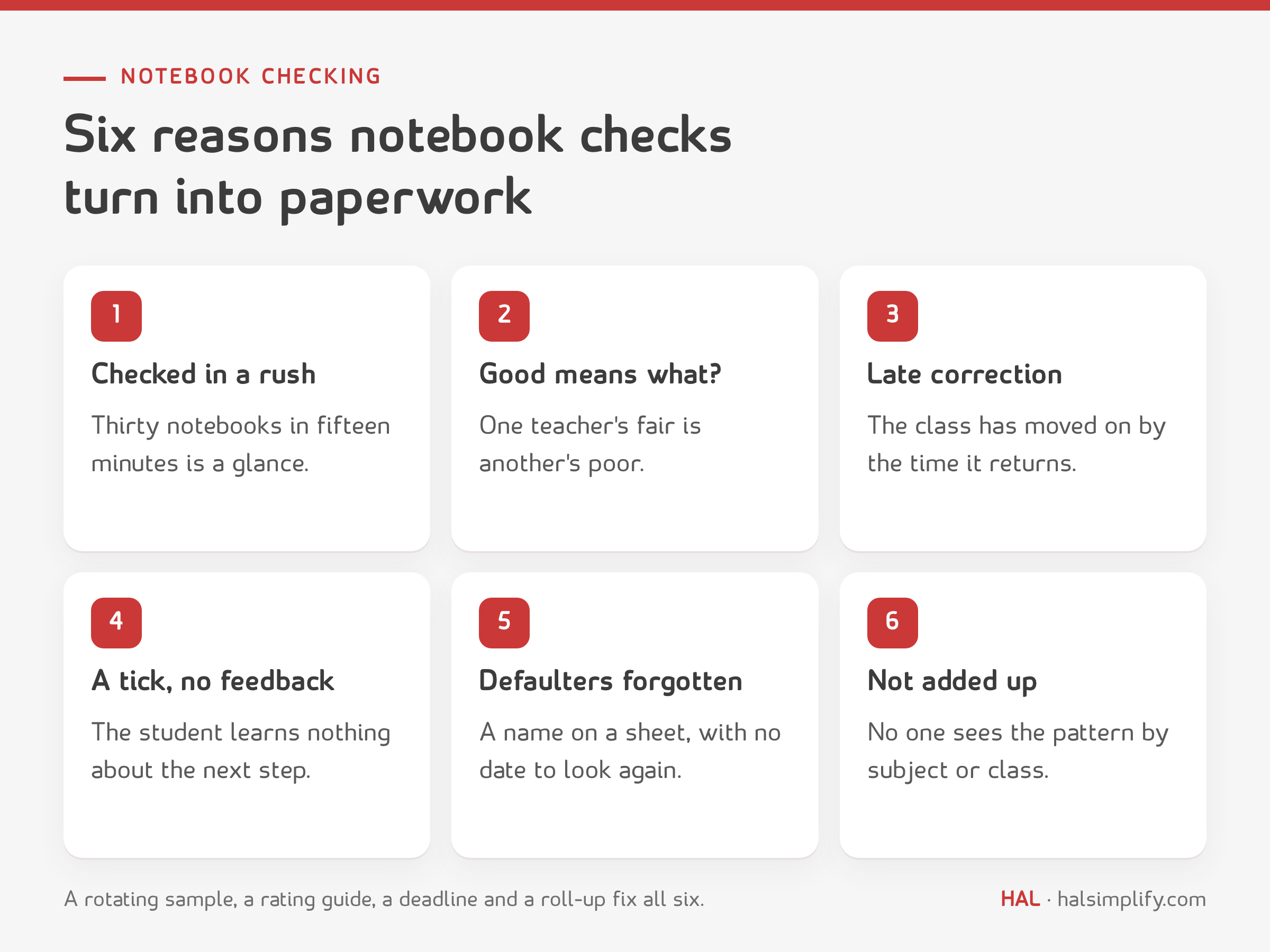
A rotating sample, a rating guide, a deadline and a monthly roll-up deal with all six.
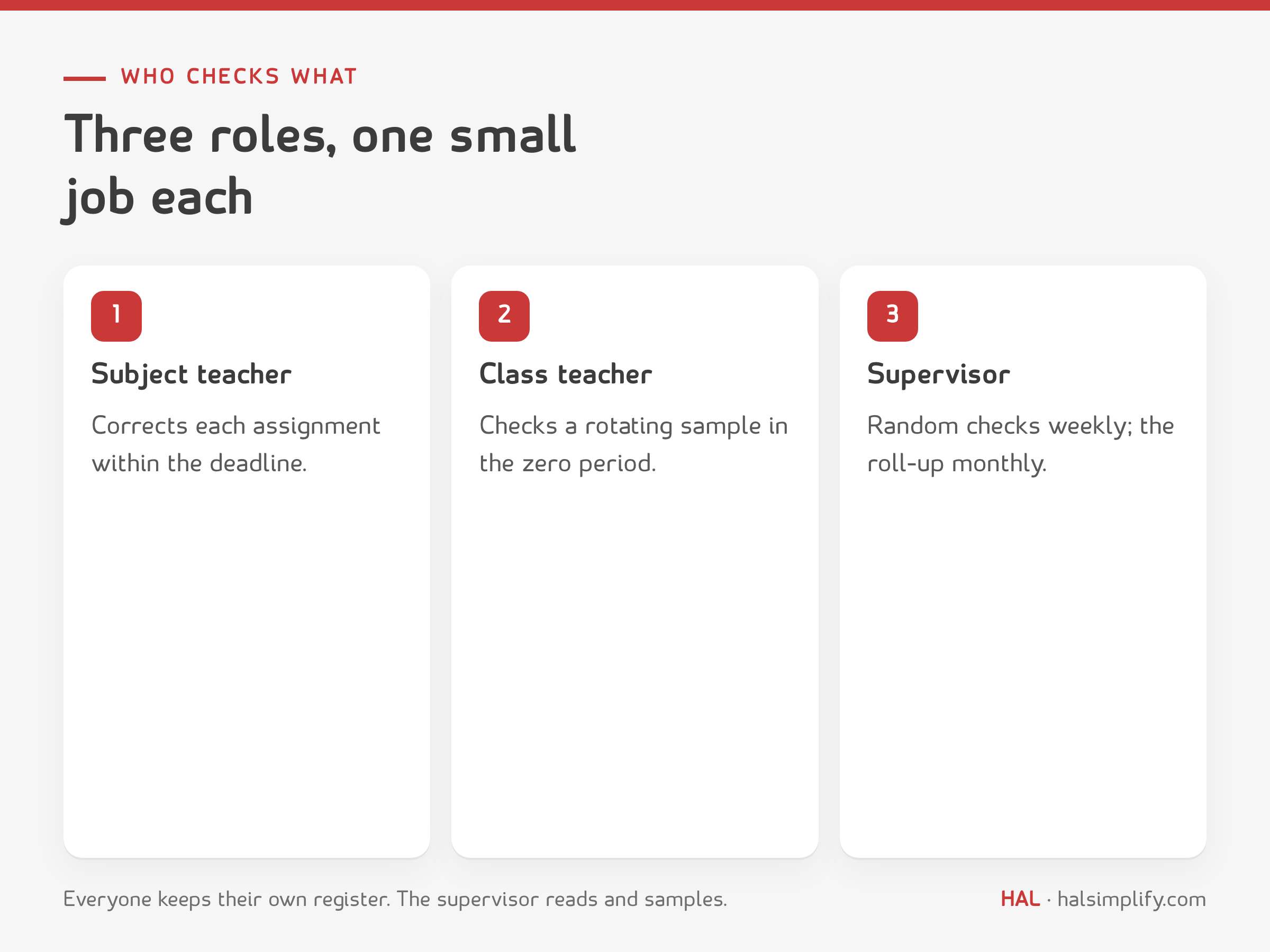
Three roles each have a small, clear job.
| Role | What they check | Where they record it | When |
|---|---|---|---|
| Subject teacher | Class work and homework notebooks for their own subject: collected, corrected, errors caught | Their own subject register | Every assignment, within the correction deadline |
| Class teacher | Every student's notebooks, handbook and handwriting across subjects, on a rotating sample | The class notebook report, one line per student | Daily, in the zero period |
| Supervisor | Random notebooks across classes and subjects; the monthly roll-up | The monthly report by subject and class | Random checks weekly; the roll-up monthly |
Subject teachers know what a correct answer looks like, so they correct. Class teachers see one student across every subject, so they spot the student who is falling behind everywhere. The supervisor sees across classes, so they spot the subject where correction is late.
The zero period is a short slot before first period when students hand in their notebooks. Collect notebooks from a few students a day, not from the whole class. With five students a day, a class of thirty is checked about every six school days, and nobody gets a stack of thirty to read in a hurry.
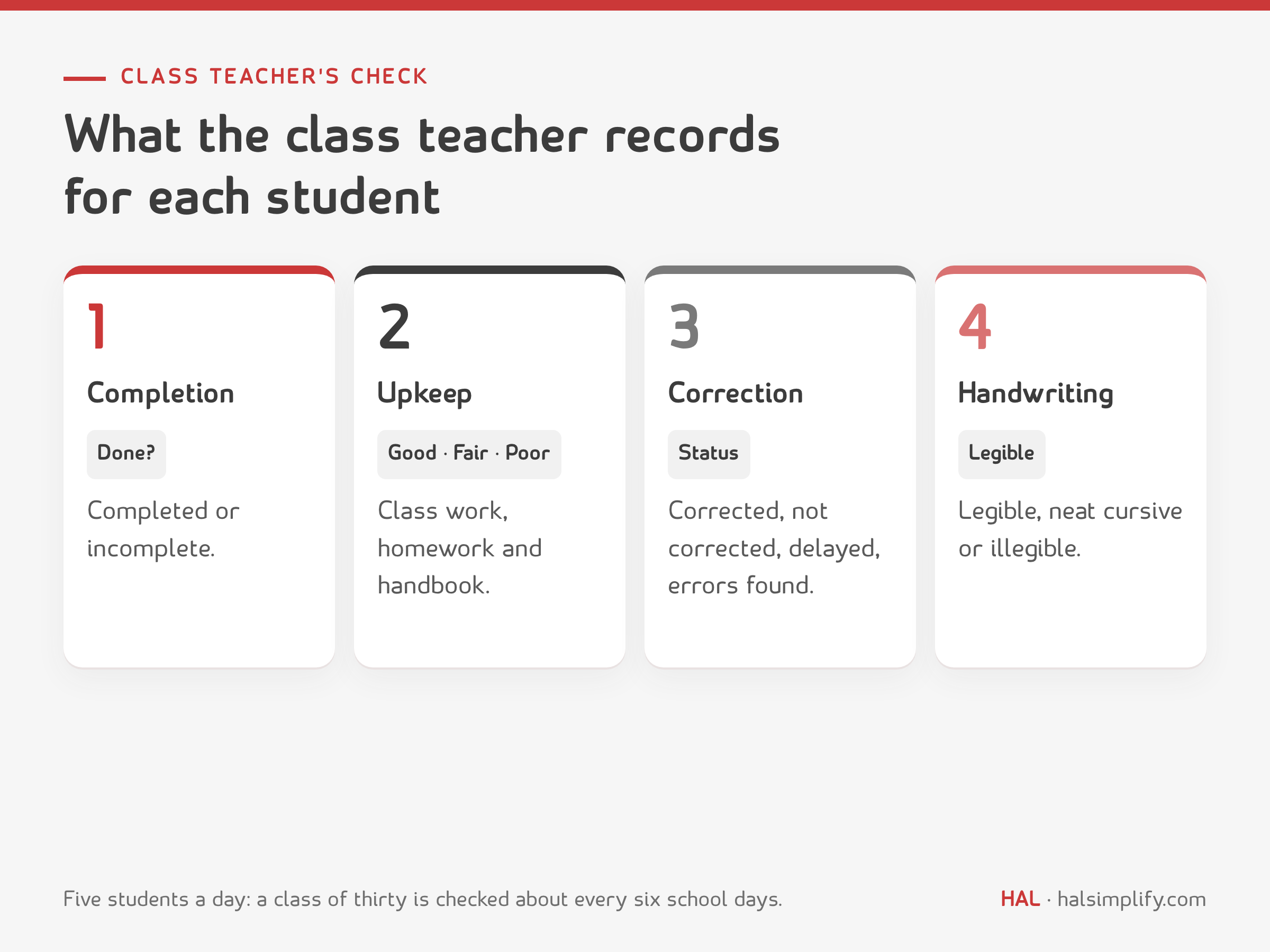
For each student, record these on the class notebook report:
The rating guide below makes "Good" mean the same thing to every checker. The original scale gives Good 10, Fair 8 and Poor 3 points, and the kit converts the ratings into a percentage so a class can be compared with another.
| Rating | Upkeep looks like |
|---|---|
| Good | Dated and headed work, every task done, tidy pages, nothing loose or torn. |
| Fair | Mostly complete, with a few gaps or untidy pages. |
| Poor | Missing work, loose pages or work that cannot be followed. |
Handwriting uses its own three levels: legible, neat cursive writing or illegible. Rate the writing a student produces in a normal lesson, not a best effort.
Correction is where notebook checking either changes learning or does not. Two simple rules help.
A deadline. Agree how many school days a teacher has to return corrected work. Three school days is a reasonable starting point and is a setting in the kit. A correction that arrives later is recorded as delayed. The record shows a pattern for a subject and is not a mark against a person, so use it to ask whether the load is realistic.
A quality check. The supervisor's random check also looks at how the work was corrected, using three levels.
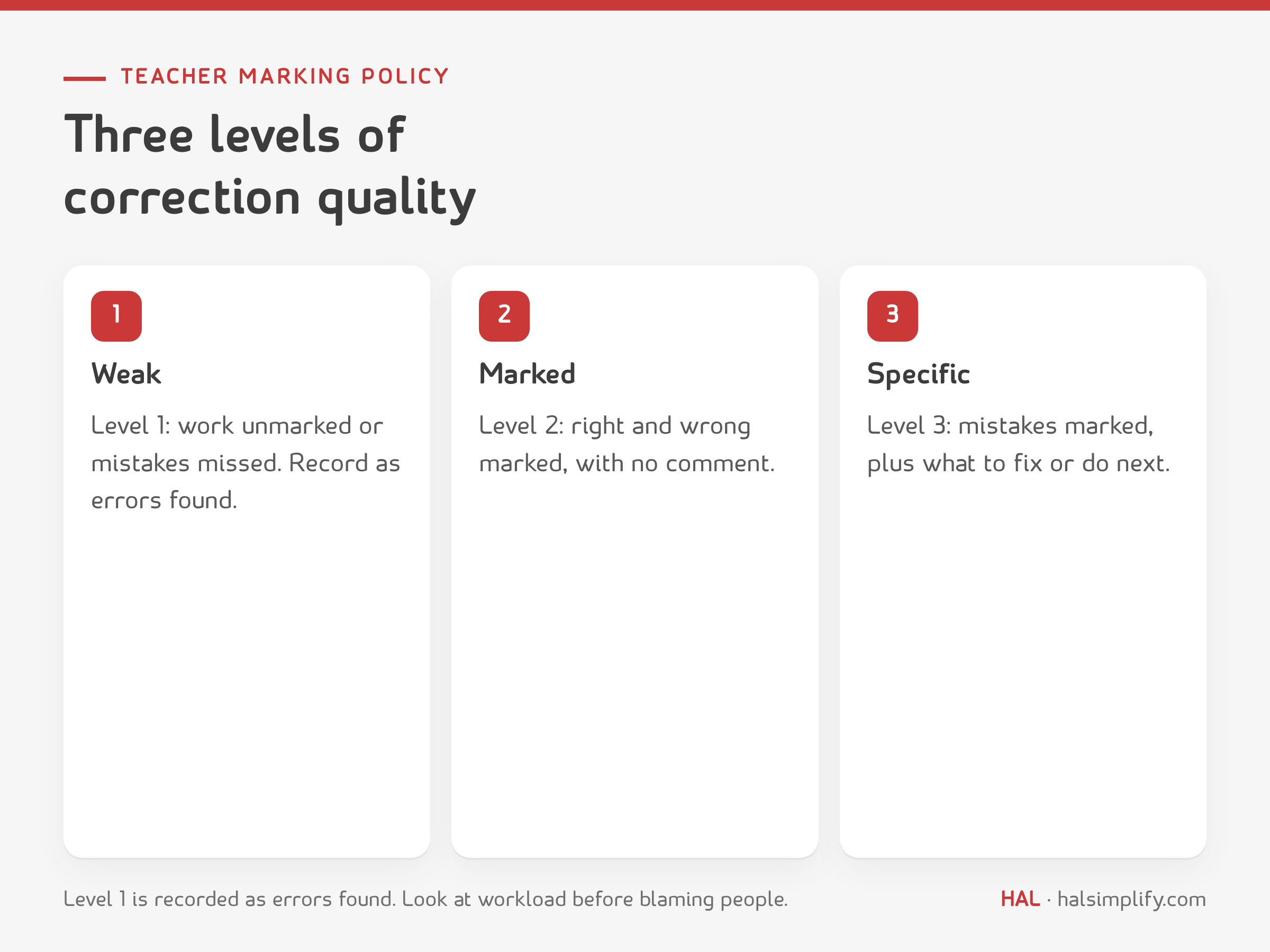
| Level | What it looks like |
|---|---|
| 3 Specific | Mistakes are marked, and a comment tells the student what to fix or do next. |
| 2 Marked | Right and wrong are marked, with no comment. |
| 1 Weak | Some work unmarked, or mistakes missed. Record these as errors found. |
Match the check to the student. Strong students can have a quick check in class. Average students need a few checks in class. Students who find the work hard are better taken aside, so the teacher can see where they went wrong. Whatever the route, correct before the next work is set, and within a week at the latest.
Teachers who miss a mistake are not careless people. Long marking loads are the usual cause, and the roll-up is how you find out.
A defaulter is a student whose notebooks are incomplete or poorly kept. Listing the name is the start. Agree one next step and a date to check again: catch up the missing pages by Thursday, for example, or bring the notebook to the class teacher on Tuesday. If the student is still behind at the recheck date, tell the parents through the student handbook.
The supervisor keeps tabs on the registers without redoing them.
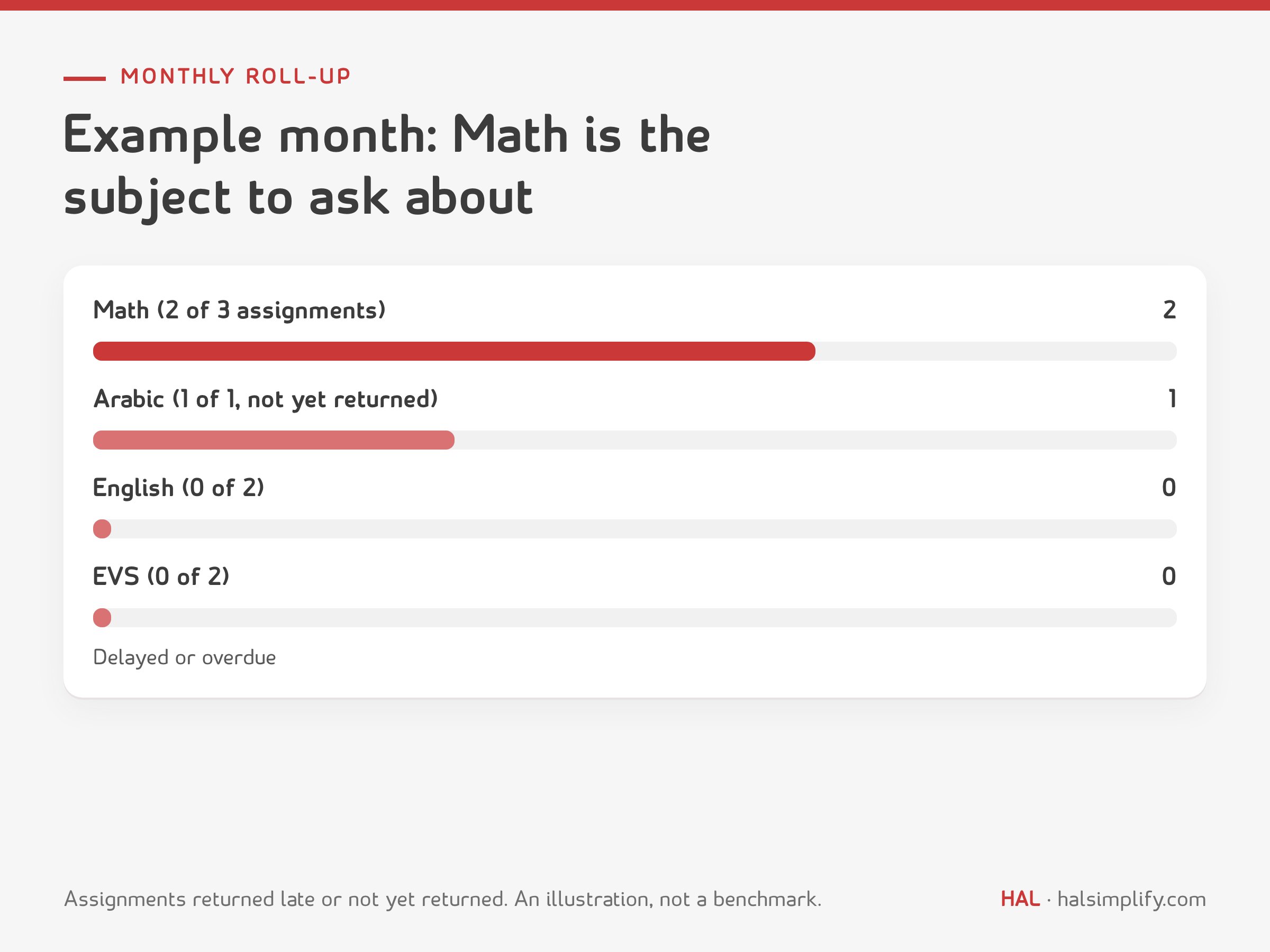
A pattern across a subject usually points to a timetable or workload problem. A pattern across a class usually points to a class routine. Look there before looking at people.
Random checks need a route. Each month, every subject teacher sends five notebooks to the head of department, on a rotation so every class and student comes round. The head of department checks all five, signs them and passes three to the compartment head. The compartment head checks those three, signs, and passes one to the principal. Everyone who checks a notebook signs it, so the notebook itself shows who looked and when.
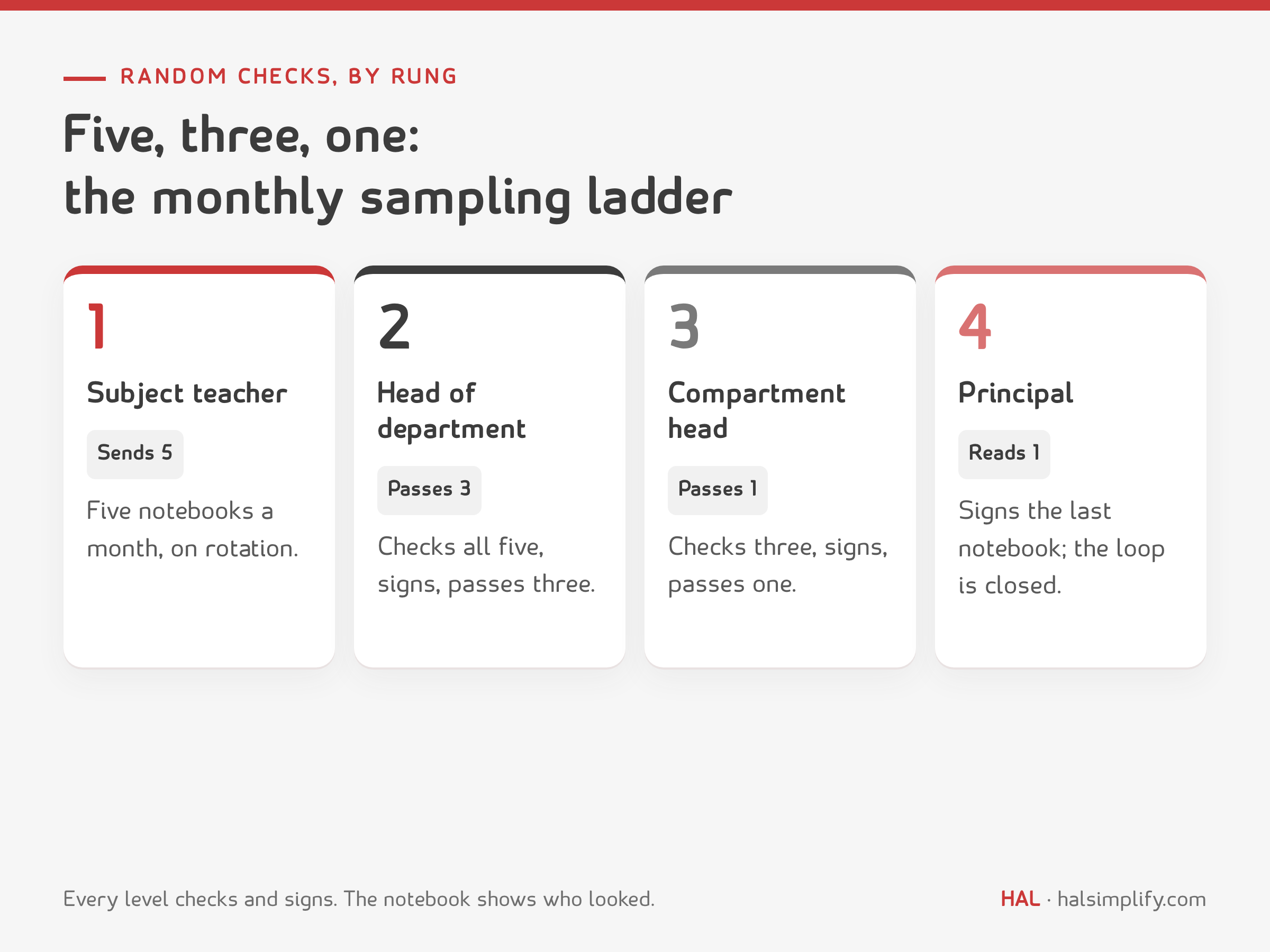
The numbers are a starting point and are settings in the kit. The point is that a few notebooks are looked at by several people, and the same notebook is never the only evidence. The kit's Sampling Ladder sheet records each month's ladder and flags a subject teacher whose ladder came up short.
Much of this is easier when the work is digital. In a learning management system (LMS), a digital assignment records who submitted and when, and multiple-choice questions can be marked automatically, so completion and marks are logged without a register. Teachers then spend their time on feedback and on the notebooks that remain on paper. The routine above still applies to written work. The roll-up for digital work is simply read from the system.
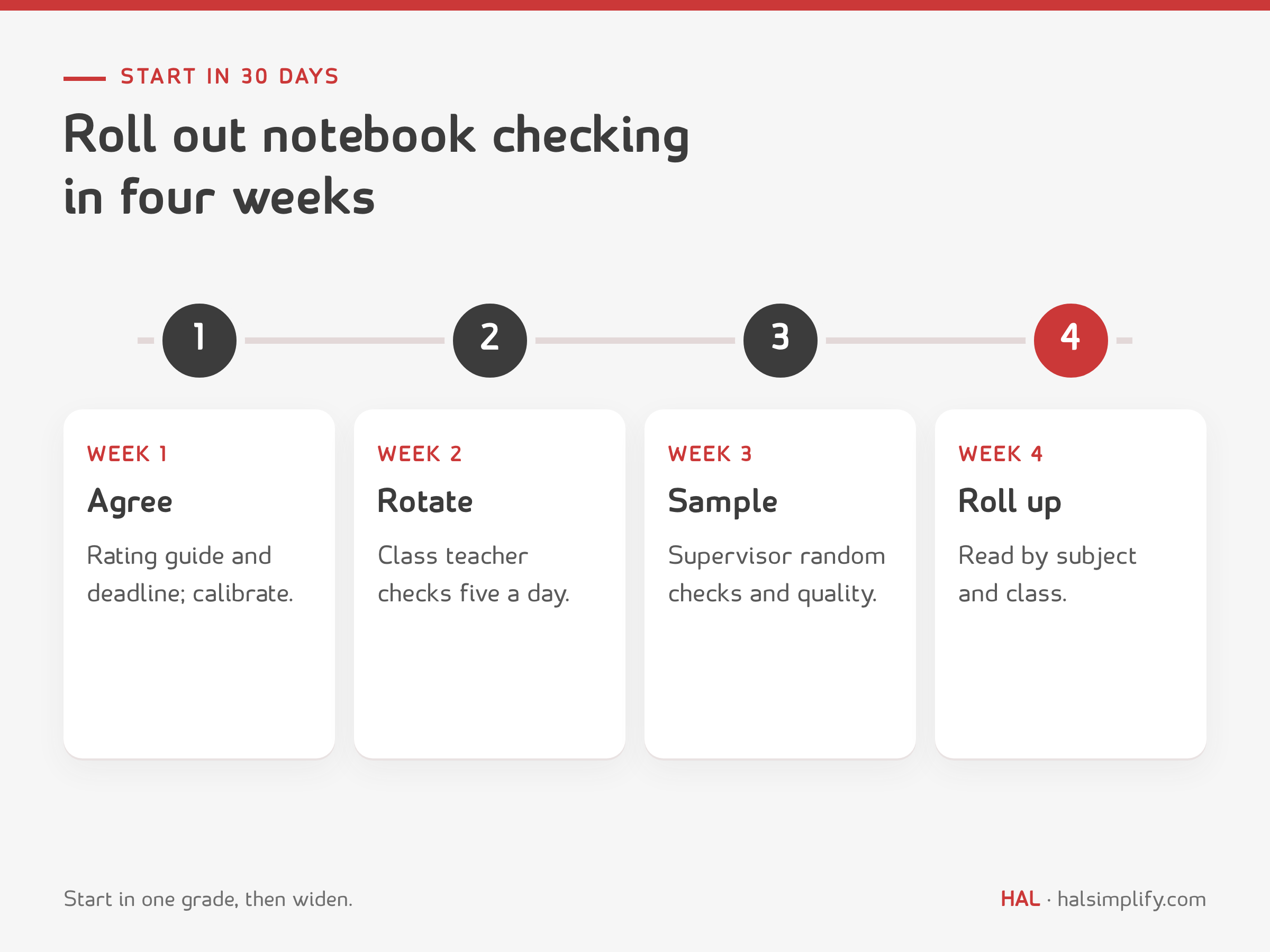
The kit has everything in this article, ready to use:
Paper registers and a spreadsheet are the right place to start. As a school grows, the slow part is chasing registers and adding up the month. When you look at software, check that it can record notebook checks per student, log correction dates against the deadline and give you the roll-up by subject and class without retyping. HAL Edge, HAL's education management system for schools in Saudi Arabia, keeps admissions, student data, faculty performance, fees and school operations in one system, in Arabic and English.
A rotating check works better than a full sweep. This kit suggests the class teacher checks five students a day in the zero period, so a class of thirty is checked about every six school days. Subject teachers correct every assignment within the agreed deadline.
Work completion, upkeep of class work, homework and handbook rated Good, Fair or Poor with a description for each level, correction status, and handwriting. The kit converts the ratings into a percentage.
Agree a deadline in school days. This kit suggests three, as a setting you can change. Corrections that arrive later are recorded as delayed so the supervisor can see the pattern for a subject.
The supervisor makes random checks and rates the correction on three levels: specific feedback, marked only, or weak with missed mistakes. Quality is read together with the deadline in the monthly roll-up.
List the defaulter, agree one next step and a date to check again, and tell the parents through the student handbook if the student is still behind at the recheck date.
Yes. The kit is a free download: a PDF guide with printable forms and an Excel tracker that scores notebooks and adds up the month by subject and class.