
In short: A class scoreboard is one sheet per class per month on which every teacher who teaches the class gives each student a star or a circle in a few habit columns, such as communication, uniform, behaviour, notebooks, home assignments and attendance. The class teacher owns the sheet, the totals roll up into house points and a class total, and the supervisor checks the board each month. Fairness rules keep it honest: written criteria, one mark per column, a reason for every circle, house scores averaged per student and individual scores kept inside the class. Below: why reward systems fade, how the scoreboard works, fairness and anti-gaming rules, the house board, a worked example and a free kit (PDF guide and Excel workbook).
By the third week of term, the house board in the corridor has not changed. One house is far ahead and the others have stopped looking. In class, a few students collect stars because teachers know their names. A quiet student who submits every assignment and keeps a tidy notebook has none. Then someone asks who actually filled in the sheet for Class 6, and nobody is sure.
That is how most reward systems die. The idea is good: recognise the habits that make learning work, and give the school a way to see them. The routine behind it is what fails. This article shows a version that stays fair and stays alive, and the free class scoreboard kit at the end gives you the workbook and the guide.
Four things go wrong, in this order.
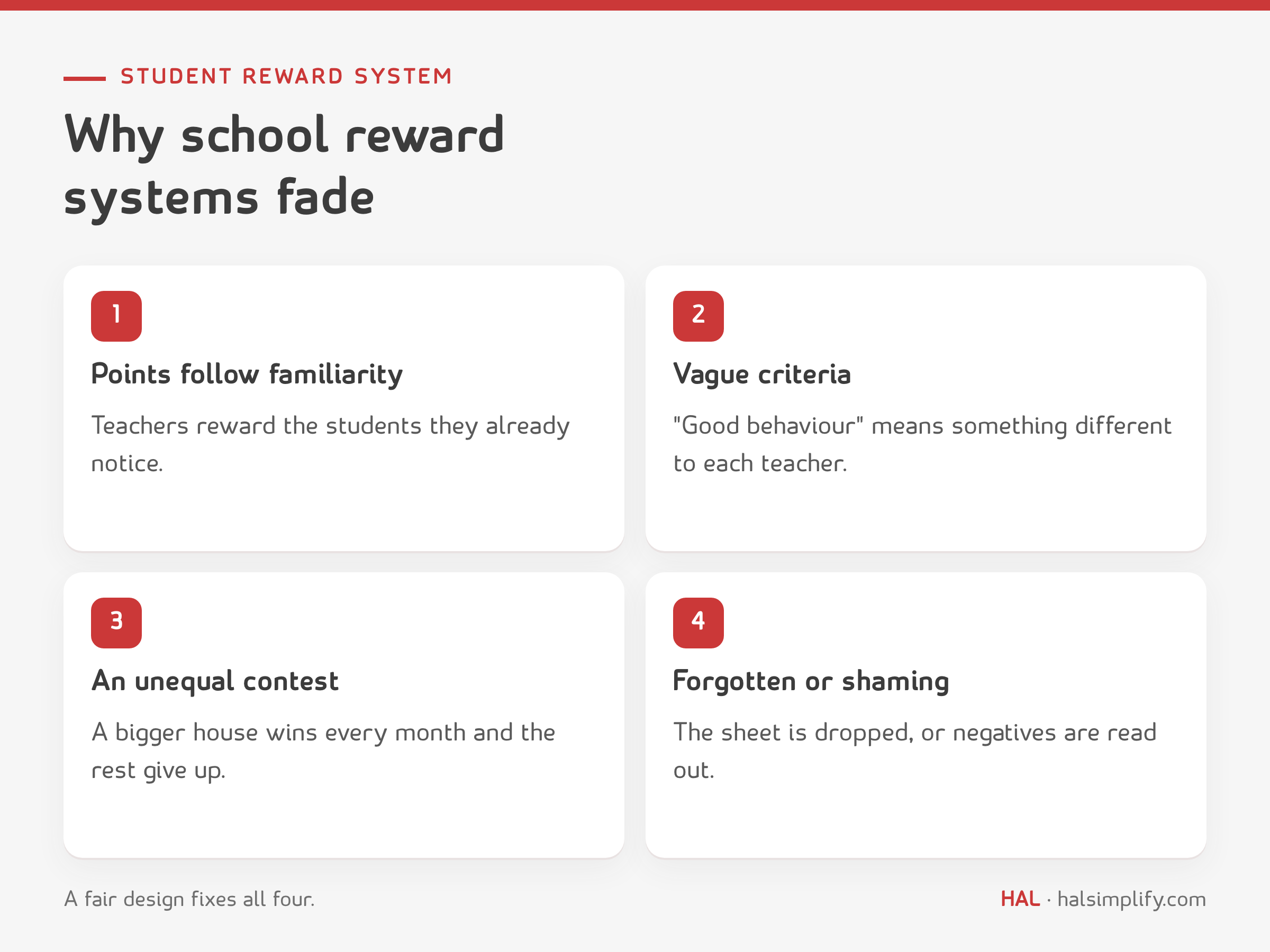
None of this is a reason to stop. It is a reason to design the scoreboard so that points are earned the same way by every student, in every class, and so that the scoreboard itself is checked.
It is a simple sheet. Down the side, the students of one class. Across the top, a handful of habit columns your school chooses. At the end of the month, each teacher who teaches the class has given each student a star (the habit was there) or a circle (it was not) in the columns that teacher is responsible for.
It is also a record. The same sheet that gives students feedback gives the school a view of habits, class by class, that marks alone do not show.
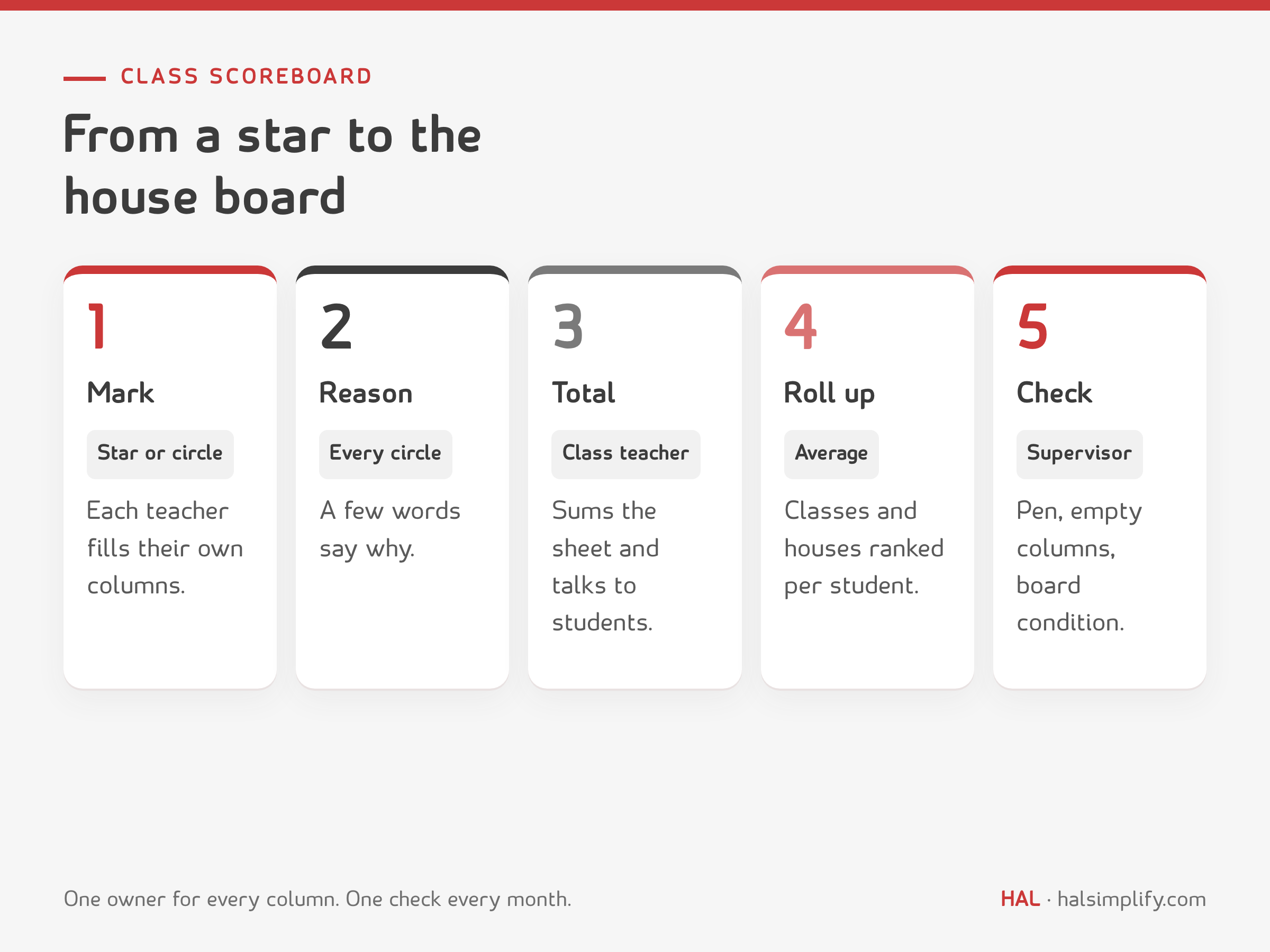
Each column has one owner, so no student is marked twice for the same thing and no column is left to chance. The sample columns below come from a scoreboard used in a school we worked with. Replace them with the habits your school wants to build.
| Column | Who fills it | When | A star means |
|---|---|---|---|
| English communication | English teacher of the class | Once a month | Speaks and writes in English as the school expects in class |
| Arabic communication | Arabic teacher of the class | Once a month | Same, in Arabic |
| Uniform, haircut and nails | Physical education teacher, or the duty teacher | Once a month | In full uniform and neat on the check day |
| Classroom behaviour and participation | Every teacher who teaches the class | Each subject teacher once a month | Follows class rules and takes part |
| Condition of notebooks, textbooks and handbook | Every teacher who teaches the class | Each subject teacher once a month | Notebook and textbook cared for, planner in use |
| Home assignments | Every teacher who teaches the class | Each subject teacher once a month | Submitted what was set, on time |
| Attendance | Class teacher | Once a month | Within the agreed leave allowance |
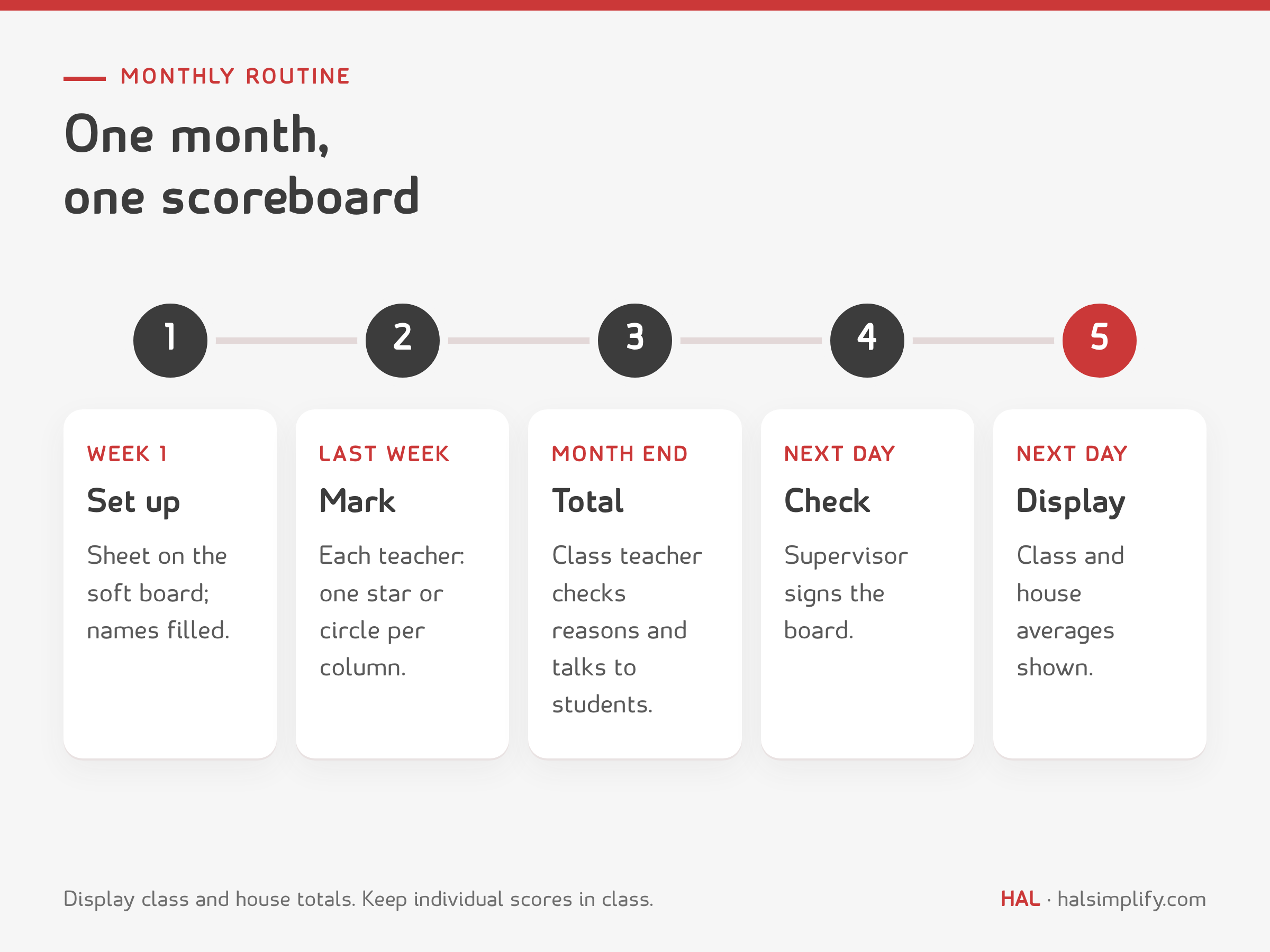
Two small habits make the sheet trustworthy. Use one pen colour for every entry, such as red, so any change in another colour stands out. And the class teacher fixes the sheet on the class soft board and fills in the class, section, month and students' names, so every teacher knows where to find it.
The columns, who fills them and the points each mark earns are settings your school defines. The sample uses star = +1 and circle = -1. Your school may prefer 2 and 0, or 3, 2, 1 and 0, or a different set of columns for primary and secondary.
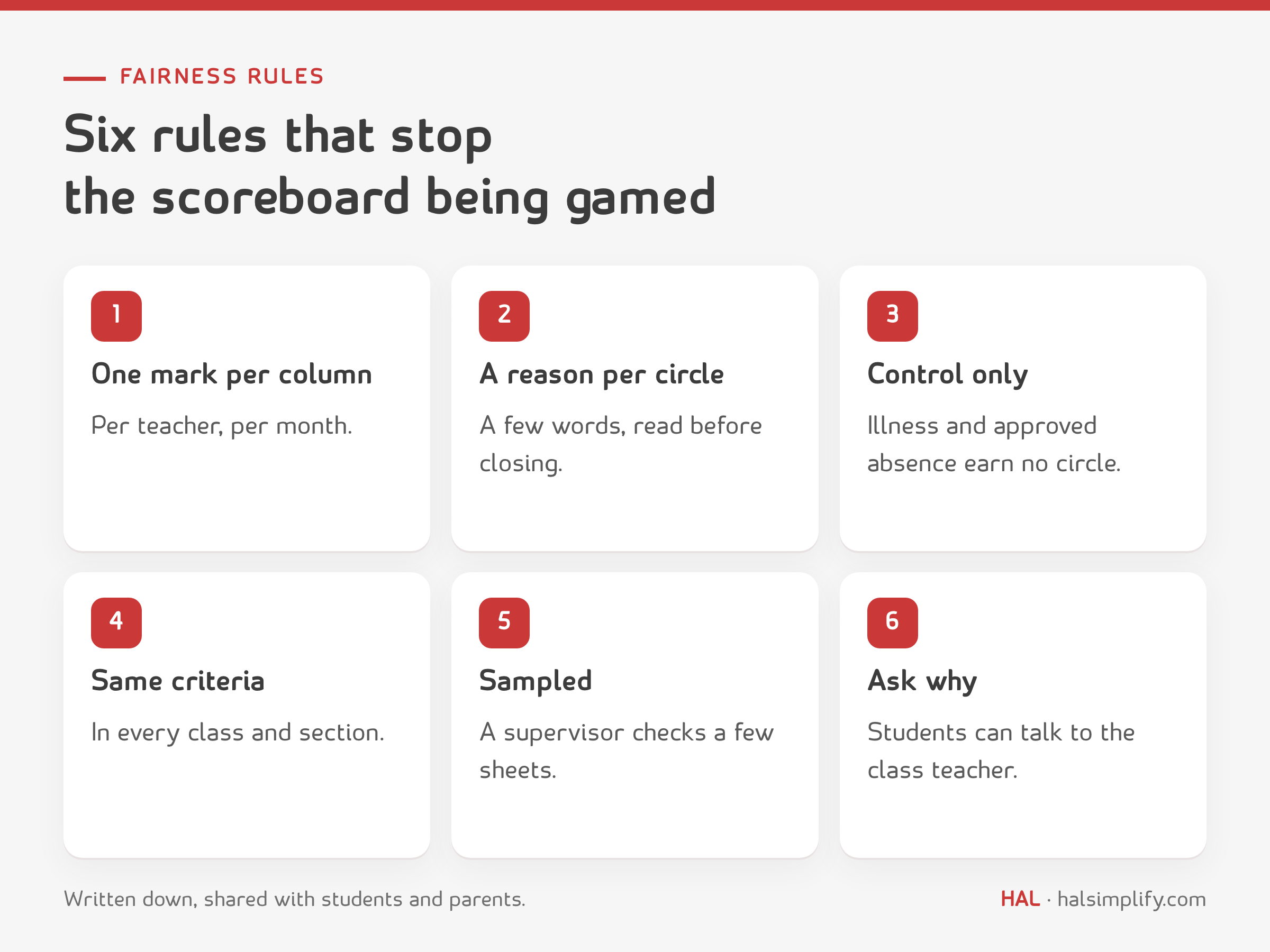
A scoreboard that students and teachers trust needs rules that are written down.
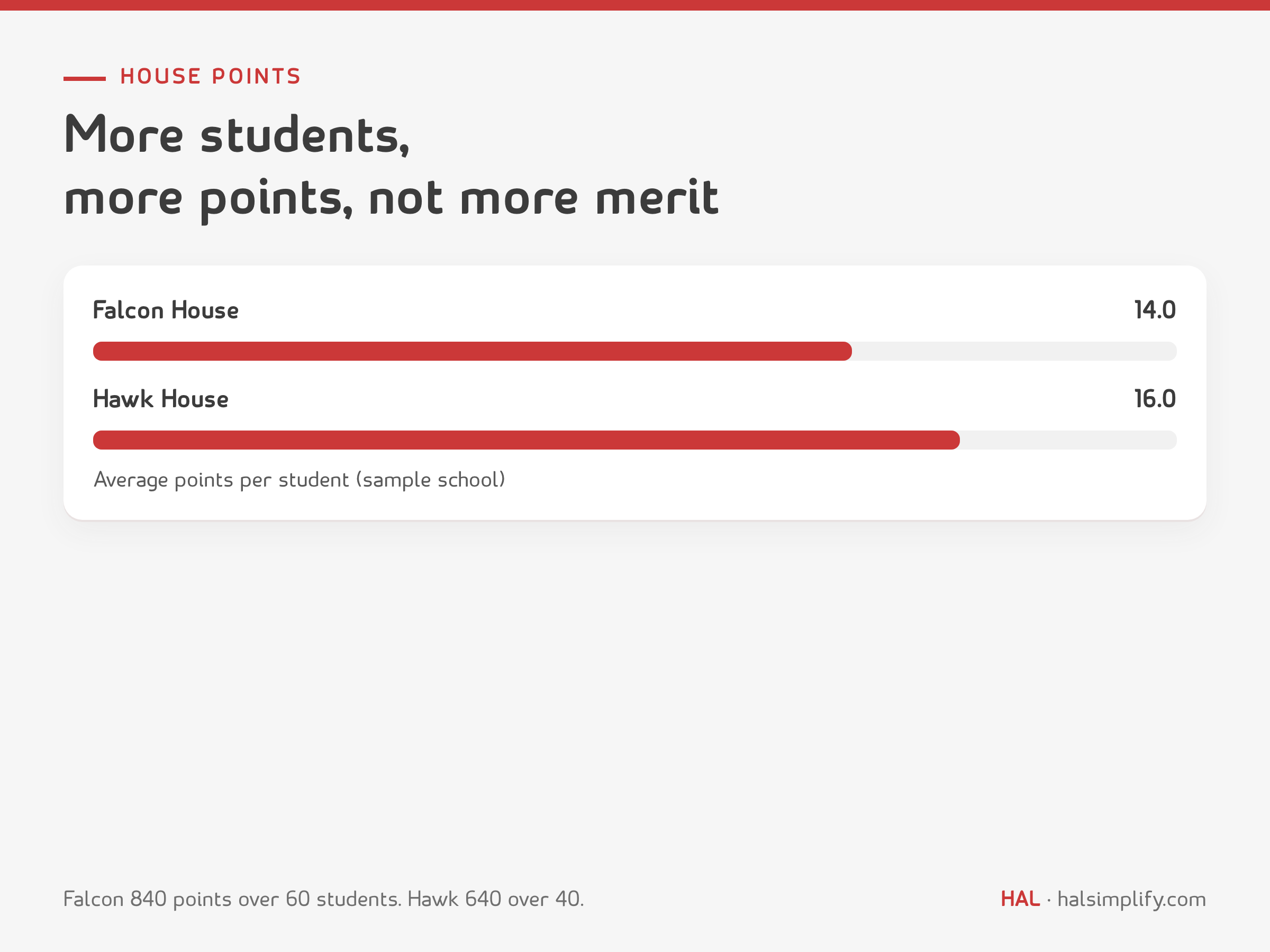
The house system gives students something to belong to. It can also turn into a contest between unequal sides.
A class leader can help the scoreboard work without marking classmates. Good jobs for a leader are keeping the sheet on the soft board tidy, reminding teachers when it is due and collecting the sheet for the class teacher at month end. The leader does not give or take away marks. That keeps the role a service, not a power.
The class teacher owns the sheet. The supervisor checks that the system is alive. For each class, the report records:
Each month's report goes into the monthly teacher report, as scoreboard use for the subject teacher and scoreboard checking for the class teacher.
Take a made-up Class 6-A at a sample school, in October, with 30 students and seven teachers who mark behaviour, notebooks and assignments.
Some schools add recognition for results: a school topper, a subject topper, and acknowledgment for teachers whose classes reach the targets the school has set. If you do this, keep the recognition separate from the habit scoreboard, make the targets public and have a second teacher moderate the marks. When recognition depends on marks, the pressure to inflate them rises.
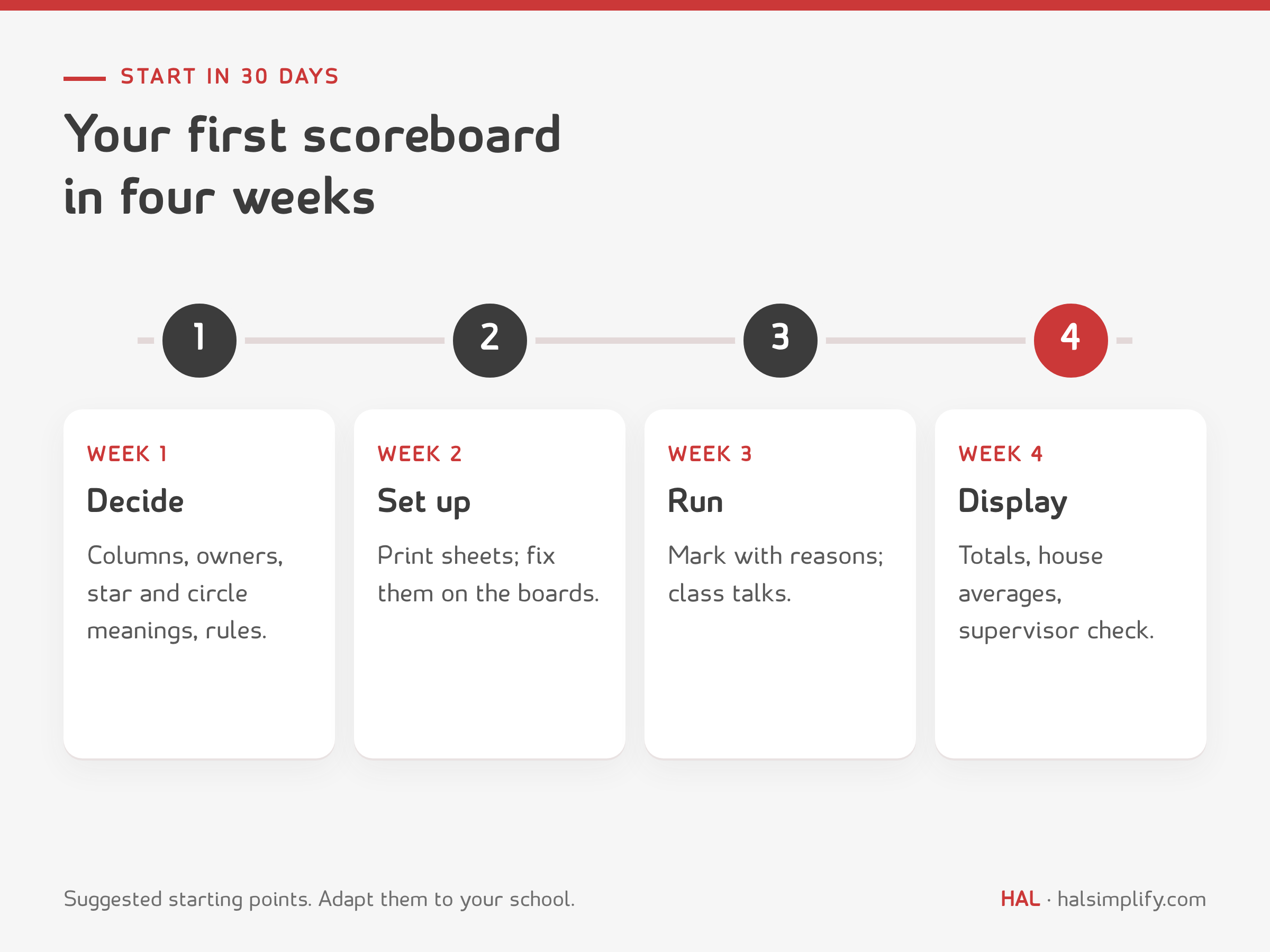
The kit has two files.
On paper, the class teacher totals the sheet and someone copies the figures to the house board. In a system where each teacher records the star as it happens, the totals, house averages and class view update themselves, and the supervisor's check is a list of what is missing.
HAL Edge, HAL's education management system, keeps academic routines, faculty performance and school data together, in Arabic and English.
A monthly sheet for one class on which each teacher marks every student with a star or a circle in a few habit columns. Totals give each student feedback and roll up into house and class views.
Students belong to a house, and their scoreboard totals add up to the house's score. Rank houses on the average per student, so a larger house does not win by size.
Write the criteria, give each teacher one mark per column, ask for a reason for every circle, keep individual scores inside the class and have a supervisor sample the sheets.
We suggest not. Students see their own sheet and their class board. The school-wide board shows house and class totals only.
Yes. The columns, who fills each, the points per mark and the thresholds are settings the school defines. The kit includes a sample you can replace.
Yes. The kit is a free download: a PDF guide and an Excel workbook that totals students, classes and houses from your own columns and points.